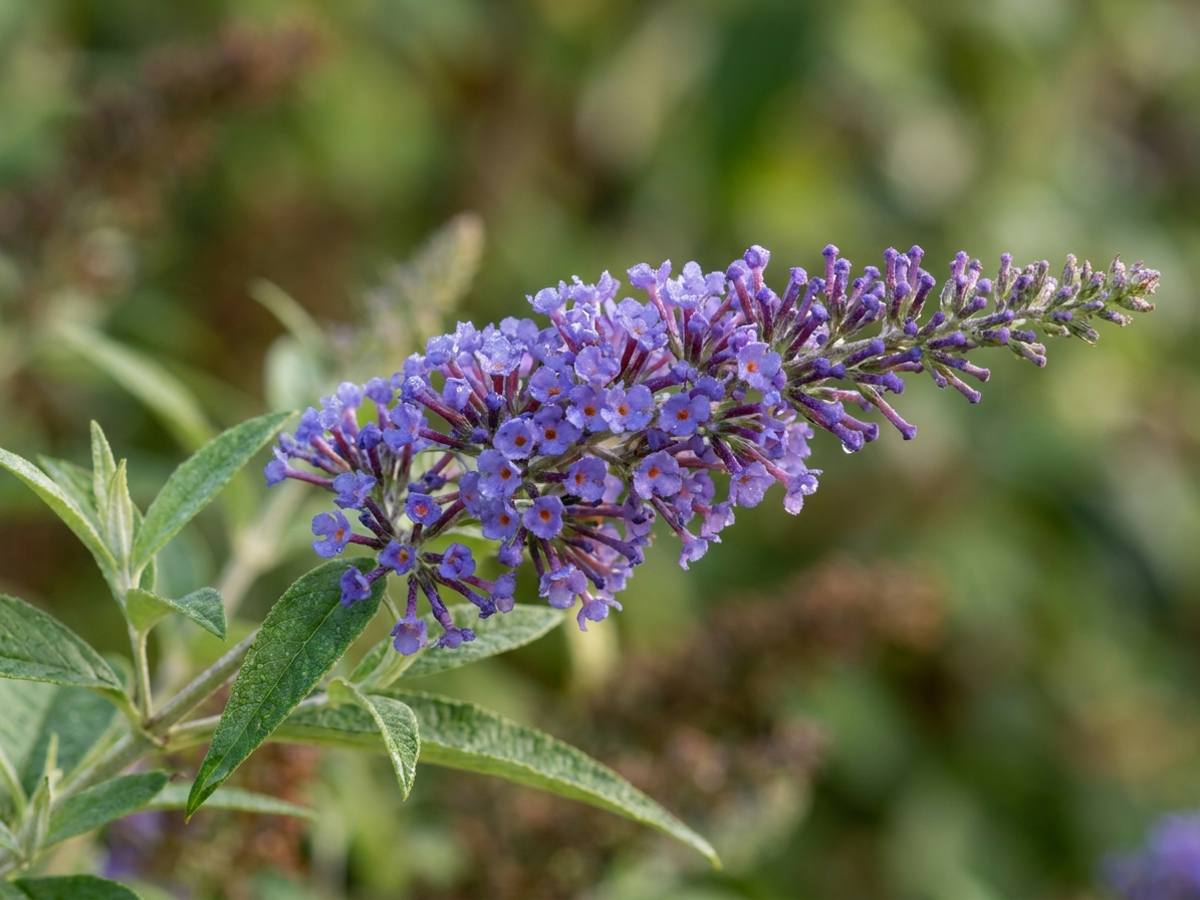
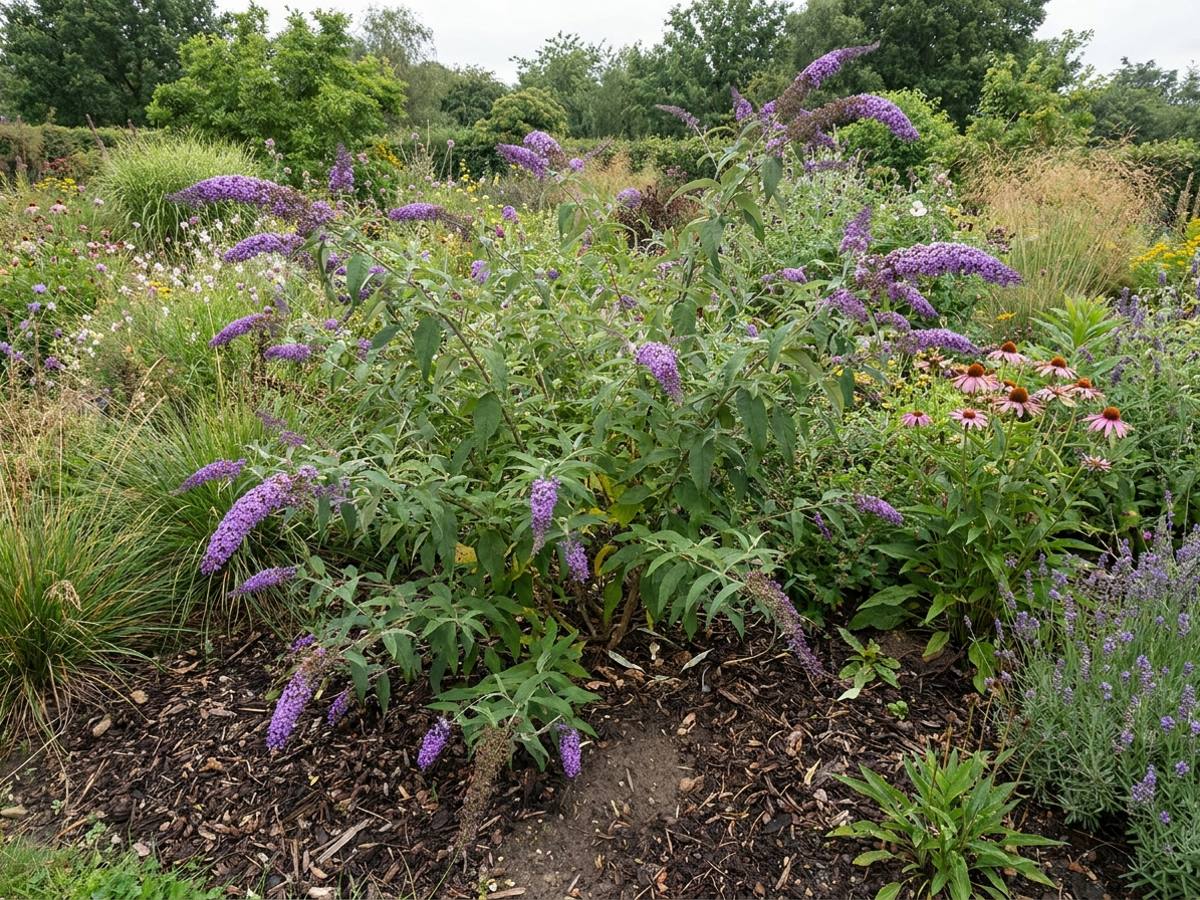
Few shrubs earn their common name as convincingly as the butterfly bush, whose long, tapering flower panicles draw peacocks, red admirals and painted ladies from July until the first frosts. Buddleja davidii is a fast, forgiving deciduous shrub with arching grey-green stems and honey-scented blooms in shades of purple, magenta, pink and white. Its most distinctive trait is sheer vigour — it will flower prolifically in its first summer from a hard spring pruning, which is both its greatest virtue and the reason it needs a firm hand.
Buddleja needs full sun to flower well — at least six hours of direct light a day. In partial shade the stems stretch, the panicles shorten and butterfly visits drop off noticeably. A sheltered, sun-baked spot beside a wall or in a gravel garden suits it perfectly and intensifies the scent.
Sharp drainage matters far more than fertility. This is a plant of Chinese riverbanks and rubble, entirely at home on thin chalk, sand or stony ground, and it tolerates a pH from about 5.5 to 8.5. Rich, heavily manured soil produces soft, floppy growth and fewer flowers, whilst waterlogged clay in winter is one of the few things that will genuinely kill it.
It is fully hardy across the British Isles and most of temperate Europe, shrugging off −20 °C once established. In colder continental zones the top growth may die back to the base, but it regenerates readily from the rootstock in spring.
Plant container-grown shrubs in autumn or early spring, when the soil is warm and moist enough for roots to establish before summer. Avoid planting in the depths of winter on cold, wet clay.
Buddleja asks for very little, but what it does ask is strictly seasonal. This table sets out the one job that matters in each part of the year, and the reason behind it.
| Season | Main task | Why it matters |
|---|---|---|
| Early spring | Cut every stem back to a low framework 30–60 cm above ground, then feed lightly and mulch | Flowers form on the current season’s wood, so unpruned plants turn leggy with small blooms |
| Summer | Deadhead spent panicles from midsummer onwards; water only in prolonged drought | Triggers a second flush and stops seed setting |
| Late autumn | Shorten the tallest stems by about a third and remove remaining seedheads | Prevents wind-rock loosening the roots over winter |
| Winter | Nothing, beyond moving dwarf forms in pots against a wall | The shrub is dormant and leafless and needs no protection in temperate gardens |
Keep to these four moments and the rest of the year looks after itself.
Spring: Prune hard in March, cutting all stems back to a low framework 30–60 cm above ground. This seems brutal but is essential — buddleja flowers on the current season’s wood, and unpruned plants become leggy with small blooms. Apply a light scatter of general fertiliser afterwards and a mulch of garden compost, keeping it clear of the stems.
Summer: Water only in prolonged drought during the first two years; established plants need nothing. Deadhead spent panicles regularly from late July onwards to trigger a second flush and, crucially, to prevent seed setting. A single spike can carry tens of thousands of seeds, so this task is as much about neighbourliness as tidiness.
Autumn: Shorten the tallest stems by about a third in November to prevent wind-rock loosening the roots over winter, but save the real pruning for spring. Remove any remaining seedheads and dispose of them in the council green waste rather than the compost heap. Autumn is also the moment to take hardwood cuttings.
Winter: The shrub is entirely dormant and leafless, and needs no protection in temperate gardens. Container-grown dwarf forms benefit from being moved against a wall to keep the compost from freezing solid.
Modern breeding has produced compact and low-seeding forms that suit smaller gardens far better than the old wilding types.