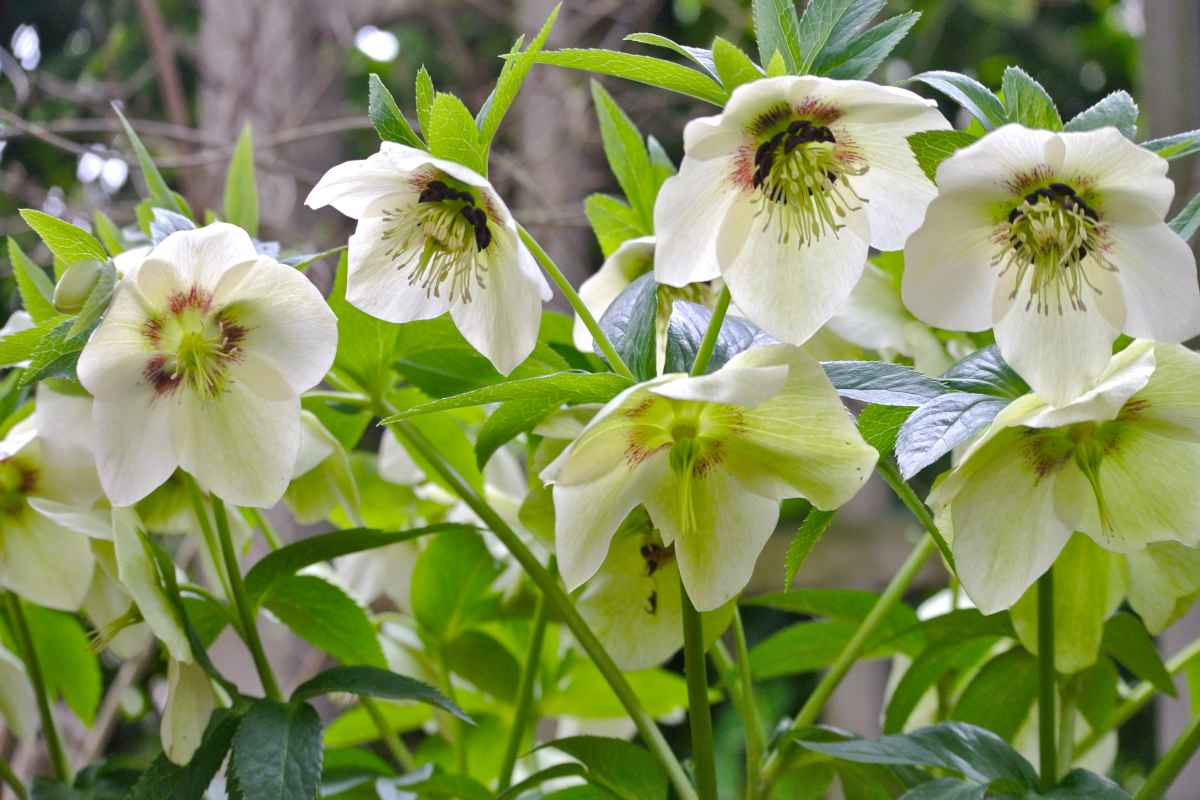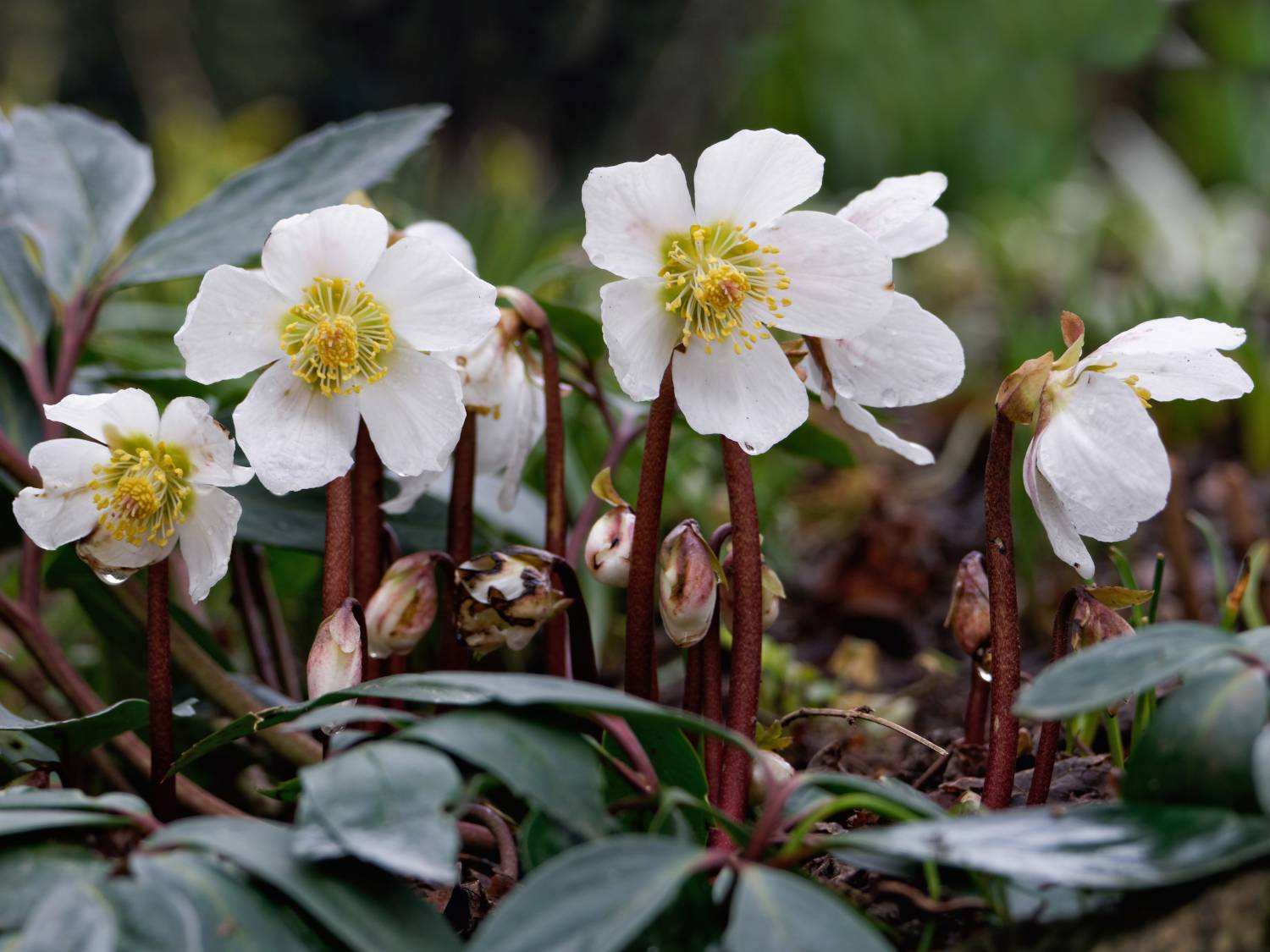
Waxy, white petals open above lobed evergreen leaves, slowly taking on a pinkish hue; black hellebore (Helleborus niger) owes its odd name to its black roots, not its blooms, and is prized for flowering in beds or pots. Give it cool, moist shade and rich clayish soil, and it will flower faithfully through the coldest weeks.
| Name | Helleborus niger |
|---|---|
| Family | Ranunculaceae |
| Type | perennial |
| Height | 8 to 12 inches (20 to 30 cm) |
| Exposure | shade to part sun |
| Soil | rich, clayish, cool and moist |
| Foliage | evergreen |
| Flowering | midwinter to early spring |
| Hardiness | USDA zones 4 to 8 |
Blooming: mid-winter → early spring – Toxicity: very poisonous plant
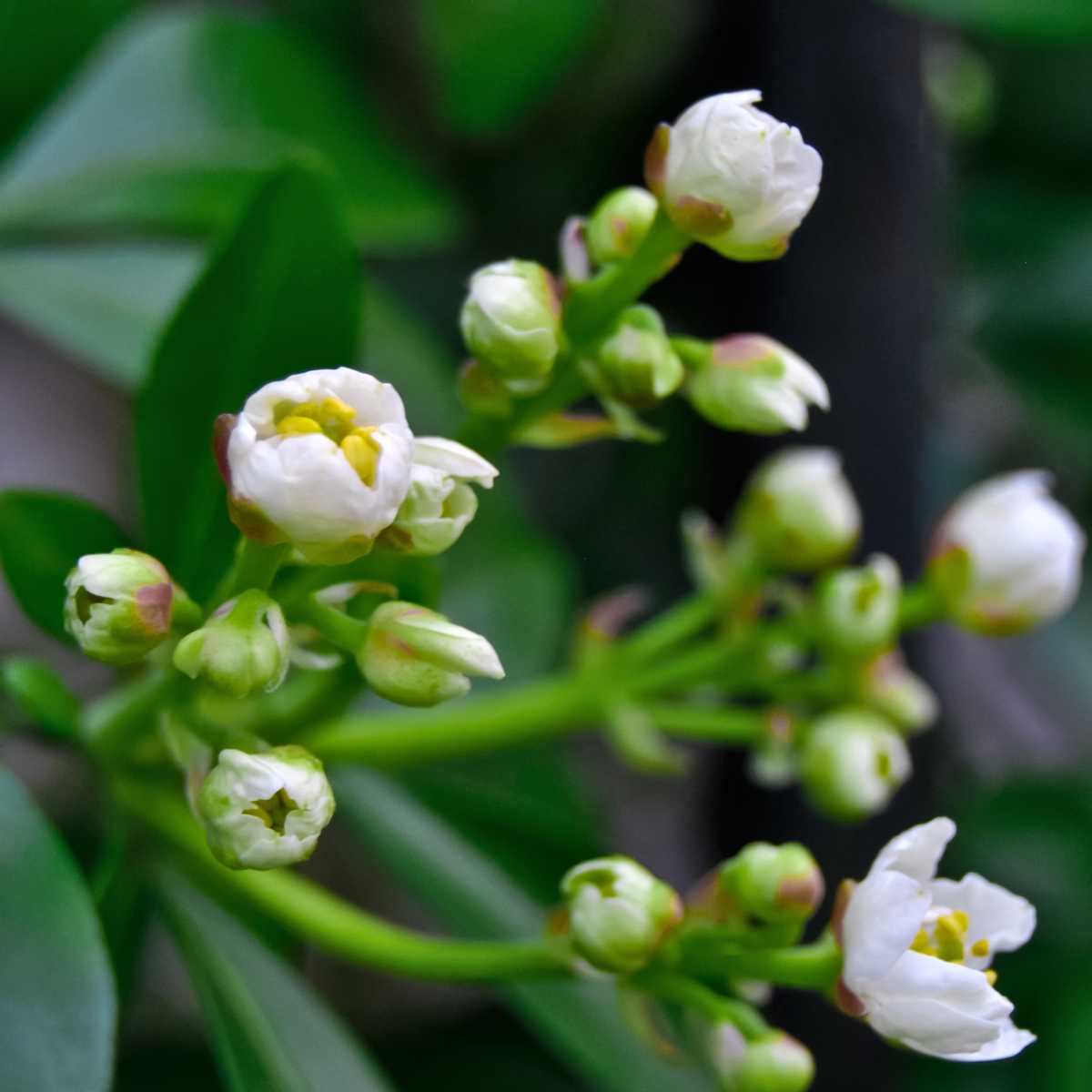
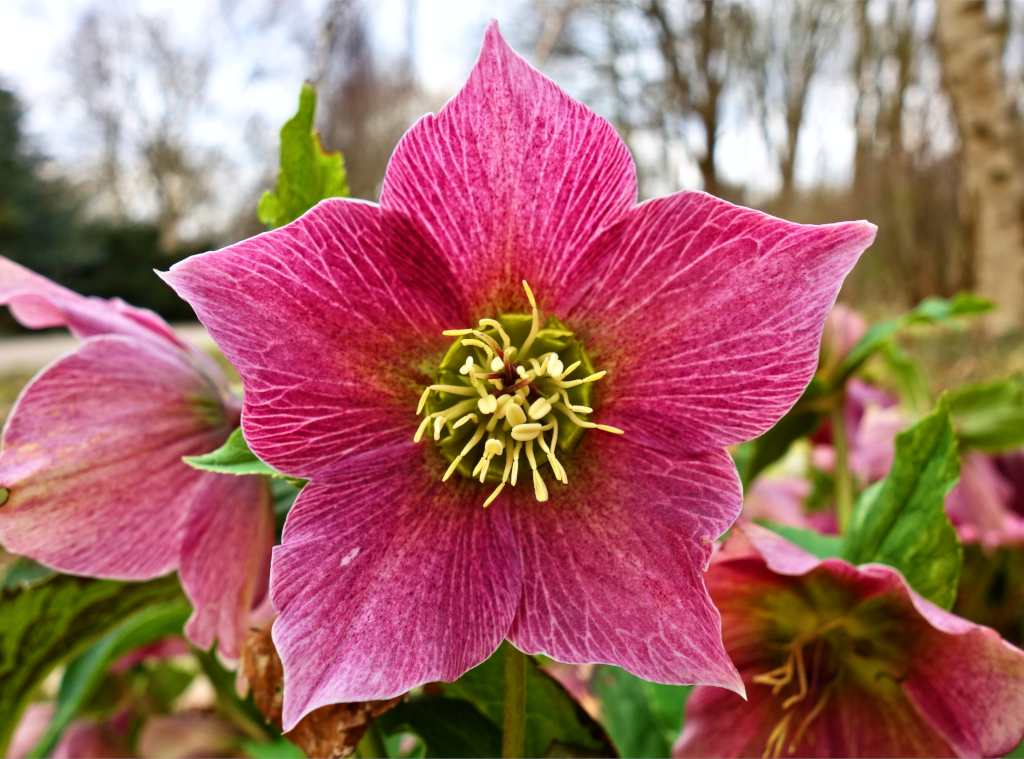
Helleborus niger is also known as the black hellebore. It’s a strange common name for this evergreen perennial, because its flowers are either white or pink. The reason behind the name lies underground: its roots are black. This hellebore grows out from an underground rhizome that is short and thick. It breaks easily, and the outside peel of the root is black.
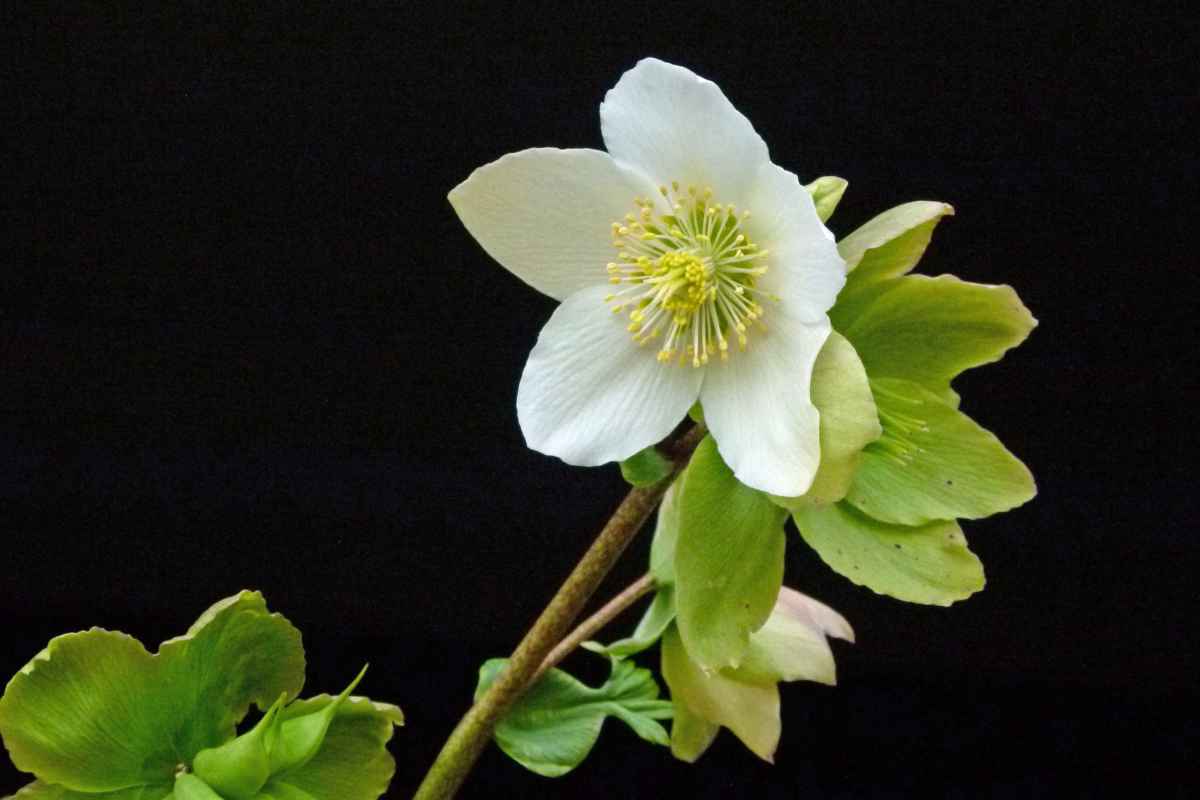
Spring foliage of this variety starts off bright emerald green, then slowly deepens to a deep jade color. Leaves are lobed, rather large, and lightly serrated (tooth-rimmed). January is when the blooming starts in earnest: magnificent white flowers appear, with waxy, round petals that slowly change to a pinkish hue with time.
Helleborus niger should be planted in fall or spring. This flowery grass loves growing in shaded or partly-shaded portions of the garden, where it’s cool and moist. It favors clay soil, loamy clay and clayish loam, as long as it stays cool and, preferably, rich. If the soil drains well, a thick layer of mulch should protect the plant against drought, since it locks moisture in.
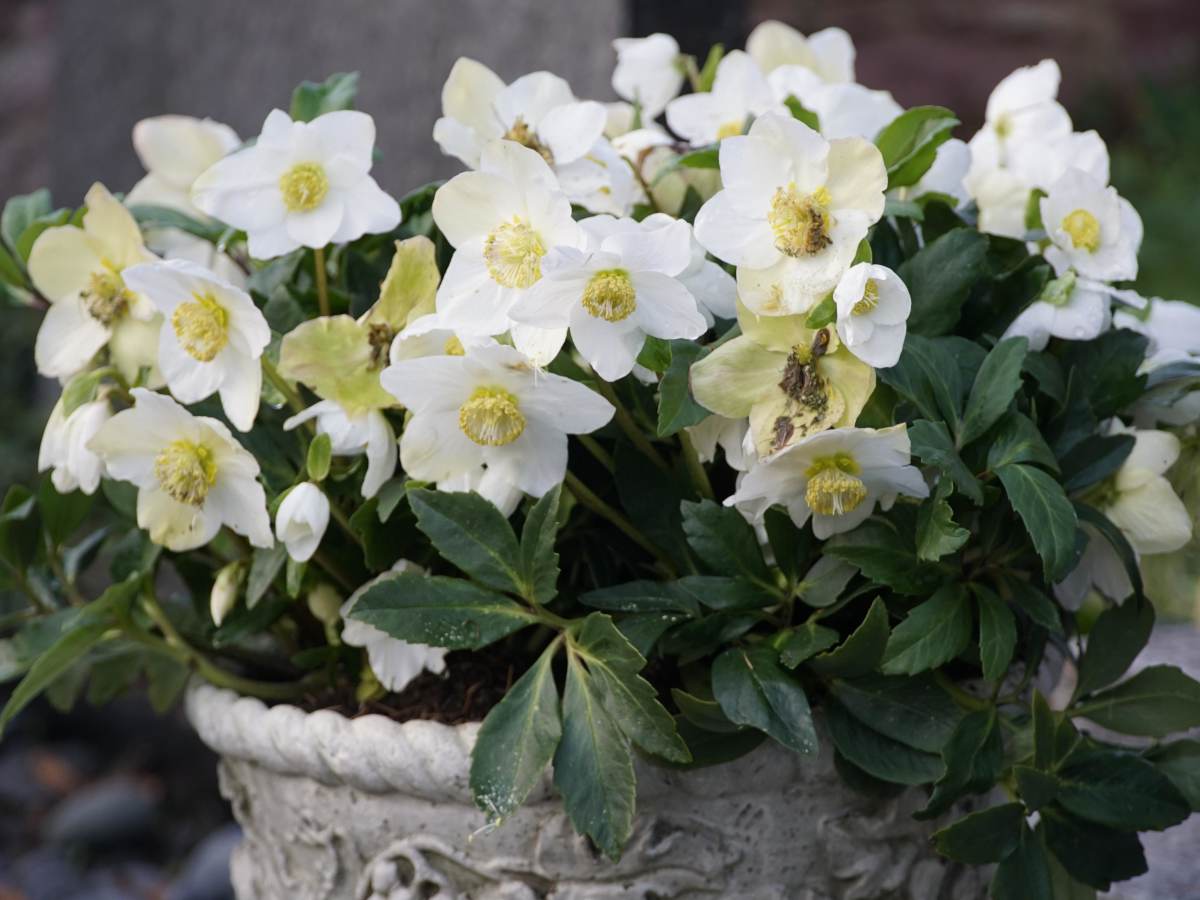
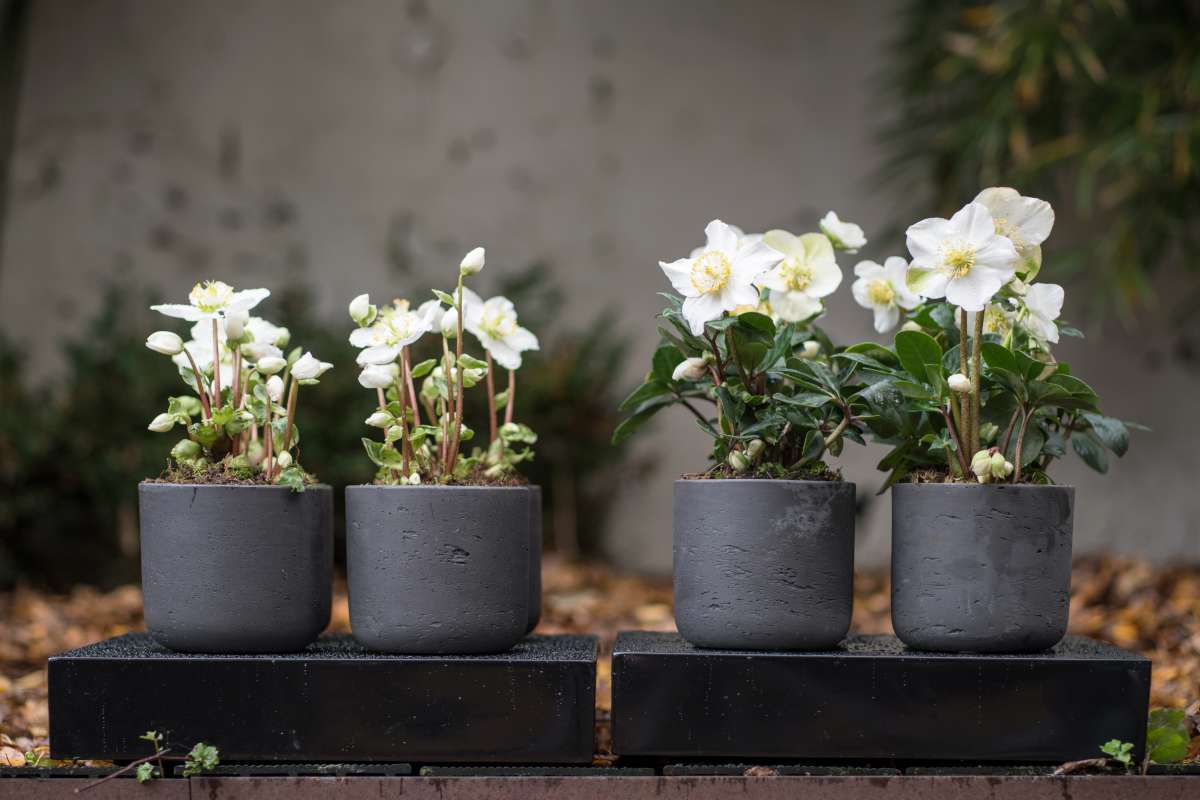
Black hellebore is excellent for growing in pots.
Dividing the clump is the easiest and most effective method to propagate Christmas rose.
However, it’s important to do this carefully, and only occasionally.
In spring, after the blooming, divide the clump with a single cut from a spade. Ensure proper watering during the summer that follows the division, this will help the wounded portion cope since it has less roots to rely on. You can also perform clump division for black hellebore at the end of fall. In that case, you probably won’t get any flowers during that first winter on the new plant.
Recent seeds sprout easily. You might discover self-sowed seeds sprouting around the mother plant, under the protective leaf cover. Sow your black hellebore seeds in nursery pots, sometime between August and September. Cover them with half-an-inch of soil (1cm). Place your seedlings in a very moist, shaded part of the garden. Transplant young Christmas rose sprouts to their final growing spot in April of the following year.
Named forms of the Christmas rose differ mainly in when they open, how large and how pink-flushed the blooms become, and whether they suit a pot or an open border. The table below compares the selections most often offered in garden centres and mainstream catalogues.
| Variety | Flower | Flowering period | Habit | Best use |
|---|---|---|---|---|
| Blackthorn Group | Pink-flushed white, dark stems | Midwinter | Medium, vigorous | Woodland planting |
| ‘Potter’s Wheel’ | Large, rounded, pure white | Midwinter to early spring | Medium, sturdy | Borders, woodland edge |
| ‘Praecox’ | White, ageing pink | Early winter | Compact | Pots, doorway displays |
| ‘Christmas Carol’ | Large white, pink-tinted with age | Early to midwinter | Compact, upright | Pots and gifts |
| HGC ‘Jacob’ | Broad white, greening | Early winter | Compact | Pots, forced displays |
| HGC ‘Josef Lemper’ | Large white, held clear of leaves | Early winter | Vigorous | Borders, large pots |
| HGC ‘Jesko’ | White, many blooms per clump | Midwinter | Medium, spreading | Ground cover in shade |
| HGC ‘Joshua’ | White, small and neat | Earliest, late autumn to early winter | Dwarf, under 30 cm | Windowboxes, troughs |
| ‘Louis Cobbett’ | White with pink reverse, pink stems | Midwinter to early spring | Medium | Shaded borders |
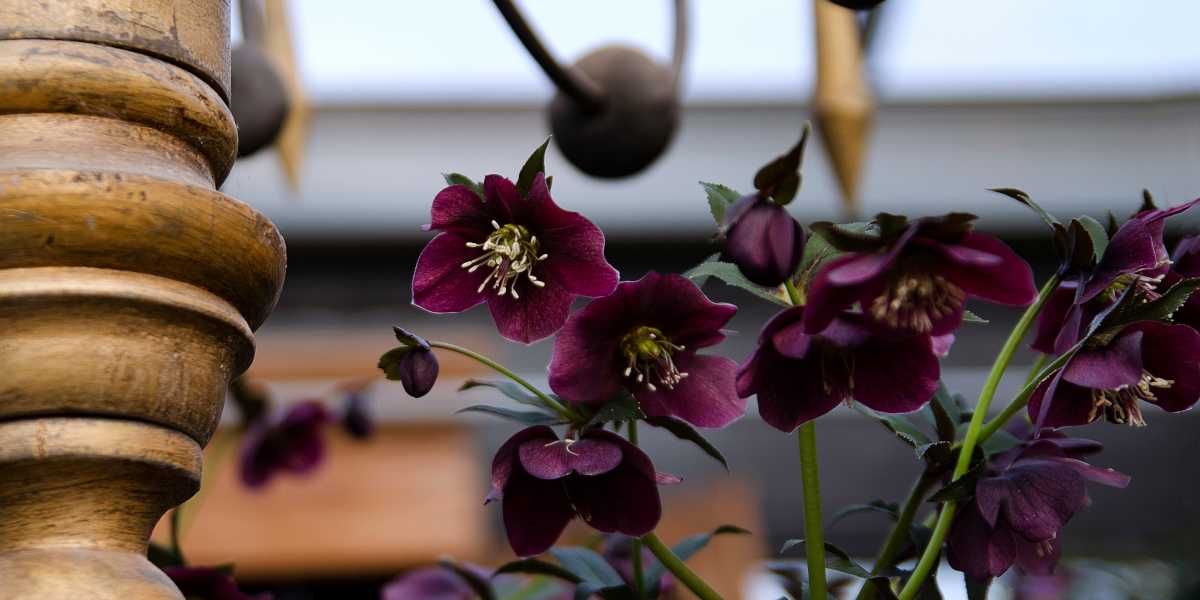
You might wonder whether there are any hellebore varieties with black flowers. These are almost always cultivars from another species, Helleborus orientalis, the Lenten rose.
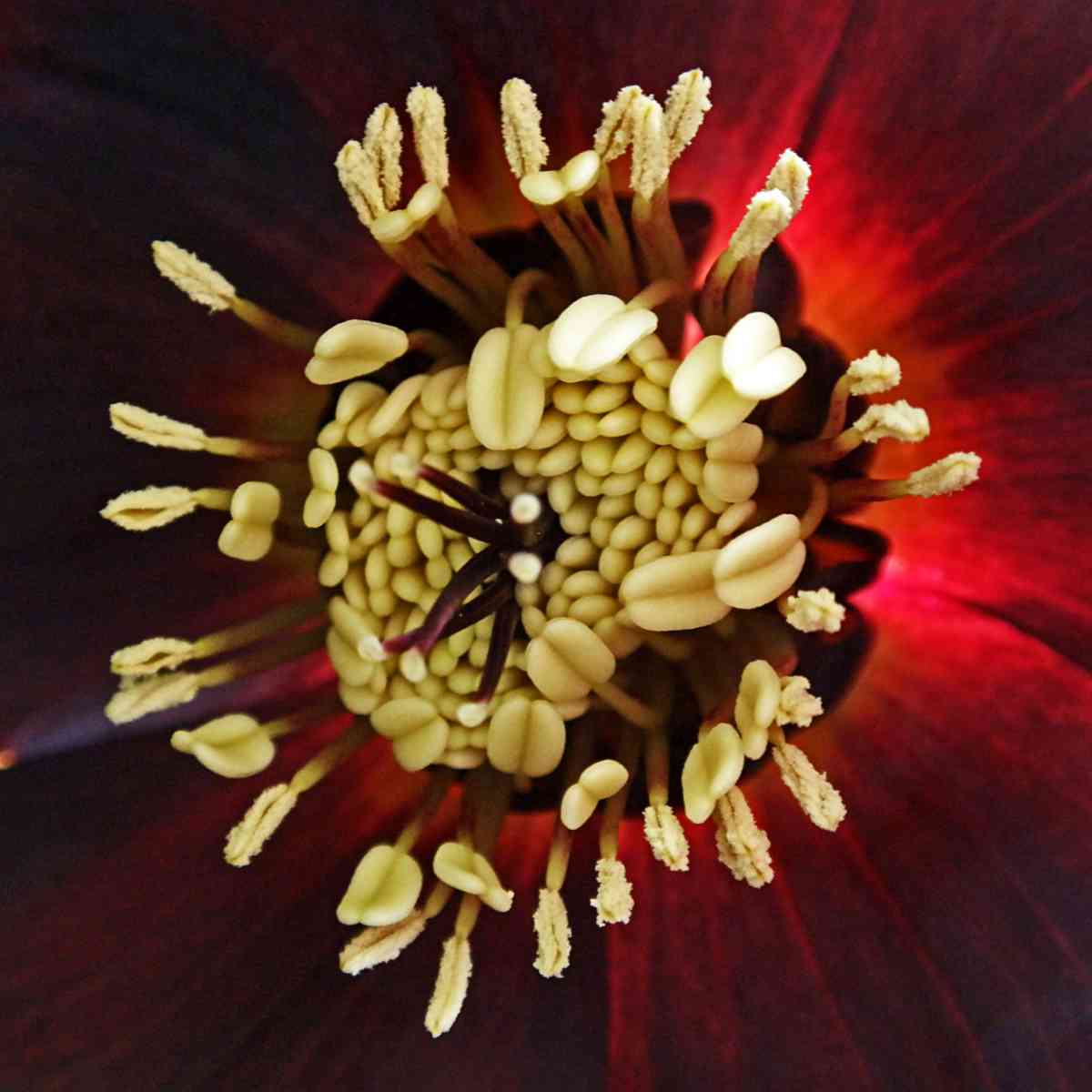
The ‘Black’ lenten rose produces simple, cup-shaped flowers with a very dark color, nearly black. If you look closely, though, you’ll notice orange reflections on some petals. These ebony-black petals contrast elegantly with the bouquet of white stamens that appear at the heart of the flower.
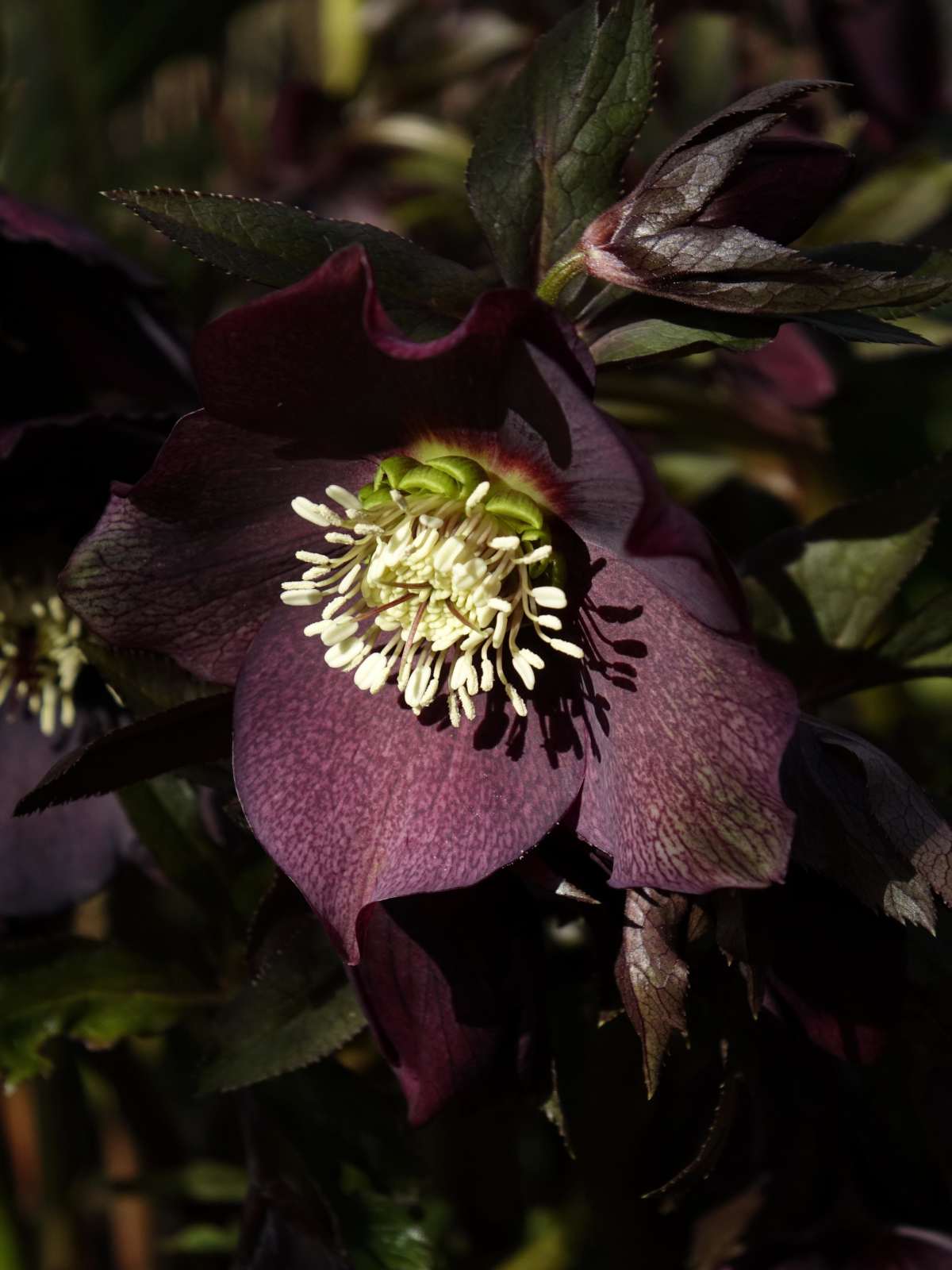
The ‘Double Black’ lenten rose produces double flowers.
Its black color is slate blue with violet tinges and is identical to that of Helleborus Orientalis ‘Black’.
The blooming has several rows of thick petals, again with a heart of nearly white stamens.
Another cultivar, the ‘Black Chocolate’, bears simple cup-shaped flowers with deep brown petals that also near on black. Again, they mark a stark contrast with the light-colored stamens. For this variety, the foliage also occasionally presents a deep violet color.
To learn more, read: