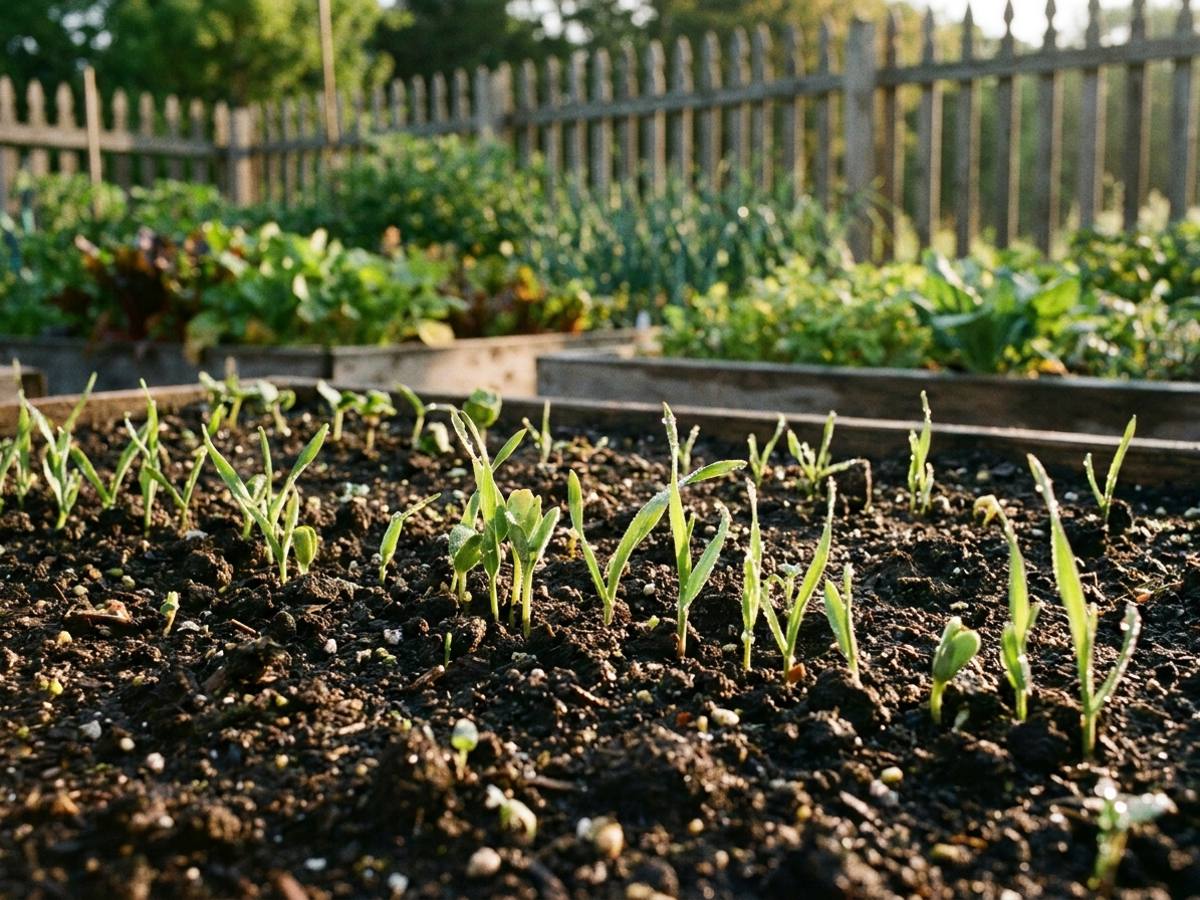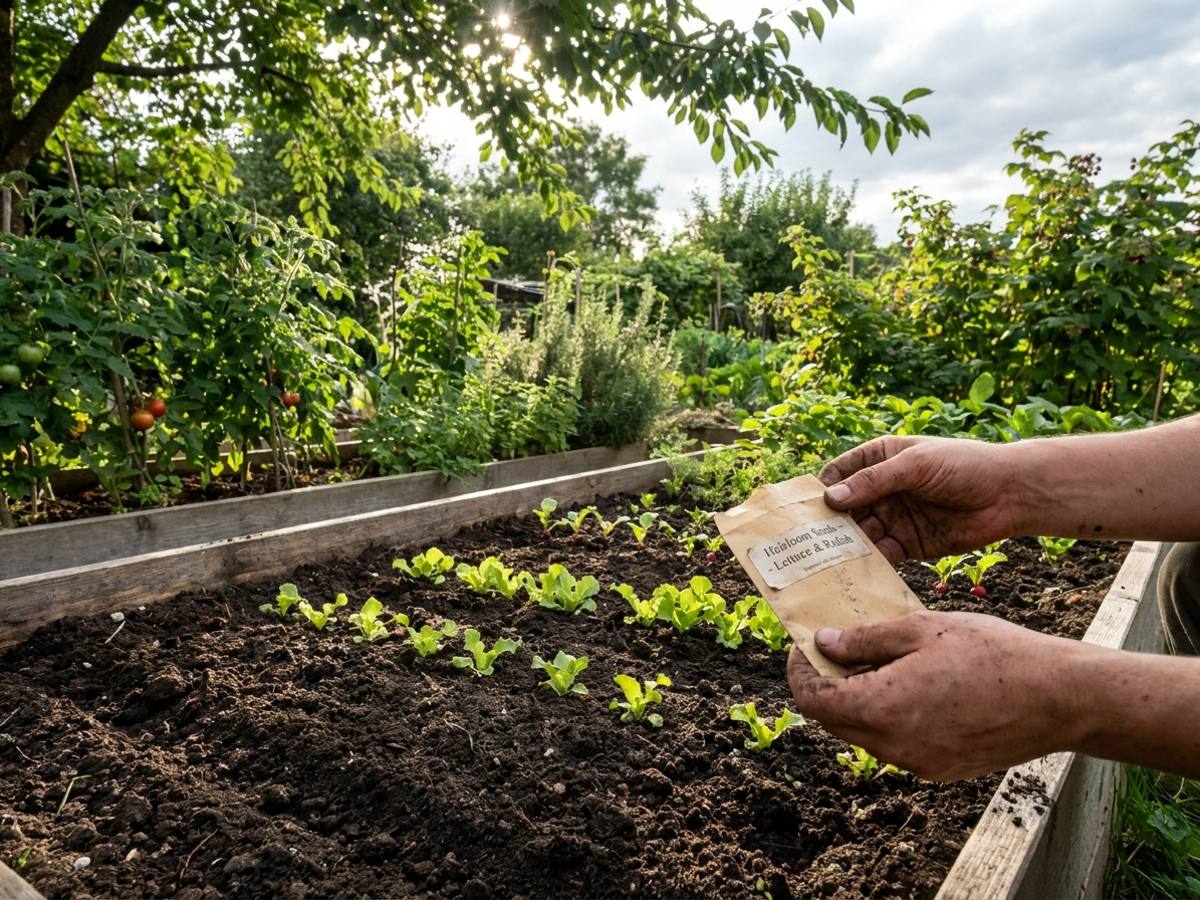
Forget the August slump. As summer heat peaks and unpredictable weather becomes the norm, UK gardeners are discovering that late-season sowing isn’t a consolation prize, it’s a game-changer. Sow the right crops now, and you’ll harvest fresh vegetables well into November whilst spring-sown plants fade. This August moment matters because cooler nights are finally arriving, creating perfect conditions for rapid germination and pest-free growth.
By August, most UK gardens have endured weeks of heat stress. Lettuce bolts, spinach flowers prematurely, and pests thrive in the warmth. Yet something shifts in late summer. Night temperatures begin to drop, soil moisture stabilises after summer drought, and daylight hours shorten just enough to trigger vigorous growth in cool-season crops. American gardeners in cooler zones have long exploited this window, but UK gardeners are only now catching on as traditional harvest-only thinking gives way to strategic succession planting.
Spring-sown vegetables are competing with lengthening days, rising pest populations, and erratic weather. Autumn-sown crops, by contrast, mature during declining daylight and cooler temperatures when slugs, whitefly, and cabbage moths are retreating. Studies from the Royal Horticultural Society suggest that late-sown leafy greens grow faster and with fewer pest interventions than their spring counterparts, often reaching harvest size in 30-45 days rather than 50-60.
The calendar window is tight but genuine. Seeds sown in the first three weeks of August will germinate before soil temperatures drop too far and daylight dwindles to a crawl. Wait until September and you risk seeds sitting dormant in cold soil through winter, germinating only in spring when pests are active once more.
The following crops thrive when sown in early to mid-August across the UK and northern US:
The crops worth sowing in the first three weeks of late summer differ mainly in how fast they mature and how long they keep cropping. Use this table to match a crop to the harvest window you want.
| Crop | Time to harvest | Harvest window | Sowing method |
|---|---|---|---|
| Lettuce and winter salad leaves (‘Winter Density’, ‘Perpetual Spinach’) | 30-45 days | mid-autumn through to midwinter | Direct in rows |
| Radishes | 25-30 days | early to mid-autumn | Direct sown |
| Kale ‘Lacinato’ | Fast-maturing | after the first frost through to spring | Direct or from modules |
| Asian greens: pak choi, mizuna, mustard greens | Rapid establishment in cooling soil | early to late autumn | Direct or as transplants |
Sow in the first three weeks of late summer and every one of these has time to establish before the light fades.
Monitor soil temperature closely in August. Seeds need soil above 10°C to germinate reliably; if you’re in a particularly hot region, water beds in the evening and sow in the early morning to catch cooler conditions. As September approaches, watch for the telltale shift when morning dew becomes more persistent and wasps lose interest in your fruit. This is your cue that the season has truly turned and your late-sown beds are entering their prime growing window, setting up harvests that’ll outlast any spring garden.