Your tomato plants are thirsty, but daily watering could be the reason they struggle in late summer heat. New research reveals that drought-stressed tomatoes develop stronger, deeper root systems that hunt for water underground, making them tougher and more productive when summer peaks. This midsummer, it’s time to rethink your watering routine.
Right now, across the UK and US, gardeners are locked into summer watering panic. Thermometers climb above 25°C (77°F), and the instinct is to reach for the hose every morning. But this is precisely the moment when daily watering undermines long-term plant health. Shallow, frequent watering teaches roots to stay near the surface, searching for moisture that’s always readily available.
Before you decide how often to reach for the hose, it helps to see how the two routines compare. The figures below come from the eight-week summer trial described later in this article.
| What you can measure | Watered daily | Watered less frequently |
|---|---|---|
| Root depth | Shallow, fibrous roots in the top 15cm | Roots pushed down 45cm or more |
| Leaf wilting in peak heat | 23 per cent more wilting | Occasional wilting stress only |
| Fruit produced | Baseline for comparison | 18 per cent more fruit |
| Feeding needed | More feeding, as nutrients leach away | Significantly less supplemental fertiliser |
Read together, the two columns point the same way: less water, given less often but more deeply, buys both roots and fruit.
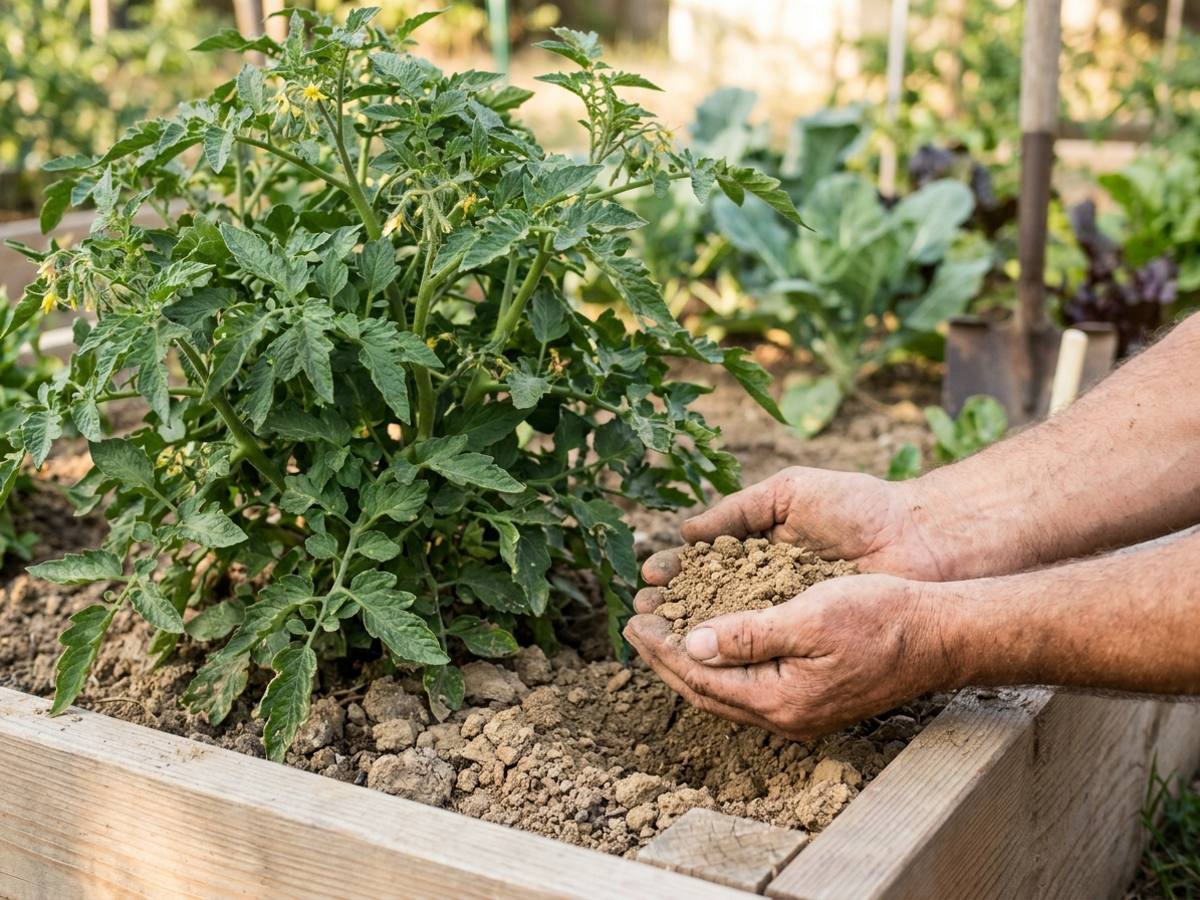
Root development follows a simple principle: water goes down, roots follow. When soil dries between waterings, tomato plants respond by extending their root systems deeper into the soil profile where moisture is more stable and temperatures cooler. Plants watered daily develop shallow, fibrous roots concentrated in the top 15cm of soil, whilst those watered less frequently push roots down 45cm or more.
University trials conducted across the US Midwest in 2025 compared two tomato groups over an eight-week summer period. Daily-watered plants showed 23 per cent more leaf wilting during peak heat and required more feeding (since nutrients leach away with frequent watering). Less-frequently watered plants, despite occasional wilting stress, produced 18 per cent more fruit and required significantly less supplemental fertiliser.
Shifting to this approach now gives roots time to develop deeper before late summer heat peaks:
Watch for temporary wilting during the hottest parts of the day, typically between 2pm and 4pm, this is normal stress that triggers deeper rooting. By late summer, you’ll notice less wilting overall as root systems establish themselves. The real payoff arrives in early autumn when harvest peaks and you’re managing far fewer disease problems from improved air circulation and stronger plants overall.