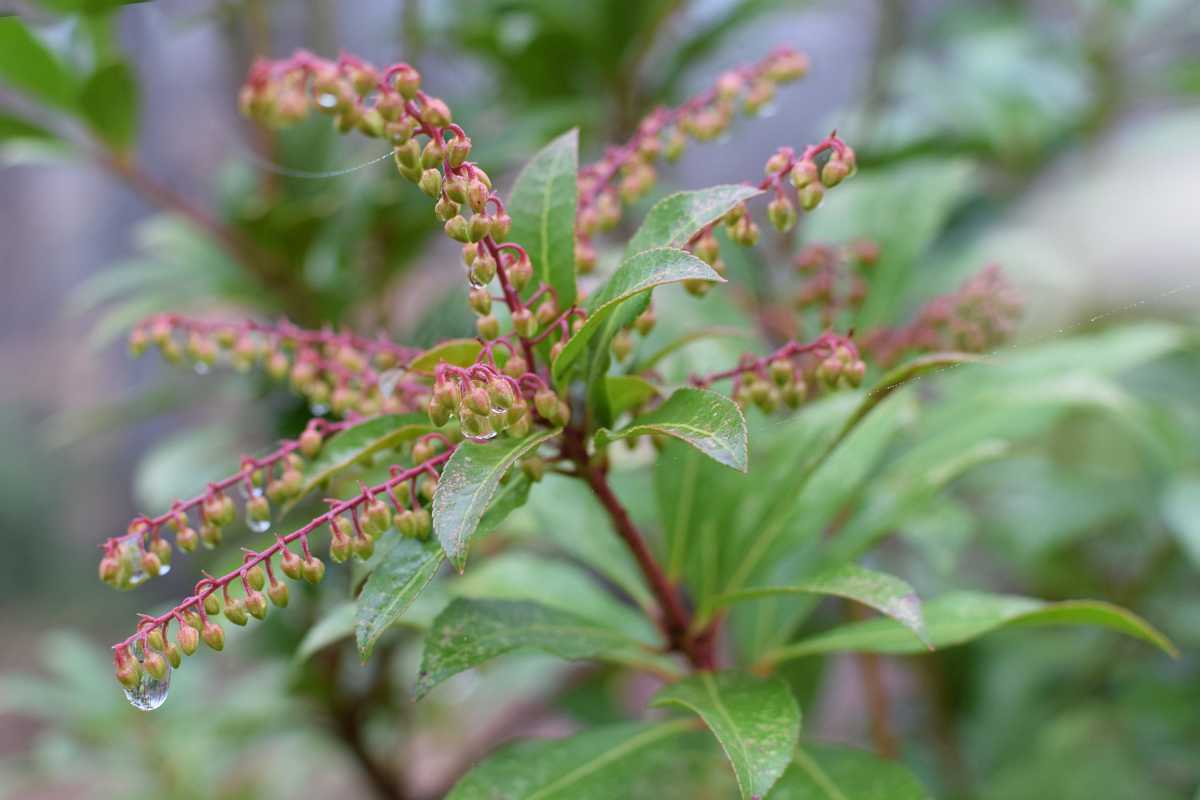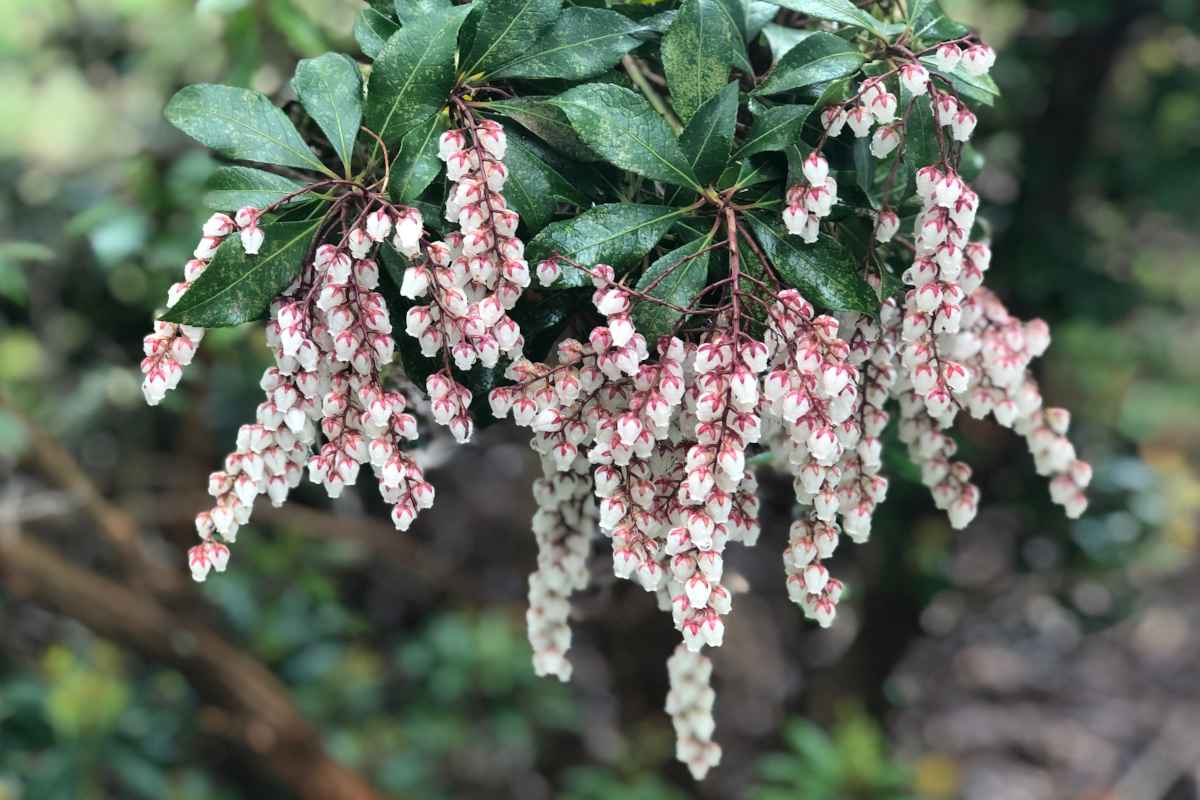
Pieris come in a multitude of varieties and put on a show all year round in the garden, either thanks to their evergreen leafage, rich in colors and changing with the seasons, or thanks to their spectacular abundant flower panicles.
Read also:
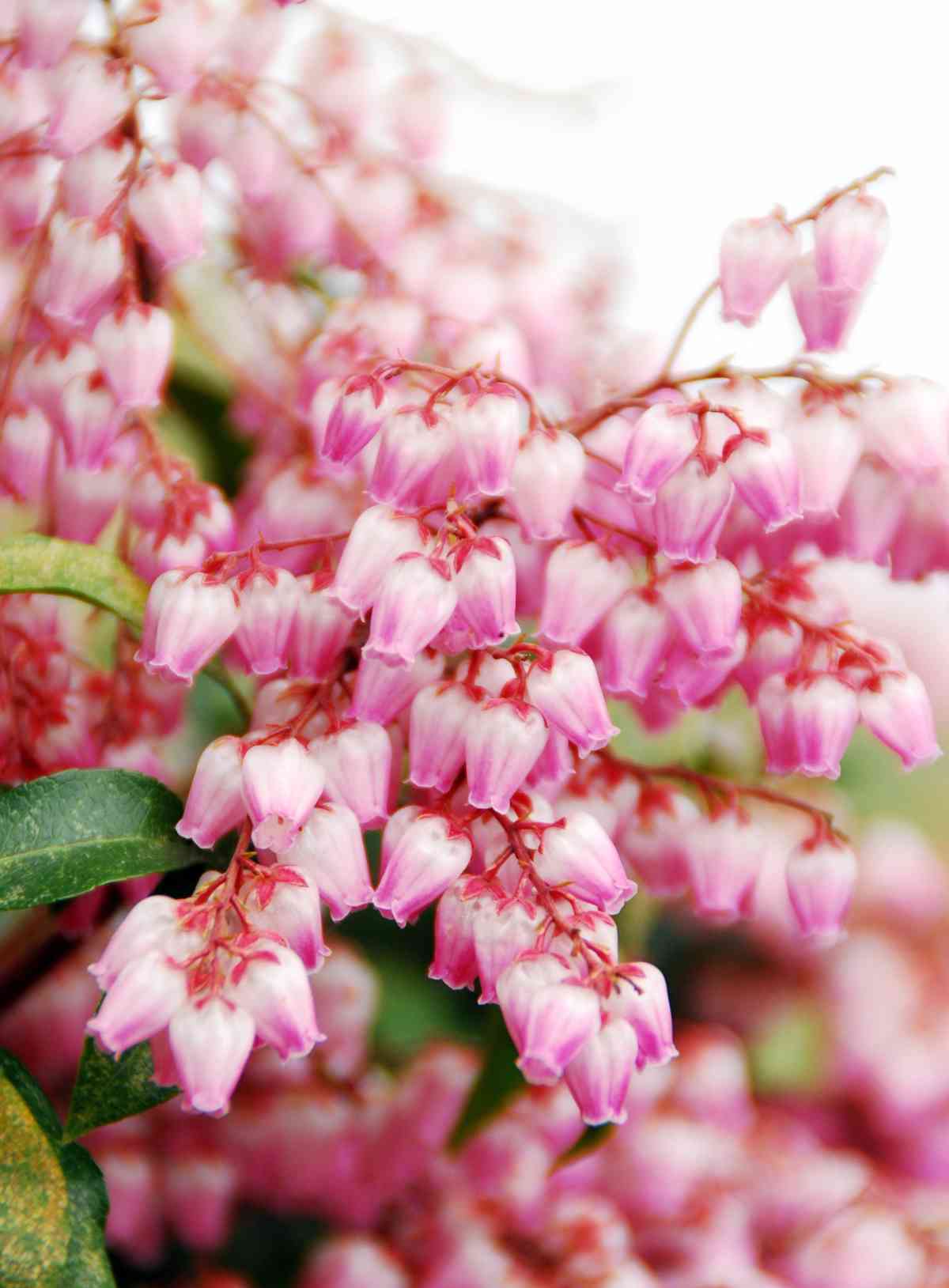
Flowers from the Pieris, which are like hundreds of little white, pink or red fragrant bells hanging from slender stems, are the wakeup call for spring. They embroider the dormant vegetation from March onwards and the blooming can last up until April or May.
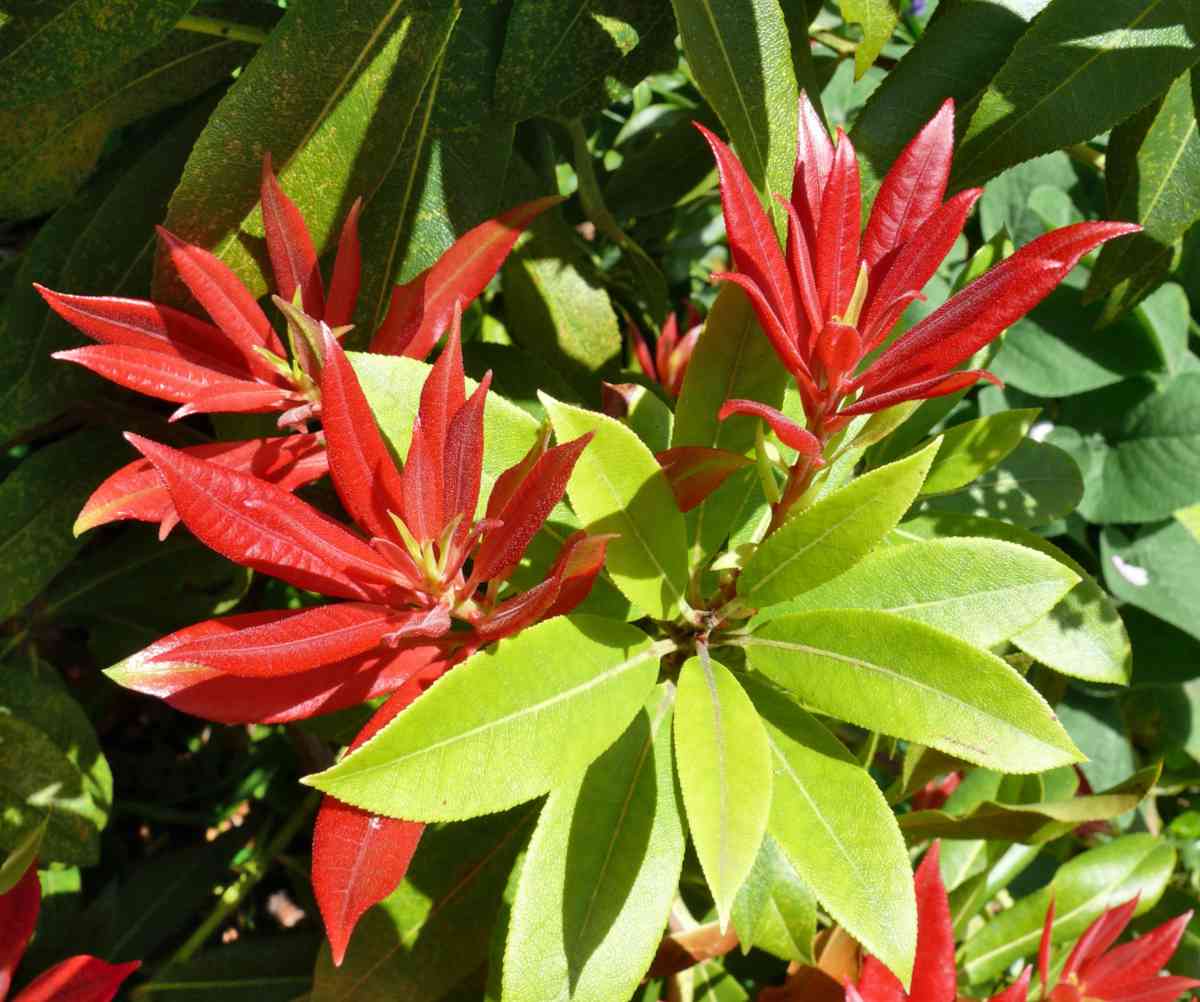
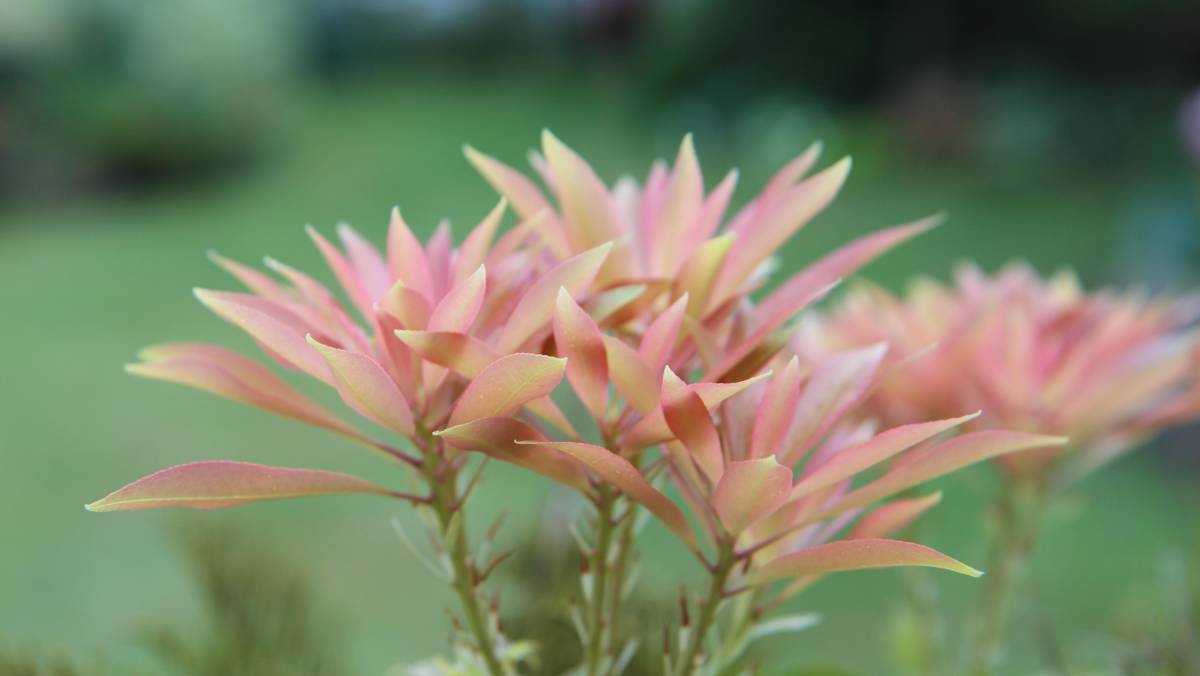
Early in spring, the young fresh shoots also appear, and these come in a rainbow of colors depending on the variety, like yellow, shrimp pink, coral orange, tan, red-brown, mahogany red, bright red, dull green and always looking tender and shiny new, which marks a stark contrast to the honest green of older leaves.
As days cycle by, these colors evolve to slowly become aquatic green, and finally a darker shade of green, mottled eventually.
In fall, the plant keeps calling for attention, waving its colored buds that are starting to form.
The genus numbers around a dozen species, two of which are very often cultivated: Pieris formosa and Pieris japonica. The former can grow up to 16 feet (5 meters) high. The latter, a very bushy shrub, never manages to grow any taller than 5 feet (1.5 meters) even after 10 years of growing.
The shrub is grown for a display that never really stops. Here is what each part of the year brings, and what the gardener has to watch at that moment.
| Season | Main display | Point to watch |
|---|---|---|
| Early spring | Young fresh shoots in yellow, shrimp pink, coral orange, tan, mahogany or bright red | Late frosts can scorch the new tips |
| March to May | Panicles of white, pink or red fragrant bells on slender stems | Remove wilted flowers at the end of spring |
| Summer | Shoot colours turn aquatic green, then a darker, mottled green | Light shade during the hottest hours of the day |
| Autumn | Coloured flower buds forming for the following spring | Main planting season, in heath or cool non-chalky soil |
| Winter | Evergreen leafage, rich in colour | Wrap containers in horticultural fleece so roots do not freeze |
Nothing here calls for heavy work: the shrub carries the display, the gardener simply keeps frost and weeds away from it.
Varieties differ mainly in the colour of the spring flowers, the shade of the young shoots and the eventual size of the bush. The table below sets out the forms most often found in garden centres and mainstream catalogues.
| Variety | Flower colour | Young shoot colour | Size and habit |
|---|---|---|---|
| Cavatine | Creamy white | Light green | Dwarf, dense |
| Valley Rose | Soft pink | Bronze-tinted | Medium, bushy |
| Katsura | Deep rose-pink | Wine red | Compact, spreading |
| Flaming Silver | White | Red, leaves later cream-margined | Medium, rounded |
| Mountain Fire | White | Fiery red | Medium, bushy |
| Valley Valentine | Deep rose-red | Bronze | Medium, upright |
| Little Heath | White, sparse | Pink-tinged, cream-variegated leaves | Dwarf, under 1 m |
| Variegata | White | Pink-tinged, cream-edged leaves | Medium, slow-growing |
| Dorothy Wyckoff | White from deep red buds | Bronze, reddening in winter | Medium, spreading |
| Debutante | Pure white, upright panicles | Pale green | Dwarf, under 1 m |
| Purity | Large pure white | Light green | Compact, good in pots |
| Christmas Cheer | White tipped deep pink, early | Pale green | Medium, upright |
Proper care for Pieris
Plant your pieris in fall or in March-April in heath soil or cool, non-chalky soil. Select a slightly shaded location.
In the open ground, pieris will effortlessly survive 5°F (-15°C) on the condition that it isn’t planted in drafty areas and that it grows in well-draining soil.
In garden boxes, protect the container with several layers of horticultural fleece, during the frosty season, in order to not have the roots freeze over.
Spring frosts can damage the colorful young shoots. In that case, wait for the vegetation to start growing again and snip off damaged tips.
As for maintenance, simply defend the trunk from invasive weeds, (especially bindweed) and remove wilted flowers at the end of spring.
M.-C. D.