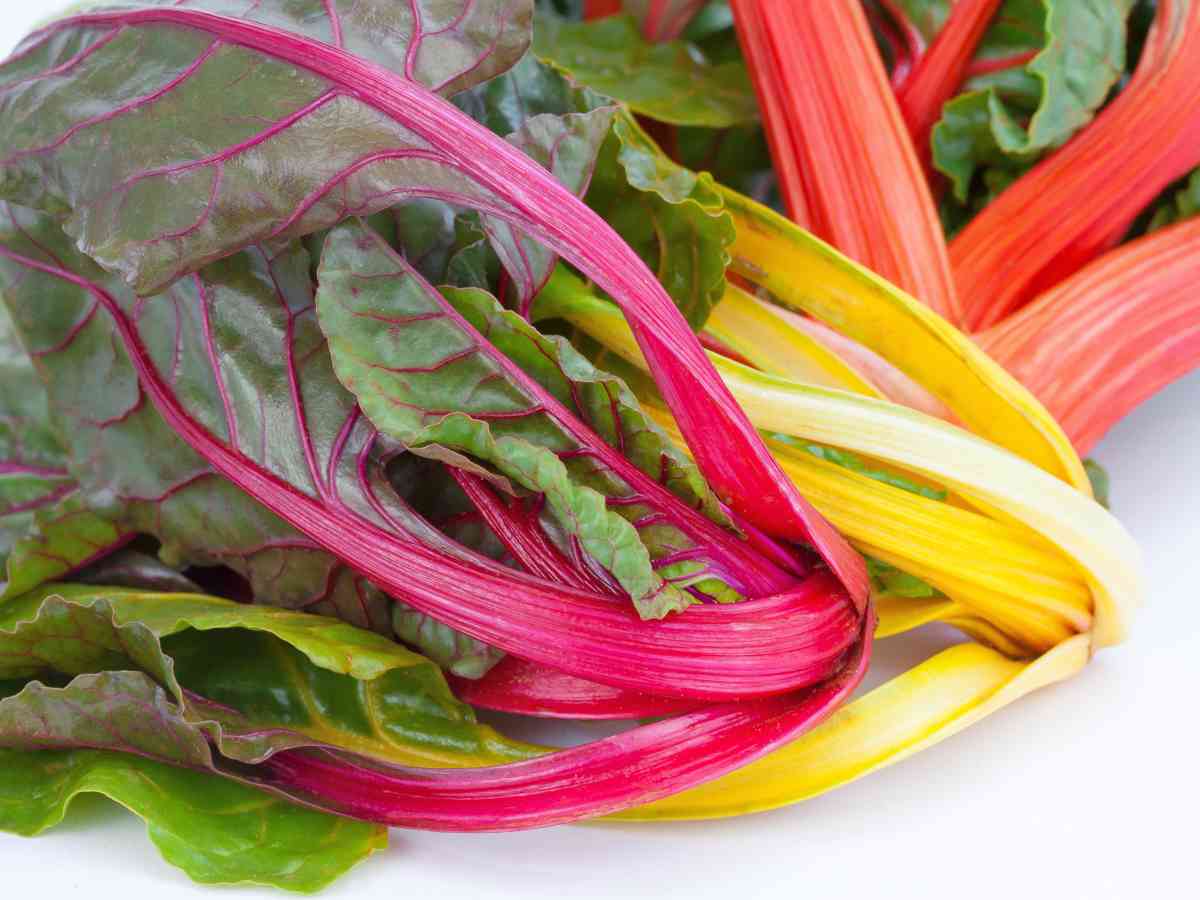
Silverbeet, also sold as chard, is the big-leaved cousin of beetroot: glossy green blades on thick white, yellow or crimson stalks. It gives two vegetables in one, costs almost nothing in calories, and takes ten minutes to cook. Here is what it contains, what herbal tradition makes of it, and how to actually put it on the table tonight.
Silverbeet at a glance
Item
Detail
Botanical name
Beta vulgaris (leaf forms, often listed as var. cicla)
Other names
Chard, Swiss chard, seakale beet, blette
Family
Chenopodiaceae (now placed in Amaranthaceae)
Origin
Mediterranean coastlines
Parts used
Green leaf blades; thick pale stalks (midribs)
Forms of use
Steamed or boiled greens, soup, gratin, pie filling, stir-fry, fresh juice, leaf poultice
Harvest season
Early summer to late autumn, and through winter in mild, frost-free gardens
Taste
Mild, earthy and faintly mineral leaves; stalks juicier, sweeter, close to celery
Two vegetables in one: tender green blades and thick pale stalks
What it is credited with
A gentle, bulky green. Mediterranean kitchen tradition treats silverbeet as a soothing, “refreshing” vegetable, served to people recovering from a heavy period of eating.
Comfortable digestion. Its fibre content is a fact; naturopathy credits the cooked leaves and stalks with encouraging regular, unhurried intestinal transit.
Emollient reputation. Old herbals class chard among the emollient vegetables, meaning soft and softening, used to pad out light broths.
Liver-friendly in the naturopathic sense. Because the plant contains betaine, naturopathy places silverbeet among the vegetables it recommends for people who feel they eat too richly.
Antioxidant standing. The leaves genuinely contain polyphenols, and herbalism counts them among the plants valued for their antioxidant contribution to a varied diet.
Topical folk use. Crushed leaf poultices have a long domestic reputation for soothing dry, tight or irritated patches of skin.
Everyday mineral support. Traditionally served to those eating little meat, for its magnesium, potassium and vitamin C.
How to use it
Preparing the two parts separately
Fold each leaf and slice along the midrib: green blades in one pile, white stalks in the other.
Stalks need roughly twice as long to cook as the blades. Start them first.
Wash in a full sink of cold water, not under the tap; grit hides in the ribbed stalks.
Slice stalks into finger-length batons, shred the blades like a coarse ribbon.
Steamed or boiled, the everyday version
Count a generous double handful of leaves per person: they collapse to about a quarter of their raw volume.
Boil the stalks 8 to 10 minutes in salted water, add the blades for the last 3 to 4 minutes.
Drain well, press out the water, then finish 2 minutes in a hot pan with olive oil and a crushed garlic clove.
Lemon juice at the end lifts the mineral taste; a spoon of cream softens it.
Soup, the gentlest form
One bunch of silverbeet, one potato, one onion, water to cover. Simmer 20 minutes, blend.
This is the preparation traditionally offered when people want something light after several rich meals.
A bowl in the evening, two or three evenings in the week, is the usual rhythm in kitchen custom, not a course of treatment.
Gratin and pies
Blanch 5 minutes, drain hard, layer with béchamel and grated cheese, bake 25 minutes until browned.
The sweeter stalks also work in a pastry case with egg, raisins and a little sugar, the old Provençal sweet chard tart.
Raw and juiced
Only the youngest, smallest inner leaves are worth eating raw, shredded fine into a salad.
Juiced, silverbeet is strong and earthy. Use a few leaves at most in a blend with apple, carrot or cucumber.
Leaf poultice, the traditional external use
Soften two or three clean leaves for a minute in hot water, let them cool to skin temperature.
Lay them flat on a dry, tight patch of skin, hold with a cloth, remove after 15 to 20 minutes.
Rinse afterwards. Use only on unbroken skin, and stop immediately if anything stings or reddens.
Forms of use compared
Form
How it is prepared
What it is used for
Steamed greens
Stalks 8-10 min, blades 3-4 min, finished in olive oil
The everyday side dish; the standard way to get the fibre and minerals
Soup or cream soup
One bunch with potato and onion, simmered 20 min and blended
The light evening meal naturopathy favours after rich eating
Gratin or pie
Blanched 5 min, drained, baked with béchamel or in pastry
Makes the vegetable appealing to children and reluctant eaters
Fresh juice
A few young leaves blended with apple, carrot or cucumber
Concentrated raw greens; strong flavour, small quantities only
Leaf poultice
Leaves softened in hot water, cooled, applied 15-20 min
Traditional external soothing of dry, tight skin patches
Frequently Asked Questions
The one thing to remember: split the leaves from the stalks, cook the stalks first and the blades last, and serve it as a simple side or a blended soup two or three times a week.
Do I have to separate the stalks from the leaves?
Yes, if you want both cooked properly. The thick pale stalks need roughly twice as long as the tender blades, so cooking them together leaves you with mush and crunch in the same pan. Slice along the midrib, start the stalks, and drop the shredded leaves in for the last three or four minutes.
Is silverbeet the same thing as spinach?
No. Silverbeet is Beta vulgaris, the same species as beetroot, while spinach is a different plant altogether. They swap places in recipes because both are mild leafy greens, and they share one practical point: both are high in oxalates, so the same caution applies if you are prone to kidney stones.
Can I eat it raw?
Only the youngest inner leaves, shredded finely into a salad. Older blades are tough and the stalks are fibrous. Juiced, silverbeet is strong and earthy, so use a couple of leaves in a blend rather than a glassful on its own.
What is silverbeet traditionally used for?
Mediterranean kitchen tradition treats it as a soothing, refreshing vegetable served in light broths and soups, and naturopathy credits it with supporting comfortable intestinal transit thanks to its fibre. Its polyphenol content puts it among the greens herbalism values for their antioxidant contribution to a varied diet. These are traditional and naturopathic uses, not treatments.
When can I pick it from the garden?
From early summer right through to late autumn, and in mild frost-free gardens all winter long. Take the outer leaves one at a time and leave the growing crown intact, and a single plant will keep producing for months.
This information is provided for general interest and reflects the traditional use of plants. It is not a substitute for medical advice. If you are on medication, pregnant, or in any doubt, ask a healthcare professional.
Written by Gaspard Lorthiois | Loves helping out, especially when it comes to growing things. Worked in herbal medicine, runs a farm, and dabbles in tech. Master's degree and engineer.