Home » Health » Melon: how to use the flesh, seeds and rind, and what tradition makes of it
Melon: how to use the flesh, seeds and rind, and what tradition makes of it
·
0
Melon is mostly water, mildly sweet, and cheap by the crate at the height of its season. This page looks at what is actually in it, how to pick one that is ripe, and what herbalists and naturopathy have traditionally made of the flesh, the seeds and even the rind. Useful if you have a whole melon and only ever eat it raw.
Midsummer to early autumn, depending on variety and climate
Taste
Sweet, watery, faintly musky; a bitter note means the fruit should be discarded
A short story of melon
Its exact origin is still debated, though an African origin is considered most likely.
Egyptians were growing melon by 500 BC.
King Charles the VIIIth is credited with bringing it back to France from Italy.
Queen Jeanne the IInd of Naples is said to have laid thin slices of melon on her face for the look of her skin — one of the oldest melon beauty habits on record.
What it is credited with
Hydration and fluid balance. Because the flesh is largely water, naturopathy treats melon as a refreshing, gently diuretic summer food and recommends it when the weather is hot.
Comfortable digestion. Its fibre gives it a traditional reputation as a mildly laxative fruit; in home herbalism it has long been eaten to help sluggish transit along.
Skin appearance. Old European cosmetic tradition, from Queen Jeanne onwards, credits melon pulp and juice with softening and brightening the complexion.
Summer skin and tanning. Naturopathy classes beta-carotene-rich foods — melon, carrot, apricot — as “sun preparation” foods eaten in the weeks before the strong-light season.
Everyday tone and vitality. Herbal food tradition values it as a light, mineral-rich fruit for people with little appetite in the heat.
Eyes and ageing. Folk dietary habit associates deep-orange fruit and vegetables with keeping the eyes comfortable as the years pass.
Itchy, reactive skin. Cooling mashed melon pulp has a traditional reputation as a soothing topical application.
How to use it
Eating it raw
Cut a ripe melon into wedges or cubes; half a small melon is an ordinary serving for one person.
Take it out of the fridge 20 to 30 minutes before eating. Cold flesh is harder on a sensitive gut, and the aroma only comes out at room temperature.
Naturopathy generally advises eating it on its own, at the start of a meal or between meals, rather than at the end of a heavy one.
Juice and smoothie
Blend the flesh of half a melon with a few mint leaves and a squeeze of lemon; drink within the hour.
No need for added sugar — ripe melon is sweet enough on its own.
A glass first thing in the morning is the classic naturopathic “hydrating” habit in hot weather.
Toasted melon seeds
Scoop out the seeds, rinse them and pat them dry.
Fry them briefly in a pan with a little olive oil, stirring, until they crackle and colour.
Salt at the end and scatter over mixed salads for crunch.
Warm and cooked
Candied melon: lay slices in a hot pan with a knob of butter, add a spoon of sugar and let it caramelise a few minutes. A dash of spirit and a flambé finish is optional.
Melon rind jam: weigh the trimmed rinds, add the same weight of sugar, a splash of water and the juice of one lemon. Simmer on very low heat for about two hours, then pot up.
Savoury skewers: melon cubes with ham, cherry tomatoes and mozzarella — the sweet-salty classic.
On the skin
Gentle cleansing paste: mash the pulp of half a melon with 3 tablespoons of full-fat cottage cheese. Spread on the face, avoiding the eyes, leave 10 minutes and rinse with cool water.
Glow lotion: soak a cotton pad in fresh melon juice and sweep it over clean skin; rinse after a few minutes.
Keep any leftover preparation in a sealed jar in the fridge and use it within two days.
Patch-test on the inside of the forearm first, especially if your skin reacts easily.
Which part of the melon, and what to do with it
Part
Preparation
Traditional use
Ripe flesh
Raw in wedges, cubes or skewers, at room temperature
Valued in naturopathy as a hydrating, lightly fibrous summer food
Juice
Blended and drunk fresh, or dabbed on with cotton
Drunk for refreshment; applied for the look of the complexion
Seeds
Rinsed, dried, pan-toasted in olive oil, salted
Eaten as a crunchy garnish; a long-standing kitchen habit in melon-growing regions
Rind
Simmered two hours with equal weight of sugar and lemon juice
Turned into jam — the traditional no-waste use of the fruit
Frequently Asked Questions
The one thing to remember: buy a melon whose stalk end gives easily, let it sit out of the fridge for half an hour, and use the seeds and rind instead of binning them.
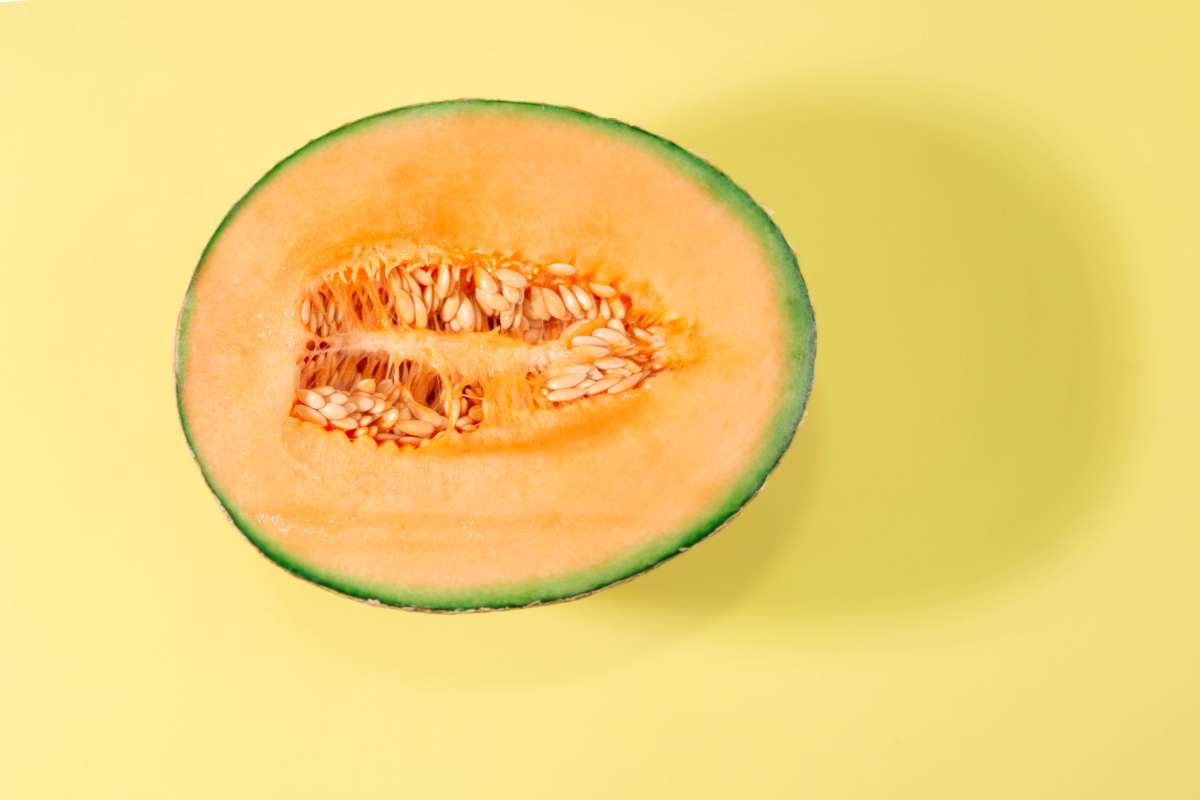
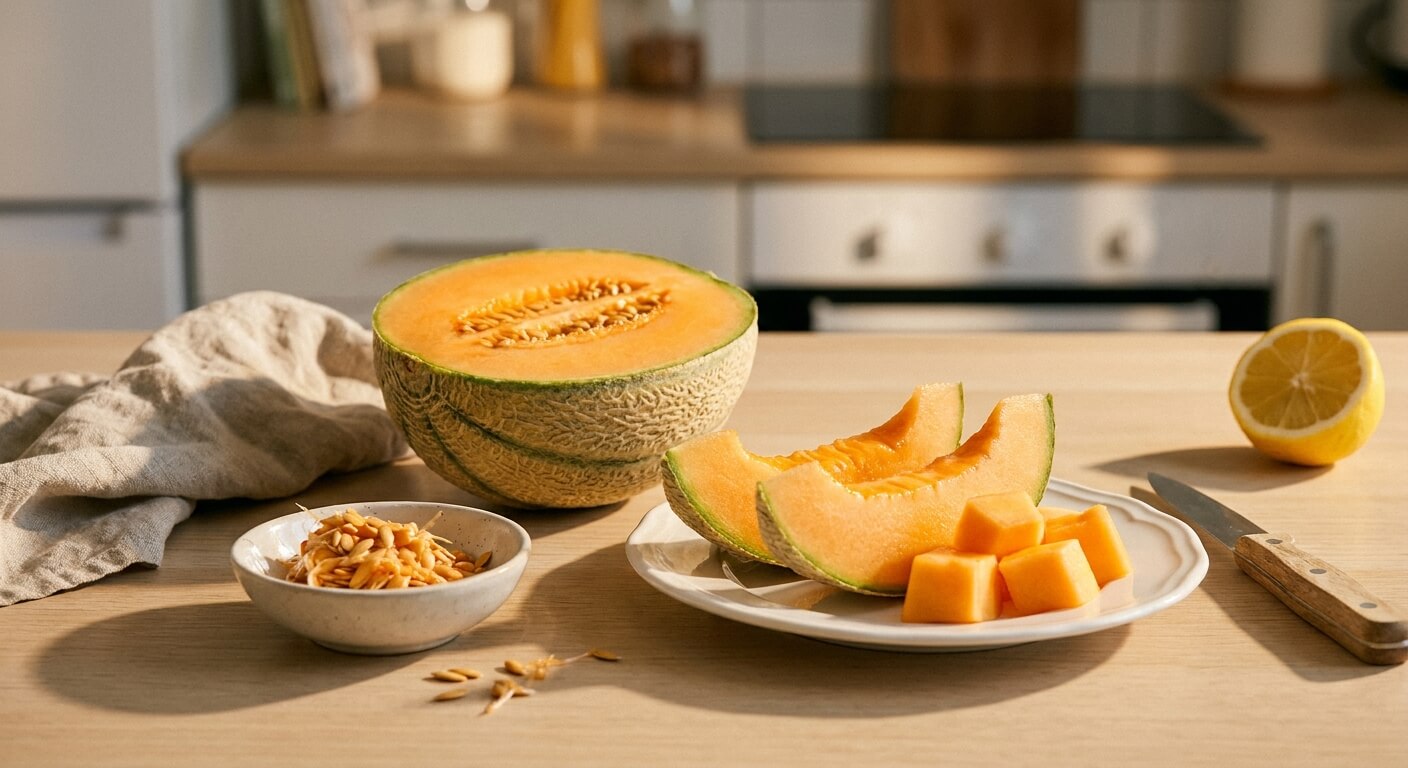
Ripe flesh in wedges, tempered, with seeds kept for toasting
How do I tell if a melon is ripe?
Press gently around the stem: on a ripe fruit it detaches easily or gives under the thumb. The melon should also feel heavy for its size and smell sweet at the stalk end. A hard, scentless melon will not improve much once cut.
Should melon be eaten cold or at room temperature?
Room temperature, or barely cool. Straight-from-the-fridge melon is harder on a sensitive gut and its aroma stays shut down. Take it out about half an hour before serving.
Can I really eat the seeds and the rind?
Yes. Rinse the seeds, dry them and toast them briefly in olive oil with a pinch of salt for a crunchy salad topping. The rinds simmer down into jam with an equal weight of sugar, a little water and the juice of a lemon, over about two hours on very low heat.
Is melon suitable for someone watching their weight?
It is a light fruit at roughly 32 kcal per 3.5 oz (100 g), mostly water, which is why naturopathy places it among the refreshing summer foods. It is still fruit sugar, so portion size matters, and anyone following a diet set by a health professional should stick to that advice.
What is melon used for in traditional beauty care?
Mashed pulp mixed with full-fat cottage cheese is the old cleansing and softening paste, applied to the face away from the eyes and rinsed off after ten minutes. Fresh juice dabbed on with cotton has a long-standing reputation for brightening the look of the complexion. Patch-test first.
This information is provided for general interest and reflects the traditional use of plants. It is not a substitute for medical advice. If you are on medication, pregnant, or in any doubt, ask a healthcare professional.
Written by Gaspard Lorthiois | Loves helping out, especially when it comes to growing things. Worked in herbal medicine, runs a farm, and dabbles in tech. Master's degree and engineer.