Home » Health » Great mullein: traditional uses, teas and cautions
Great mullein: traditional uses, teas and cautions
·
0
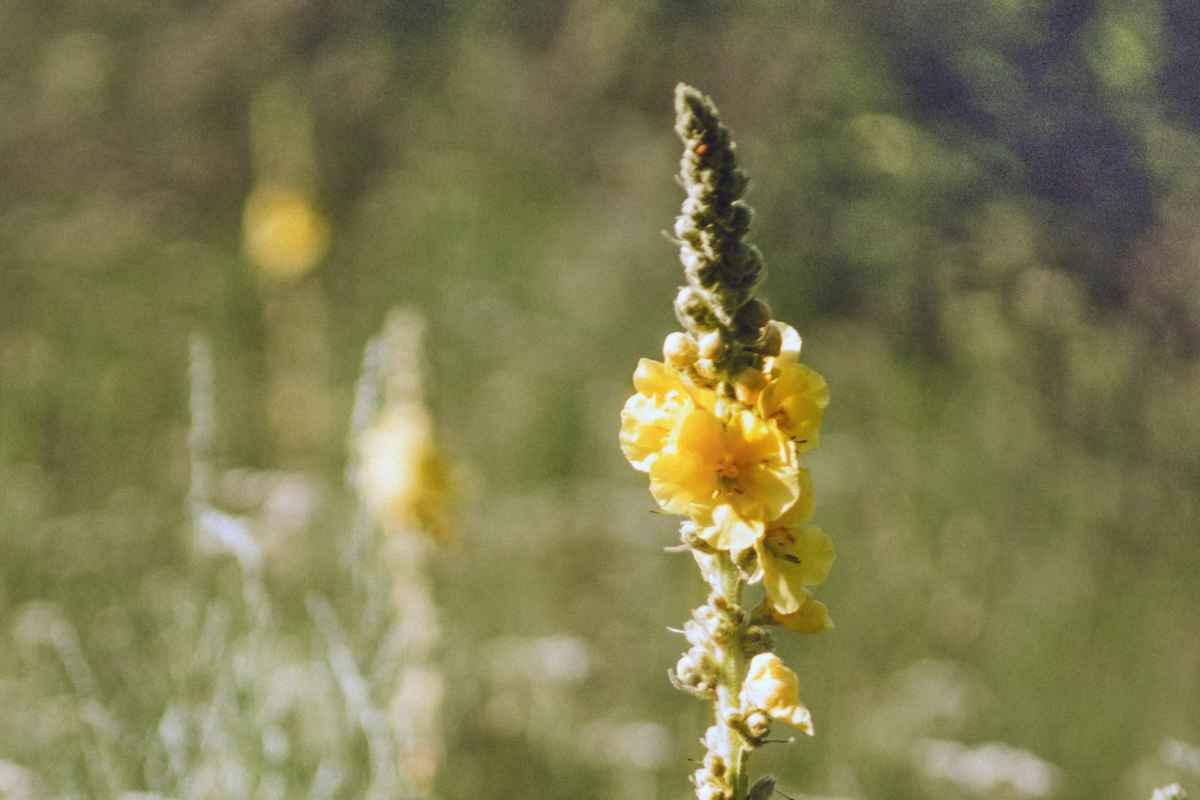
Great mullein is the tall, woolly spire you see on roadside banks and dry mounds, topped with soft yellow flowers. Herbalists keep the flowers and leaves, not the seeds, and turn them into gentle, honeyed infusions and oil macerates. This page covers which part to pick, how to brew and filter it, what tradition credits it with, and who should leave it alone.
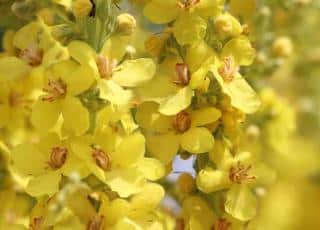
The golden yellow flowers are the part herbalists keep
Great mullein at a glance
Item
Detail
Botanical name
Verbascum thapsus
Family
Scrophulariaceae
Other names
Common mullein, velvet dock, Our Lady’s candle, Saint Fiacre’s herb
Flowers from midsummer to late summer; leaves from late spring onwards
Taste
Mild and faintly sweet, honeyed, a little earthy; takes honey well
A plant with a long paper trail
Greek and Roman writers credited the plant with magical powers and used it to ward off curses.
Dioscorides, the Greek botanist, recorded the use of the roots for chest and breathing complaints.
In the 11th century, Saint Hildegard favoured the flowers and leaves when the voice grew hoarse.
In the Middle Ages, the sap was collected for external complaints of the skin and the seat.
In the 18th century the name “great mullein” appears in the Trévoux Dictionnary, listed among the soothing herbs of the household.
In North America, several native peoples smoked the dried leaves as a breathing remedy.
What it is credited with
A soothing, coating tea. Herbalism attributes the softening effect to the mucilage, which is traditionally said to lay a protective film over irritated throat tissue.
A loosening, expectorant reputation. Naturopathy credits the saponins with helping to shift thick, stubborn mucus, which is why the flower sits in so many old chest teas.
Dry, tickly coughs. Traditional herbal use is for the scratchy night-time cough and the hoarse, worn-out voice that follows a cold.
Comfort in the gut. Folk practice used the emollient infusion for cramping and general digestive discomfort.
Flower oil for the skin. Flowers macerated in olive oil have a long reputation in country herbalism for chapped, irritated or itchy skin.
An ear-oil tradition. The same flower oil, warmed, was a classic household remedy for earache — a traditional use only, and never to be poured into an ear that may be perforated or discharging.
The “four-flower” chest teas. Mullein flower is one of the classic partners in old soothing blends alongside mallow, marshmallow, coltsfoot, violet, poppy and cudweed.
A gentle, relaxing cup. The infusion has a reputation for being mildly calming in the evening, taken warm and sweetened.
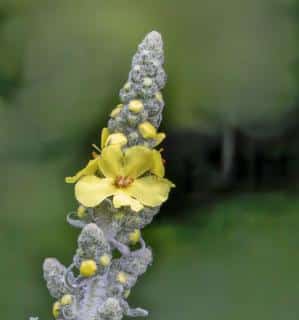
Woolly leaves and flowers: mucilage and saponins together
How to use it
The everyday flower infusion
Bring a mugful of water to the boil and take it off the heat.
Add a heaped teaspoon of dried flowers per cup.
Cover and leave to steep for about a quarter of an hour.
Filter through a fine cloth or paper filter — this step is not optional, see the cautions.
Sweeten with honey. Up to three cups spread across the day is the usual household habit, and short courses only.
A chest-tea blend
Mix two parts dried mullein flowers, three parts fennel seed and two parts dried peppermint leaf.
Store the mix in an airtight jar away from light.
Use a level tablespoon of the blend per mug of just-boiled water.
Cover, steep no more than ten minutes, filter well, add honey and drink warm.
Leaf and flower decoction for outside use
Simmer a small handful of dried flowers in a third of a litre of water for a few minutes.
Let it cool to lukewarm, then filter twice.
Use as a compress or a wash on itchy, irritated skin.
Flower oil macerate
Fill a small clean jar loosely with fully dry flowers.
Cover completely with olive oil, cap, and leave on a sunny windowsill for two to three weeks.
Strain through cloth, bottle in dark glass, and keep in a cool cupboard.
Use a few drops on the skin. Damp flowers will spoil the oil, so dry them thoroughly first.
Milk poultice
Simmer dried leaves in a little milk for around five minutes.
Let them cool to a comfortable warmth, wrap in clean gauze and apply.
Discard after a single use.
Ready-made forms
Tincture and micronised powder capsules are sold in pharmacies and herbalist shops.
Follow the maker’s instructions on the packet, and keep to short courses.
Forms of great mullein compared
Form
Preparation
Traditionally used for
Flower infusion
Just-boiled water poured over dried flowers, steeped a quarter hour, filtered
Dry, tickly coughs and a hoarse voice
Decoction
Flowers simmered a few minutes, cooled, double-filtered
Compresses and washes on itchy skin
Oil macerate
Dry flowers steeped in olive oil two to three weeks, strained
Chapped skin; the old household ear oil
Milk poultice
Dried leaves simmered in milk, applied warm in gauze
Local skin discomfort
Tincture or capsules
Bought ready-made, taken as the label states
Convenience when travelling
Frequently Asked Questions
The one thing to remember: brew a heaped teaspoon of dried flowers per cup, steep a quarter of an hour, and filter it twice — the hairs are the whole problem with this plant.
Which part of great mullein do I actually use?
The flowers above all, and the leaves as a second choice. The seeds are never used and must be removed from any infusion, capsule or extract, since those of some varieties can be poisonous. Buying dried flowers from a herbalist or pharmacy takes care of that for you.
Why does everyone insist on filtering it?
The flowers and stamens carry fine hairs that scratch the throat, which rather defeats the object of a soothing cup. Pour the infusion through a paper filter or a piece of clean muslin, not just a wide tea strainer. Filtering twice is better than once.
What does it taste like?
Mild and faintly sweet, honeyed, with a slightly earthy edge. It is one of the easier herbal teas to drink on its own. It takes honey well and pairs comfortably with fennel seed and peppermint.
Can children or pregnant women drink it?
No. The European Medicines Agency contra-indicates great mullein for children under twelve, for pregnant women and for nursing mothers. It also advises against courses lasting longer than seven days for anyone.
When should I pick the flowers?
From midsummer to late summer, as they open in succession up the stem, choosing a dry morning. Pick by hand, only the freshly opened flowers, and dry them quickly in shade with air moving around them. Store them airtight, in the dark.
This information is provided for general interest and reflects the traditional use of plants. It is not a substitute for medical advice. If you are on medication, pregnant, or in any doubt, ask a healthcare professional.
Written by Gaspard Lorthiois | Loves helping out, especially when it comes to growing things. Worked in herbal medicine, runs a farm, and dabbles in tech. Master's degree and engineer.