Home » Health » Eucalyptus leaves: traditional uses, infusions and everyday cautions
Eucalyptus leaves: traditional uses, infusions and everyday cautions
·
0
Eucalyptus leaves smell of camphor and cool menthol, and that scent is the whole point: it is what herbalists have always reached for when a chest feels heavy and a throat feels raw. This page covers which part to pick, how to brew it, how to steam with it, what it tastes like, and who should leave it alone.
Eucalyptus at a glance
Item
Detail
Botanical name
Eucalyptus globulus
Family
Myrtaceae
Part used
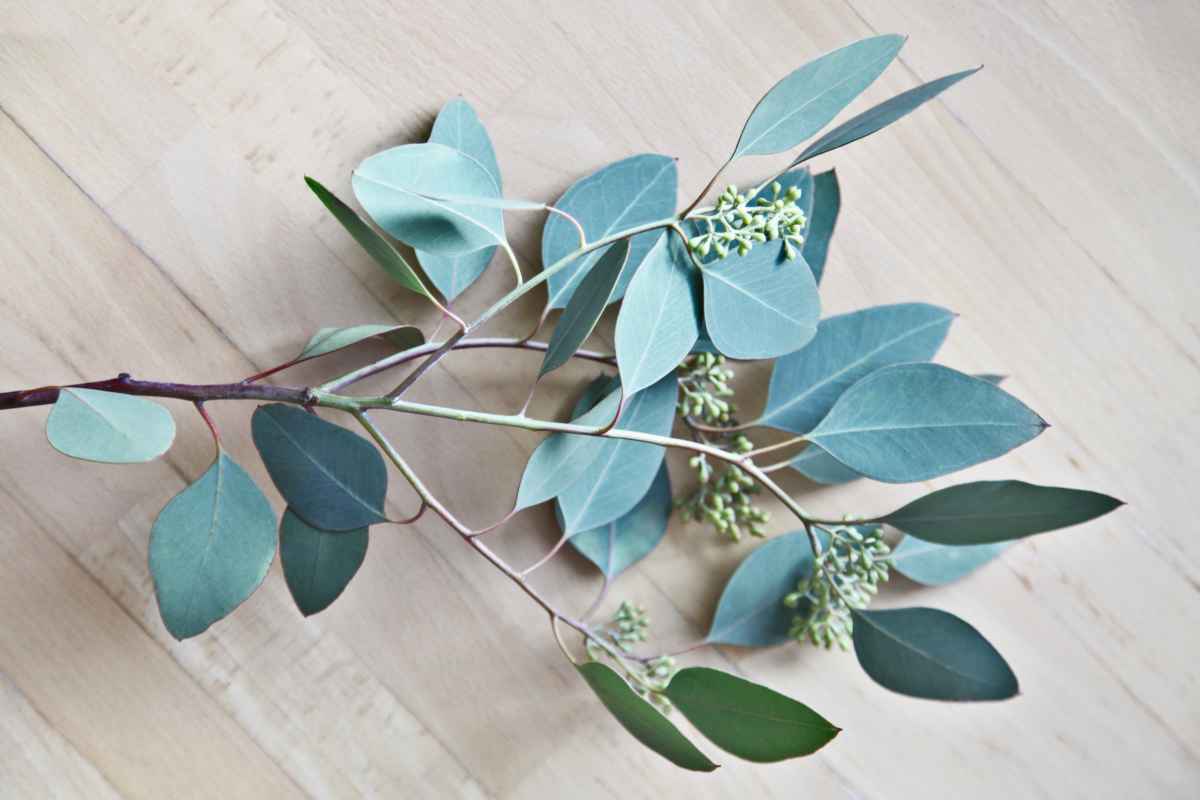
Mature leaves (the adult, sickle-shaped ones), fresh or dried
Leaves can be picked all year; traditionally gathered late summer to early autumn, when the foliage is most strongly scented
Taste
Bitter, resinous, camphor-cool, with a long menthol finish; needs honey
What it is credited with
Herbalism has long classed eucalyptus leaf as a respiratory plant, used when the chest feels blocked and breathing feels stuffy.
Traditional herbalists describe the leaf infusion as an expectorant, taken to help loosen thick mucus so it can be cleared more easily.
In traditional European herbalism, eucalyptus infusions and gargles were used to ease the discomfort of a cold, a sore throat or a rough, congested winter chest.
Naturopathy credits steam inhalation over eucalyptus leaves with a clearing, decongesting feel around the nose and sinuses.
The leaf has a reputation as a bitter, appetite-rousing digestive, drunk after meals in small amounts.
Folk practice also treated it as astringent and calming to a griping gut, though bitter aromatic plants are used sparingly in that role.
Diluted in a carrier oil such as sweet almond, the essential oil is traditionally rubbed into stiff shoulders, tired backs and aching joints for its warming-then-cooling sensation.
Applied to the temples in heavily diluted form, it has a long-standing reputation for easing a tense, heavy head.
Eucalyptus is a well-known insect repellent; the trees were historically planted around marshy ground for that reason.
In the garden, eucalyptus essential oil is used as a mite treatment, including against red spider mite and its eggs.
How to use it
The leaf infusion
Crumble one teaspoon of dried leaves (or two or three torn fresh leaves) per cup.
Pour on water just off the boil, cover the cup, and steep 8 to 10 minutes. Covering matters: the aromatics leave with the steam.
Strain. Drink one cup, up to two or three in a day, and not for more than a week at a stretch.
It is frankly bitter. Honey, a slice of lemon or a little liquorice root makes it drinkable.
Steam inhalation
Put a small handful of leaves in a bowl, cover with hot water, and let it stand a minute so the steam is warm rather than scalding.
Lean over the bowl at arm’s length, a towel over your head, eyes closed. Five minutes is plenty.
Best done in the evening, then stay indoors in the warm afterwards.
Never do this for a young child, and stop at once if the steam makes you cough or tighten.
Gargle
Make the infusion a little stronger, let it cool to lukewarm, then gargle and spit it out.
Two or three times a day while a throat feels scratchy.
Massage oil
Count a couple of drops of essential oil per tablespoon of sweet almond, sunflower or olive oil.
Rub over the chest, back or a stiff joint. Wash your hands afterwards and keep it away from eyes.
Patch-test on the inner forearm the day before if your skin is reactive.
Room diffusion
A few drops in a diffuser or in a bowl of hot water scents a room sharply and cleanly.
Diffuse in short bursts, in a ventilated room, and not in a room where a baby, a small child or a pet sleeps.
Forms of eucalyptus and what each is used for
Form
Preparation
Traditionally used for
Infusion
One teaspoon dried leaf per cup, covered, 8–10 minutes
A congested chest, a bitter digestive drink after meals
Steam inhalation
A handful of leaves in a bowl of hot water, five minutes
That blocked-nose, stuffy-sinus feeling
Gargle
Stronger infusion, cooled to lukewarm, spat out
A rough, scratchy throat
Diluted oil
Two drops essential oil per tablespoon carrier oil
Rubbing into stiff joints, tired backs, chest
Diffusion
A few drops in a diffuser, ventilated room
Freshening a room in the cold season
Frequently Asked Questions
The one thing to remember: a covered infusion of dried leaves, sweetened with honey, is the gentlest way to meet this plant — the essential oil is a different, far stronger beast.
A covered infusion of dried eucalyptus leaves, sweetened with honey
Which part of the eucalyptus do I actually pick?
The mature adult leaves: leathery, narrow and curved like a blade. Skip the soft rounded juvenile leaves, which are less aromatic. Leaves can be gathered all year, though tradition favours late summer to early autumn.
What does eucalyptus tea taste like?
Bitter and resinous, with a strong camphor coolness that lingers at the back of the throat. Most people find it needs honey, lemon or a little liquorice root. One teaspoon of dried leaf per cup, covered for 8 to 10 minutes, is enough — brewing it stronger only makes it harsher.
Can I use eucalyptus for my child’s cold?
No, not with the essential oil and not with steam inhalation. Eucalyptus vapours can cause serious breathing trouble in babies and young children, and the oil should never be applied to their face, chest or back. Ask a pharmacist or doctor for something age-appropriate instead.
Is it safe to rub eucalyptus oil straight onto my skin?
Never neat. Dilute a couple of drops in a tablespoon of sweet almond or another carrier oil, and patch-test on the inner forearm first if your skin reacts easily. Keep it well away from eyes and wash your hands after the massage.
Does eucalyptus really keep insects away?
It has a long-standing reputation as an insect repellent, and the trees were historically planted around marshy ground for that reason. In the garden, the essential oil is also used against mites, including red spider mite and its eggs.
This information is provided for general interest and reflects the traditional use of plants. It is not a substitute for medical advice. If you are on medication, pregnant, or in any doubt, ask a healthcare professional.
Written by Gaspard Lorthiois | Loves helping out, especially when it comes to growing things. Worked in herbal medicine, runs a farm, and dabbles in tech. Master's degree and engineer.