Home » Health » Celery: which part to use, how to prepare it, and when to be careful
Celery: which part to use, how to prepare it, and when to be careful
·
0
Celery (Apium graveolens) is two plants in one kitchen: crisp green stalks you eat, and tiny brown seeds you brew. The stalks bring water, fibre and a salty-green crunch; the seeds bring a warm, bitter kick and a long history in Western herbalism. Here is what each part is good for, how to prepare it tonight, and who should go easy.
Stalks and leaves from late summer to mid-autumn; seeds from late summer to early autumn
Taste
Stalks: salty, green, slightly bitter and very crunchy. Seeds: warm, peppery, strongly bitter
Firm, pale-based stalks are the ones to chop raw
What it is credited with
A watery, low-calorie food: nutritionally, celery is mostly water and fibre, which is why it turns up so often in light, filling salads.
A diuretic reputation: herbalists have long classed celery, and above all celery seed, among the diuretic plants, used to encourage the flow of water through the body.
Digestive support: naturopathy credits the seeds with stimulating appetite and digestion, and traditional use calls on them to make trapped wind easier to pass.
Aching, stiff joints: in traditional Western herbalism, celery seed was one of the classic remedies taken to ease the discomfort of gout and rheumatic stiffness.
A warming, circulatory plant: old herbals describe celery seed as bringing warmth to muscles and joints.
Calm before bed: aromatherapy credits celery seed essential oil with a heavy, calming, sedative scent, used in blends for winding down in the evening.
A salt substitute: cooks and naturopaths alike use ground celery seed or dried leaf to season food with less added salt.
How to use it
Raw stalks, the everyday way
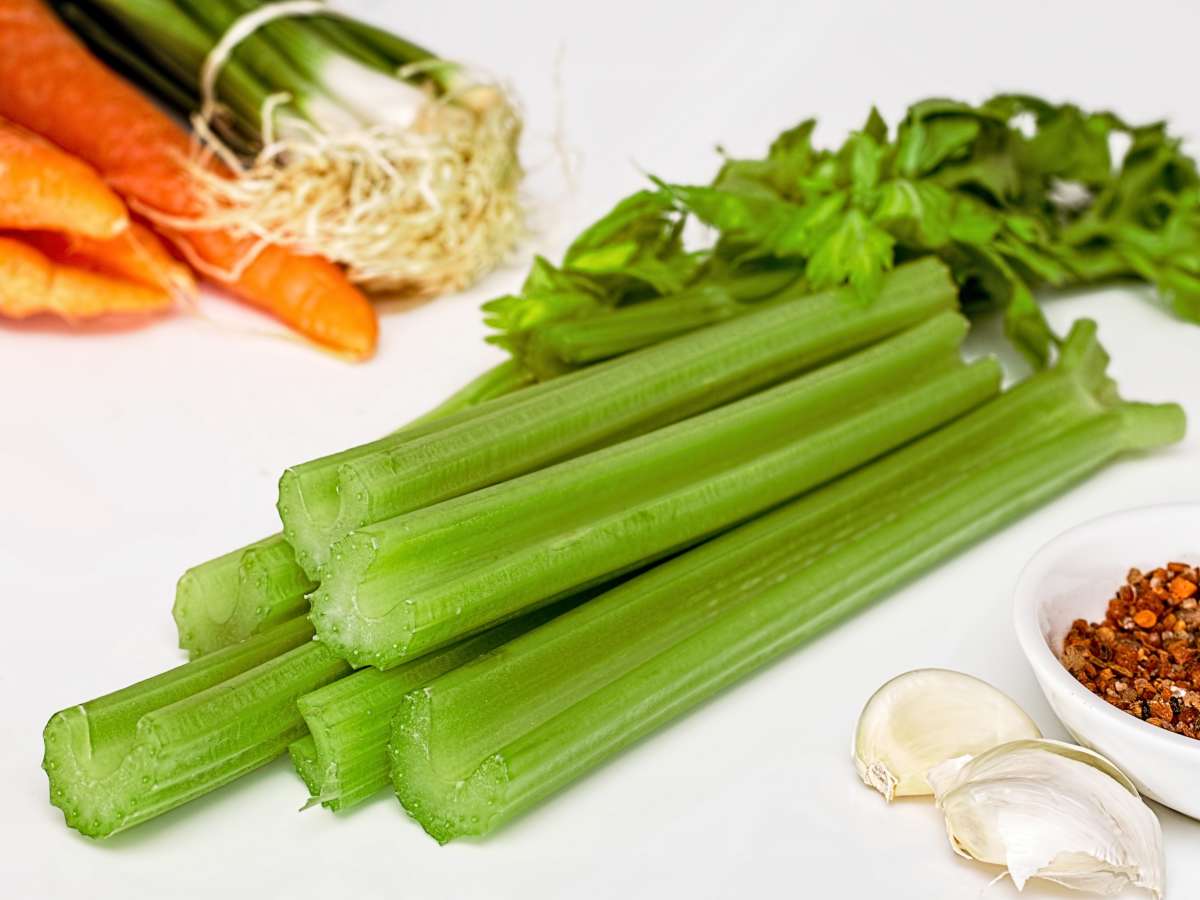
Snap off the stalks, rinse under cold water, and pull away any tough strings from the outer ribs with a peeler.
Cut into sticks and eat plain, or with hummus, nut butter or a soft cheese dip.
Slice thinly across the rib for salads: thin slices are far less fibrous than long chunks.
Two or three stalks a day is the usual everyday amount in a naturopathic eating plan.
Cooked
Sweat chopped stalks in butter or olive oil over low heat for 10 to 15 minutes, until soft and sweet.
Add the base of the head and the leaves to stocks, soups and lentil dishes; the leaves carry the most flavour.
Celery is a core aromatic in marinière mussels, and in most soup bases alongside onion and carrot.
Celery seed infusion
Lightly crush about a teaspoon of seeds to release the aroma.
Pour a cup of just-boiled water over them, cover, and leave for 10 minutes.
Strain and drink after a meal. One to two cups a day is the traditional pattern.
The taste is bitter and strongly aromatic; a slice of lemon or a little honey softens it.
Herbalists usually suggest short runs — a week or two — rather than drinking it continuously.
Juice
Juice 4 or 5 rinsed stalks with their leaves; drink fresh, within the hour.
A small glass is enough. It is very green and very salty on the palate — apple, cucumber or lemon balance it.
Essential oil
Aromatic use only: one or two drops on a tissue, or in a diffuser for 20 minutes in the evening.
Never swallow it, and never apply it neat to the skin.
Forms of celery compared
Form
Preparation
Traditionally used for
Raw stalks
Rinse, de-string, slice or cut into sticks
A light, watery, filling food with crunch
Cooked stalks and leaves
Sweated in fat 10–15 min, or simmered in stock
Gentle flavour base, easier on sensitive stomachs than raw
Seed infusion
1 tsp crushed seeds, covered, 10 min in hot water
Digestion, wind, and the plant’s old diuretic reputation
Ground seed / celery salt
Milled seeds, alone or with salt
Seasoning with less salt; appetite and digestion
Essential oil
Diffused or on a tissue, aromatic use only
Calming evening blends
A note on growing it
Celery wants full sun or part shade, in humus-rich soil that stays cool and moist but drains well.
It grows happily in a large pot or garden box, as long as the compost never dries out.
Watch for celery fly, which stains and stunts the leaves, and for slugs, rust and downy mildew.
The one thing to remember: eat the stalks for their crunch and water content, and save the crushed seeds for a short course of after-dinner infusion.
Which part of celery should I actually use?
The stalks and leaves are the food part: raw, cooked, or juiced. The seeds are the herbalist’s part, brewed as an infusion or ground as seasoning. The root, sold as celeriac, is used like any other winter root vegetable.
Can I drink celery juice every day?
A small glass of fresh juice is a common naturopathic habit, and it is best drunk within the hour of juicing. Because celery has a strong diuretic reputation, herbalists tend to suggest short runs rather than an indefinite daily glass. If you take diuretics, blood pressure or kidney medication, ask a healthcare professional first.
Is celery salt the same as celery seed tea?
No. Celery salt is ground celery seed blended with table salt, and it is a seasoning. For an infusion you want plain celery seeds, lightly crushed and steeped in covered hot water for 10 minutes. Using celery salt in a cup would give you a mouthful of brine.
Why should I stay out of the sun after eating celery?
The leaves and roots contain compounds that enhance photosensitivity, meaning your skin reacts more strongly to sunlight. Avoid sun exposure after ingesting celery, and be especially careful with the essential oil on skin.
When do I pick the seeds?
Let a few plants run to flower and leave the seed heads on the plant until they turn brown, from late summer to early autumn. Cut the heads into a paper bag, dry them somewhere airy, then rub the seeds free and store them in a sealed jar away from light.
Images: CC BY 2.0: Marco Verch; Pixabay: Melanie Hardy, Steve Buissinne
This information is provided for general interest and reflects the traditional use of plants. It is not a substitute for medical advice. If you are on medication, pregnant, or in any doubt, ask a healthcare professional.
Written by Gaspard Lorthiois | Loves helping out, especially when it comes to growing things. Worked in herbal medicine, runs a farm, and dabbles in tech. Master's degree and engineer.