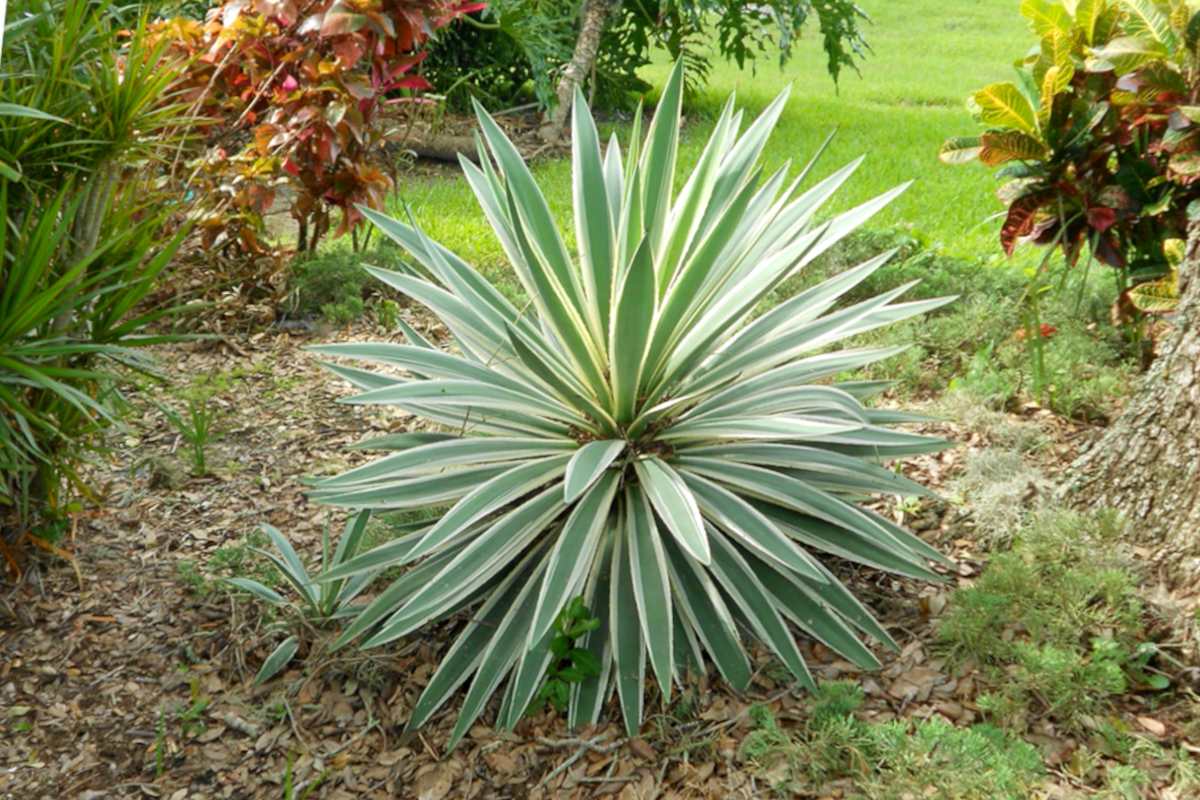
Long, pointed evergreen leaves form a stiff, spiky rosette, and from early summer to mid-autumn the outdoor yucca (Yucca gloriosa, Yucca filamentosa) sends up its flowers. It is a succulent shrub for full sun and poor, dry, sandy soil; shelter it from strong winds and it will reach 6 to 10 feet on minimal care.
Care is quite easy and you’ll be enchanted by the beauty of its leafage.
Favor planting in spring in a place with a lot of sun.
Yucca doesn’t need very rich soil, and particularly likes sandy soil.
Set the top of the root ball flush with the soil surface, since burying the crown of a yucca invites rot.
Plant Spanish dagger (Yucca gloriosa) well back from paths, doorways and play areas, because its stiff, sword-shaped leaves end in hard, needle-sharp spines that can readily puncture skin.
Check your species’ mature size, since some yuccas form rosettes several feet across, and give it a permanent spot from the start, because established plants with deep, thick roots transplant poorly.
Watering yucca
Don’t water the plant too much because it likes rather dry soil.
Watering once a fortnight is usually more than enough even in case of high temperatures, and then again only if you feel your yucca is starting to collapse.
Water yucca at the base rather than over the rosette and let the soil dry between waterings, since soggy, poorly drained soil is the main cause of crown and root rot.
Once established in the open ground, an outdoor yucca usually survives on rainfall alone.
Established yuccas seldom need watering, but newly planted ones benefit from an occasional deep soak during their first dry season, while their root systems are still becoming established.
For yuccas in pots, check that the compost is dry well below the surface before watering and tip out any water left standing in the saucer.
Pruning yucca
They don’t need any pruning.
You can remove the flowers after they’ve wilted away.
Wear thick gloves and eye protection, as yucca leaf tips are needle-sharp.
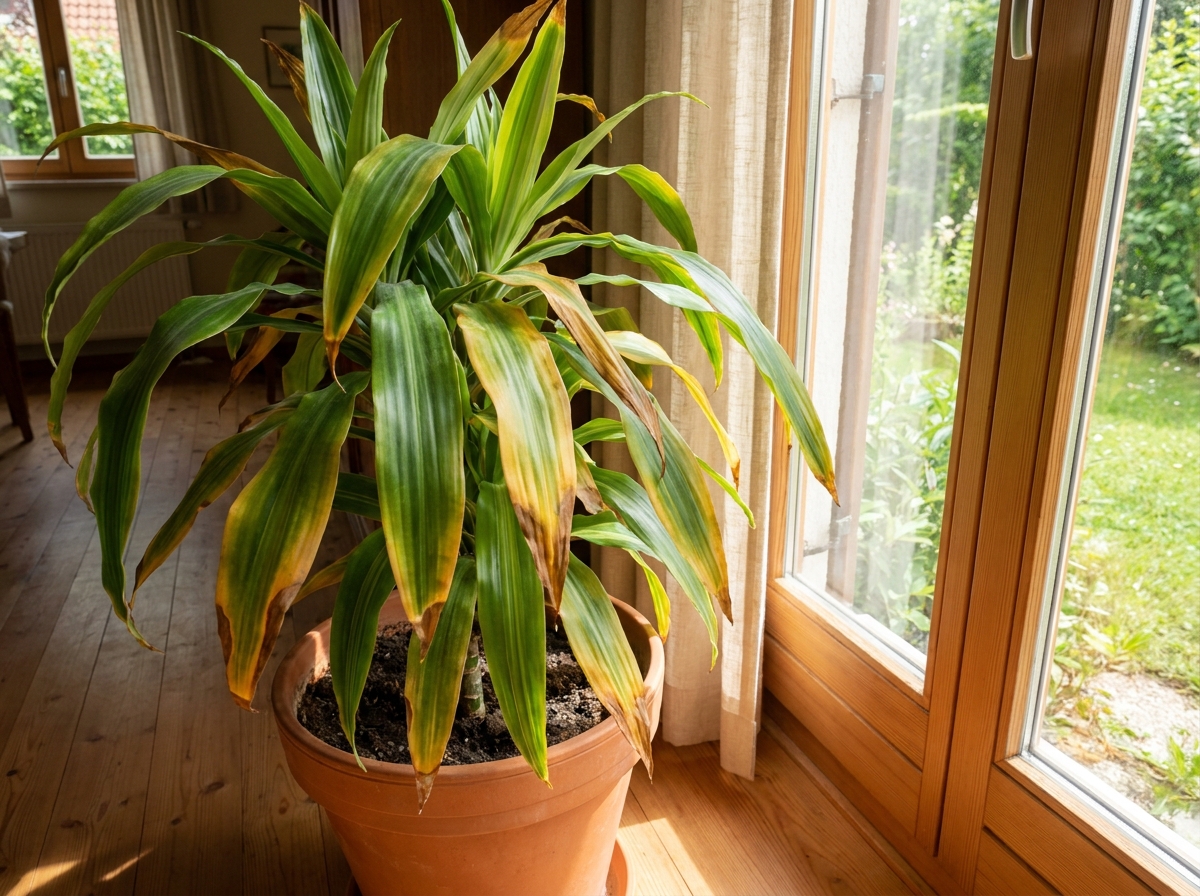
On a Dracaena marginata, dried brown lower leaves can be gently pulled downward or snipped close to the trunk once fully dead, exposing the bare, ringed stem beneath without harming the plant.
Choosing an outdoor yucca variety
Most garden yuccas sold for outdoor beds and pots are selections of Yucca filamentosa or Yucca gloriosa, chosen mainly for leaf colour and final size. The table below compares the varieties you are most likely to find in garden centres.
Choosing an outdoor yucca variety
Variety
Leaf colour
Hardiness
Best use
‘Bright Star’
Gold edges, pink winter flush
Hardy in mild, sheltered spots
Large pots, coastal gardens
‘Bright Edge’
Green with cream-yellow margins
Very hardy
Gravel gardens, front of bed
‘Color Guard’
Yellow centre, green edges
Very hardy
Focal point in a sunny bed
‘Golden Sword’
Broad yellow central stripe
Very hardy
Pots and patio containers
‘Variegata’
Blue-green, cream striped
Hardy in mild, sheltered spots
Standalone architectural shrub
Learn more about yucca
Yucca is typical of hot countries like Mexico or southern United States, but there will be no problem if you try to grow it in other places, along the coast, as long as it is sheltered from strong winds.
It only requires minimal care and has quite a figure with its long, pointed leaves.
Its blooming will nonetheless only occur 5 years after planting.
This shrub will fit right into any flower bed, but setting it as a standalone or in a pot on your deck, terrace or balcony will do it honor, too.
It’s most probably due to too much water. Stop watering immediately. Yucca, like all plants, enters a dormant state during which its needs diminish considerably.
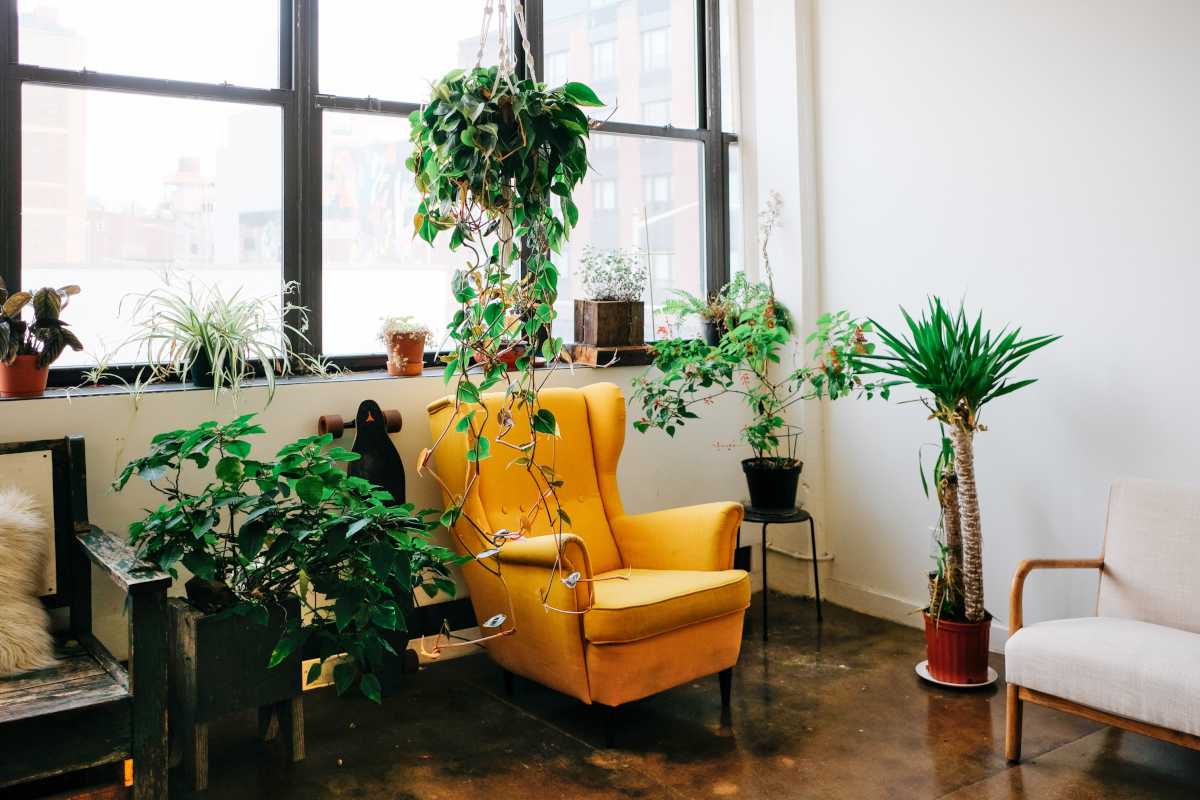
Indoors, set it in a well-lit spot but avoid sources of heat such as radiators or direct light from the sun during the hottest hours.
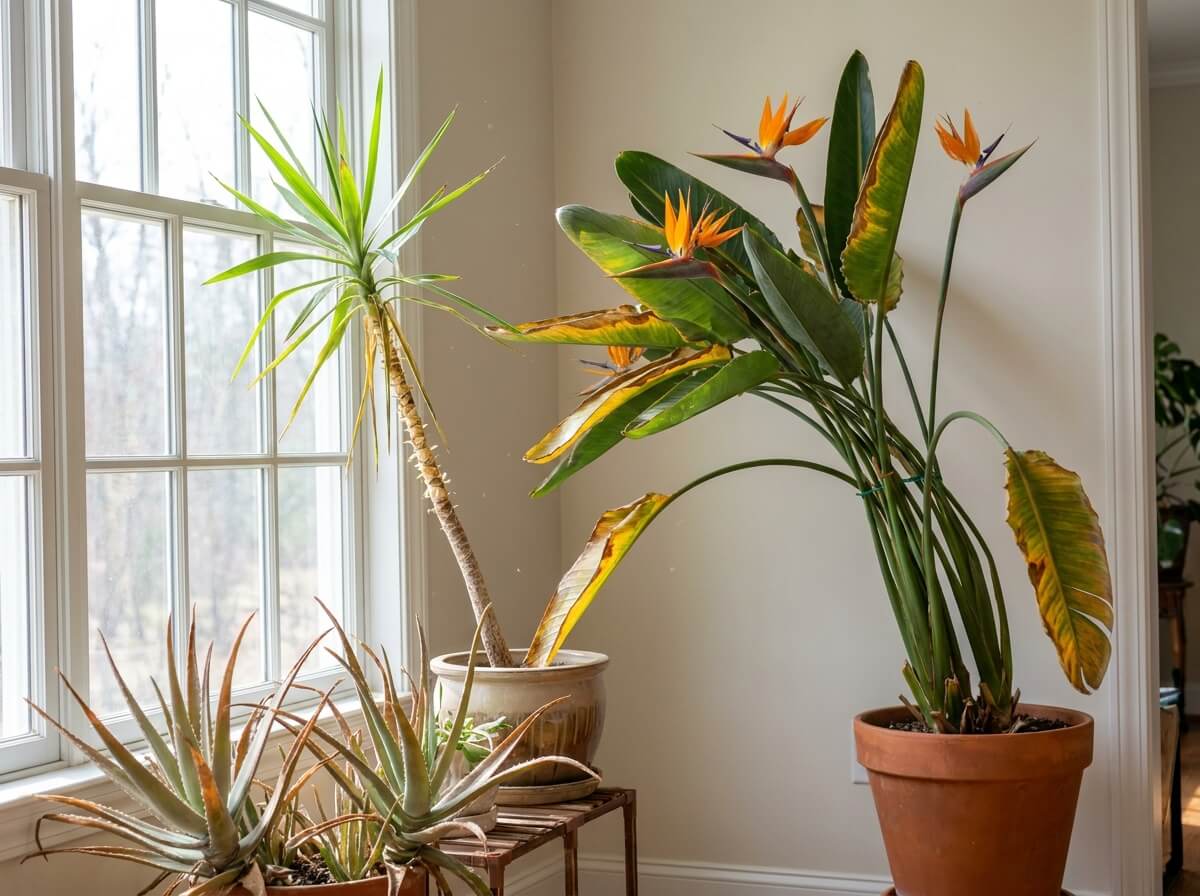
Empty the saucer after watering because standing water quickly rots yucca roots.
Pale stippling on the leaves with fine webbing underneath points to red spider mite rather than watering so rinse the foliage thoroughly.
Smart tip about yucca
Mulch over winter is a good idea, especially if you’re afraid the weather will be cold. Mineral mulch fits this plant particularly well.
In areas where it can freeze, prefer growing in pots so you can bring it in during the colder months.
Written by Gaspard Lorthiois | Loves helping out, especially when it comes to growing things. Worked in herbal medicine, runs a farm, and dabbles in tech. Master's degree and engineer.