Viburnum tinus: growing guide, care tips and varieties
0
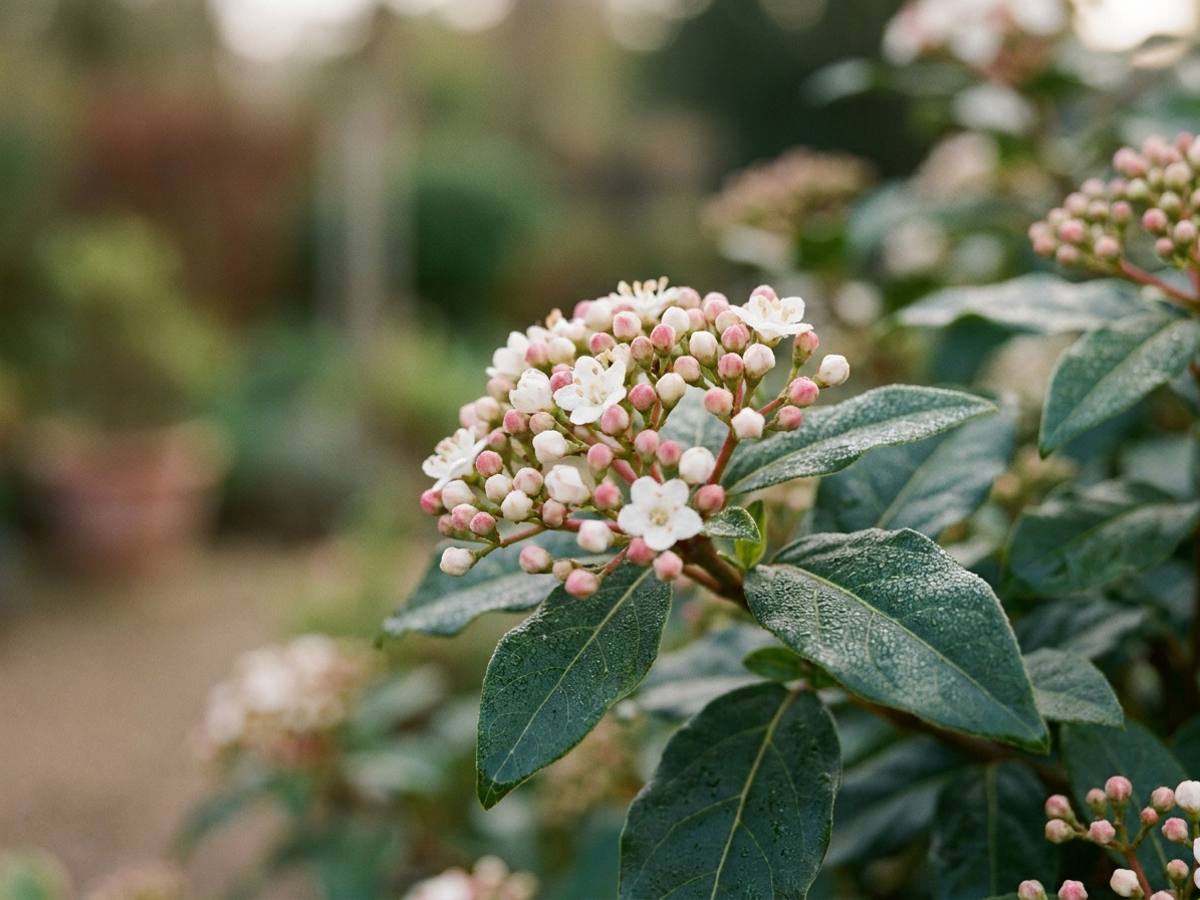
Viburnum tinus, commonly known as Laurustinus, is a handsome evergreen shrub prized for its year-round foliage and delicate clusters of white flowers tinged with pink. It makes an excellent choice for hedging, screening, or as a specimen plant in sheltered borders. This Mediterranean native is valued for flowering through winter and early spring when many gardens are bare.
Growing conditions
Viburnum tinus thrives in full sun to partial shade, though it performs best with at least four hours of direct sunlight daily. In deep shade, flowering diminishes and growth becomes leggy. Choose a spot sheltered from strong, cold winds, particularly in northern regions.
This shrub is tolerant of most soil types, including chalk and clay, provided drainage is reasonable. It prefers neutral to slightly alkaline conditions but adapts well to slightly acidic soils. Avoid waterlogged ground, which causes root rot and fungal problems.
Laurustinus is hardy to −10 °C and thrives in USDA zones 8–11, making it reliable throughout most of Britain and the south of Ireland. In harsher inland gardens or northern Scotland, site it against a south-facing wall for extra protection.
How to plant Viburnum
Plant bare-root stock in autumn or early winter, or container-grown plants from spring to autumn. Autumn planting allows roots to establish before the growing season, promoting stronger growth.
Space shrubs 1.5–2 m apart for informal planting; closer (80 cm–1 m) for formal hedges.
Plant with the top of the root ball level with the soil surface; never bury the crown.
Incorporate well-rotted compost or leaf mould into the planting hole to improve soil structure and drainage.
Water thoroughly after planting and maintain moisture for the first growing season.
Propagate from semi-hardwood cuttings in summer or hardwood cuttings in winter, rooted in a cold frame or propagator.
Care through the seasons
Spring: As new growth emerges, apply a balanced feed or slow-release fertiliser in late March. Deadhead spent flower clusters to tidy the plant, though leaving some develops attractive berries. Thin out any frost-damaged stems carefully.
Summer: Water young plants weekly during dry spells; established shrubs are fairly drought-tolerant but flower better with occasional deep watering in very dry summers. Inspect foliage for pests and diseases, especially whitefly. Summer is an ideal time to take semi-hardwood cuttings if propagating.
Autumn: Tidy up the shrub after flowering in late spring if you haven’t already done so. Mulch around plants with 5–7 cm of bark chips or leaf mould in October to insulate roots and suppress weeds. Avoid heavy pruning; light shaping is all that’s needed.
Winter: The shrub requires little attention during dormancy, though newly planted specimens may need protection from severe frost with fleece. Continue to water occasionally in dry spells, especially in containers.
Best varieties to grow
Several cultivars offer useful variations in habit, flower colour, and foliage.
Viburnum tinus ‘Eve Price’ — A compact form reaching 1.5 m, with carmine buds opening to white flowers; Award of Garden Merit winner.
Viburnum tinus ‘Gwenllian’ — Similar compact habit with pink-tinged flowers and berries that ripen from red to black; excellent for small gardens.
Viburnum tinus ‘Variegatum’ — Green leaves margined with cream, providing year-round colour interest; flowers are white and abundantly produced.
Viburnum tinus ‘Spirit’ — Upright, vigorous growth to 3 m, producing abundant white flowers; ideal for tall screening or hedging.
Viburnum beetle: Leaves become skeletonised in spring as larvae feed between veins. Remove and burn affected leaves, or spray with an organic insecticide such as neem oil as soon as symptoms appear.
Whitefly: Tiny white insects congregate on undersides of leaves, weakening the plant and causing sticky honeydew. Spray with horticultural soap or insecticidal oil in early morning or late evening.
Powdery mildew: A white coating appears on leaves, typically in hot, dry conditions. Improve air circulation by pruning, increase watering, and spray with sulphur dust or a fungicide registered for this use.
Dieback: Brown patches or dead shoots, often caused by hard frost or waterlogging, signal stress. Prune out dead wood once growth resumes in spring and improve drainage if needed.
🌿 Nature & Garden Newsletter
Gardening tips, recipes & seasonal advice, twice a week.