Strawberry tree problems, Arbutus leaves with black spots on leaves
·
0
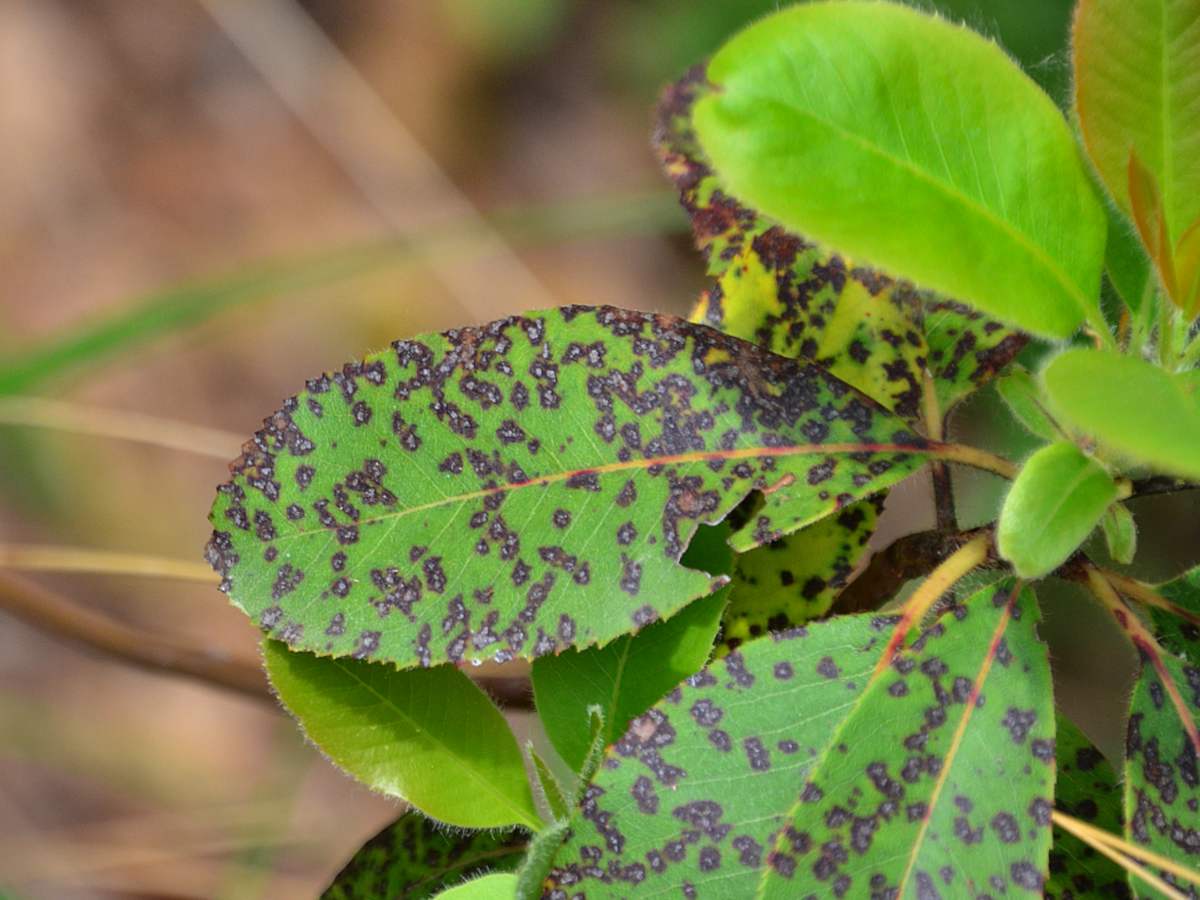
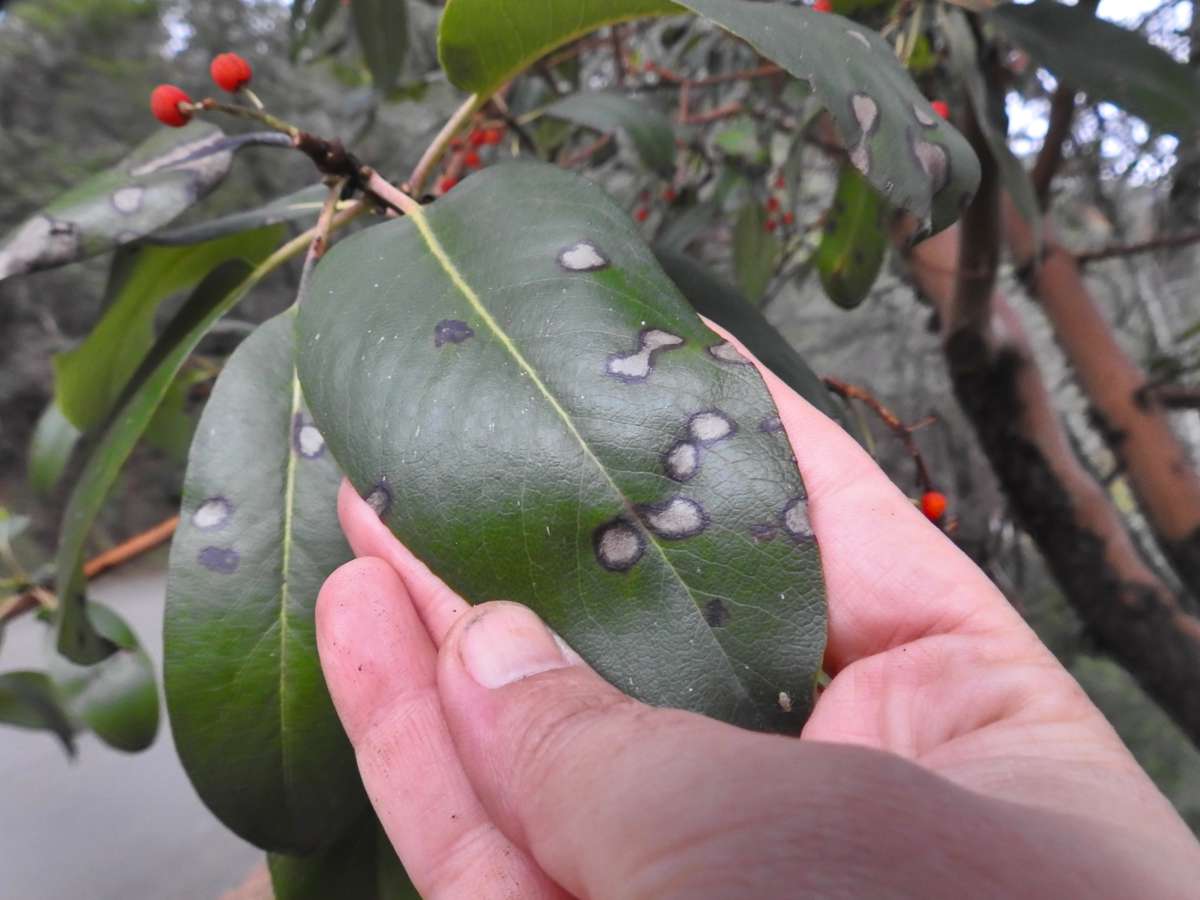
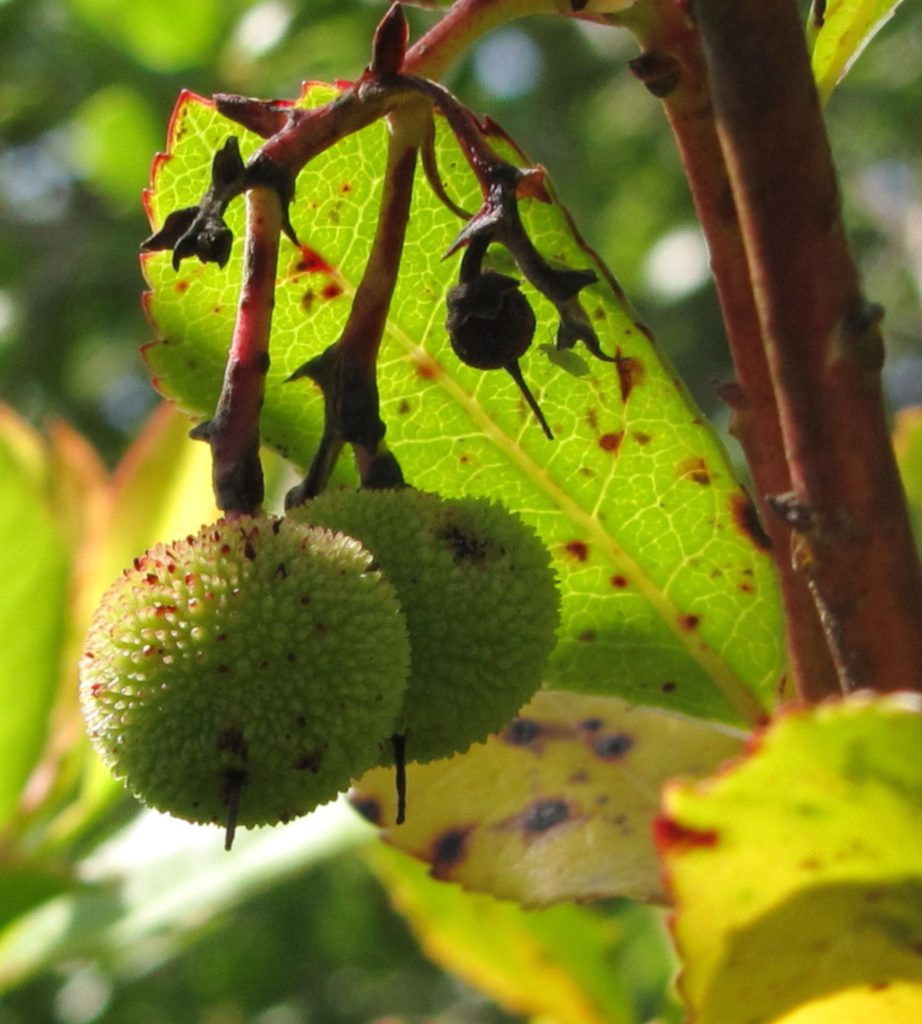
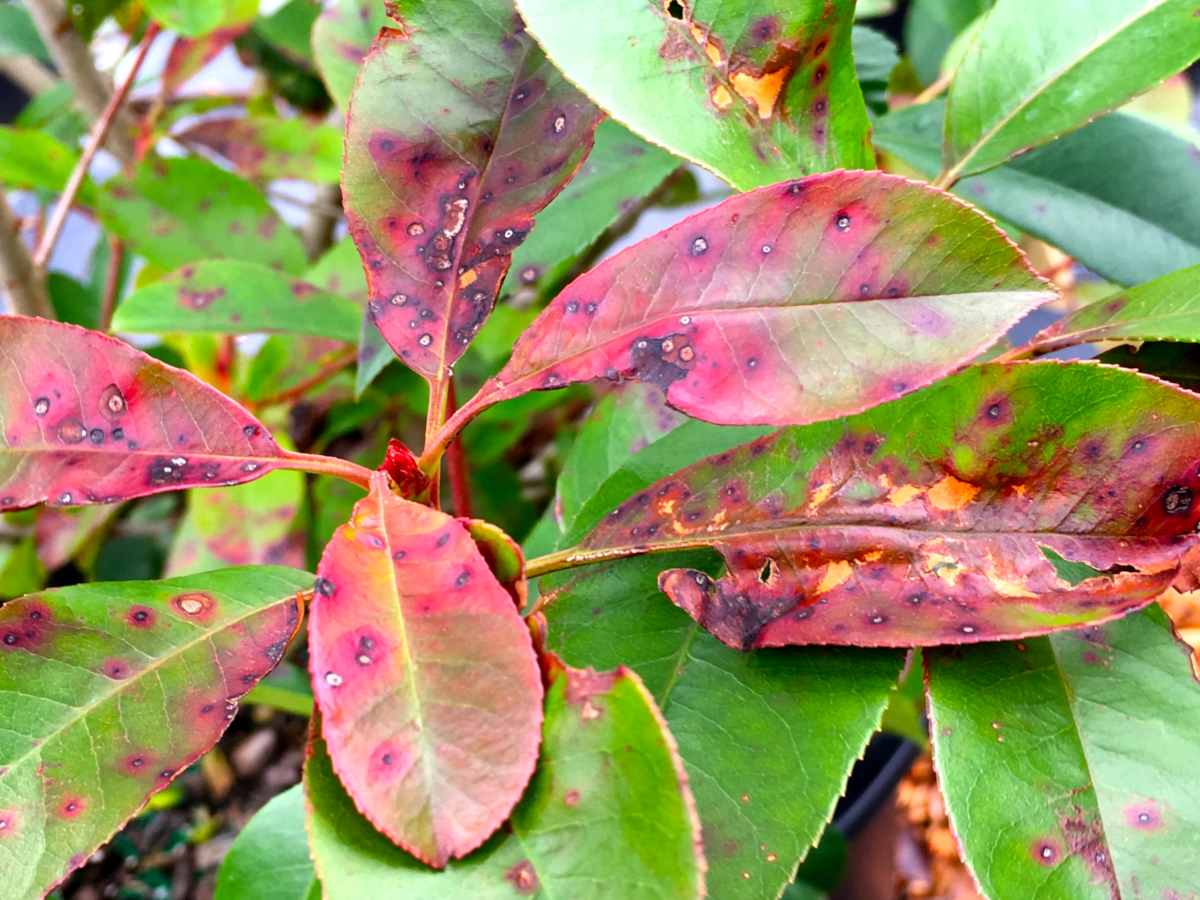
Brown spots ringed with red or purple appear on the leaves, and left alone the fungus spreads until every leaf is contaminated and drops off. Three different fungi cause this on strawberry trees, none of them harmful to us, and a rich, very well-draining spot with air moving around the tree is what keeps it cropping.
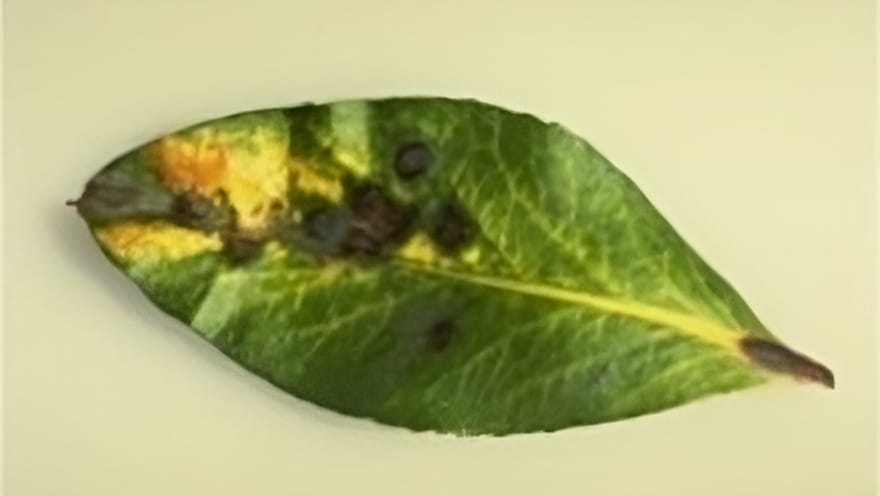
Symptoms are the presence of brown spots with a red or purple perimeter on leaves.
There are several strands of this disease, but all can be treated in the same manner.
This fungus will spread until all leaves are contaminated and drop off.
Strawberry tree leaf spot
Actions to avoid strawberry tree problems
The most effective way to protect the tree is to give it an excellent growing environment.
A good growing environment is the best protection
Rich and very well-draining soil.
Regular fertilizing if the soil is very poor.
Regular watering over the first 2 years to make sure it settles in healthily.
Space around the tree for air to circulate and to avoid moist air around the tree.
At the end of winter, spray Bordeaux mixture 2 to 3 times, at a two-week interval.
Curative care
Collect and burn fallen leaves as soon as spots appear
As soon as the fungus appears, collect fallen leaves, burn them or dispose of them in a place that won’t risk contaminating your plants.
There isn’t any natural product to use that can definitely eliminate this particular type of fungus, but you can reduce its spread with Bordeaux mix. Best of course is to remove any infected parts beforehand.
Using bordeaux mix and even fungus-killing fermented weed teas is better than to spray with mancozeb or myclobutanil based solutions, which are fungicides sold in horticulture stores.
What causes spots on strawberry tree leaves?
These three fungus spread most when the weather is warm.
Note: these fungus aren’t toxic to us humans. If ever your tree is infected, you can still harvest its berries to make arbutus berry jam without any risk at all.
1 – Spots are round, purple and spread on both leaves and twigs
You’
Round purple spots on leaves and twigs signal the worst strand
re dealing with the more severe of these fungus, Elsinoë mattiroloanum.
It’s quite aggressive and must be taken care of quickly.
3 – Brown spots with reddish edges, roundish shape
This is a variant that is most common in British Columbia, in Canada.
Its name is Didymosporium arbuticola Zeller.
Telling the three leaf-spot fungi apart
Three different fungi produce spots on strawberry tree leaves, and the shape and colour of the marks tell you which one you are dealing with. All three spread most in warm weather and are treated the same way.
Telling the three leaf-spot fungi apart
Fungus
Spot appearance
Parts affected
Notes
Elsinoë mattiroloanum
Round, purple
Leaves and twigs
The most severe of the three; deal with it quickly
Ruptoseptoria unedonis
Brown and purple, oblong
Leaves
Belongs to the septoria leaf spot fungi
Didymosporium arbuticola Zeller
Brown with reddish edges, roundish
Leaves
Most common in British Columbia, Canada
Whichever strand is present, the same care applies: remove infected parts and treat with Bordeaux mixture.
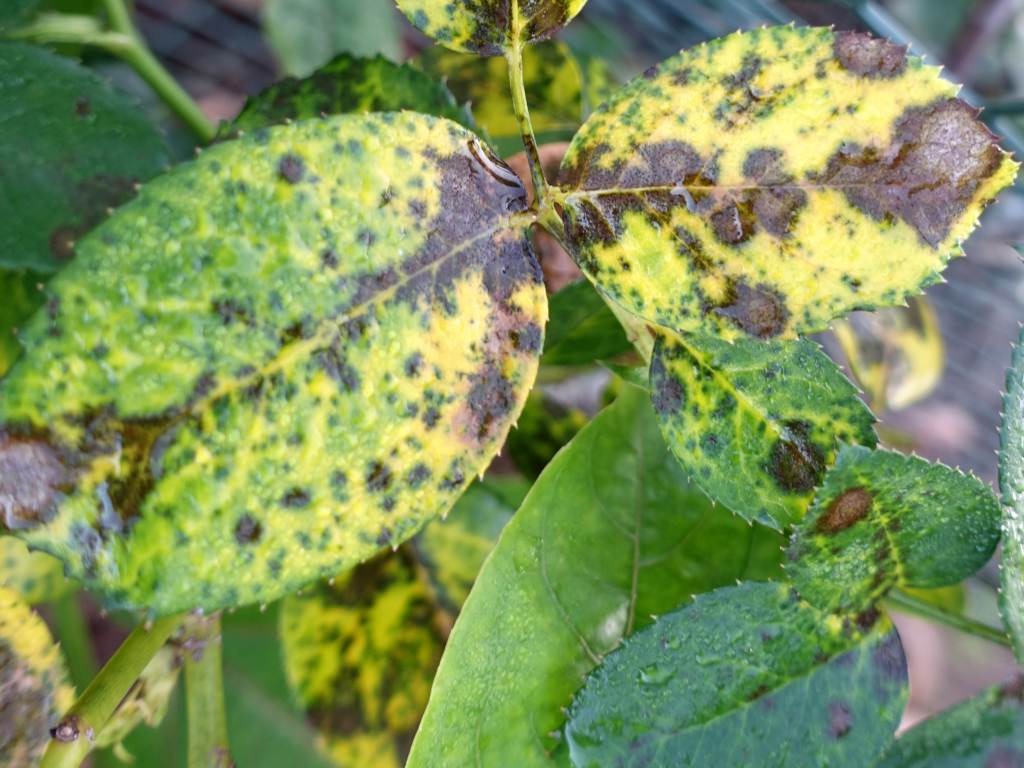
In roses with black spot (Diplocarpon rosae), prune out canes bearing purplish-black lesions along with infected leaves, because the fungus can overwinter in cane tissue and reinfect new foliage the following spring.
Avoid putting spotted, diseased leaves in a cool garden compost heap, where spores can survive; instead bin or burn them, or use only a hot heap that reliably reaches pathogen-killing temperatures.
Bordeaux mixture is copper-based, so keep to the treatment programme instead of spraying the tree repeatedly, as copper accumulates in the soil.
Written by Gaspard Lorthiois | Loves helping out, especially when it comes to growing things. Worked in herbal medicine, runs a farm, and dabbles in tech. Master's degree and engineer.