It sounds counterintuitive, but August is the month to stop feeding your courgettes. Late-season nitrogen fertiliser encourages soft new growth that attracts powdery mildew and reduces fruit production just when you want autumn cropping. Gardeners who cut feeds now report healthier plants, fewer diseases, and harvests stretching well into October.
In August, across the UK and US, courgette plants are in full production. Temperatures are warm, day length is shortening, and most gardeners are in cruise mode, applying regular liquid feeds to keep those marrows coming. But August is precisely when this approach starts to work against you.
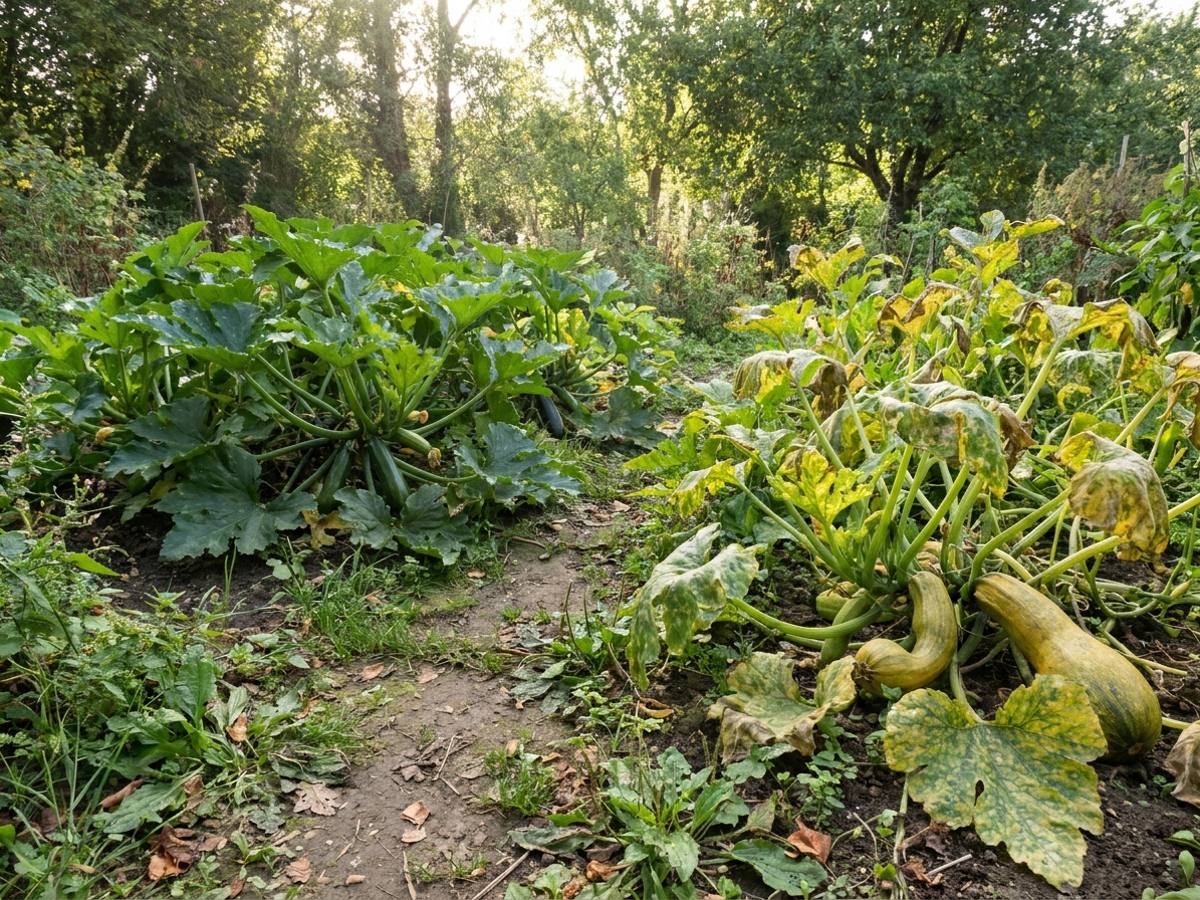
Courgettes are nitrogen-hungry feeders, and we’re conditioned to believe more food equals more fruit. The reality is more subtle. By late summer, excessive nitrogen pushes the plant into vegetative growth, creating dense canopies of soft new leaves that shade developing flowers and create humid microclimates where fungal spores thrive. Powdery mildew, in particular, loves these conditions. Research from university extension services shows that high-nitrogen plants are significantly more susceptible to foliar diseases in August and September than those on reduced feeds.
Additionally, all that leafy growth is metabolically expensive. The plant diverts energy into expanding foliage rather than developing and ripening fruits. The result, counterintuitively, is fewer courgettes per week and smaller individual fruits, along with a higher disease burden that can collapse the plant by early autumn when you’d otherwise have another six weeks of harvesting ahead.
Feeding courgettes is not one job but a sequence: generous early on, then deliberately lean as the plant switches from building leaves to holding on to its fruiting. The table below sets out what to give, and what to do, at each stage.
| Period | Feed to give | Key task | Why |
|---|---|---|---|
| Early summer | Generous feeding | Build the plant’s framework | Biomass is established before fruiting takes over |
| Midsummer (hotter US zones, USDA 8 and above) | Start reducing nitrogen | Count back six to eight weeks from your first frost | Times the change to your own climate |
| Late summer, from the outset | No nitrogen at all | Drop general-purpose liquid feeds and fish emulsions | These are the nitrogen-heavy feeds that push soft growth |
| Late summer onwards | Tomato or flowering plant feed, once weekly at half strength | Keep potassium coming | Supports fruit production without pushing leafy growth |
| Late summer to early autumn | Continue the potassium-rich feed | Water at soil level, never overhead | Dry foliage is the best defence against powdery mildew |
| Early autumn | Continue the potassium-rich feed | Check lower leaves and remove affected foliage promptly | Catches powdery mildew at its earliest signs |
The pattern is the same in every case: feed for growth first, then feed only for fruit.
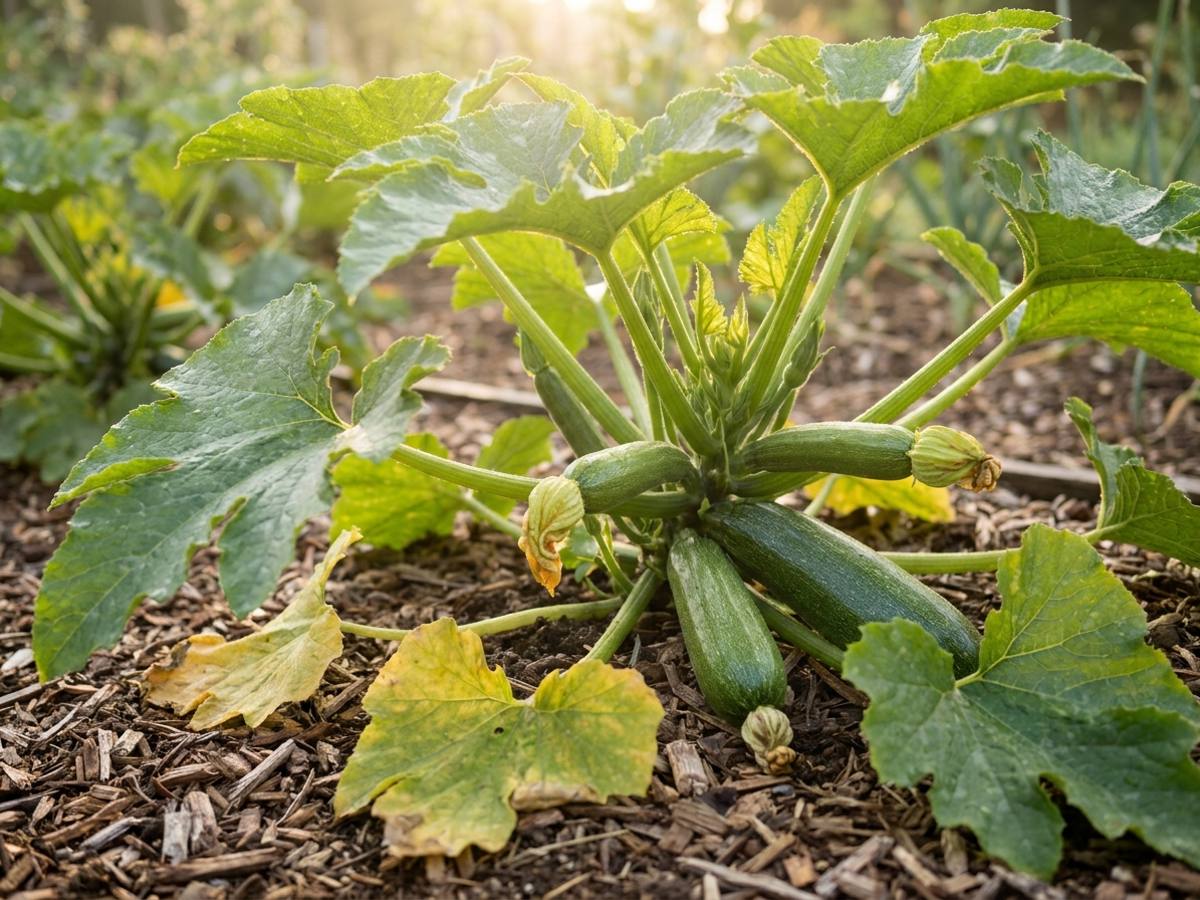
Think of August as the turning point in your courgette’s life cycle. Early summer, feed generously. By mid-August, the plant’s framework is established, and your job shifts from building biomass to extending fruiting. A plant that’s slightly hungry stays leaner, produces tighter foliage with better air circulation, and channels reserves into flowering rather than leaf expansion.
This principle applies whether you’re growing traditional green courgettes, yellow varieties, or round ball types. The biology is the same. Stop nitrogen feeds in early August. You can continue with potassium-rich feeds, which promote flowering and fruit quality, but cut the nitrogen entirely.
Here’s how to transition your courgettes for autumn success:
Over the coming weeks, you’ll notice your plants becoming visibly leaner, with more open canopies and improved light penetration. Don’t panic. This is exactly what you want. Keep monitoring for early signs of powdery mildew, particularly on lower leaves, and remove any affected foliage promptly. By mid-September, plants managed this way are typically producing better-quality fruits than their nitrogen-fed neighbours, with many still flowering reliably into October.