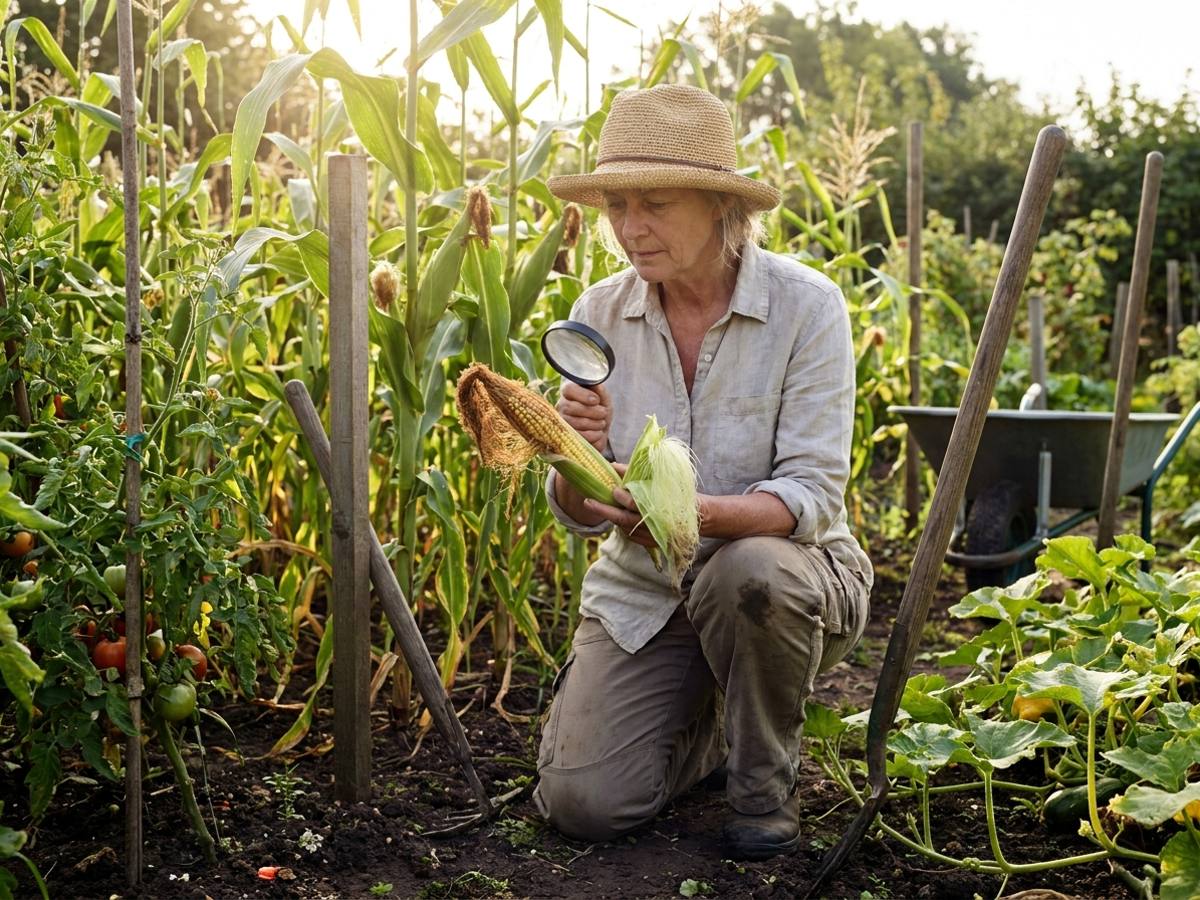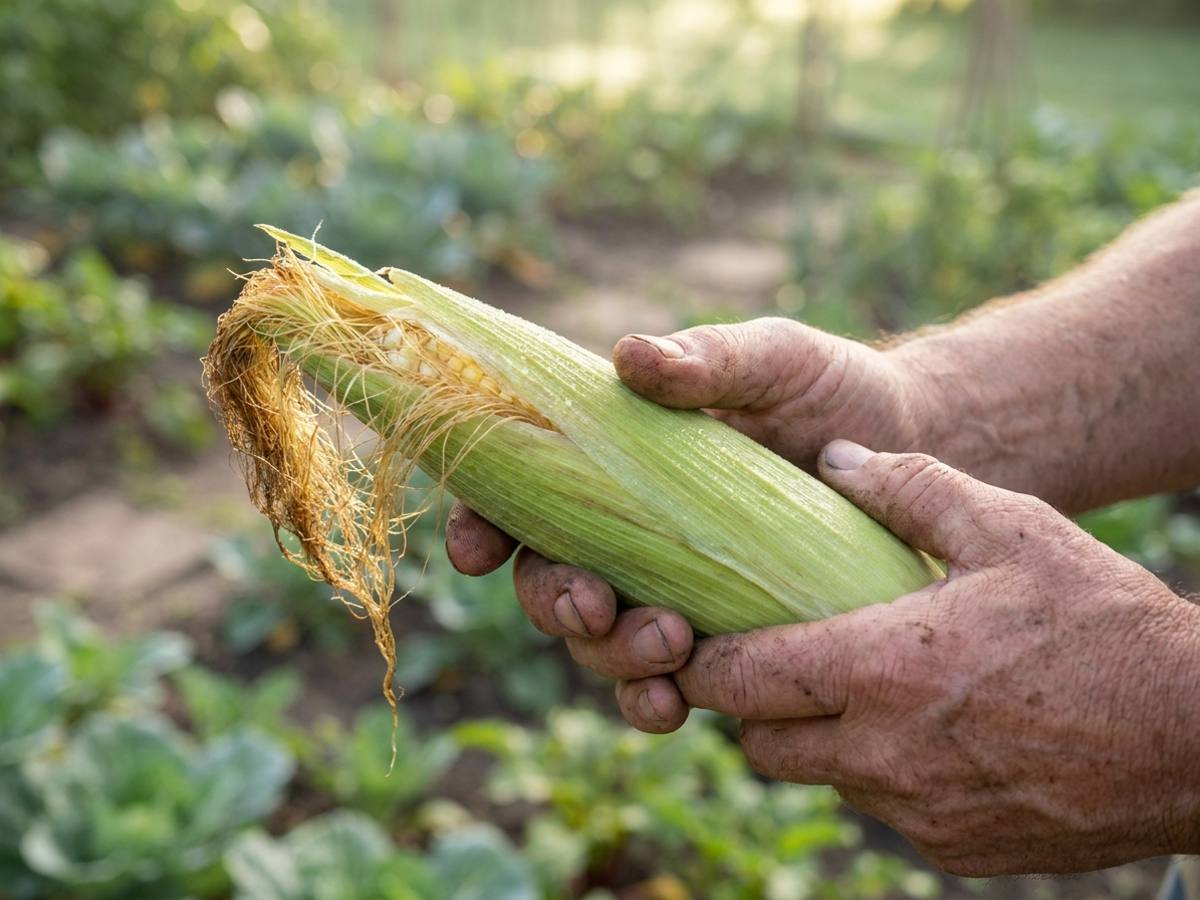
Sweetcorn reaches peak sweetness for just 24 to 48 hours after the silks emerge, then sugar rapidly converts to starch. In late summer, your crop is at its critical moment. Miss this window and you’ll harvest starch instead of sugar. Learning to spot the exact signs of readiness transforms your harvest from ordinary to extraordinary.
Across the UK and US, late summer gardens are bursting with sweetcorn at full maturity. The summer heat has done its job, and cobs are swelling beneath their husks. This is the month when timing becomes everything, because sweetcorn’s natural biology works against the gardener who waits too long or picks too early.
Sweetcorn varieties are bred to retain sugar longer than field corn, but the conversion clock still ticks relentlessly. The moment the silks emerge and turn brown, an enzymatic process begins that transforms sugars into starch. A cob picked two days too late loses up to 40 per cent of its sugar content. Home gardeners often don’t realise that calendar dates mean nothing, variety means everything.
Early varieties like ‘Sunrise’ mature in 60 days and have a narrower harvest window, whilst later types like ‘Stowell’s Evergreen’ offer slightly more flexibility. But all sweetcorn varieties follow the same biological deadline. The traditional “thumbnail test” of piercing the kernel to check for milky juice is actually the most reliable indicator you have, far more trustworthy than counting days from planting.
Follow these four steps to catch your crop at its sweetest moment.
The article names several varieties, and each behaves differently once the silks brown. Use this table to see which ones give you a wider margin for error and which demand daily checking.
| Variety | Season type | Harvest window | Best suited to |
|---|---|---|---|
| ‘Sunrise’ | Early, ready in 60 days | Narrow — check daily | Gardeners wanting the earliest cobs in late summer |
| ‘Stowell’s Evergreen’ | Late | Slightly more flexible | Gardeners who cannot check the plot every day |
| ‘Sundance’ | Reliable in cool conditions | Follow the thumbnail test | UK gardens with cooler summers |
| ‘Earlibird’ | Early and reliable | Follow the thumbnail test | UK gardens with cooler summers |
| ‘Silver Queen’ | Long-season | Needs a long growing season | US gardens, particularly southern states |
Whichever variety you grow, the biological deadline is the same: it is the state of the kernel, not the calendar, that decides the day.
As late summer progresses, mark which varieties gave you the longest harvest window and which ones matured all at once. Keep notes on the exact timing between silk emergence and peak ripeness for your particular varieties and climate zone. This late summer harvest will teach you invaluable lessons about spacing successions across midsummer and early autumn, so you can avoid feast-or-famine months in future seasons.