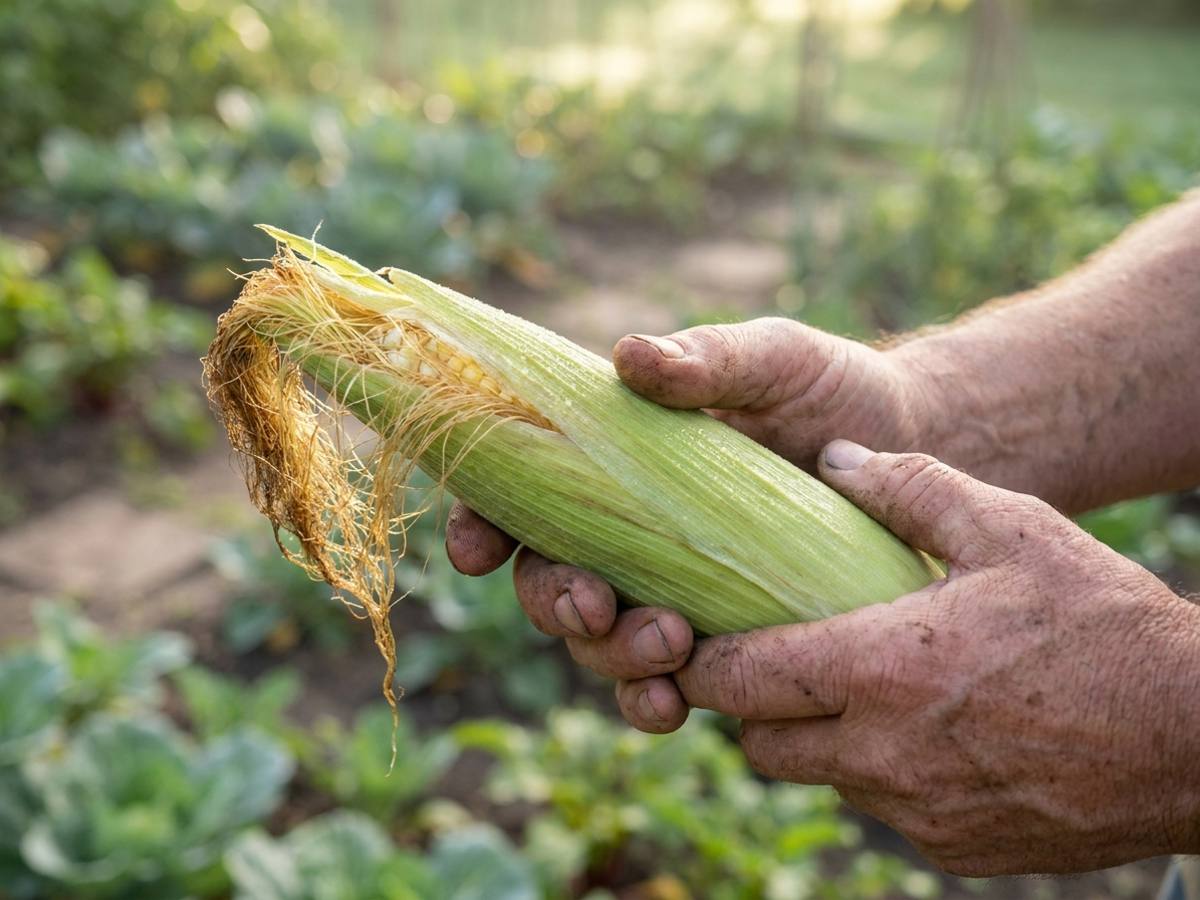
Late summer is sweetcorn’s golden hour. New research reveals that mid-summer plantings develop significantly higher sugar content than spring sowings, meaning the cobs ripening in a late-summer garden could taste sweeter than anything you’ve grown before. Learn how to spot peak ripeness and why timing matters more than you think.
Across both UK and US gardens, sweetcorn planted in early summer and midsummer is reaching peak maturity this month, and the timing creates perfect growing conditions. Longer daylight hours combined with consistent warmth trigger enhanced sugar accumulation in the kernels, a process that simply doesn’t occur as efficiently during the cooler, shorter days of spring.
Home gardeners who sowed their sweetcorn in early spring or mid-spring are already harvesting, but those cobs typically contain between 8 and 12 percent sugar by weight. Mid-summer plantings, by contrast, can reach 16 to 20 percent sugar content under ideal conditions, according to recent trials conducted at agricultural extension centres in both regions.
The difference comes down to photosynthesis and kernel development timing. Sweetcorn varieties bred for high sugar retention accumulate sucrose steadily throughout growth, but they do so most efficiently when plants mature during peak daylight and warmth. A cob that develops its final kernels in late summer simply has more energy available to convert into sugars than one maturing in late spring or early summer.
Additionally, the natural stress of heat accelerates ripening without compromising sweetness, provided plants receive consistent watering. Spring-sown crops often mature during unpredictable weather patterns, whilst late summer plantings experience more stable conditions. The result is more uniform, sweeter cobs across your entire harvest.
The same variety can taste very different depending on when the cob finishes filling. This table sets out what the trials found for each sowing window.
| Timing | Sugar in the kernels | Conditions at ripening |
|---|---|---|
| Sown early spring to mid-spring | 8 to 12 percent by weight | Cooler, shorter days and unpredictable weather as cobs mature |
| Planted early summer to midsummer | 16 to 20 percent under ideal conditions | Longer daylight hours with consistent warmth |
| Cobs finishing in late summer | Potentially the sweetest of the season | Cool nights against warm days widen the temperature contrast |
| Late summer planting | Depends on steady soil moisture | Cropping continues into early autumn in most regions |
Read across the rows and the pattern is clear: light and warmth at the moment of kernel filling decide the sugar.
Peak ripeness requires attention to detail, but the rewards justify the effort.
Late summer plantings will continue producing through early autumn in most regions, so don’t assume your harvest is finished yet. Keep monitoring soil moisture carefully, as late summer heat dries soil rapidly, and water stress reduces sugar development dramatically.
As nights cool in late summer, the contrast between day and night temperatures actually increases sugar concentration further, making late-month harvests potentially your sweetest of the season. Watch your local first frost date and plan your final harvest accordingly.