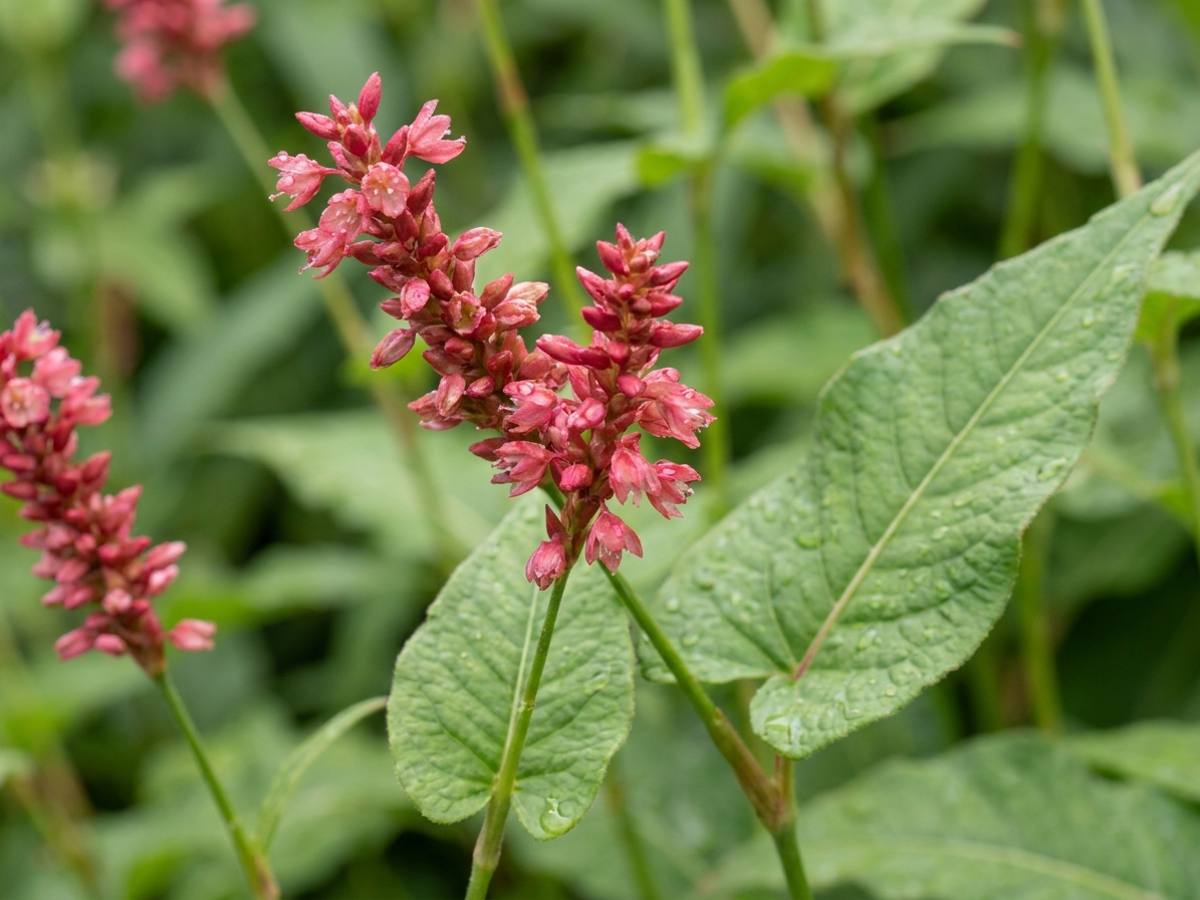
Few late-season perennials work as hard as Persicaria amplexicaulis, which throws up slender bottlebrush spikes in shades of crimson, coral and white from midsummer until the first frosts. Its bold, arrow-shaped foliage forms dense, weed-smothering clumps that need almost no attention once established. Best of all, it flowers for a genuinely remarkable four months or more, making it one of the most reliable plants for a naturalistic border.
Growing conditions
Red bistort is happiest in full sun to light dappled shade. In hotter, drier climates a few hours of afternoon shade helps prevent the leaves scorching and browning at the edges. In cool maritime regions such as Britain and Ireland, open sun gives the strongest flower spikes and the most compact habit.
The one thing this plant genuinely insists on is moisture. Give it a deep, fertile soil that stays cool and damp through summer — heavy clay suits it perfectly, and it tolerates seasonally wet ground that many perennials refuse. It is unfussy about pH, growing well on neutral, acid or alkaline soils, but thin, sandy or chalky ground that bakes dry will leave it stunted and short-lived.
Hardiness is excellent, with established crowns shrugging off −20 °C without protection. Native to the Himalaya, it thrives in cool summers and struggles in prolonged heat above 30 °C unless kept well watered.
How to plant Persicaria
Plant in spring or early autumn, when the soil is warm and moist enough to encourage rapid rooting. Spring planting is safer in cold, wet gardens; autumn planting suits mild regions and gives a head start on next season’s growth.
Spacing: allow 60–90 cm between plants (45 cm for dwarf cultivars) — the clumps bulk up considerably and crowded plants flower less freely.
Depth: set the crown level with the soil surface, never buried, as sunken crowns can rot in winter wet.
Soil preparation: fork in a generous bucketful of garden compost or well-rotted manure per plant to boost moisture retention.
Watering in: soak thoroughly after planting and keep the soil damp for the whole first growing season — this is when losses occur.
Propagation: lift and split established clumps in early spring using a spade or two forks back to back; each fist-sized piece with roots will grow away readily.
Persicaria amplexicaulis growing in a naturalistic garden border
The gardener’s year with red bistort
Red bistort asks for very little, but the little it asks falls at predictable points in the year. This table sets out the one job that matters in each season, and the reason behind it.
The gardener’s year with red bistort
Season
Main job
Why it matters
Early spring
Mulch, feed on poor soils and divide congested clumps
Shoots appear late, so mark the crown before digging
Late spring
Cut tall cultivars back by a third (the Chelsea chop)
Gives a shorter, self-supporting clump
Early to late summer
Water deeply in dry spells; shear off the oldest spent spikes
Drought stalls flowering; shearing brings a fresh flush
Mid to late autumn
Leave stems standing or cut back to 5 cm; divide in mild areas
Stems give winter structure and insect shelter
Midwinter
Nothing, beyond keeping containers from waterlogging
Crowns in pots are the ones that rot
Beyond these few moments, an established clump is genuinely self-sufficient.
Care through the seasons
Spring: Growth emerges relatively late, often not until mid-April, so mark the position to avoid digging into dormant crowns. Apply a 5 cm mulch of compost around (not over) the emerging shoots and, on poor soils, scatter a handful of general-purpose organic fertiliser. This is also the ideal moment to divide congested clumps.
Summer: Water deeply during dry spells — flagging, curling leaves are the first sign of drought stress and flowering stalls quickly. Deadheading is not essential, but shearing off the oldest spent spikes encourages a fresh flush. If the clump is spreading beyond its allotted space, slice around the edge with a spade and remove the surplus.
Autumn: Flowering often continues until the first hard frost, after which the foliage turns bronze and collapses. Leave the stems standing for winter structure and insect shelter if you like, or cut back to 5 cm once blackened. Autumn is a good second window for dividing in mild areas.
Winter: The plant dies back completely to a woody rootstock and needs no protection in temperate gardens. Avoid winter waterlogging in containers, where crowns are more vulnerable to rot.
Best varieties to grow
There are dozens of named forms, varying chiefly in height, spike colour and flowering start date.
‘Firetail’ — the classic, with brilliant crimson-red spikes on 1.2 m stems from July to October; holds an RHS Award of Garden Merit.
‘Rosea’ — softer rose-pink flowers that mix easily with grasses and pastel-toned perennials.
‘Alba’ — slim ivory-white spikes, excellent for lighting up a partly shaded border.
‘Fat Domino’ — noticeably thicker, shorter deep-red pokers on sturdy stems that rarely need staking.
‘High Society’ — compact at around 60 cm, with dense dark-red spikes, ideal for smaller gardens.
Pests, diseases and common problems
Drought scorch: leaves brown and crisp at the margins and flowering stops early. Mulch generously, water deeply once or twice weekly in dry spells, and consider relocating to a moister spot in autumn.
Slugs and snails: young spring shoots can be shredded before they get going. Protect emerging crowns with wool pellets, crushed grit or evening hand-picking during damp weather.
Powdery mildew: a white bloom on the foliage in hot, dry late summers. Improve soil moisture and air circulation, remove badly affected leaves, and avoid overhead watering in the evening.
Flopping stems: tall cultivars in rich soil or too much shade may splay outward. Cut back by a third in late May (the “Chelsea chop”) for a shorter, self-supporting clump.