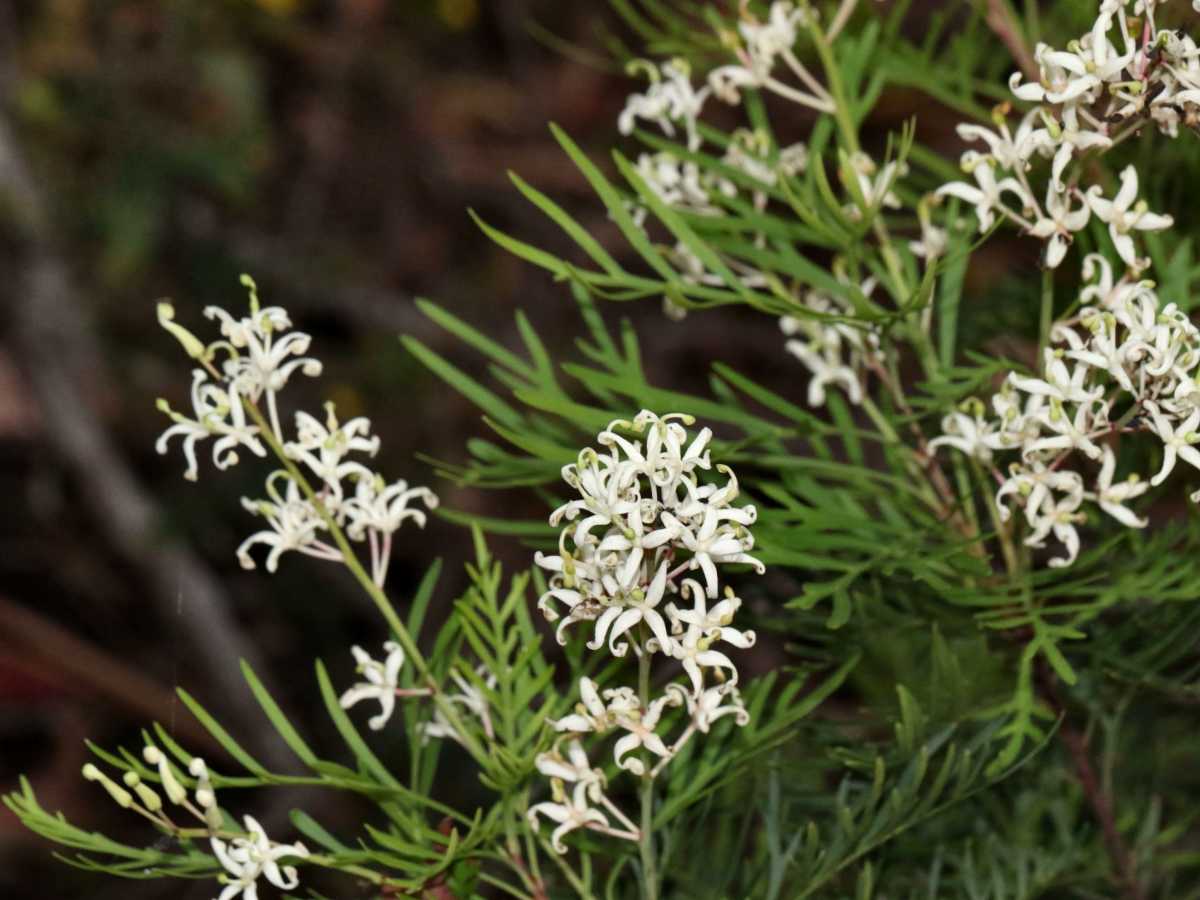
White summer flowers open above small evergreen leaves, each bloom starting out shaped like a guitar — hence the common name of the guitar plant (Lomatia tinctoria). It makes a naturally rounded, delicately scented shrub for a pot beside the deck; give it full sun and acidic, well-drained soil and it blooms abundantly.
| Name | Lomatia tinctoria |
|---|---|
| Family | Proteaceae |
| Type | Evergreen shrub |
| Height | 6 ½ feet (2 meters) |
| Exposure | Full sun |
| Soil | Well-drained, acidic |
| Foliage | Evergreen |
| Flowering | Summer |
An easy plant to care for, here are the tips for planting guitar plant.
The planting of the Lomatia tinctoria is an important step that influences further development and abundant blooming of your shrub.
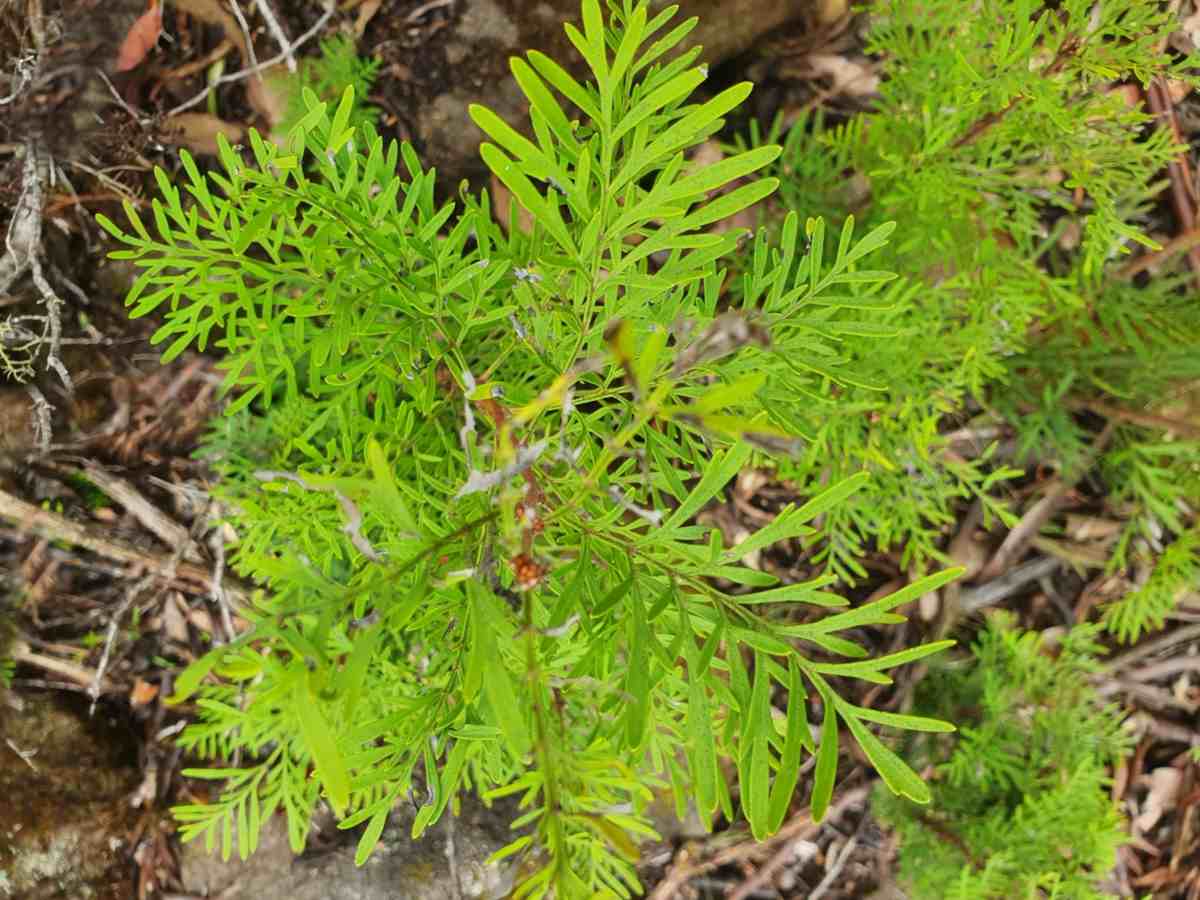
Lomatia tinctoria is a shrub that is easy to care for when outdoors, but soil quality and emplacement are important considerations.
Lomatia tinctoria is particularly well suited to growing in pots.
Lomatia tinctoria thrives both in open ground and in a container, but the two situations ask for slightly different soil, drainage and watering. Here is what to adjust before you plant.
| Aspect | In the open ground | In a pot |
|---|---|---|
| Planting time | Preferably in spring | Preferably in spring |
| Soil or mix | Acidic, even sandy soil | Mix of heath soil and planting soil mix |
| Exposure | Mostly sunny emplacement | Full sun, ideal on a deck beside the table |
| Drainage | Plant on a slight mound in heavy or clay ground | Drainage hole plus a bed of clay beads or gravel; never stand the pot in a saucer of water |
| Watering | Only in prolonged dry spells or heat waves, with regular water while the shrub settles | As soon as the soil is dry, without flooding the pot |
| Feeding | Fertiliser low in phosphorus | Organic fertilizer for flower shrubs, low in phosphorus |
Whichever you choose, acidic, free-draining conditions and plenty of sun decide the result.
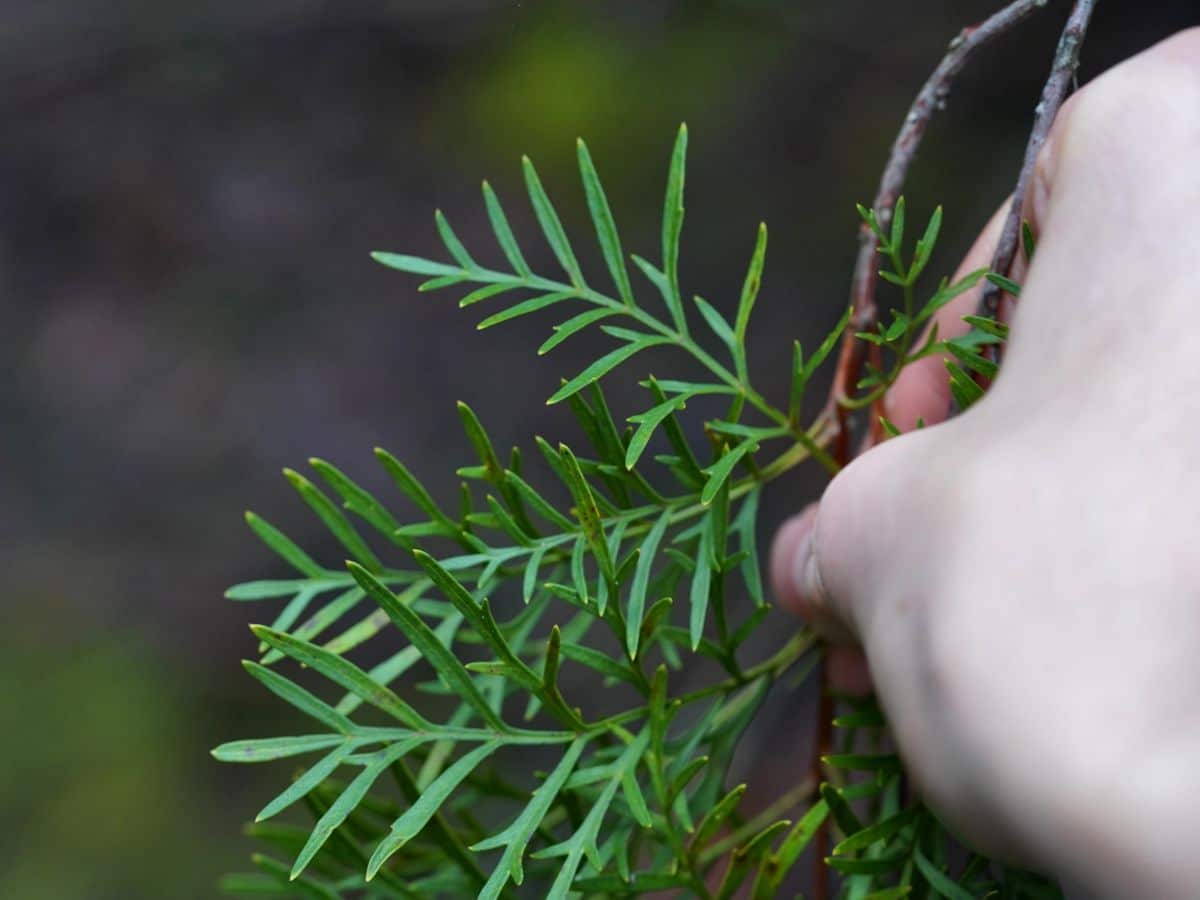
Pruning isn’t really needed but certain good practices should help increase the growth of your lomatia tinctoria.
After the blooming, it’s useful to remove wilted flowers.
Remove dead wood regularly and clear the inside branches to let light penetrate to the center.
Feed with a fertiliser low in phosphorus, as members of the Proteaceae family are adapted to poor soils and can be damaged by phosphate-rich feeds.
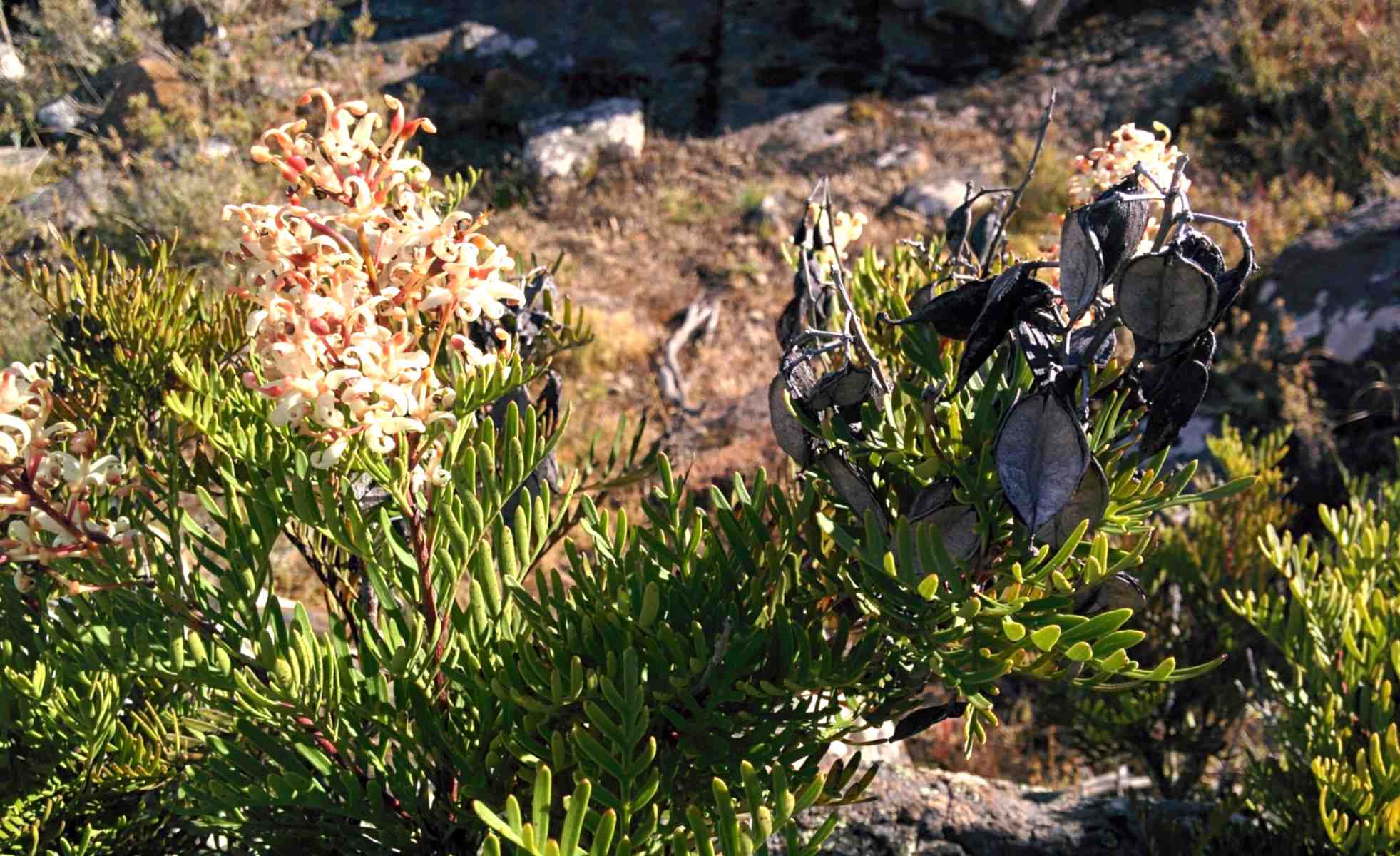
In pots, it’s important to water as soon as the soil is dry, without flooding the pot. During the growth phase, regularly add organic fertilizer designed for flower shrubs.
If your tree is growing outside in the ground, water in case of prolonged dry spells or heat waves.
Like most Proteaceae, it favours acidic, low-lime conditions, so rainwater is generally a safer choice than hard, lime-rich tap water, though the size of the difference will vary with local water quality.
Pick a feed low in phosphorus, because members of the Proteaceae family such as lomatia are easily burned by phosphate-rich fertilisers.
A mulch of pine bark or pine needles around the base keeps the root zone cool, slows evaporation and suppresses weeds, though it will not meaningfully acidify the soil beneath it.
A freshly planted shrub in the ground still needs regular watering through its first dry spells, before its roots reach down far enough to fend for itself.
Very hardy, Lomatia tinctoria is a shrub that resists diseases well.
If the leaves start turning black, it’s often linked to excess watering. Reduce watering frequency and check that the soil drains well enough.
Because it belongs to the Proteaceae, Lomatia tinctoria is sensitive to phosphorus, so choose a feed low in phosphorus to avoid scorched leaf tips and blackened edges.
Never leave the pot standing in a saucer of water.
In heavy or clay ground, plant on a slight mound so water drains away from the collar, a standard precaution for Proteaceae, which are generally grown in free-draining soil.
Lomatia tinctoria is a very easy shrub to care for. It is hardy to the cold down to 14°F (-10°C), or even 10°F (-12°C) and it blooms abundantly in summer.
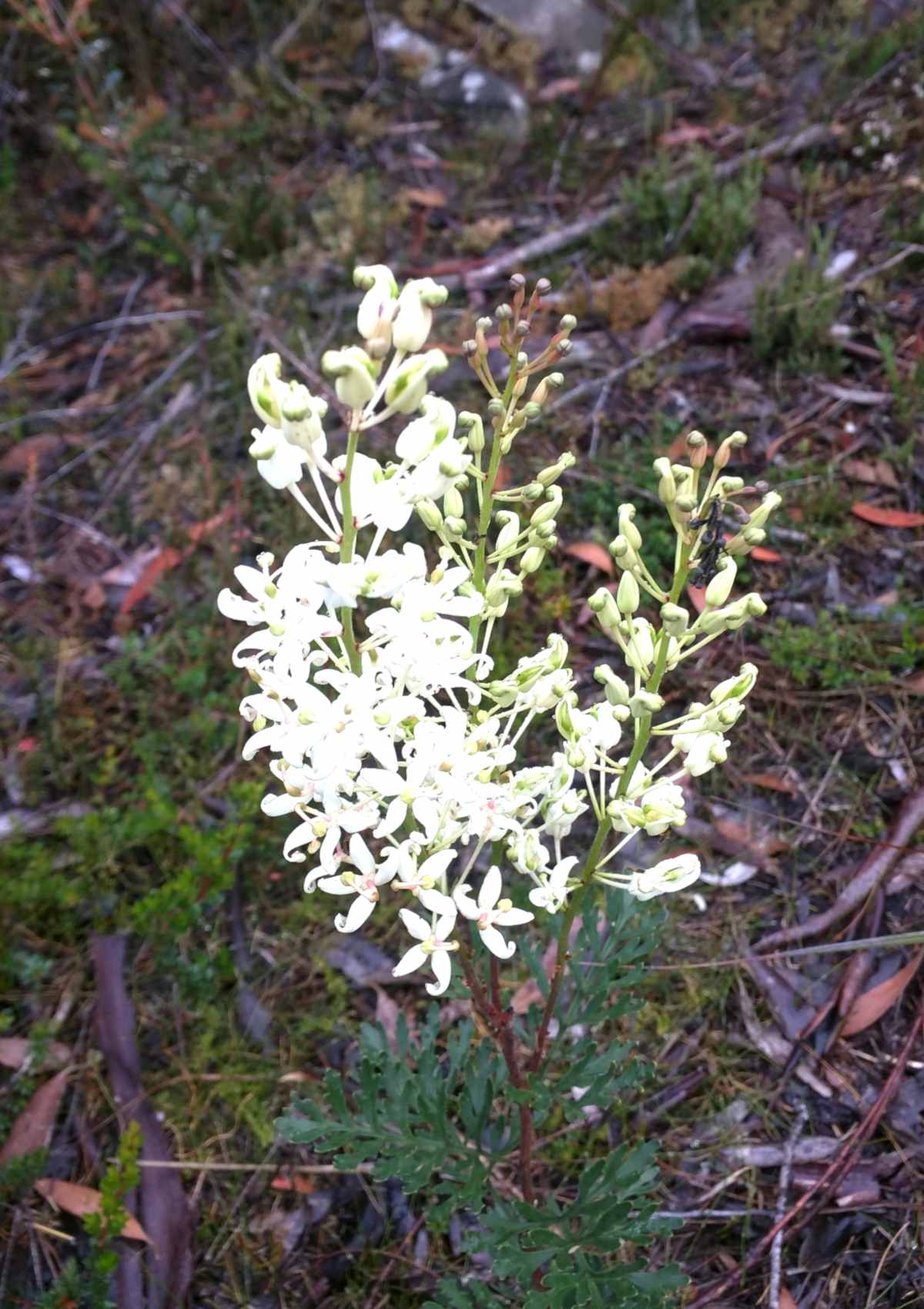
Native to South Africa, its bearing naturally forms a very interesting round silhouette. The blooming, white in color, is simply astounding and the very cute leaves make for a nice evergreen backdrop.
The seeds of Lomatia tinctoria explain the plant’s name:
Its individual flowers start out shaped like a guitar, which gave them their common name: Guitar plant. Some say it’s the fruit that looks like a guitar.
The blooming and delicately-scented fragrance make it an ideal shrub for pots to decorate your deck next to the table or long chair.