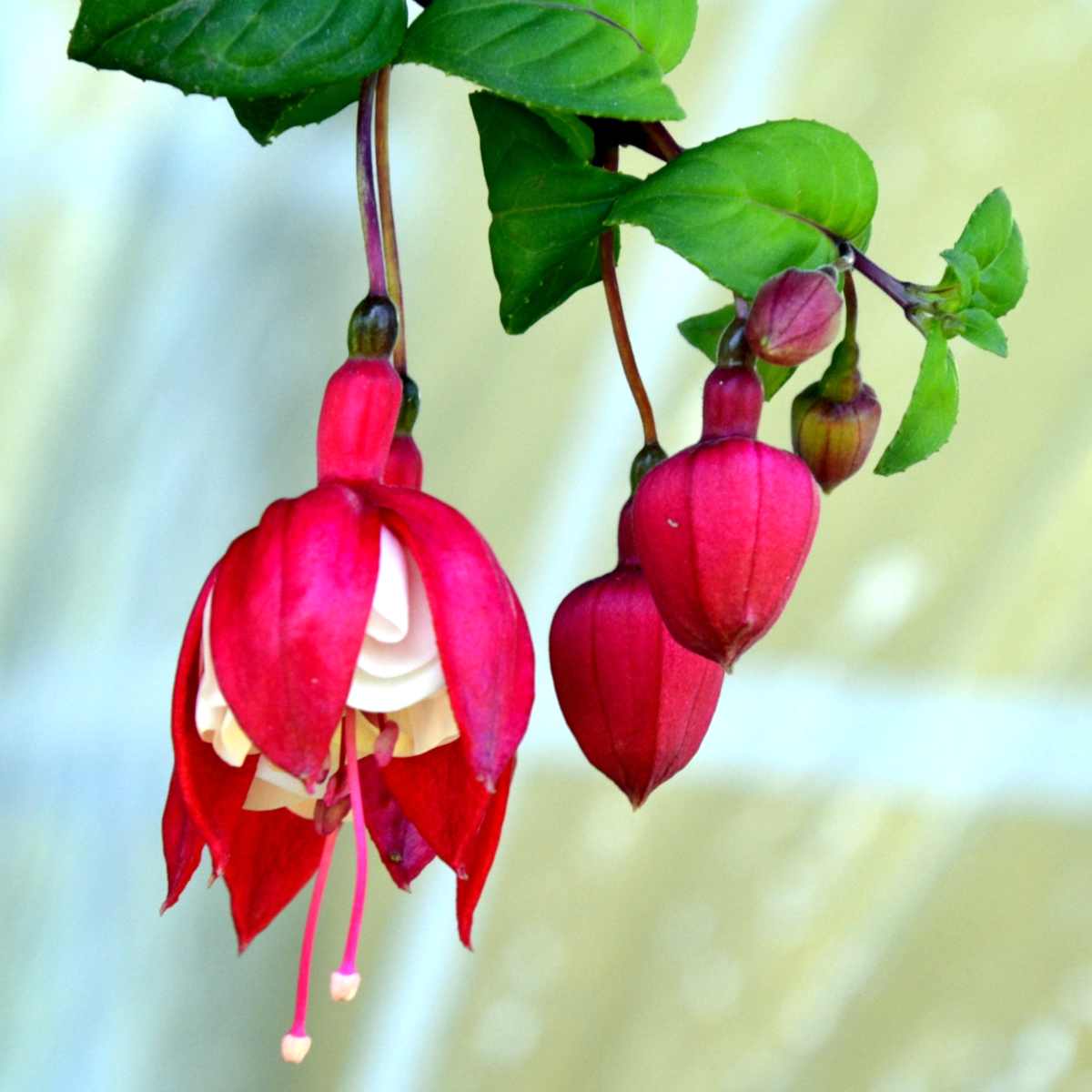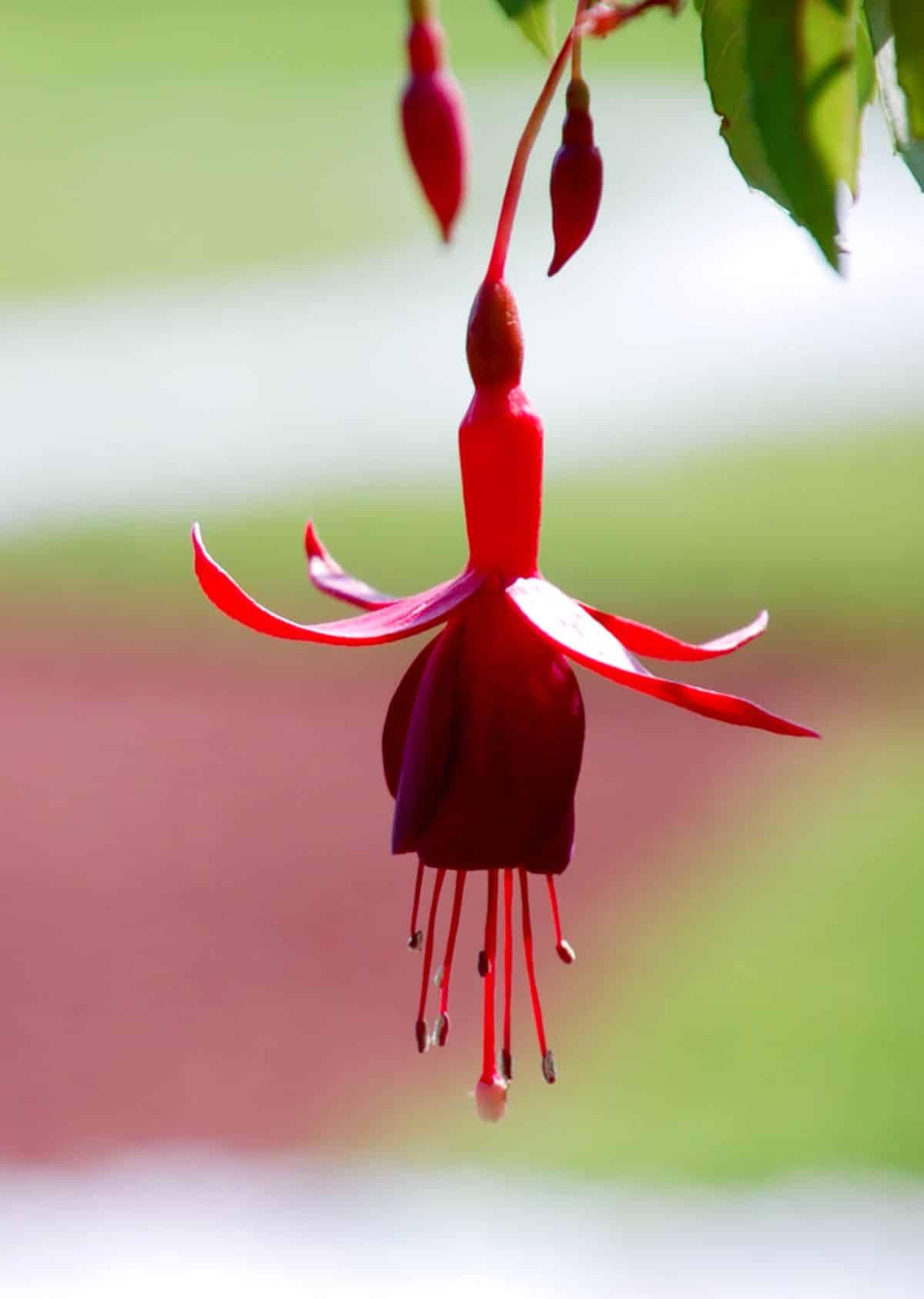
Flowers shaped like tiny bells hang in bright, original colours on a small tree that looks like a bush and comes from Central and South America. Fuchsia is grown for that showy display, but it is not hardy: shelter it from freezing temperatures and it will flower generously.
| Name | Fuchsia [“FOO-shya” or /ˈfjuːʃə/] |
|---|---|
| Family | Onagraceae or Willowherb family |
| Type | Shrub |
| Height | 8 to 24 inches (20 to 60 cm) |
| Exposure | Part sun or light sun |
| Soil | Ordinary |
| Foliage | Deciduous |
| Flowering | May to October |
Care, pruning and planting must all follow good practices to have your plant bear very nice flowers.
Favor planting in spring taking great care to enrich the soil with soil mix and even soil conditioner such as manure and seaweed if possible.
In areas with mild climates in winter, you can also plant in fall.
Keep a distance of about 32 inches (30 cm) between specimens.
Cut wilted flowers off as they die, this favors the appearance of new buds.
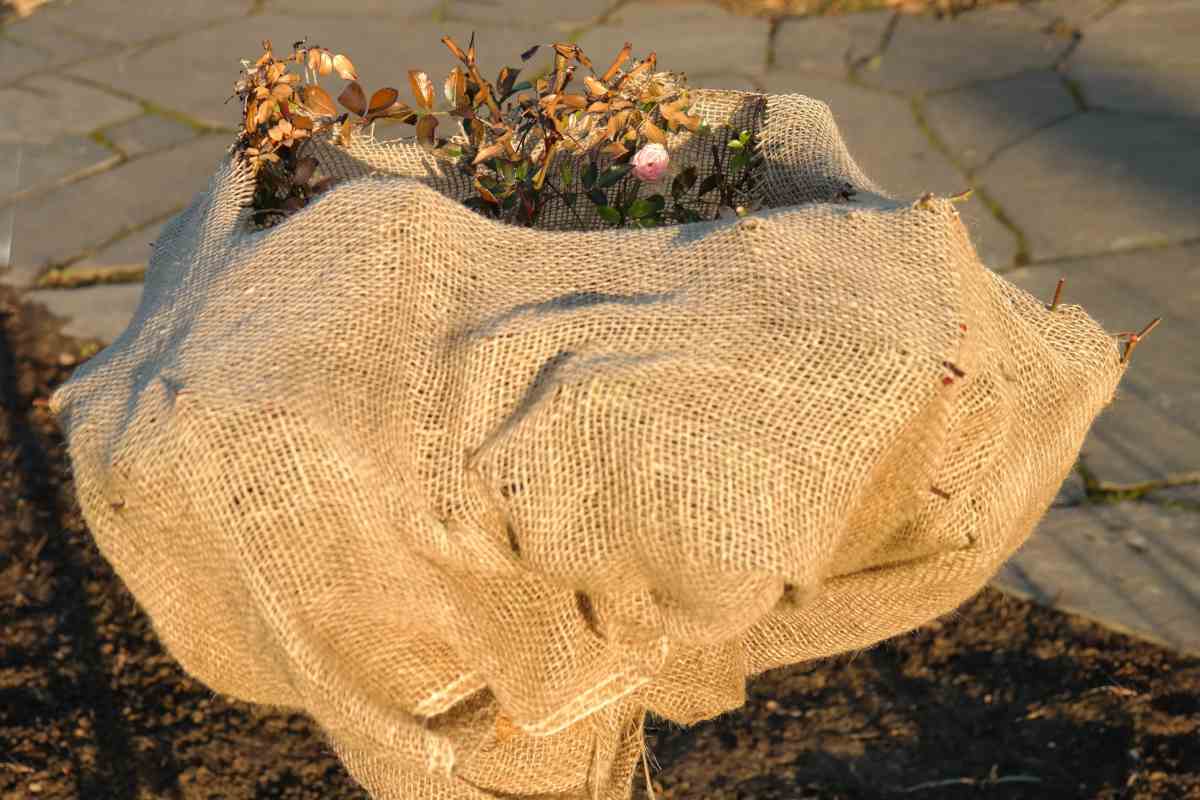
In fall, cut back as short as you can in November, and protect the foot of the plant with dried leaf mulch for instance.
Be careful if you’re growing fuchsia plants and if you live in a region where winters are cold, you must absolutely grow it in a pot and bring it indoors to a shed or space that is cool but where it doesn’t freeze in winter.
The entire point of growing a plant in a pot is that you’re able to place it anywhere, like a terrace or a balcony.
But the soil usually dries up much faster in a pot than in the ground, and it helps to water regularly, especially in the summer.
It loves light sun but appreciates shade in the summer when temperatures are high.
The same advice applies as for specimens growing directly in the ground.
Fuchsia plants aren’t hardy and will need to be protected in areas where the temperature consistently drops below 32°F (0°C).
In winter, pots make roots even more vulnerable to the cold and to freezing, and so bringing the plants indoors to a nice cool and sheltered spot until the winter is over is recommended.
Fuchsias fall into two camps that matter far more than colour: the tougher bush types that can stay in the ground in mild areas, and the trailing or tender sorts grown in baskets and pots. This table sets the most widely sold cultivars side by side so you can match habit and hardiness to the spot you have in mind.
| Variety | Habit | Flower colour | Hardiness | Best use |
|---|---|---|---|---|
| Dollar Princess | Compact upright | Cerise and purple, double | Hardy in mild areas | Border, pots, free flowering |
| Mrs Popple | Upright bush | Scarlet tube, violet skirt | Hardy in mild areas | Border, informal hedge |
| Riccartonii | Tall upright, vigorous | Crimson and purple | Hardiest type | Hedging, shelter planting |
| Hawkshead | Slender upright | White, green-tipped | Hardy in mild areas | Shady border, white schemes |
| Genii | Compact upright | Cerise and violet | Hardy in mild areas | Grown for golden foliage |
| Tom Thumb | Dwarf bush | Rose-red and mauve | Hardy in mild areas | Edging, rockery, small pots |
| Swingtime | Trailing to lax bush | Red tube, white double skirt | Half-hardy | Hanging baskets |
| Marinka | Strongly trailing | Rich red, single | Half-hardy | Hanging baskets, wall pots |
| Annabel | Lax upright | White flushed pink, double | Half-hardy | Pots, standards, baskets |
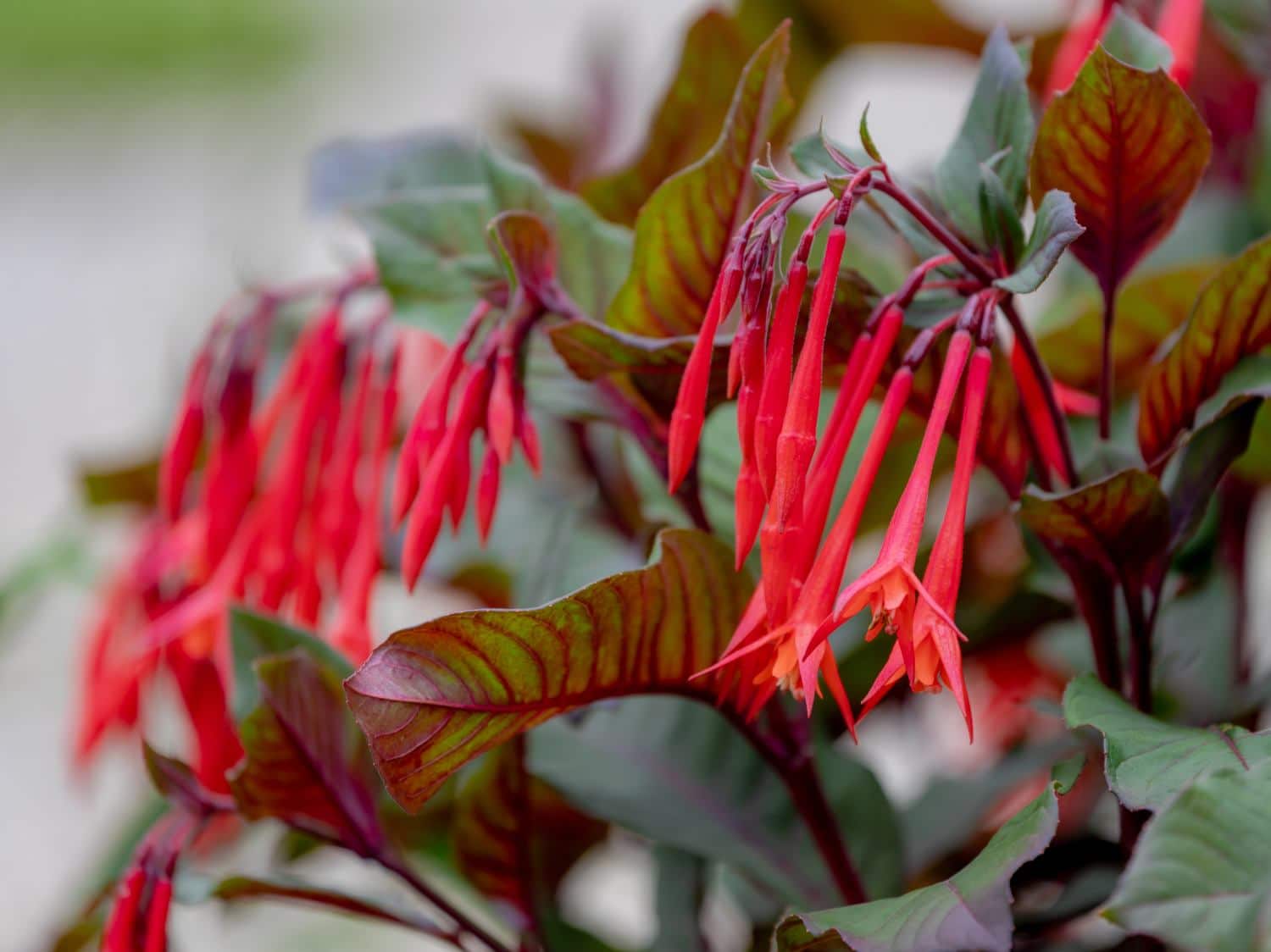
| Thalia | Upright, dark bronze leaves | Long orange-red tubes | Tender, frost-free only | Summer pots and bedding |
| Lady Boothby | Very tall, climbing | Crimson and deep purple | Hardy in mild areas | Trained up a wall or obelisk |
| Alice Hoffman | Dwarf bush, bronze leaves | Rose tube, white skirt | Hardy in mild areas | Low border, patio pot |
| Display | Upright bush | Pink, self-coloured | Hardy in mild areas | Border, standard training |
| Winston Churchill | Bushy upright | Pink tube, lavender double skirt | Half-hardy | Containers, patio display |
| Gartenmeister Bonstedt | Upright, bronze-red leaves | Brick-orange tubes | Tender, frost-free only | Bedding, sunnier containers |
The work a fuchsia needs changes completely from one season to the next, from planting to frost protection. Here is what each period asks of you.
| Period | What to do | Key point |
|---|---|---|
| Spring | Plant out, spacing specimens about 32 inches (30 cm) apart | Enrich the soil with soil mix, manure or seaweed |
| Summer | Water regularly, especially in pots, and remove wilted flowers | Give shade when temperatures are high |
| August | Take cuttings | Propagation is relatively easy at this time |
| Autumn | Plant in mild-winter areas; cut back hard in November | Protect the foot with dried leaf mulch |
| Winter | Add horticultural fleece, or bring potted plants under cover | Pots leave roots very vulnerable to freezing |
Below 32°F (0°C), protection is not optional: the plant simply is not hardy.
If you thought Fuchsia was spelled fushia or fuschia, you aren’t alone! Two-thirds of English speakers are misled by the pronunciation. Only less than a third among us get it right!
Indeed, the plant was named in honor of a German doctor and herbalist called Leonhart Fuchs. Fuchs is pronounced “fooks”, similarly to “fox”, the wiley animal. “Fuchs” actually means “fox” in German.
However, most English natives pronounce this flower shrub’s name as “foo-shya”, hence the habitual misspelling. Discover easy tricks to remember the correct spelling – i.e., neither fushia nor fuschia.
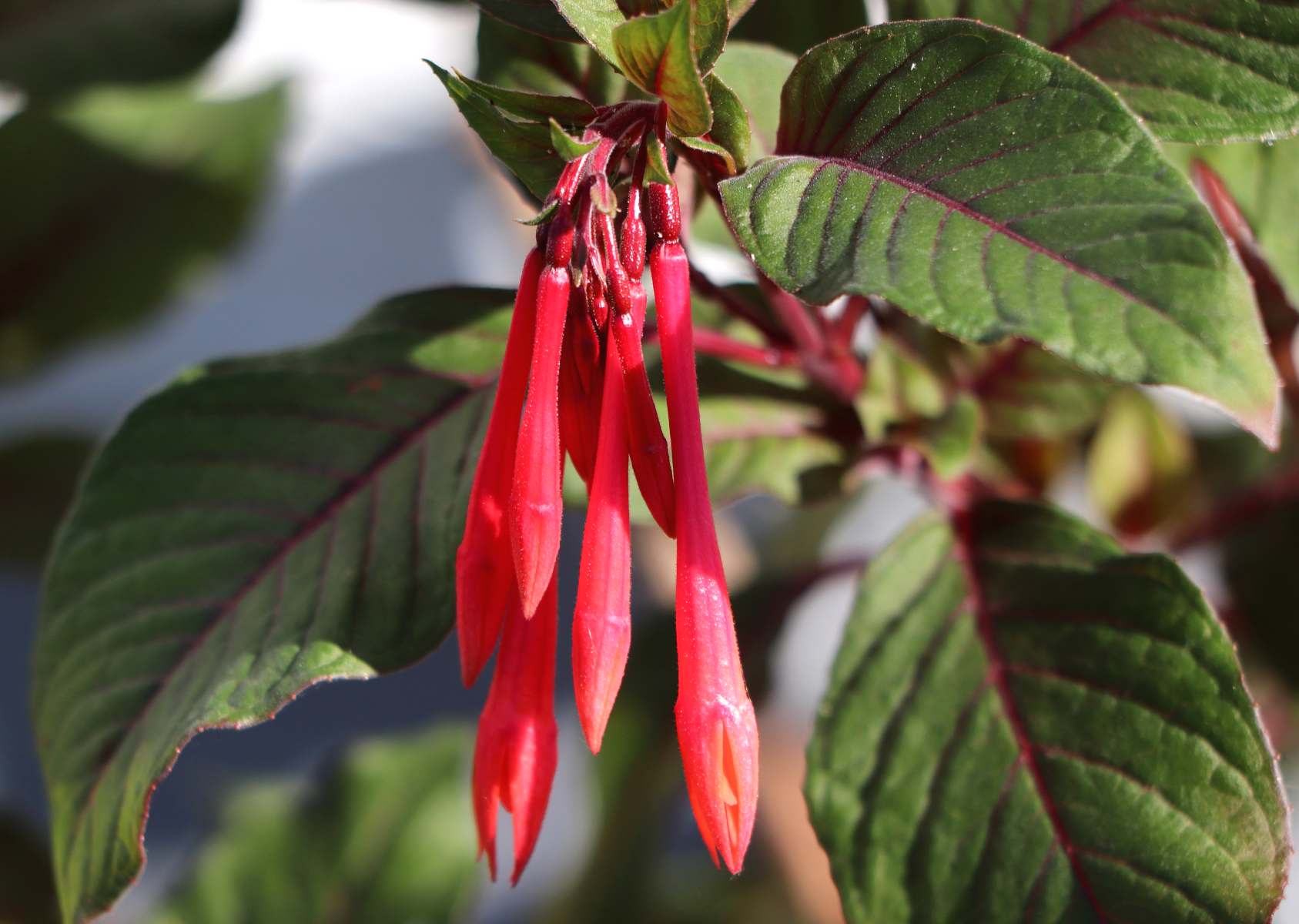
Fuchsia is actually a small tree that looks like a bush and that is native to Central and South America.
Over a hundred species belong to the genus, which makes for a wide variety of colors, flowers and leaves.
The important number of species also makes it possible to spread the blooming season.
It bears magnificent flowers shaped like tiny bells which are noticed for their original shape and the brightness of their colors.
To stimulate this magnificent blooming, regularly add organic liquid fertilizer designed for geraniums or flowering plants.