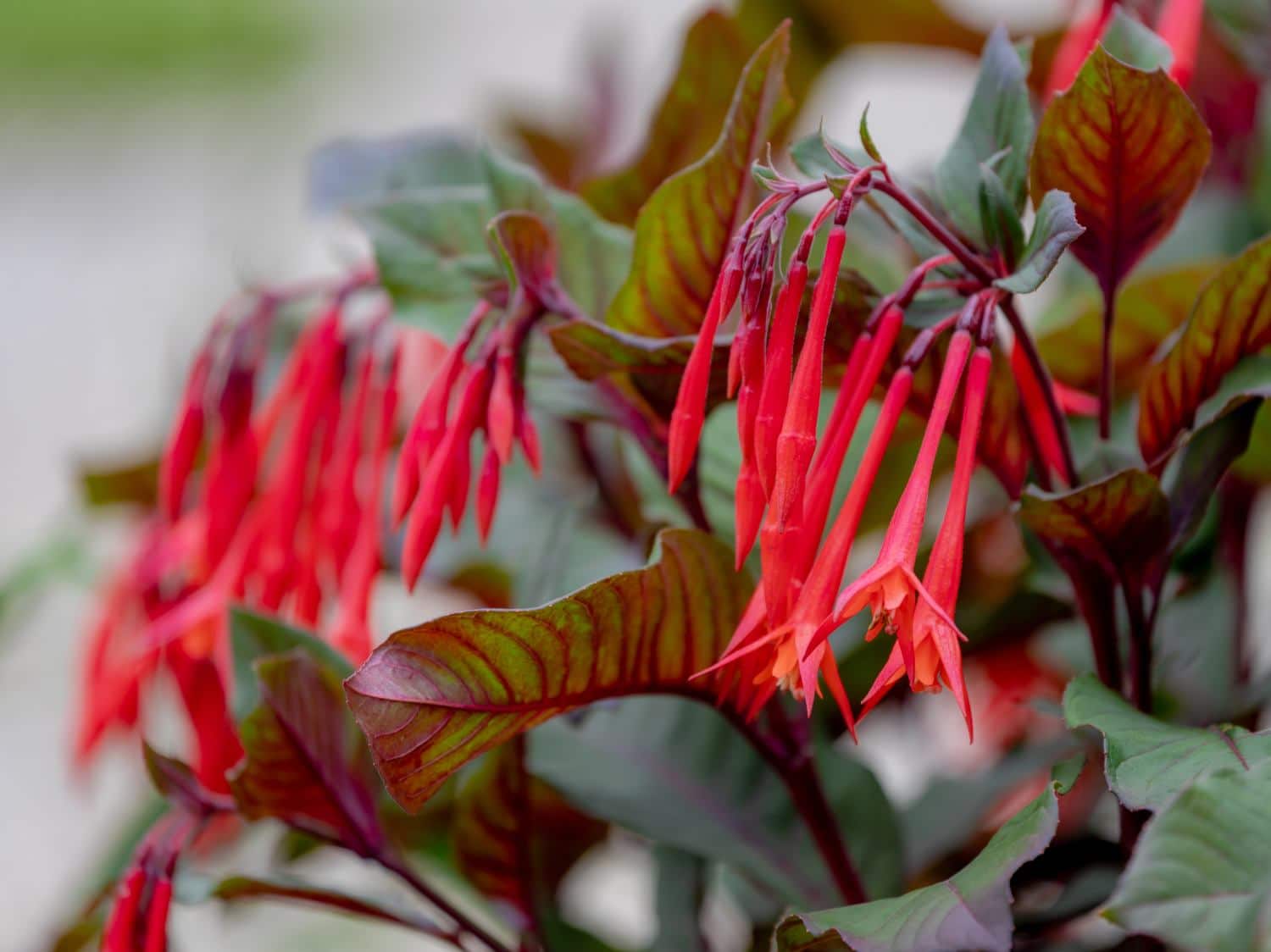
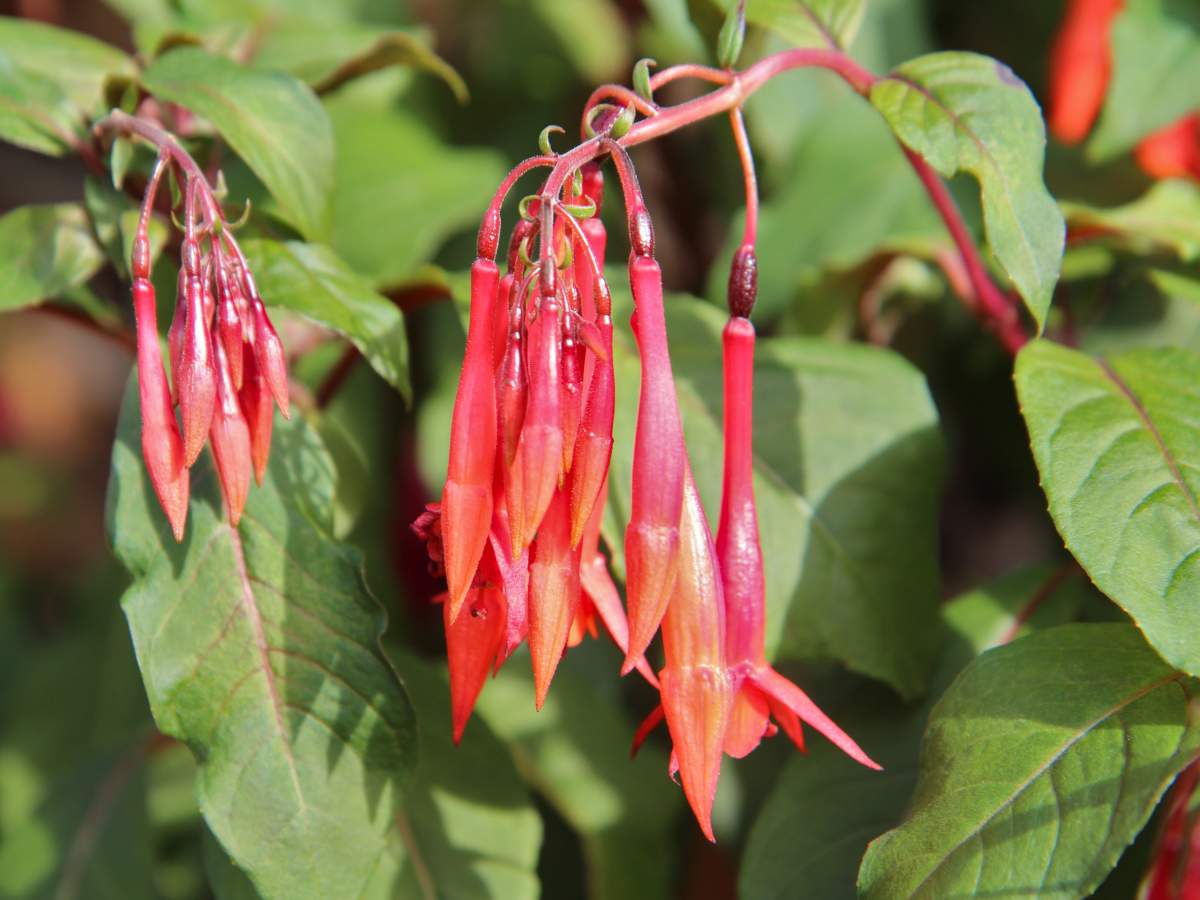
Long, bell-shaped flowers in brilliant red hang against large, bright leaves on a small tree that looks more like a bush. Fuchsia fulgens is grown for that unusual shape and colour, but it isn’t hardy: shelter it from frost and it will flower from late spring right through to mid-autumn.
Fuchsia fulgens at a glance
Name
Fuschia fulgens
Family
Onagraceae or Willowherb family
Type
perennial
Height
8 to 24 inches (20 to 60 cm)
Exposure
full sun, part sun
Soil
ordinary
Foliage
deciduous
Flowering
late spring to mid-autumn
Care, pruning and planting must all follow good practices to have your plant bear very nice Fuchsia flowers.
Planting Fuchsia fulgens
Favor planting in spring, taking great care to enrich the soil with soil mix and even soil conditioner such as manure and seaweed if possible.
In areas with mild climates in winter, you can also plant in fall.
Keep a distance of about 32 inches (30 cm) between specimens.
Propagation through cuttings is relatively easy during the month of late summer.
Tender fuchsias should only be planted out once all risk of frost has passed, since frost damages or kills soft young growth; hardy types such as Fuchsia magellanica can overwinter outdoors.
Soak the root ball in a bucket of water until bubbles stop rising before planting, as a dry root ball set in moist soil often stays dry and the plant struggles to root out.
For most plants, set the root ball’s top level with the surrounding soil, firm the soil by hand and water in generously; some, such as clematis, tomatoes and certain grafted roses, are deliberately planted deeper.
Choose a planting spot sheltered from strong wind and avoid ground where water sits after rain, since wind can damage stems and foliage while waterlogged soil deprives roots of oxygen and encourages rot.
Pruning and caring for Fuchsia fulgens
Cut wilted flowers off as they die, this favors the appearance of new buds.
Cut back hard in late autumn, then mulch the base
In fall, cut back as short as you can in late autumn, and protect the foot of the plant with dried leaf mulch for instance.
If you fear harsh colds, feel free to add horticultural fleece.
Be careful if you’re growing fuchsia plants and if you live in a region where the climate is harsh, you must absolutely grow it in a pot and bring it indoors to a shed or space that is cool but where it doesn’t freeze during the winter.
Watering for F. fulgens
In case of high temperatures or prolonged dry spells, water enough to keep the soil moist, especially if it is grown in a pot.
Feel free to mulch the base of your Fuschia fulgens to keep the soil moist as long as possible.
Never leave a potted Fuchsia fulgens standing in a saucer full of water; empty it after watering so the drainage holes can work and the roots are not starved of air.
Once Fuchsia fulgens has been cut back and moved under cover for winter, reduce watering to just enough to stop the rootball drying out completely, as a dormant plant needs very little.
Drooping leaves and dropping buds on a fuchsia can signal a dry rootball, but overwatering, root damage, heat or sudden changes cause the same symptoms, so check the compost first and, only if it is dry, water thoroughly until it drains from the base.
Growing potted Fuchsia fulgens
In spring and summer
The entire point of growing a plant in a pot is that you’re able to place it anywhere, like a terrace or a balcony.
But the soil usually dries up much faster in a pot than in the ground, and it helps to water regularly, especially in the summer.
It loves light sun but appreciates shade in the summer when temperatures are high.
In fall and winter
The same advice applies as for specimens growing directly in the ground.
Fuchsia plants aren’t hardy and will need to be protected in areas where the temperature consistently drops below 32°F (0°C).
In winter, pots make roots even more vulnerable to the cold and to freezing, and so bringing the plants indoors to a nice cool and sheltered spot until the winter is over is recommended.
The Fuchsia fulgens year, season by season
Everything this fuchsia asks for falls into a handful of moments in the year. Here is what to do, and when.
The Fuchsia fulgens year, season by season
Season
What to do
Points to watch
Spring
Plant out, enriching the soil
Work in soil mix, and manure or seaweed if you have it
Summer
Water to keep the soil moist
Pots dry out fastest; mulching the base helps
late summer
Take cuttings
The easiest month of the year to propagate it
Autumn
Cut back hard in late autumn
Protect the base with dried leaf mulch, or fleece if colds are harsh
Winter
Move pots under cover
A cool, frost-free shed until winter is over
Miss the late autumn cut-back or the winter shelter and the plant suffers; keep to the rest and it flowers from late spring to mid-autumn.
All there is to know about fuchsia fulgens
Fuchsia fulgens is actually a small tree that looks like a bush and is native to Central and South America.
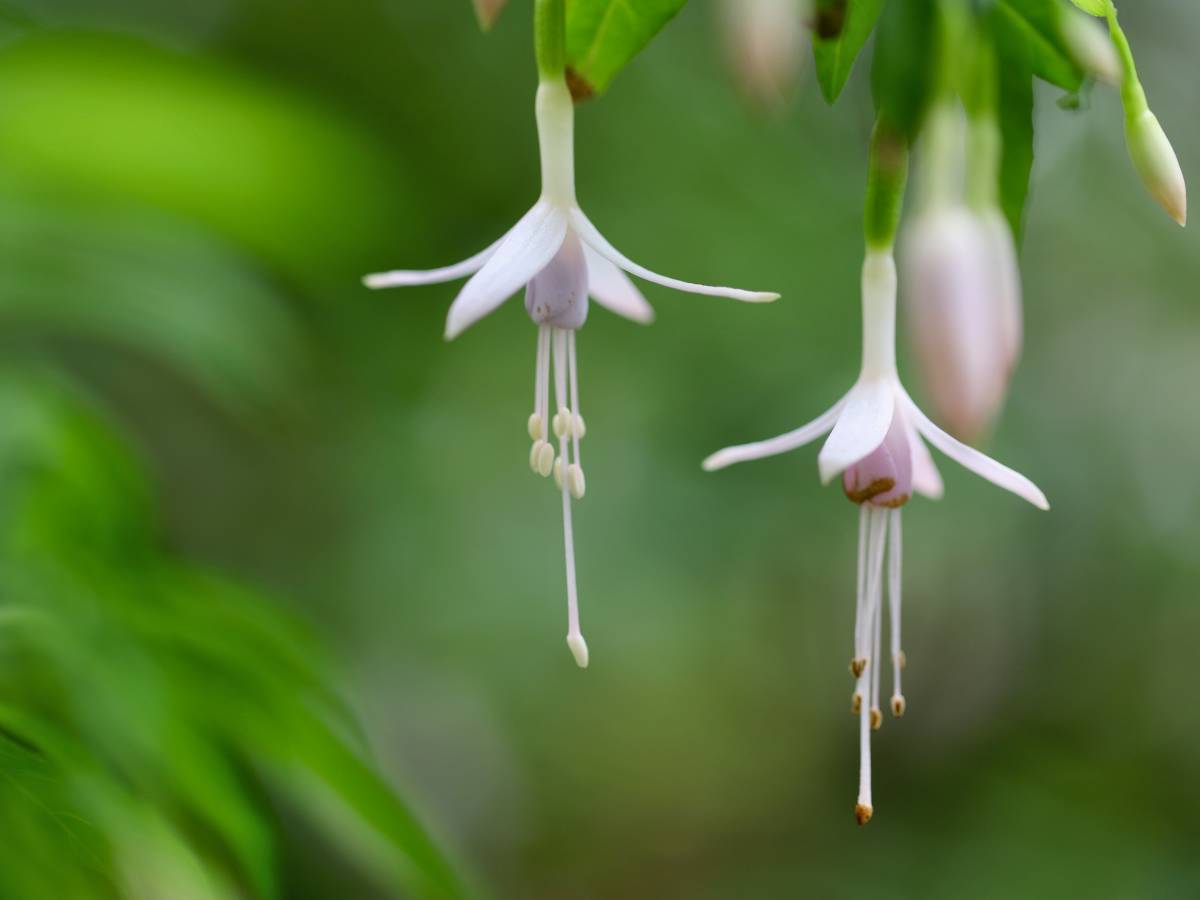
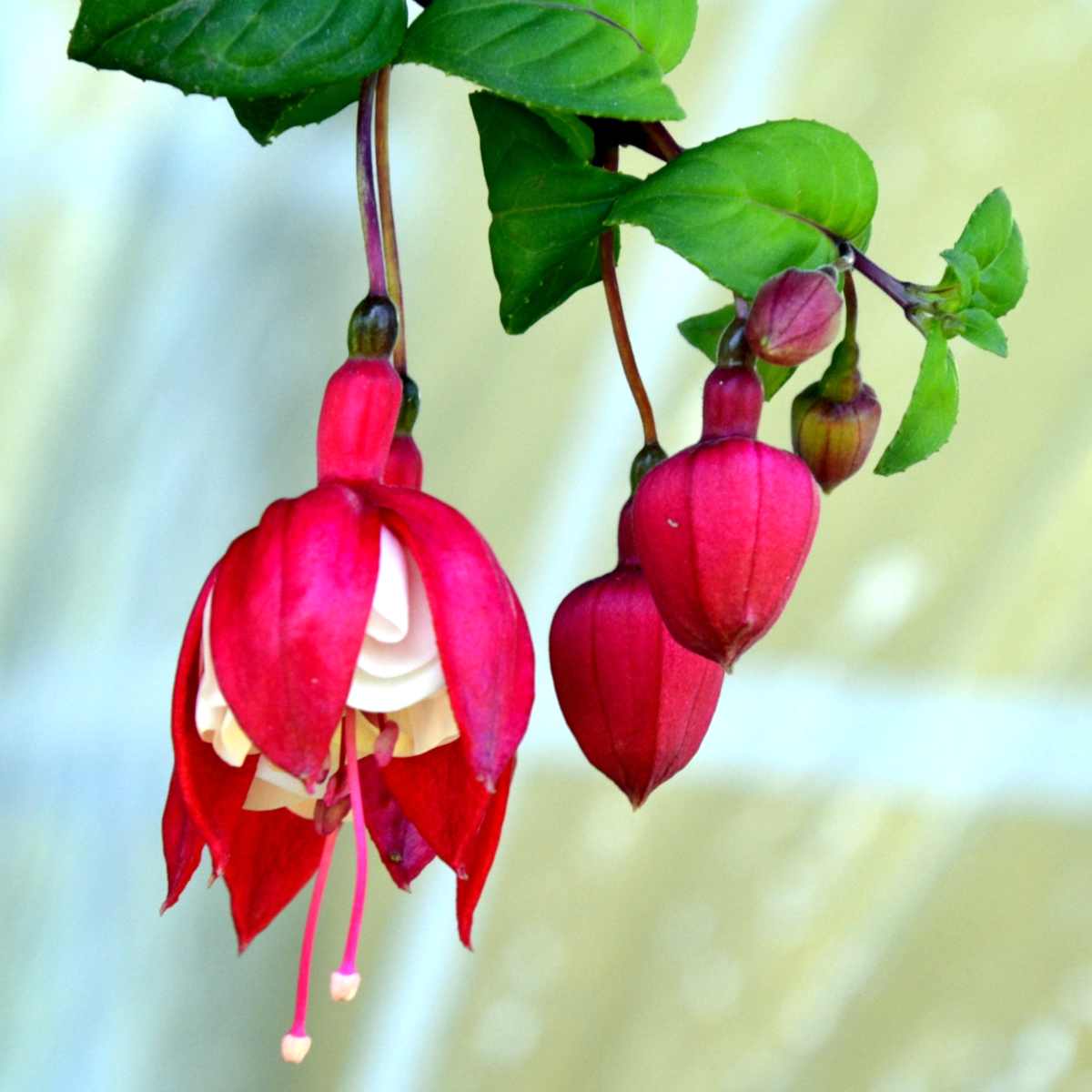
It is one from over a hundred species belonging to the fuchsia genus, which makes for a wide variety of colors, flowers and leaves.
The important number of species also makes it possible to spread the blooming season.
It bears magnificent flowersshaped like elongated bells which are noticed for their original shape and the brightness of their red colors.
Fuchsia fulgens forms fleshy, tuberous roots that store reserves, which is why a hard cut-back does not kill it: the dormant rootstock can be overwintered almost dry in a frost-free shed.
Fuchsias flower on shoots produced in the current season, so cutting back hard and pinching out the tips of young stems both increase the number of flowering branches.
Fruit develops from pollinated flowers, so if you want berries from a fruiting plant, leave some faded blooms in place rather than deadheading every one, and confirm the species’ fruit is edible before eating.
Plants with large, soft leaves tend to scorch and wilt in hot, dry wind, so give them a sheltered spot and inspect leaf undersides regularly for whitefly and red spider mite, which flourish in warm, sheltered conditions.
Smart tip about fuchsia fulgens
To stimulate this magnificent blooming, regularly add organic liquid fertilizer designed for geraniums or flowering plants.
Written by Gaspard Lorthiois | Loves helping out, especially when it comes to growing things. Worked in herbal medicine, runs a farm, and dabbles in tech. Master's degree and engineer.