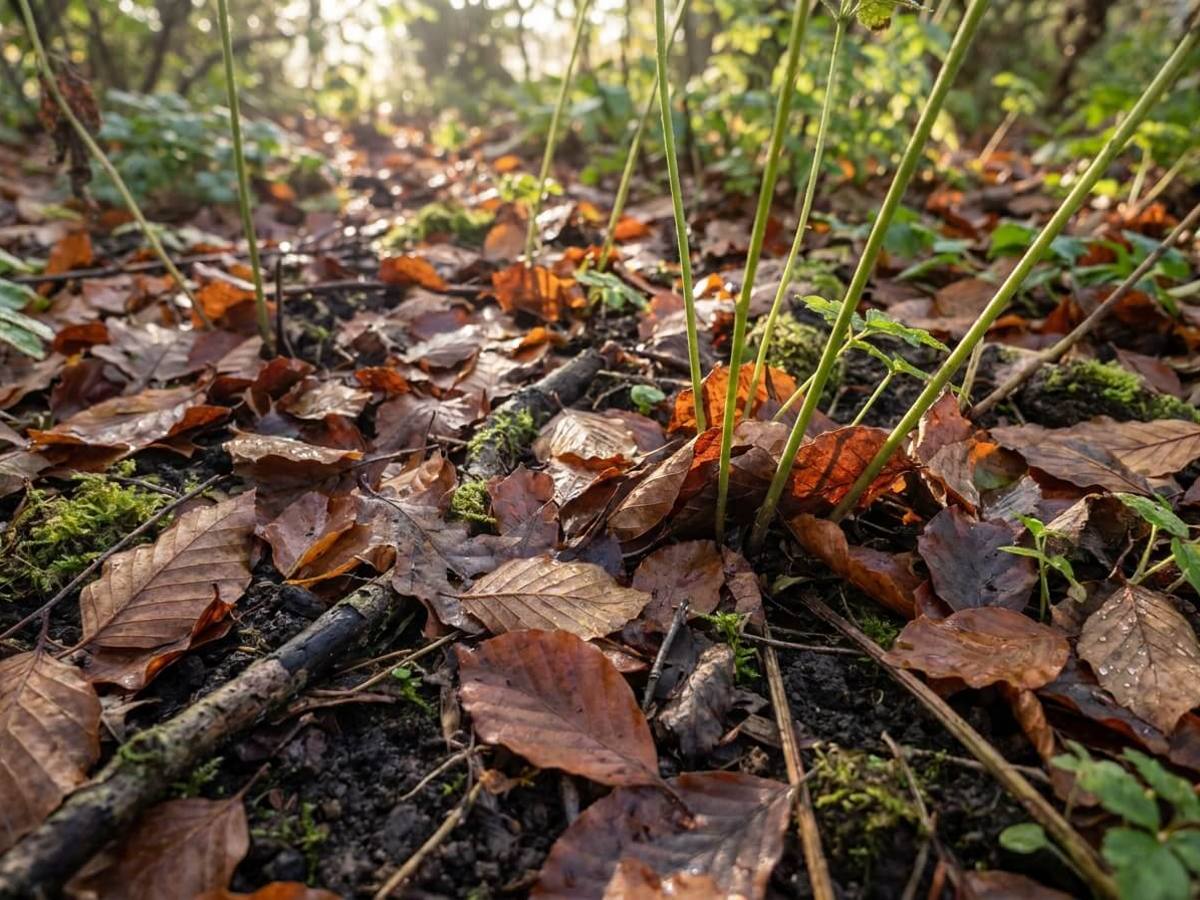
Frost-blackened perennial foliage looks like garden carnage in September, but resist the urge to tidy it up. Cutting back dead-looking stems now exposes the crowns to harsh winter frost, potentially killing plants that would otherwise survive. Wait until late winter to prune, and your perennials will thank you with stronger spring growth.
Across gardens in the UK and US, late frosts turn perennial foliage brown and blackened overnight. Gardeners instinctively reach for secateurs, seeing the damage as disorder that needs fixing before winter sets in. The problem is that this frost-damaged foliage, however ugly, acts as protective insulation for the plant’s crown and root system.
The crown of a perennial, that vulnerable point where stems meet roots at soil level, is the plant’s Achilles heel. Once exposed to repeated freeze-thaw cycles, the crown rots or splits, killing the entire plant. Dead foliage, leaf litter and even frost-damaged stems create a natural mulch that buffers temperature fluctuations and keeps moisture levels stable around the crown.
Most gardeners don’t realise that perennials have already drawn energy down into their roots by the time frost arrives. The blackened top growth is already dead wood, doing no photosynthesis, but it’s still doing crucial protective work. Studies from university extension services show that perennials left uncut through winter have significantly better survival rates than those pruned in autumn.
Not every stem calls for the same treatment: some foliage earns its keep as insulation, while diseased or flopping growth is better away. This table sets out each job, its season and the reason behind it.
| Task | When | Which plants | Why |
|---|---|---|---|
| Leave frost-damaged foliage in place | Early autumn to late winter | All perennials | It insulates the crown against freeze-thaw |
| Remove diseased stems only | Early autumn | Anything showing powdery mildew or rust | Stops spores overwintering |
| Cut back flopping growth | Early autumn | Low-growing sedums and hellebores | Removes slug habitat |
| Add a loose mulch of shredded leaves | Late autumn | Around the crowns of all perennials | Extra winter protection as the ground freezes |
| Cut all old stems to about 5cm | Early spring | Any perennial showing new growth at the base | The dead top growth has done its job |
In short, the secateurs come out twice: briefly for disease in autumn, then properly once spring growth shows.
Follow these steps to protect your plants whilst keeping your garden looking intentional:
Monitor your perennials through January and February for signs of rot or crown damage. If you notice any stems becoming mushy or if the crown smells unpleasant, it’s best to remove the entire plant to prevent pathogen spread. By March, you’ll see new green growth emerging from the base, and that’s your signal to cut back all the old stems to about 5cm above soil level. The wait is worth it, and your garden will reward your patience with vigorous, healthy perennials throughout next season.