With August heat intensifying water stress across gardens, we put drip irrigation and hand watering head-to-head during a genuine drought. The results shattered one myth: hand watering isn’t necessarily more flexible when water restrictions bite. Our test revealed which method truly conserves water, keeps soil moisture stable, and lets plants flourish when every drop counts.
August is when drought stress peaks in both UK and US gardens. Soil temperatures soar, plants transpire moisture faster, and water restrictions often tighten just as gardens need it most. Across the southern United States, hosepipe bans are already common; in the UK, prolonged dry spells mean many regions face usage limits for the second or third consecutive summer.
Before deciding how to water through a drought, it helps to see how each approach behaved in our side-by-side trial. The figures below come from identical herb and vegetable beds watered two different ways.
| Approach | When to use it | Effect on water and moisture | Best for |
|---|---|---|---|
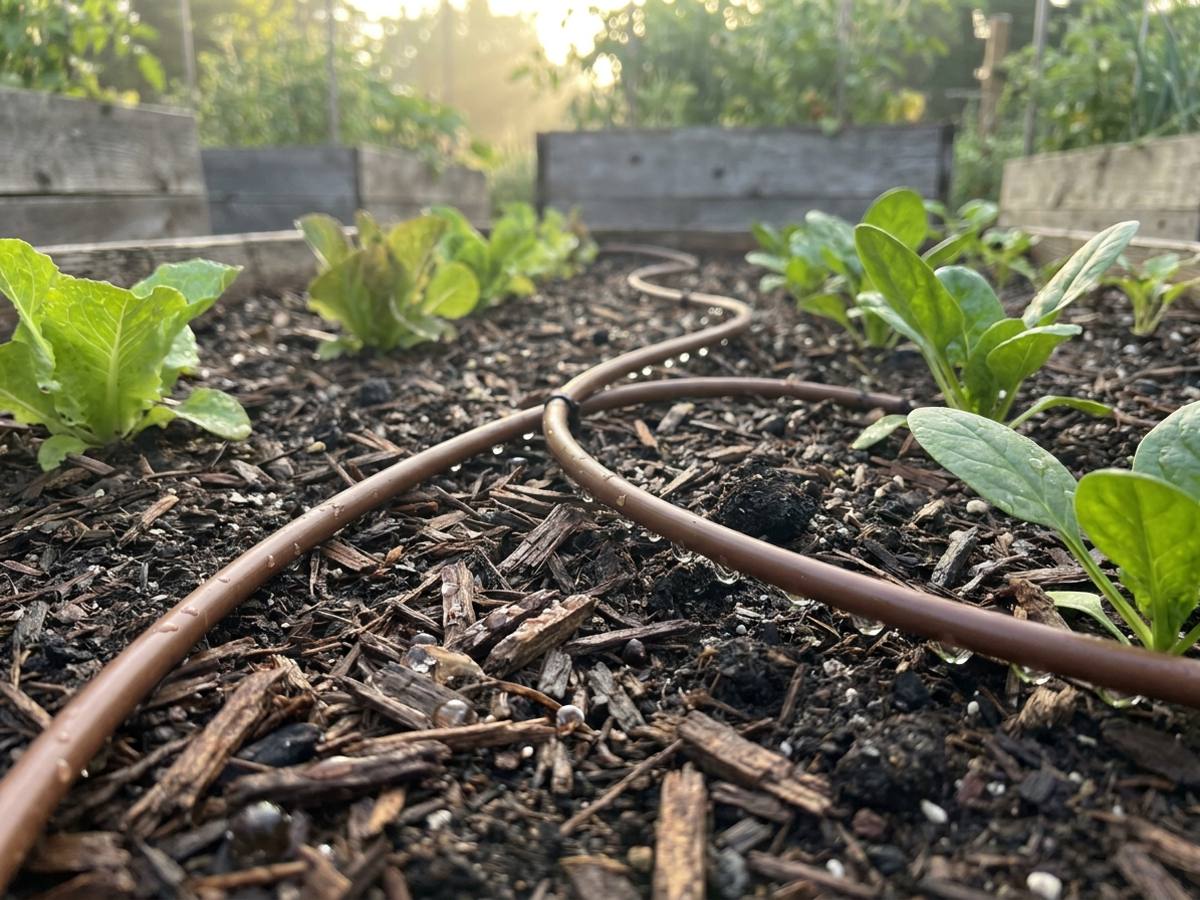
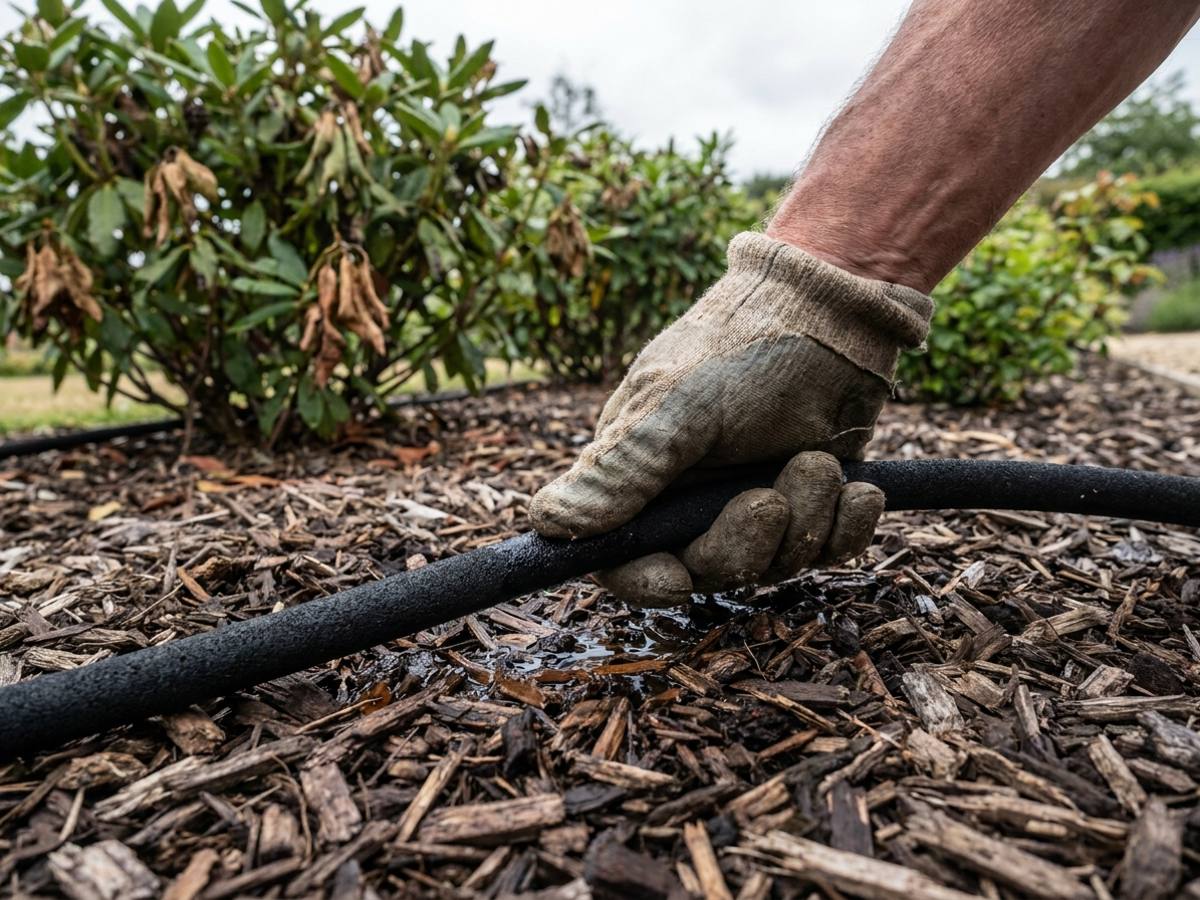
| Drip irrigation or soaker hose | Any time, including on a timer under late-summer restrictions | Held 62 per cent soil moisture at midday | High-value beds: vegetables, newly planted shrubs |
| Hand watering | Before 6am or after 7pm | Lost 30 per cent more moisture to evaporation | Targeting individual plants and containers |
| Mulch, 5-7cm of wood chip or straw | Any time through late summer, around plants | Reduces watering frequency by up to 40 per cent | Locking in moisture alongside either method |
| Soil moisture meter | Check before watering rather than on a fixed schedule | Prevents overwatering and conserves during damp spells | Knowing when the top 5cm has actually dried |
Read across the rows and the pattern is clear: delivery at soil level, cool-hour timing and mulch all pull in the same direction.
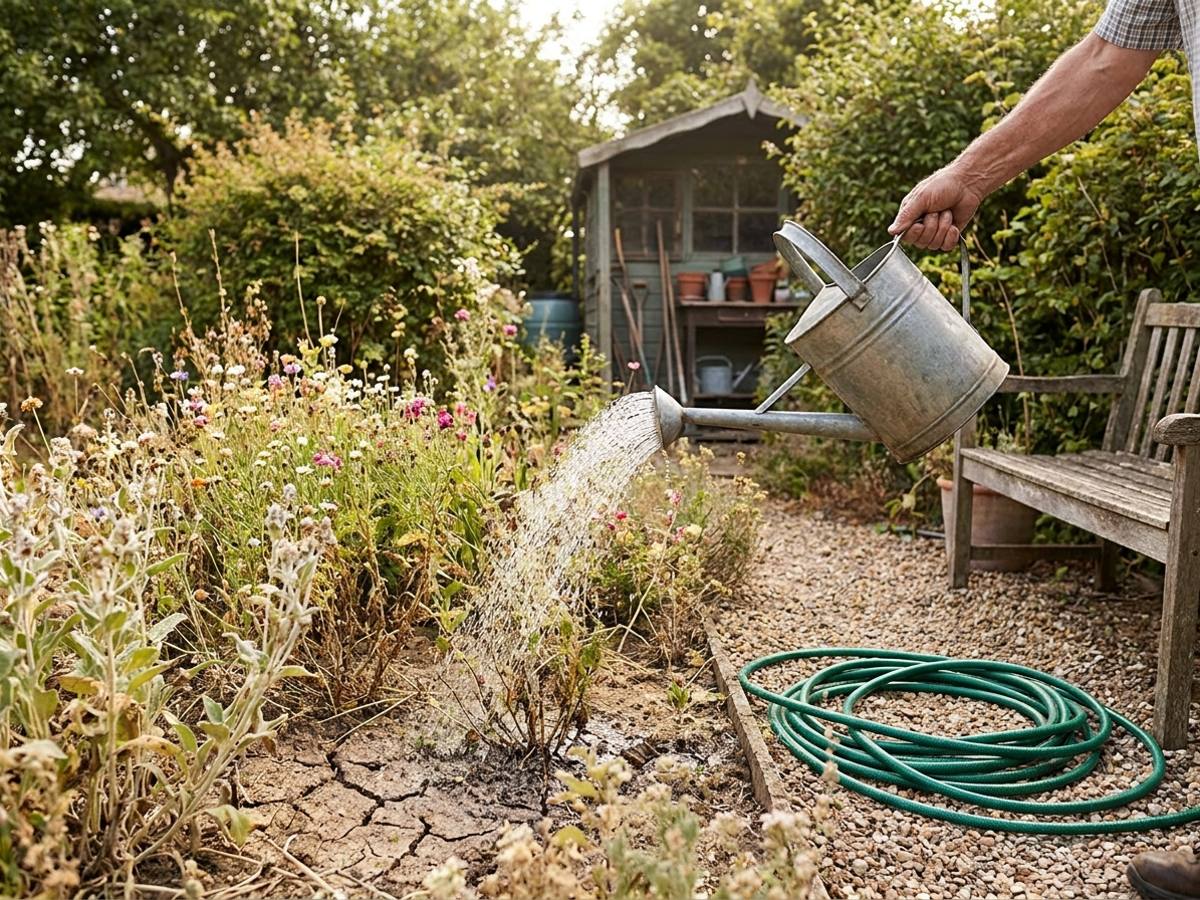
Gardeners often assume hand watering offers superior flexibility and control. You can target individual plants, adjust flow by feel, and respond to visible wilting. However, this perception masks a critical flaw: hand watering is labour-intensive and inconsistent. A 2024 horticultural study found hand-watered plots lost 30 per cent more moisture to evaporation than drip-irrigated soil, partly because surface watering happens during the day when temperatures peak.
Our August trial planted identical herb and vegetable beds side by side. The hand-watered bed received water every morning at 7am. Soil moisture readings at 10cm depth revealed the truth: hand-watered soil dried to 35 per cent moisture by midday, whilst drip-irrigated soil held 62 per cent. Plants in the drip system showed less wilting stress by 2pm, and tomato yields were 18 per cent higher over the trial period.
If you’re choosing between methods or switching mid-summer, follow this approach:
Monitor your drip system or watering schedule closely over the next four weeks. Clogged drip emitters, uneven coverage, and unexpected dry patches are common in August heat. If you’re hand watering, track which plants show stress earliest, those are your priority slots when water is rationed. As autumn approaches and temperatures drop, you’ll naturally reduce frequency, but soil moisture metres ensure you’re not guessing.