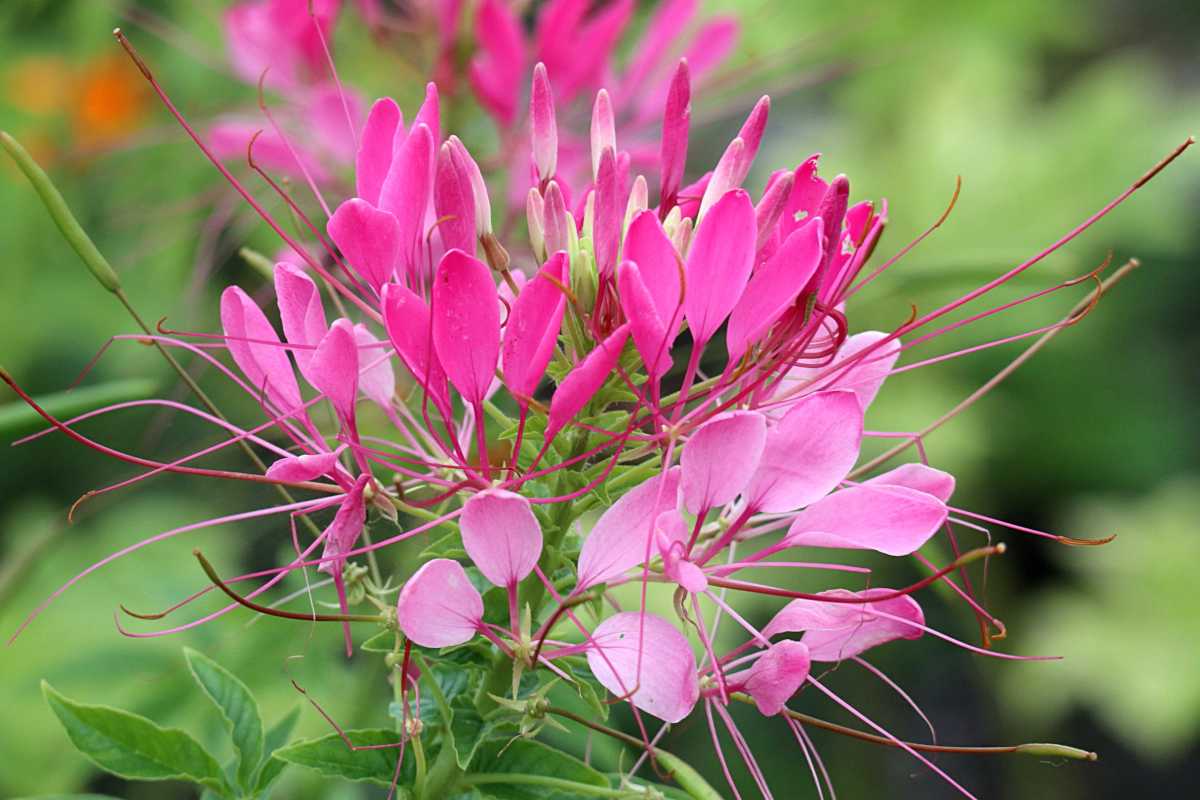
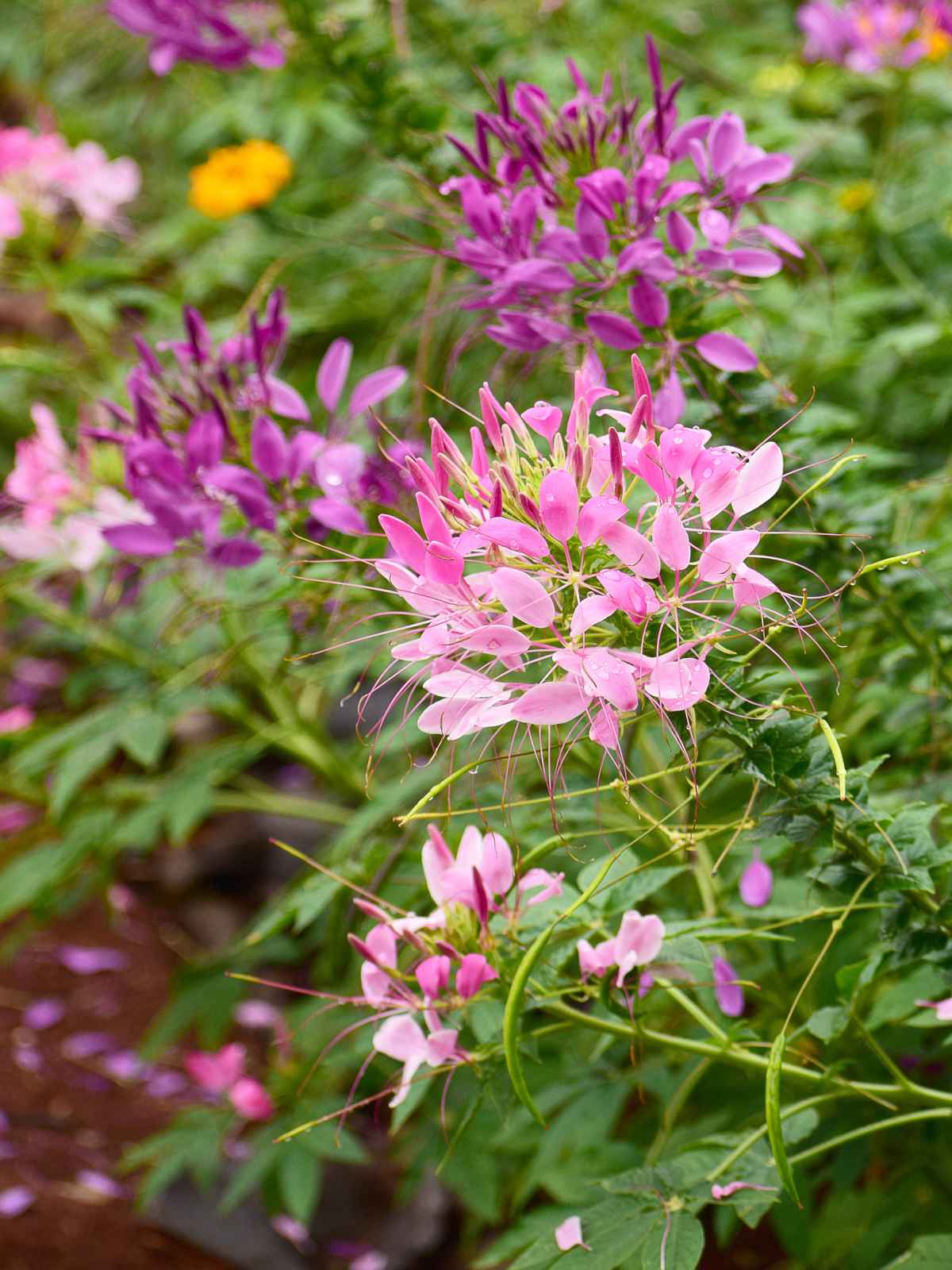
Large pink, white or purple flowers, fragrant, top stems that reach up to five feet, above palmate green leaves that are ornamental in their own right. The spider plant (Cleome spinosa) makes a tall backdrop to a bed: give it rich, well-drained soil in full sun, sheltered from wind, and it blooms all summer.
| Name | Cleome spinosa |
|---|---|
| Family | Cleomaceae (formerly Capparaceae) |
| Type | Annual |
| Height | 32 inches to 5 feet (80 cm to 1.5 metres) depending on the variety |
| Exposure | Full sun |
| Soil | Rich and well drained |
| Flowering | All summer → early autumn |
Cleome blooms over all of summer. Also called spider plant, it belongs to the same family as the caper bush.
Cleome is grown in temperate climates as an annual, because it cannot withstand temperatures below 17°F (-8°C).
You’ll have to sow your cleome seeds every year, either directly in the ground from April onwards, or a bit earlier under cover followed by transplanting to the flower bed in May.
You can sow in a tray as early as March and April which will let you transfer the strongest seedlings to a nursery pot before the final transplanting, when the climate is most suited to the plant’s growth.
Cleome, when planted in pots, is more vulnerable to the dryness of the soil, and must be watered more often but in moderate amounts.
You can also stake the longest stems if they tend to collapse.
Cleome has to be sown afresh every year, and the sowing date decides how early the plants flower and how sturdy they are when they reach the border. Here are the options described above, side by side.
| Method | When | What follows | Point to watch |
|---|---|---|---|
| Direct sowing in the ground | From April onwards | Thin and space the young plants in the bed | Soaked seeds sprout in 10 to 15 days |
| Sowing under cover | A little earlier than April | Transplant to the flower bed in May | April in warmer areas, May in cooler climates |
| Sowing in a tray | March and April | Strongest seedlings potted on, then planted out | Wait until the climate suits the plant’s growth |
| Growing on in pots | After the final transplanting | Water more often, in moderate amounts | Soil dries out faster than in open ground |
Whichever method you choose, pinch the sprouts at planting time and set the plants 16 to 24 inches (40 to 60 cm) apart.
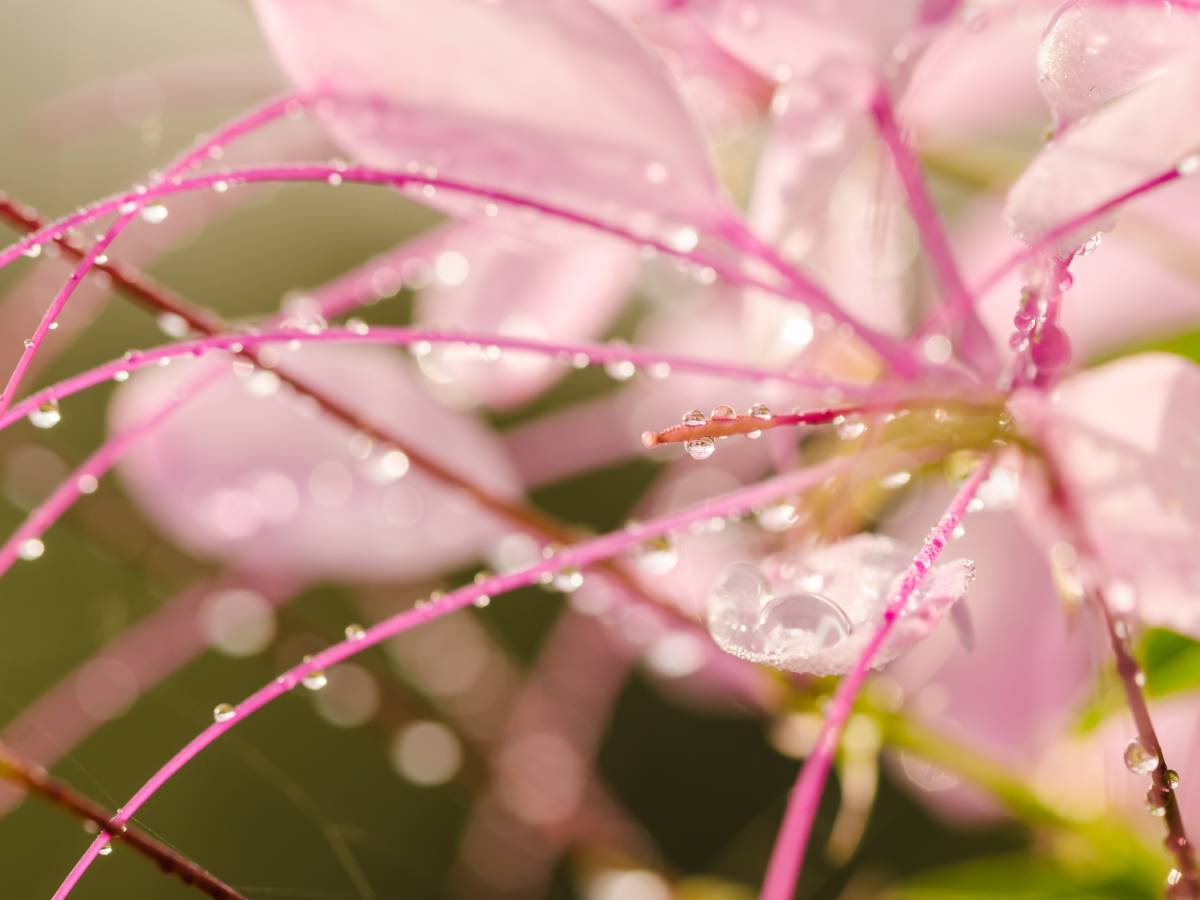
Cleome handles drought quite well and doesn’t fear diseases which makes it an easy plant to care for.
Once well settled in, you’ll only have to water in case of prolonged dry spell or heat wave.
Staking the stems might be necessary if they start bending over.
Lastly, remove wilted flowers regularly in order to stir the plant into bearing more flowers.
Cleomes differ mainly in flower colour and in how tall they grow, which decides whether they go at the back of a border or in a pot on the terrace. The varieties below are the ones most often found on seed racks and among bedding plants.
| Variety | Flower colour | Height band | Grown from | Best use |
|---|---|---|---|---|
| White Queen | Pure white | Tall | Seed | White and evening borders |
| Sparkler White | White | Medium, branching | Seed | Mid-border and large pots |
| Rose Queen | Soft rose pink | Tall | Seed | Back of a sunny border |
| Sparkler Rose | Rose pink | Medium, branching | Seed | Mid-border and large pots |
| Señorita Mi Amor | Deep pink | Medium, bushy | Bought as plants | Containers and patio displays |
| Violet Queen | Violet purple | Tall | Seed | Back of a sunny border |
| Sparkler Lavender | Lavender | Medium, branching | Seed | Mid-border and large pots |
| Cherry Queen | Deep cerise pink | Tall | Seed | Hot-coloured borders |
| Pink Queen | Clear pink | Tall | Seed | Borders and cutting |
| Señorita Blanca | White to blush | Medium, bushy | Bought as plants | Containers and patio displays |
| Sparkler Blush | Pale pink fading to white | Medium, branching | Seed | Mid-border and large pots |
| Helen Campbell | White | Tall | Seed | Cottage and white schemes |
| Señorita Rosalita | Lavender pink | Medium, bushy | Bought as plants | Containers, no deadheading needed |
Cleome is native to South America and Africa depending on the variety. Over 120 species are included in the genus, the most common of which is Cleome spinosa, the spider flower.
One usually appreciates cleomes for the large pink, white or purple fragrant flowers, and the palmate green-colored leaves that are also very ornamental.
This not-so-hardy plant is very easily grown and even reseeds itself from one year to the next.
Whether in the ground or on a terrace, avoid drafts because cleome stems will fold and easily fall over.