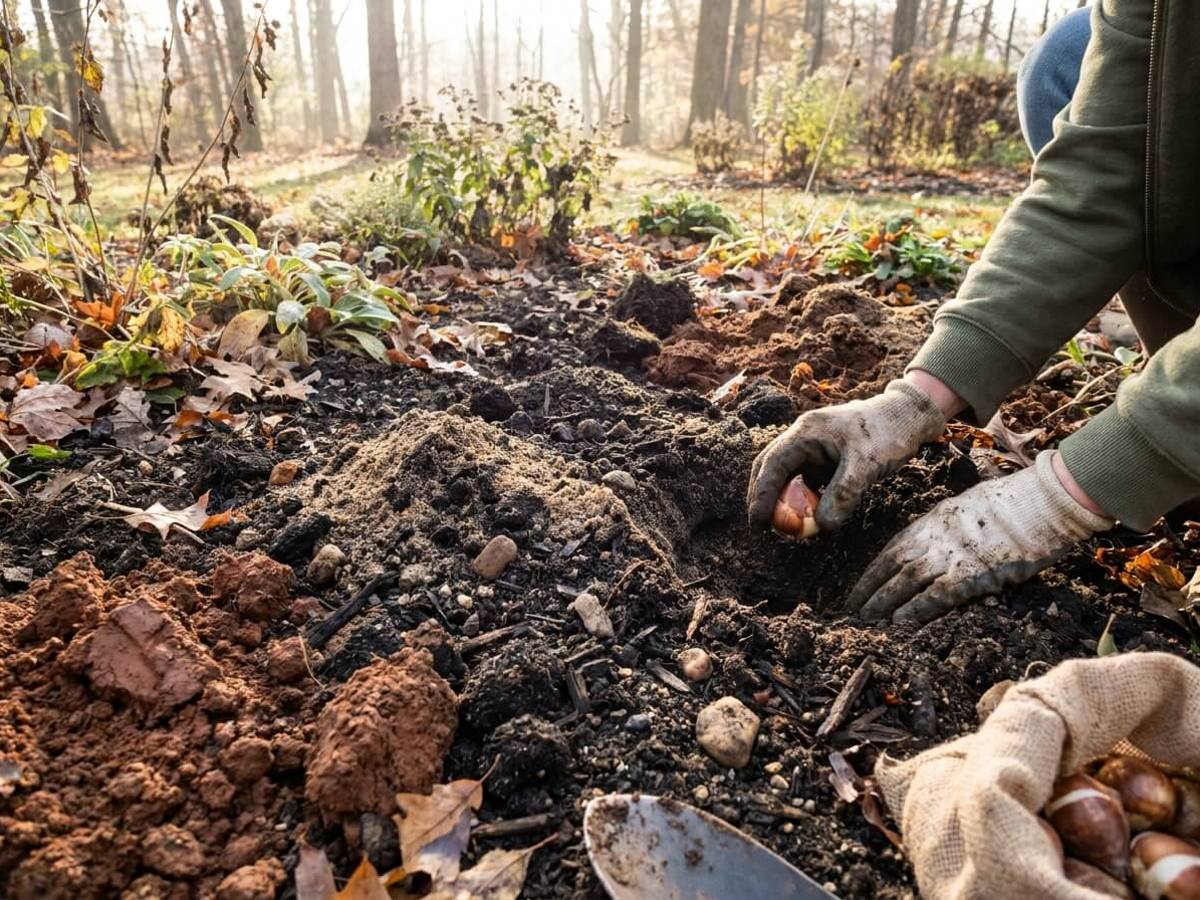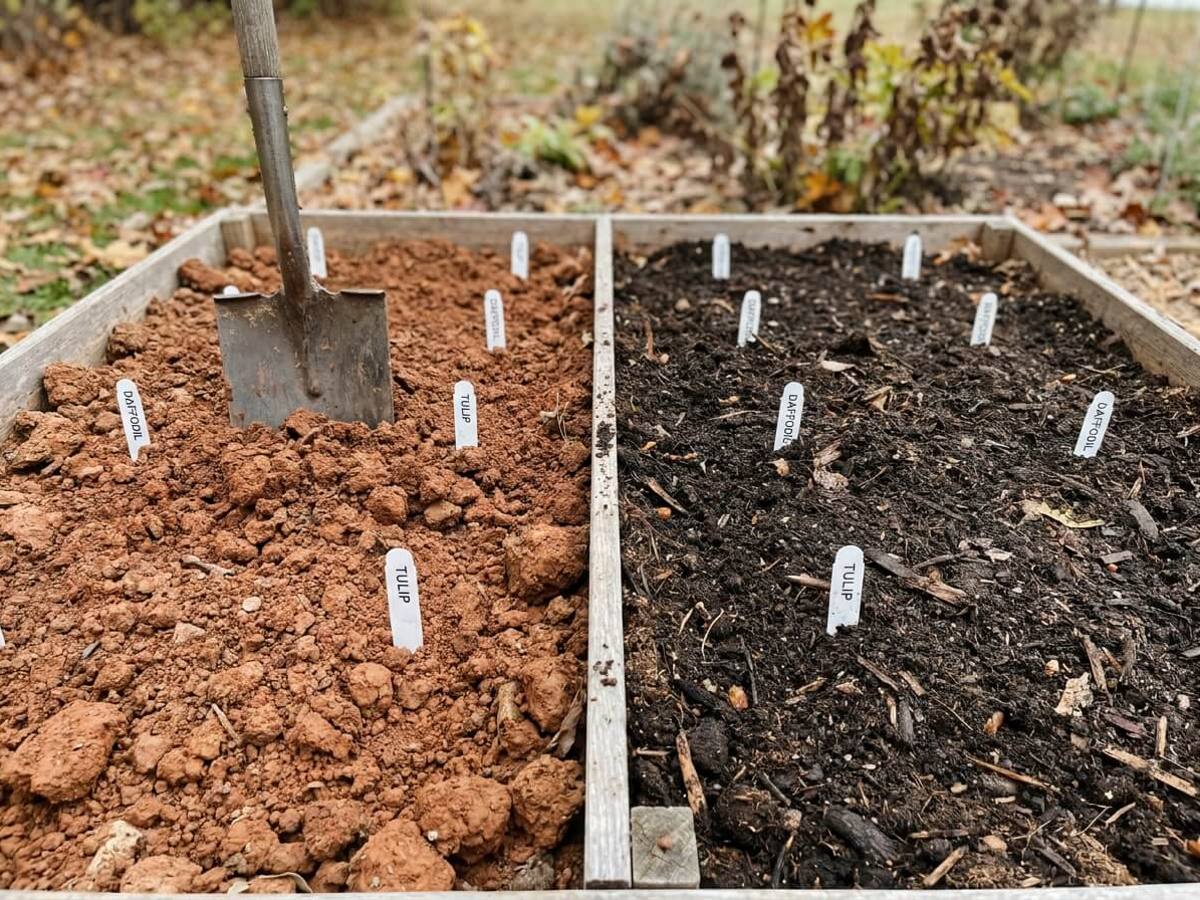
September is bulb-planting season, but if your garden sits on heavy clay, every guide you read assumes you’ve got loose, well-draining soil. You don’t. The good news: UK and US gardeners with compacted earth have trialled a simple sand-layer technique that transforms autumn bulb success. Here’s how to use it, and which bulbs to plant when the hack fails.
In early autumn, soil temperatures drop to the ideal range for autumn bulb planting, typically between 13 and 18 degrees Celsius across most of the UK and northern US regions. This is when daffodils, tulips, and crocuses need to be in the ground to establish roots before winter dormancy. For gardeners on clay, the window is tighter because waterlogged soil will rot bulbs before they’ve had a chance to anchor.
Clay soil compacts easily and drains poorly. When autumn rain arrives, water sits around bulbs for weeks, creating rot conditions that no amount of hope will fix. Most gardening advice glosses over this, assuming you’ll amend your entire bed with compost or grit. That’s expensive, time-consuming, and often ineffective if the clay sits just below the worked layer.
A trial group of UK gardeners with Wealden clay and US gardeners in the Midwest discovered that creating a sharp drainage layer directly beneath each bulb works better than broad-acre amendments. The technique is simple: instead of relying on the soil below, you create a deliberate barrier that forces water away from the bulb itself.
Follow this approach when planting bulbs in September on clay:
This technique succeeds for tulips, daffodils, crocuses, and hyacinths, all of which are moderately sensitive to waterlogging. If your clay is particularly heavy or sits in a low-lying area that floods, switch to varieties with true drainage tolerance. Snowdrops and winter aconites naturally prefer damp soil and will establish reliably even without the sand layer. Anemones and small species tulips also show surprising resilience on poorly draining ground.
Watch your bulbs over October and November. If soil remains boggy after rain, don’t plant tender varieties like gladiolus next autumn, and consider raising beds or French drains for the seasons ahead.