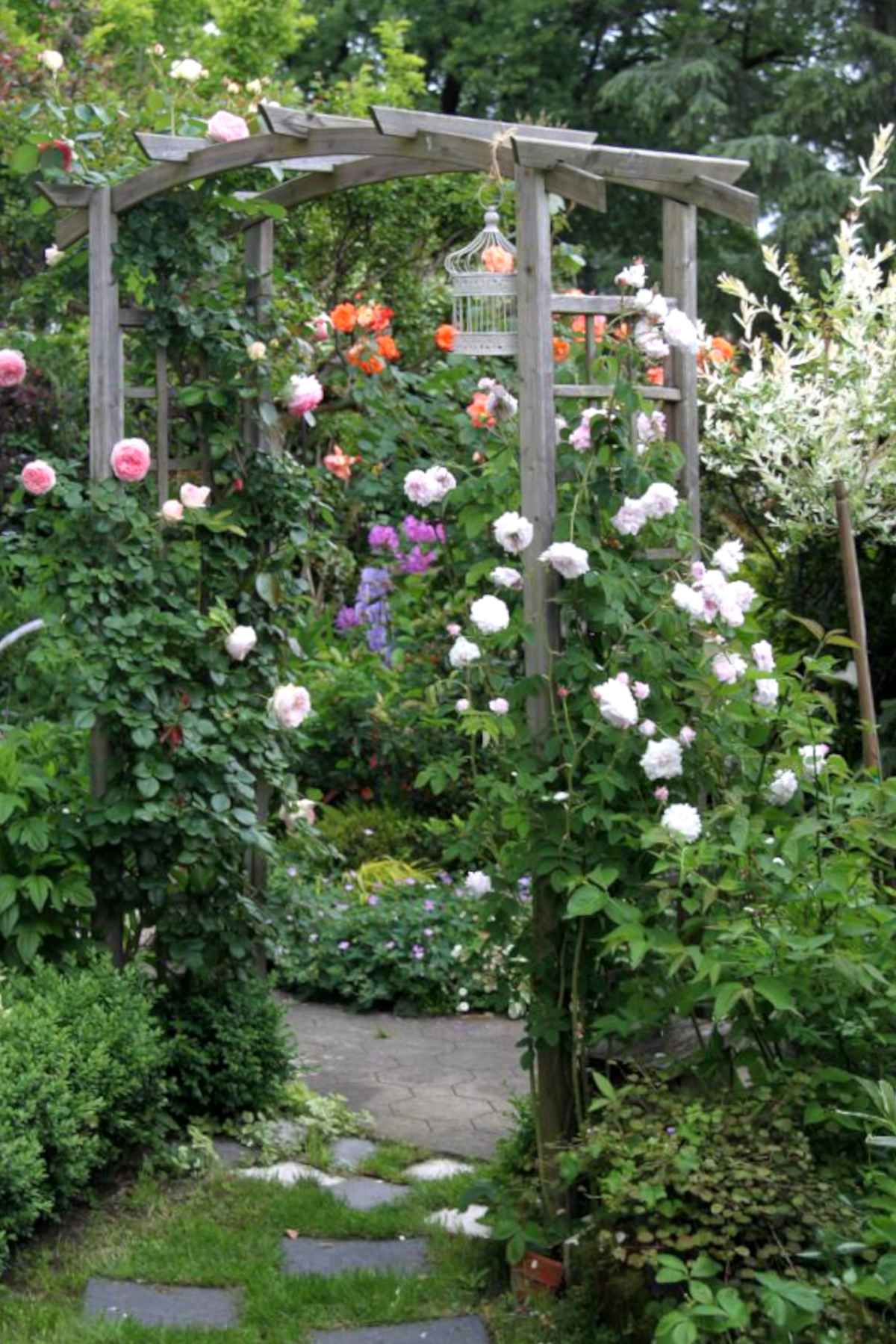
Arbors, pergolas, gazebos, trellis, you’ve got lots of aces up your sleeve when it comes to showcasing your favorite climbing roses. Dome structures and tunnel arbors add shade that is refreshing in summer, whereas upright lattices will keep stems reaching for the sky.
Setting such ornaments up isn’t very difficult. Of course, if you can’t tell a hammer from a screwdriver and aren’t particularly keen on learning the difference, it’s perfectly ok to simply purchase ready-assembled kits or to ask a garden professional to help you out.
Discover:
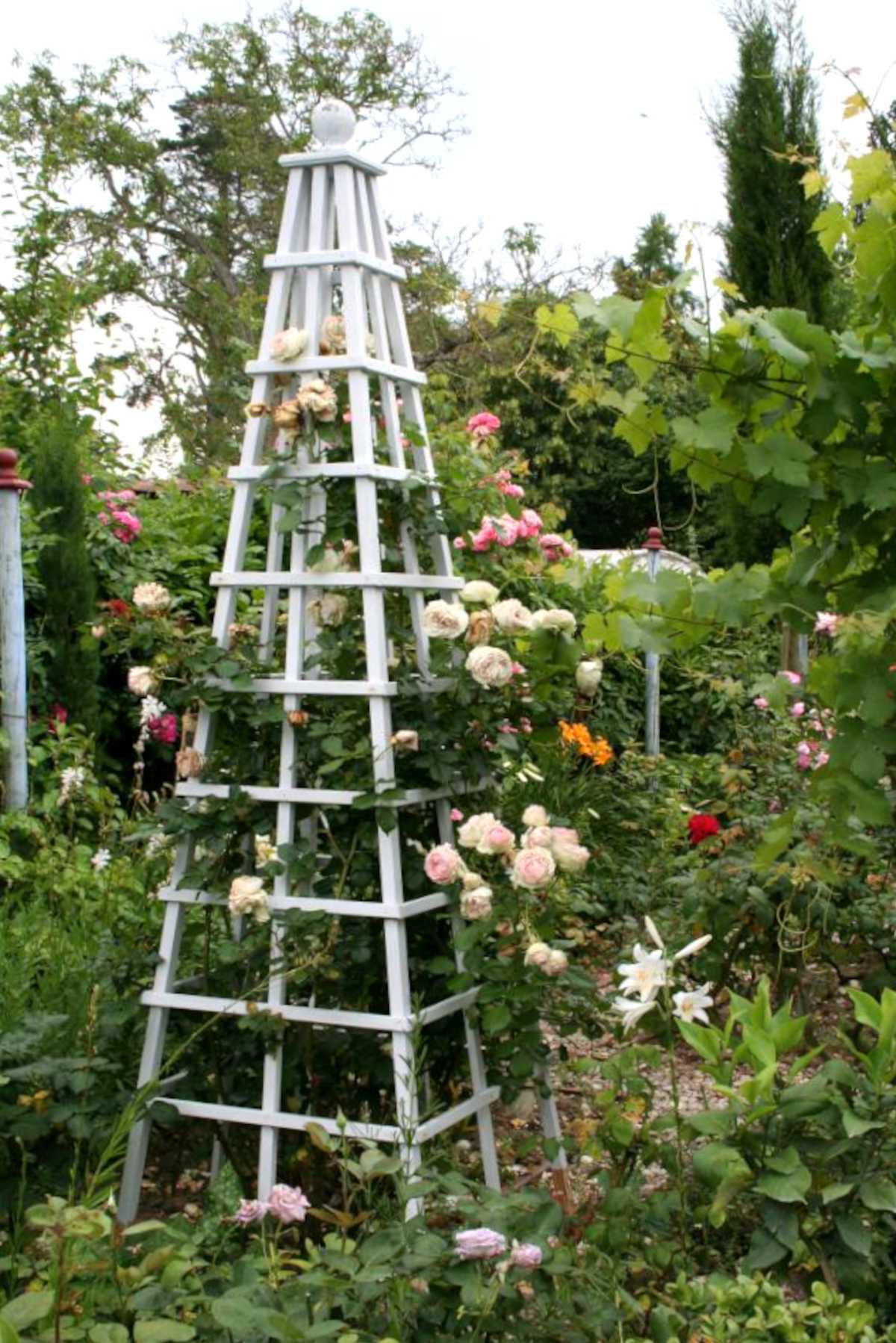
This is a simple idea: a ladder-like pyramid that encases the rose tree from the moment its very first leaves come out. Bit by bit, sprigs and shoots of – for instance – a ‘Pierre de Ronsard‘ rose tree climbs up the levels and, in time, dominates the structure. Whenever an adventurous branch tries to flee, gently turn it around to guide it through the structure again, or, slightly more drastic, cut it short!
For the structure, choose a color that harmonizes well with that of the rose growing inside it: after all, both cage and tree will be intertwined “for life”!
Each of the five structures below carries a climbing rose in a different way, and the choice depends on the material you want and the effect you are after. Use this table to decide before reading the detail of each one.
| Structure | Material | Scale | What it does for the rose |
|---|---|---|---|
| Rose cage | Ladder-like pyramid frame | Single specimen | Encases the plant from its first leaves and lets it climb level by level |
| Flowery arbour | Wood, with trellis panels along the sides | Wide, walk-through | Becomes a large gateway marking the transition to another part of the garden |
| Low-key trellis | Woven metal rods on square poles | Flat, against a wall or pergola side | Almost invisible support, so only the rose is seen |
| Post-and-crossbeam walkway | Round pine posts 6 inches (15 cm) thick | Long covered walkway | Carries the full weight of vigorous branches |
| Modern steel arcade | Rusty-toned steel with bricks laid on the ground | Tall arching arcades | Draws woody stems upwards while keeping the view transparent |
Dome and tunnel shapes give shade, while upright lattices keep the stems reaching upwards.
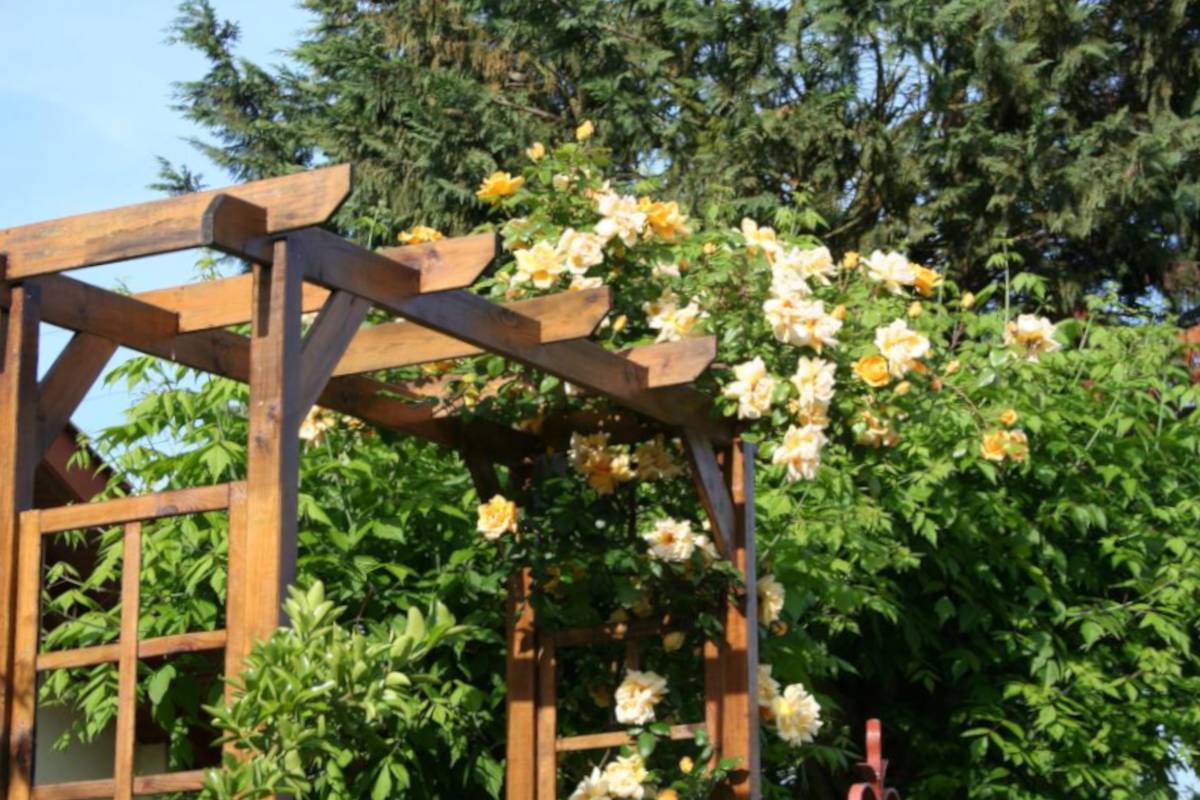
This wooden arbor provides a sturdy growing space for an uncanny pair of vines: a yellow rose tree and a large-flowered trumpet vine. In spring, it’s still only producing flowers, but over the summer its blooming will overtake that of the rose tree.
Along the sides, trellises are set up to which loose branches can be tethered to and guided. Since it’s a wide arbor, it truly turns into a large gateway that marks the transition to a different section of the garden.
Remember to focus an onlooker’s attention to it, using the one or the other strategy (hedge, walkway, low wall…) and your visitors will naturally gravitate to this entrance.
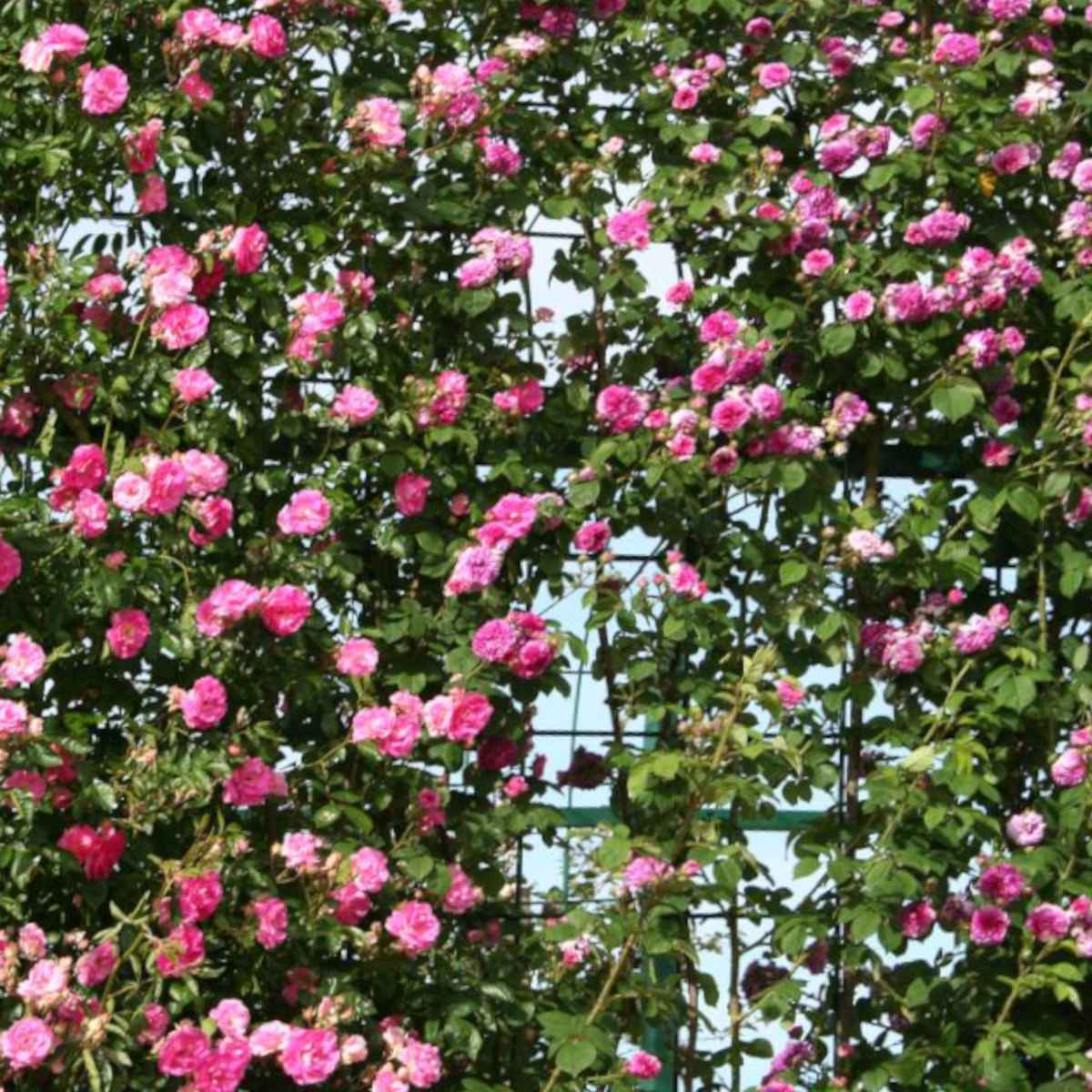
The structure in this case is actually rather hard to see: metallic rods holding the ‘Souvenir de la Bataille de Marengo’ rose tree.
The weaving rods of metal line the side of a tall pergola that is completely covered in vegetation.
Square poles strongly secured to the ground uphold the trellis at regular intervals.
→ Special: more climbing roses
Fix the rods a hand’s width clear of the wall so air can circulate behind the canes and leaves dry faster after rain.
Tie the main canes as close to horizontal as they will bend, since side shoots spring from bent wood and carry most of the flowers.
Use soft ties, never bare wire, and slacken them as the canes thicken.
Choose galvanised or powder-coated rods if the trellis sits against pale render, because bare steel bleeds rust streaks down the wall.
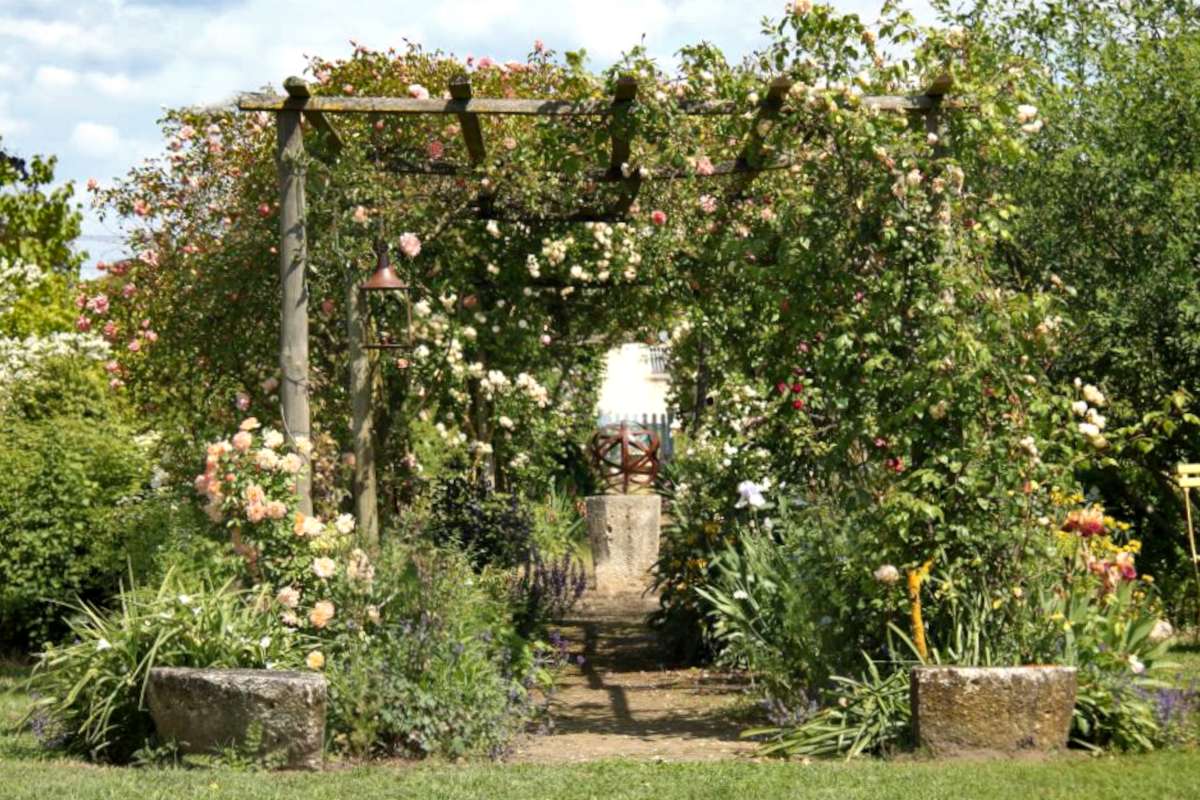
Given the vigor of most climbing rose trees, using thick 6-inch (15 cm) posts isn’t overkill to carry the weight of the branches. These cylindrical pine wood posts are hammered into the ground and then bound together with tightly set crossbeams.
Moreover, the stone sculpture serves as the centerpiece of the landscape and gives the whole scene a strong sense of peace. The massive pedestal is lined with two white stones that signal the way into the covered walkway.
Perennials overflow from both sides of the walkway, which adds to the charming authenticity of the picturesque setting.
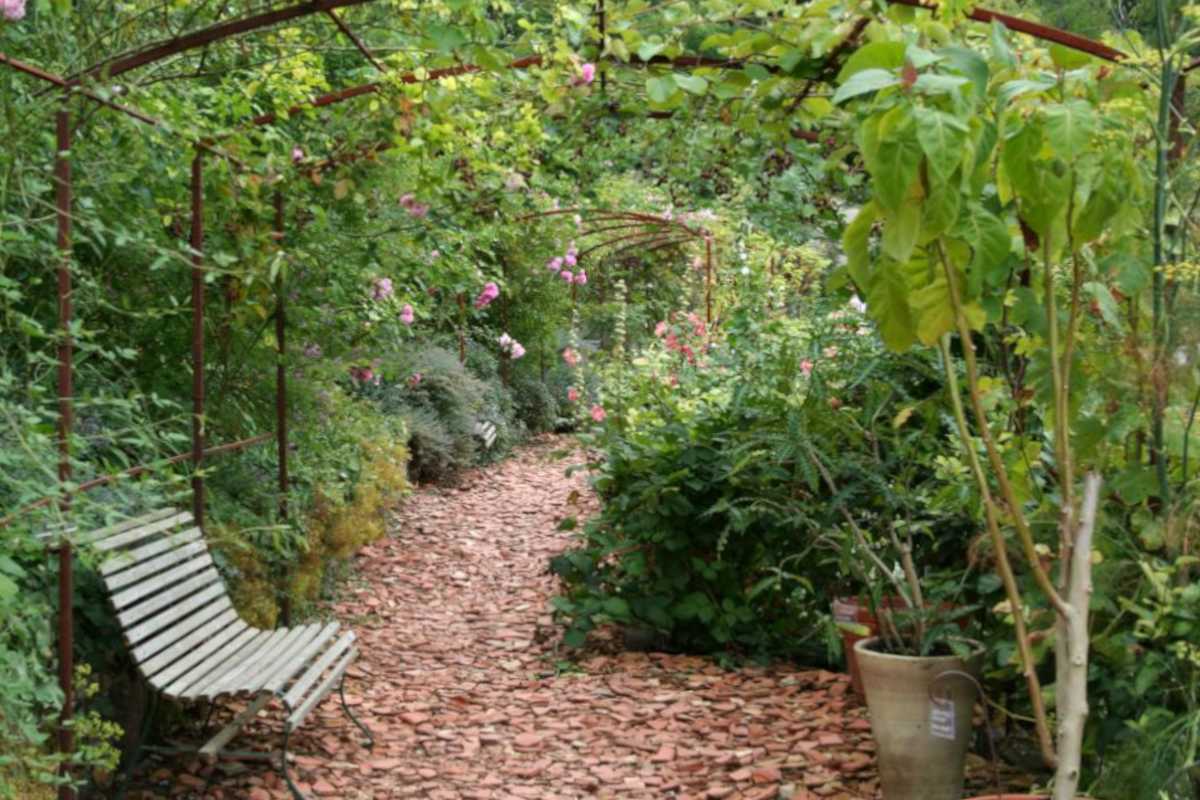
Rusty-toned steel pairs exceptionally well with bricks simply piled along the ground. The effect is strikingly modern, both elegant and post-industrial (unlike the more traditional wrought iron). The thin poles and wide, arching arcades draw the knobby, woody rose trees up and create a welcome transparency to the view.
Thanks to the space this provides, it’s possible to add a few potted plants and hollyhock roses to create an airy composition. White tends to invite bystanders to pause for a moment in this warm and welcoming atmosphere, reminiscent of the soft multi-faceted joys of a sensory garden: fragrance, muffled sounds, warmth…
To learn more, read: