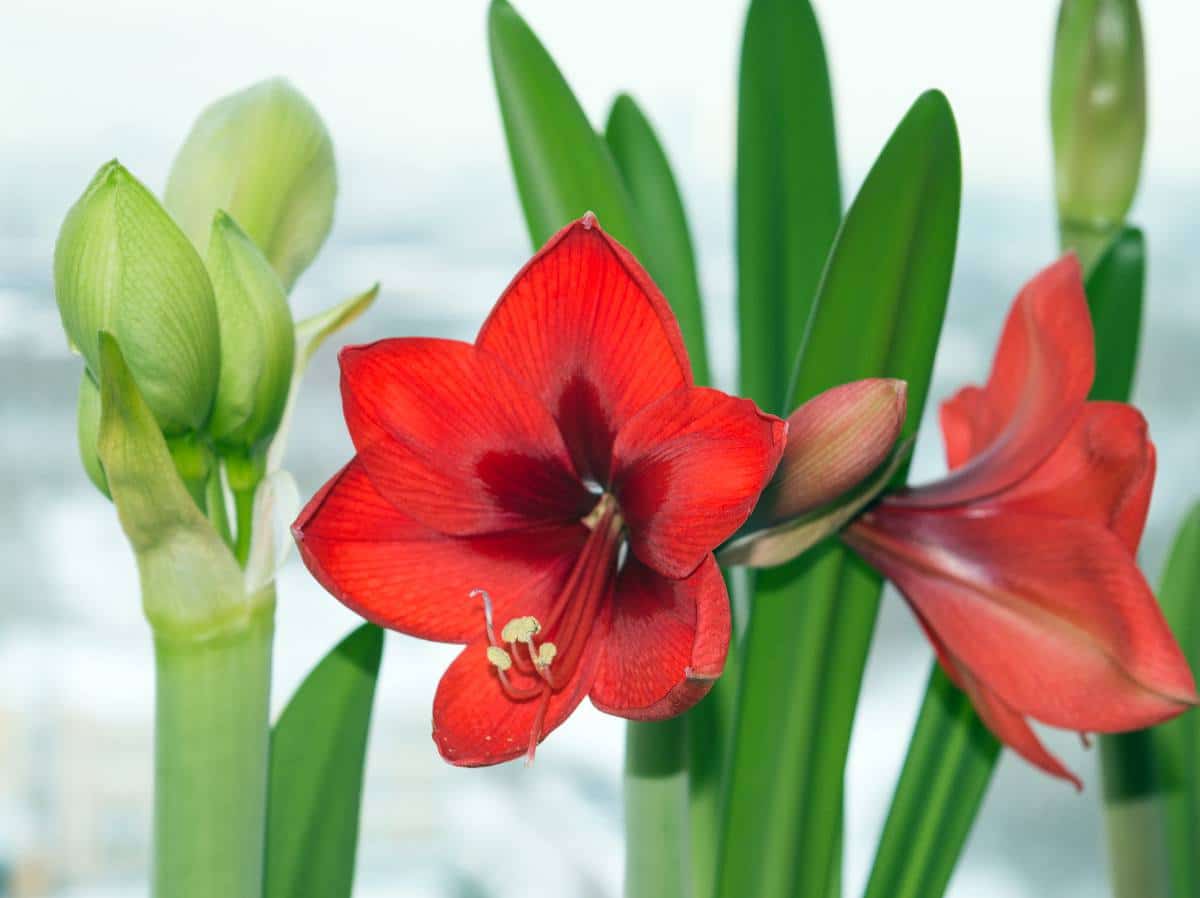
Sold as a bulb for winter pots, the amaryllis (Hippeastrum) sends up stems of huge, abundant, brightly coloured flowers, and borrows its name from another plant, the true amaryllis. It comes from the tropical Americas and, given a cool, dry rest of at least two months after flowering, it will bloom again year after year.
| Name | Hippeastrum |
|---|---|
| Family | Amaryllidaceae |
| Type | bulbous, indoor flower |
| Height | 12 to 24 inches (30 to 60 cm) |
| Exposure | full sun |
| Soil | soil mix, well-drained |
| Climate | rather warm if outdoors |
| Flowering | Winter |
These tips on how to care for amaryllis should help you get dazzling flowers.
Amaryllis is normally grown during the fall and winter seasons, and fall is when bulbs must be prepared and planted in the ground.
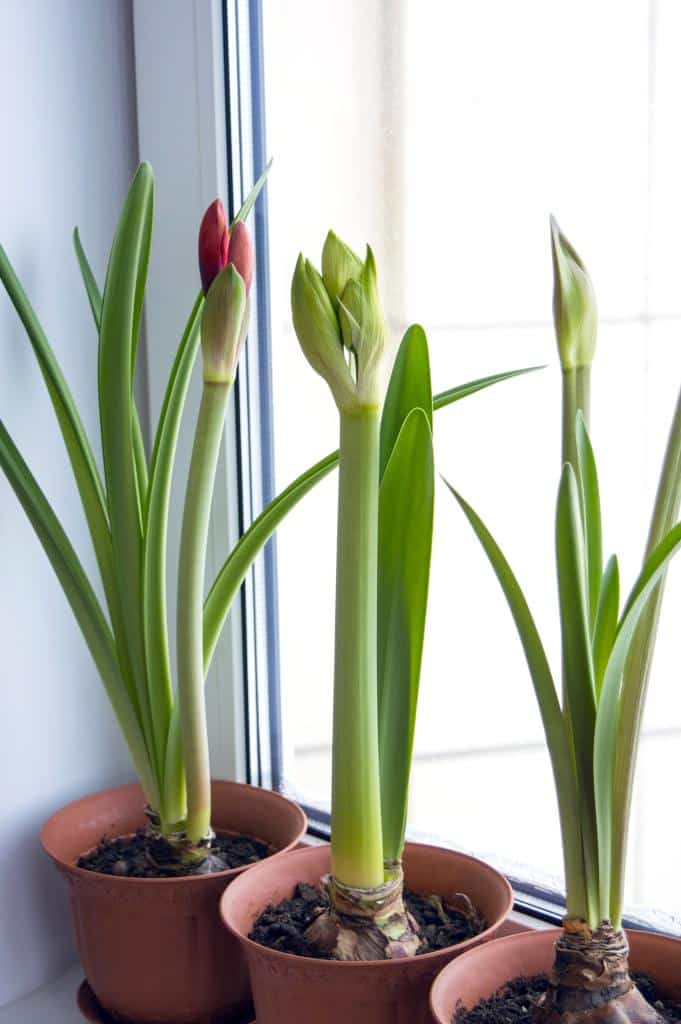
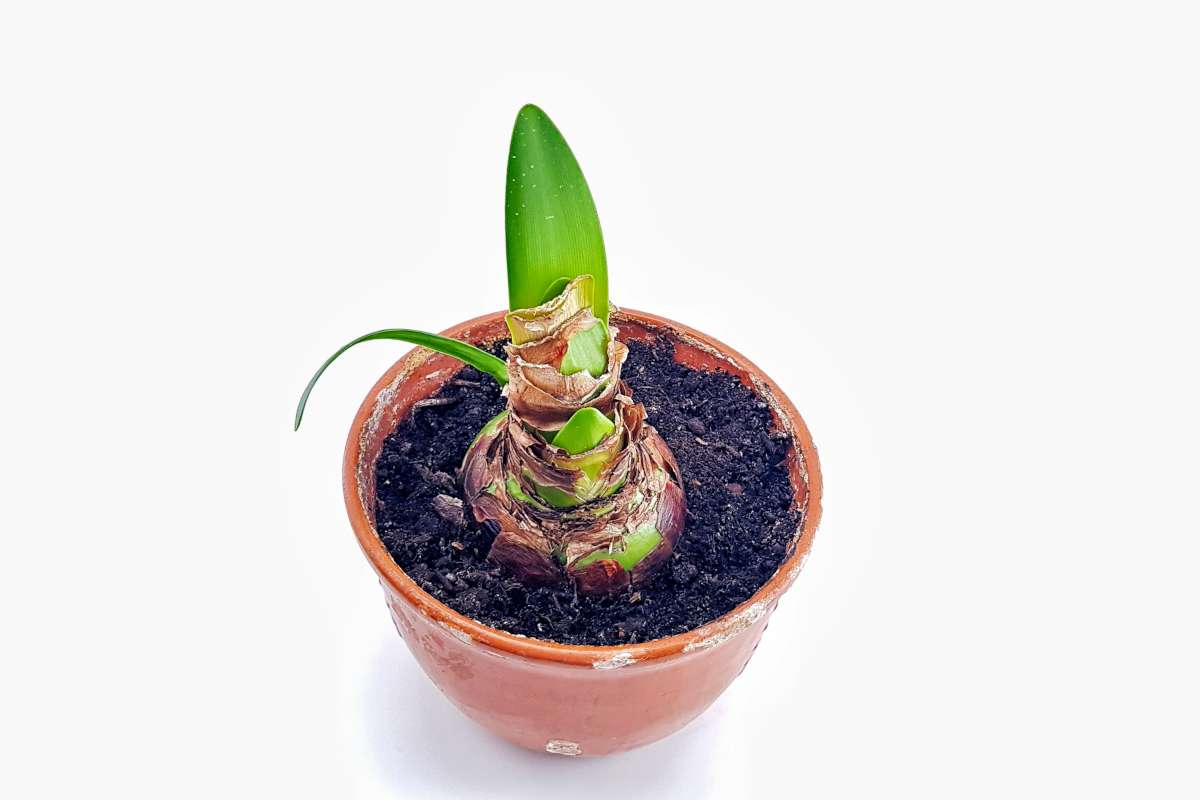
Choose a pot that is wide enough to house the bulb, and plant it immediately after buying.
Remember to plant it in special flower plant soil mix, or re-potting soil mix.
Plant the amaryllis bulb so that roots touch the bottom and the cut stem just sticks out from the soil.
If you’ve already got an amaryllis and you wish to make it bloom again, check our page that deals with this specifically:
Growing amaryllis outdoors in most of Europe isn’t possible because it isn’t hardy: winters are often too cold for it to survive.
But if the climate is mild enough, that is, winter is mild enough, plant your bulbs in spring when the last frosts are past, in a mix of soil mix and garden soil.
At the end of the blooming season, once the leaves have yellowed and dried, you can dig out the bulbs and plant them again in the following spring, unless winter temperatures in your area never dip below 55°F (12°C).
To keep the bulbs over winter, choose a rather dry, ventilated and dark place.
Amaryllis is handled quite differently depending on whether it lives in a pot, in the open ground or in storage. The table below sums up when to plant, where to put it and what each situation leads to.
| Situation | When | Where and in what | Point to watch |
|---|---|---|---|
| Indoor bulb in a pot | Straight after buying, between October and March | Pot wide enough for the bulb, special flower plant or re-potting soil mix | Roots touch the bottom, cut stem just sticking out of the soil |
| Pot flowering at Christmas | Bulbs planted in October | Indoors, in soil mix | Blooming is forced, not the plant’s natural season |
| Outdoors in a mild climate | In spring, once the last frosts are past | A mix of soil mix and garden soil | Not possible in most of Europe, since the plant isn’t hardy |
| Bulbs lifted for winter | At the end of the blooming season | A rather dry, ventilated and dark place | Only leave them in the ground where it never dips below 55°F (12°C) |
| Dormant phase after flowering | From the end of blooming until the following fall | A rather cool and dry place | Must last at least two months |
Whichever route you take, the bulb is worth keeping: kept correctly, it flowers again year after year.
Care and watering for amaryllis
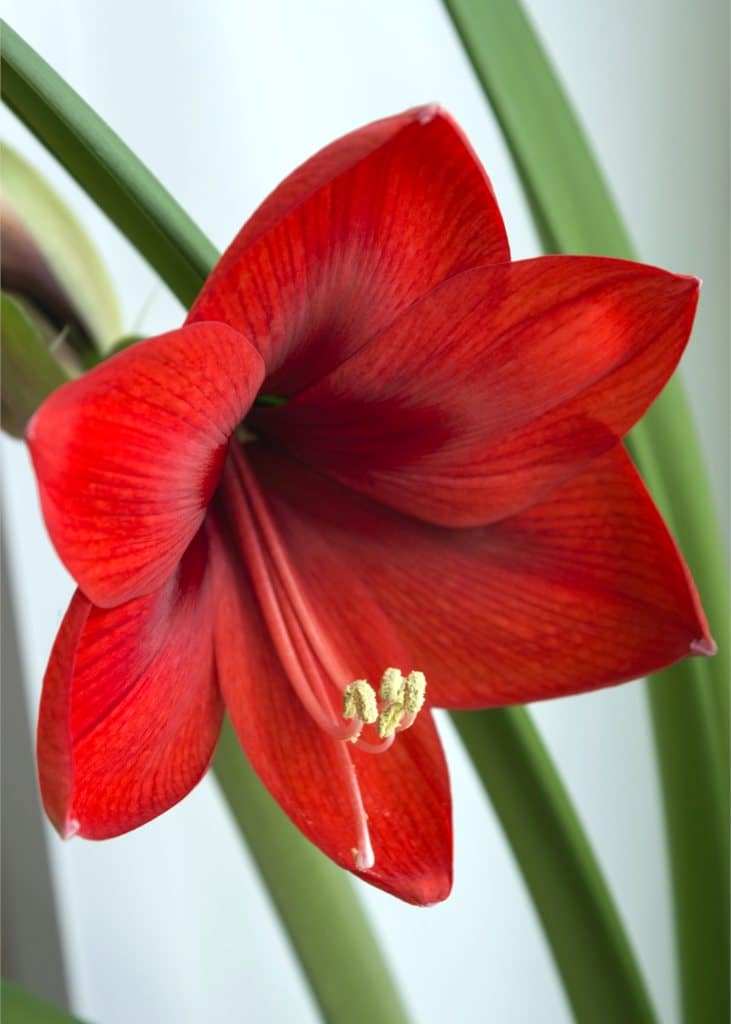
Regular watering and add organic fertilizer upon planting the bulb.
Reduce then stop watering once the leaves start wilting.
Place the bulbs in a cool, ventilated spot and let the leaves fall off on their own.
In January the bulb will enter its growth phase again.
Once your amaryllis has finished blooming, whatever happens, do not cut the leaves off, quite the opposite…
After flowering, it still is possible to get the flower to bloom again the following year. Indeed, if correctly kept, amaryllis bulbs will bloom again year after year.
A dormant phase is required from the end of the blooming season until the following fall. It must last at least two months and must take place in a rather cool and dry place.
After flowering, you must keep watering the plant when the soil is dry, adding ½ dose of flower plant fertilizer every two weeks. In fact, it is after the blooming and before the withering that the plant stocks up on nutrients for the next blooming cycle.
Bulbs are usually sold by name, and the label tells you a great deal about the show to come. Here are the amaryllis most commonly found in garden centres and bulb catalogues, compared on colour, flower form and stem height.
| Variety | Flower colour | Flower form | Stem height |
|---|---|---|---|
| ‘Apple Blossom’ | White flushed pink | Single, wide open | 16–20 in (40–50 cm) |
| ‘Red Lion’ | Deep velvety red | Single, very large | 18–20 in (45–50 cm) |
| ‘Minerva’ | Red with white star | Single, striking markings | 18–20 in (45–50 cm) |
| ‘Picotee’ | White, thin red edge | Single, refined | 18–20 in (45–50 cm) |
| ‘Nymph’ | Creamy white, red flecks | Double, peony-like | 16–20 in (40–50 cm) |
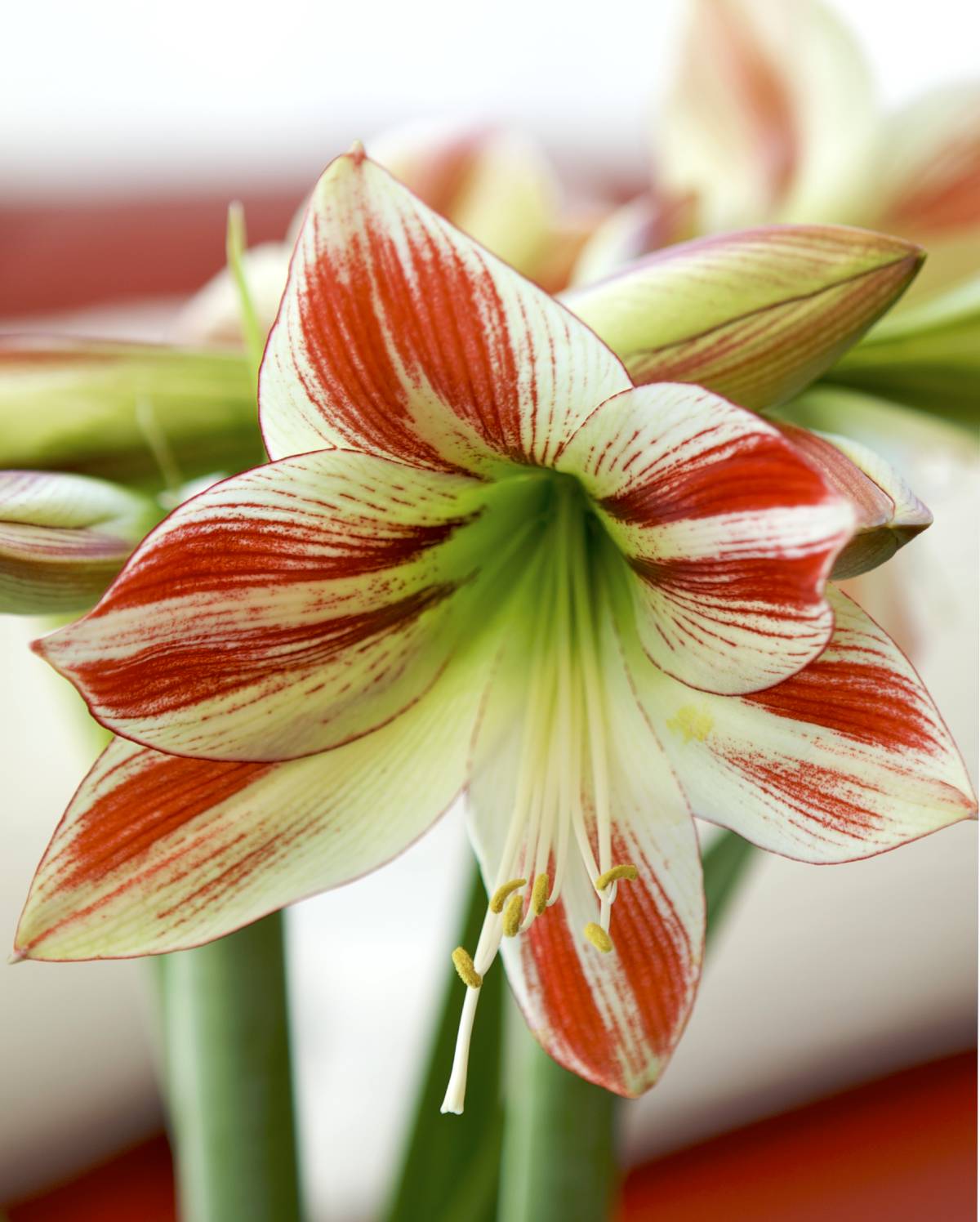
Amaryllis comes from tropical regions, more specifically the tropical Americas. Its name was borrowed from Amaryllis belladona, which is the true amaryllis: those grown in pots are actually Hippeastrum flowers.
They are very well-known for their dazzling flowers, abundant and brightly colored.
Although they usually bloom in spring, amaryllis can be found in flower shops as early as Christmas time.
You must know that for them to bloom in that season, the bulbs were forced: it isn’t their normal blooming period.
This must not stop you from preciously keeping your bulbs after the blooming because it’s possible for you to make those amaryllis bloom again!
Amaryllis will perfectly complement green plants and shrubs in your garden flower beds, on your terrace or indoors.
©akuptsova