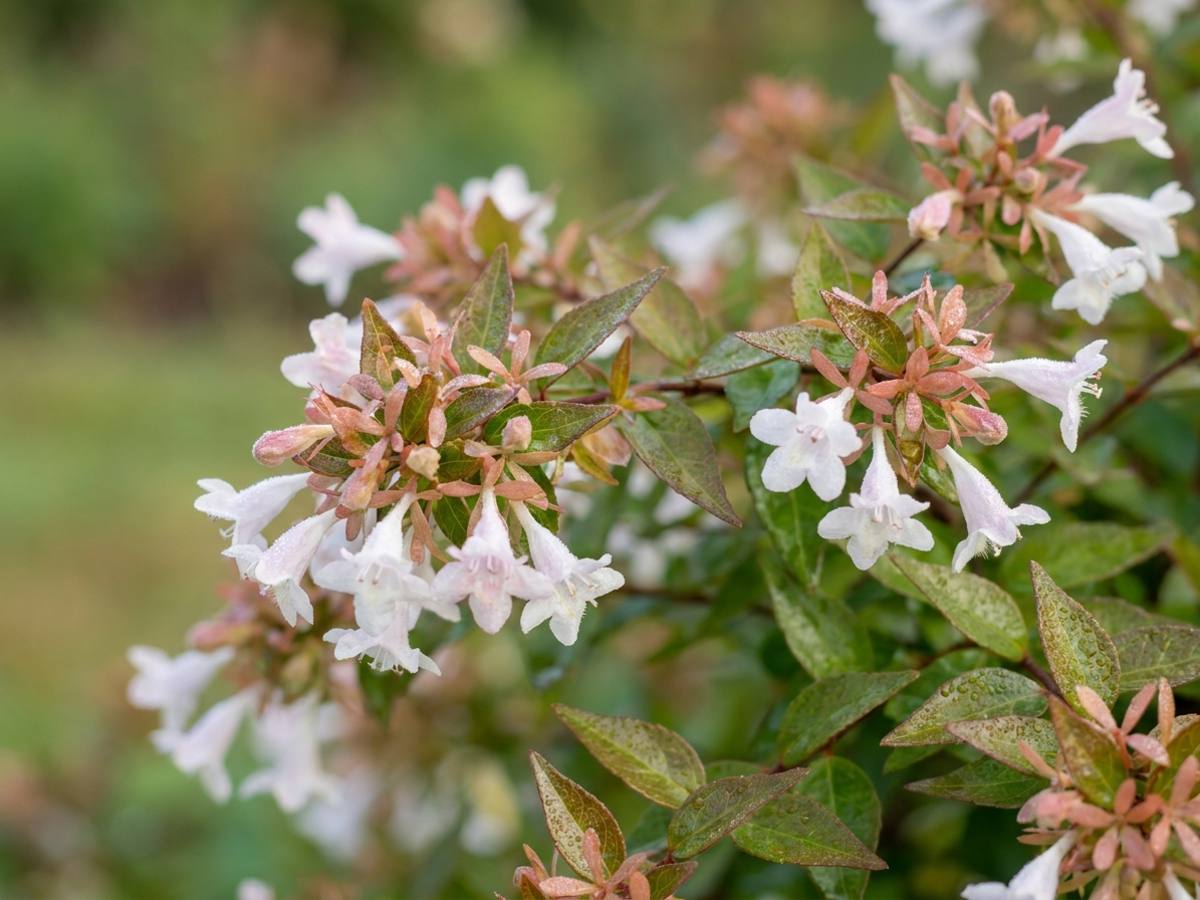
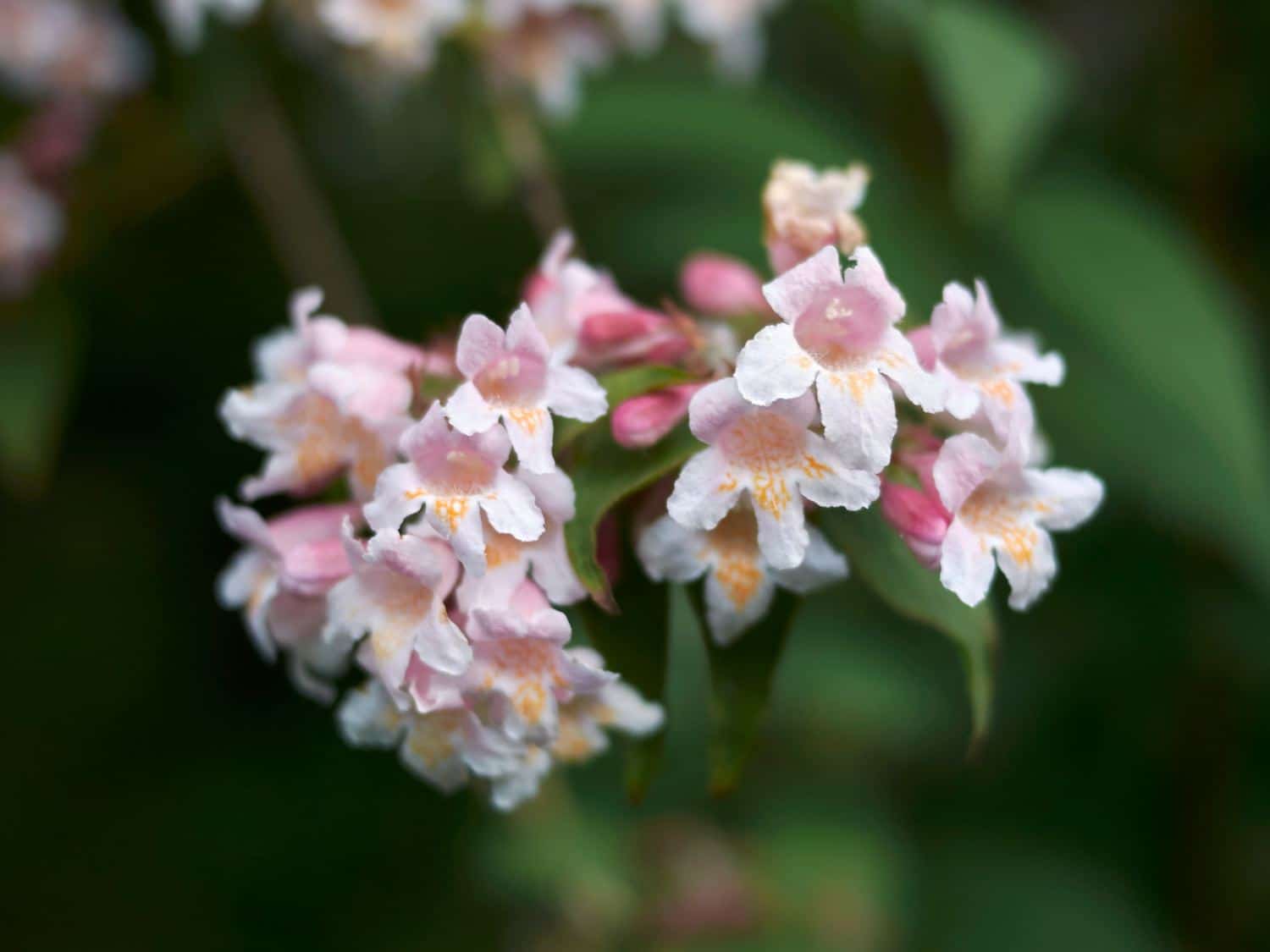
Abelia grandiflora is a semi-evergreen shrub prized for its delicate, fragrant white and pink tubular flowers that bloom prolifically throughout summer and into autumn. Its graceful, arching habit and bronze-tinged foliage make it an elegant choice for borders, hedging, and mixed planting schemes. This reliable, low-maintenance plant is particularly valued for its extended flowering season and sweetly scented blooms.
Growing conditions
Abelia grandiflora performs best in full sun to partial shade, with a minimum of three to four hours of direct sunlight daily to encourage prolific flowering. In warmer regions, afternoon shade helps protect foliage from scorching, whilst in cooler climates, maximum light exposure promotes better ripening of wood and more abundant blooms.
This shrub thrives in well-drained, fertile soil enriched with organic matter. It tolerates a range of soil types, including slightly acidic to neutral conditions, and is relatively forgiving of poorer soils provided drainage is adequate. Avoid waterlogged or heavy clay soils, which can lead to root rot and winter dieback.
Abelia is fully hardy to −12 °C across most of the UK and Ireland, though in exposed northern regions or particularly severe winters, shoots may be cut back by frost. In such areas, a sheltered position or protective mulch in late autumn enhances winter survival.
How to plant Abelia grandiflora
Plant between autumn and spring when the soil is workable, preferably in autumn to allow the shrub to establish during the dormant season. Container-grown specimens can be planted year-round if watered regularly through their first summer.
Space shrubs 1.5 to 2 metres apart to allow for their full mature spread and ease of maintenance
Plant with the top of the rootball level with the soil surface; burying too deeply can cause stem rot
Prepare planting holes generously, working in mature compost or well-rotted manure to improve fertility and drainage
Water thoroughly after planting and maintain consistent moisture for the first growing season
Propagate from semi-ripe cuttings in late summer, rooted in a propagator with bottom heat
Care through the seasons
Spring: As new growth emerges, apply a balanced slow-release fertiliser or a dressing of blood, fish and bone in March. Remove any stems killed by winter frost, cutting back to healthy buds. Thin out wayward shoots to maintain an open, vase-shaped form.
Summer: Water regularly during dry spells, aiming for consistently moist (but not soggy) soil, particularly in the first season. Deadhead spent flower clusters to encourage continuous blooming and maintain tidiness. In exceptionally hot periods, mulch lightly to conserve soil moisture without promoting stem rot.
Autumn: Reduce watering as growth slows and temperatures fall. Cut back any excessively tall or untidy growth in late September before winter hardening. Apply a mulch of shredded bark or compost around the base to protect roots from hard frosts, clearing it away in spring.
Winter: The shrub becomes semi-deciduous, shedding some or most of its leaves depending on severity of weather. No active care is needed; simply protect from damage by strong winds and heavy snow if in an exposed location.
Best varieties to grow
Several cultivars offer distinct ornamental qualities and are readily available from specialist nurseries.
Abelia grandiflora — The species type, with pure white and pale pink flowers and glossy green foliage that bronzes in autumn.
‘Confetti’ — Compact form with variegated cream and green foliage, pale pink flowers, and an award-winning reputation for small gardens (AGM).
‘Gold Spot’ — Striking yellow-variegated leaves that age to green, creating a bright focal point even when not in flower.
‘Sherwood’ — Vigorous, tall-growing cultivar reaching 2.5–3 metres, excellent for screening and hedging purposes.
Pests, diseases and common problems
Whitefly: Tiny white insects cluster on leaf undersides, causing sticky residue and premature leaf drop. Spray forcefully with water or treat with insecticidal soap, repeating at seven-day intervals until clear.
Red spider mite: Fine webbing appears on leaves and foliage yellows and bronzes in hot, dry conditions. Increase humidity by misting foliage regularly and ensure adequate soil moisture; severe infestations may require horticultural oil spray.
Frost damage: Hard winters may kill back new growth; foliage blackens and stems become brittle. Prune dead wood back to healthy buds in spring; mature shrubs recover quickly and rarely die outright.
Poor flowering: Insufficient light, over-feeding with high-nitrogen fertiliser, or hard pruning at the wrong time can reduce blooms. Ensure at least four hours of sunlight daily, use balanced fertiliser, and prune lightly in early spring only.
🌿 Nature & Garden Newsletter
Gardening tips, recipes & seasonal advice, twice a week.