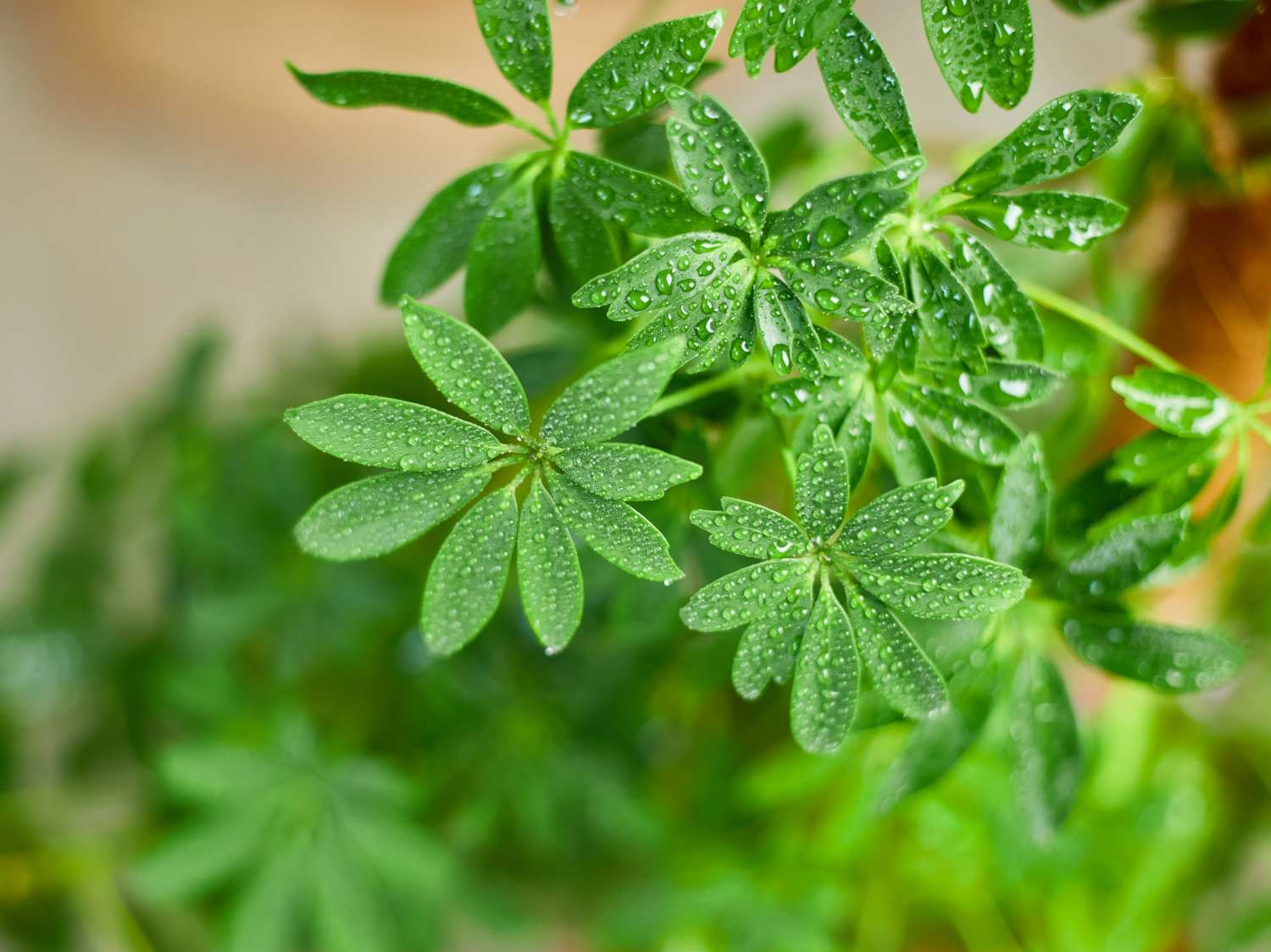
Bright to dark green evergreen leaves borne on a shrub that can reach 10 feet indoors: the schefflera (Schefflera arboricola) is one of the most common plants in houses, apartments and offices, valued as much for its resilience as for its looks. Give it a luminous spot out of direct sunlight and it thrives almost unattended.
| Name | Schefflera arboricola |
|---|---|
| Family | Araliaceae |
| Type | indoor plant |
| Height | 10 feet (3 meters) indoors, 100 feet (30 meters) in its native environment |
| Soil | indoor plant soil mix |
| Exposure | bright light but no direct sunlight |
| Foliage | evergreen |
Care, pruning, watering and treatment, follow this advice to grow a beautiful schefflera and avoid having it fall sick.
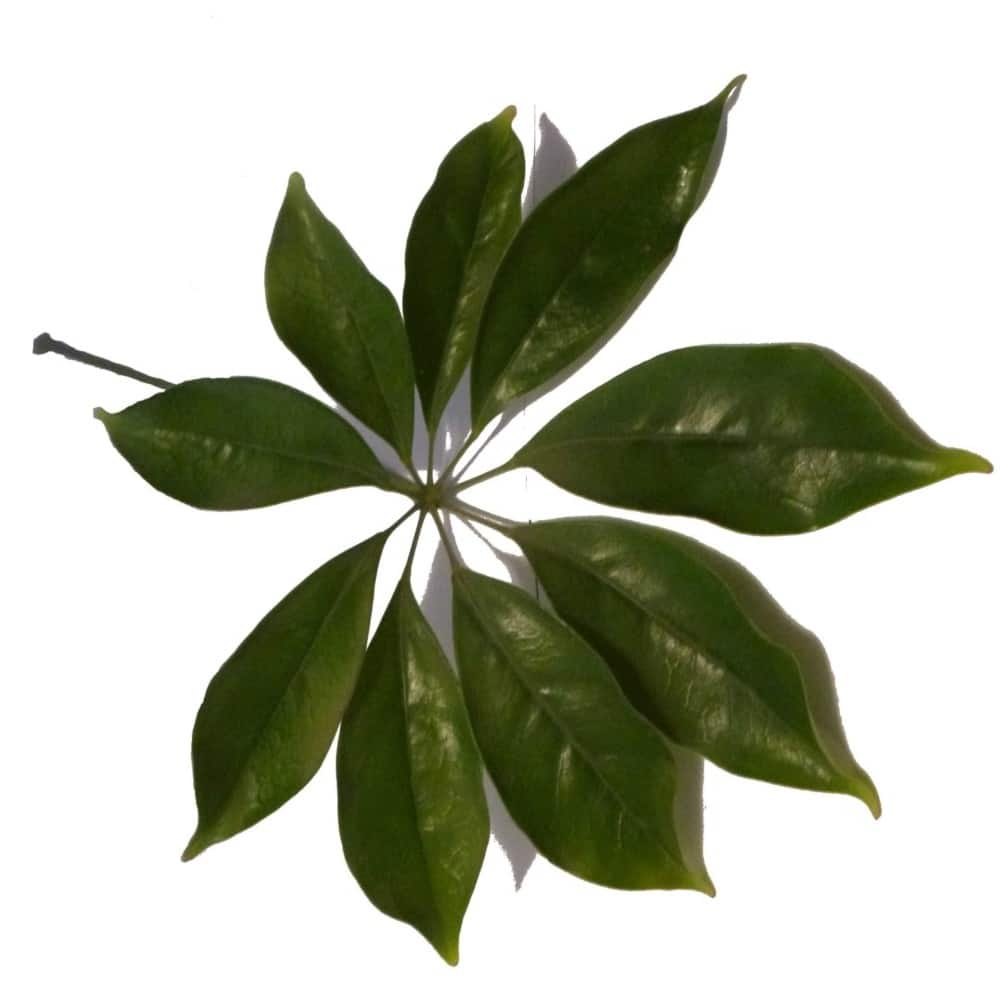
Schefflera is one of the shrubs most often found as an indoor plant for the beauty of its leaves and its resilience.
It is appreciated for its aesthetic appeal but also for its highly adaptive survival traits that let it thrive in the most varied settings of our homes, apartments and offices.
It is also often present in office spaces because of its care-free growing and capacity to survive even when people ignore it.
Schefflera arboricola comes from the warm, humid forests of Taiwan and Hainan, which explains why it asks for steady indoor warmth rather than a cool porch.
Schefflera is quite tolerant as regards exposure, watering and temperature levels of where it stands.
Indeed, it does just great in a room where temperatures might range from 55 to 72°F (12 to 22°C). Best still to avoid brutal temperature shifts.
Every 2 or 3 years, you must repot your schefflera.
Nearly every schefflera sold as a houseplant is a named cultivar of Schefflera arboricola, differing mainly in leaf colour and how dense the plant stays. Use the table to match a variety to the light your room can offer.
| Variety | Foliage | Habit | Good for |
|---|---|---|---|
| Variegata | Yellow mottled green | Upright, vigorous | Tall specimen plant |
| Gold Capella | Green splashed with gold | Upright, well branched | Bright living rooms |
| Trinette | Creamy yellow marbling | Bushy, medium | Colour without flowers |
| Janine | Cream and pale green | Compact, dense | Small pots, desks |
| Renate | Green, wavy leaflets | Bushy, medium | Unusual leaf texture |
It is important to prune schefflera stems for it to branch out.
This means pinching the tip of the main stem so that new lateral shoots may develop.
Make each cut just above a leaf node, since the new shoots emerge from the buds sitting at that junction.
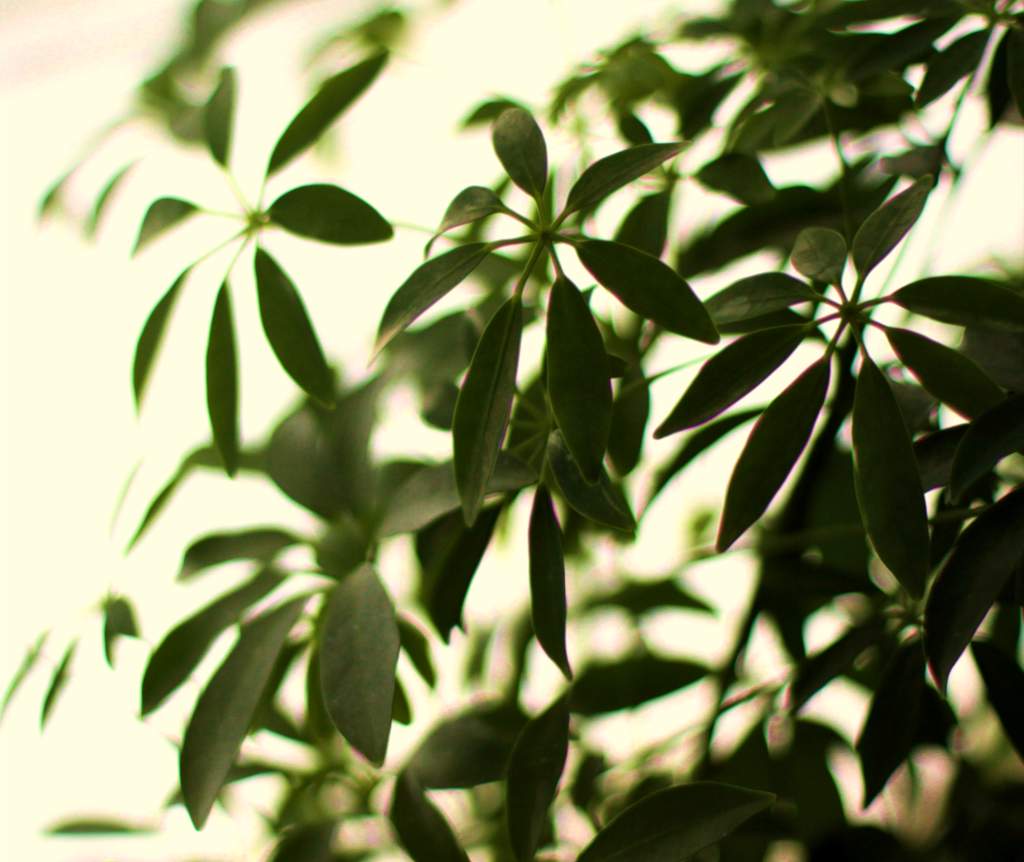
Quite common for schefflera, this is normal as long as leaf loss is regular and not too many are falling.
In case of leaf loss, check that it is well watered, and eventually proceed to topdress the pot.
It should quickly bounce back more vigorous than ever.
This is often due to a mite attack.
This is usually due to mealybugs or scale insects.
Most schefflera troubles show up on the leaves. Match what you see to its usual cause before reaching for any treatment.
| Symptom | Likely cause | What to do |
|---|---|---|
| Leaves falling | Normal renewal, or a change of pot or place, or too little light | Check watering, topdress the pot, move it to a brighter spot |
| Leaves turning yellow | Mite attack | Treat with organic mite killer, avoiding chemical products indoors |
| White powder and sticky leaves | Mealybugs or scale insects | Follow the treatment for scale insects |
In every case the plant recovers quickly once the cause is removed.
Its preferable to wait for the soil to have dried up before watering again.
Consequently, water on average once a week.
If the air indoors is quite dry or if it is summertime, it’s possible to water more often, but always wait for the soil to have dried up in the surface layer.
Of course, in winter or if surrounding moisture levels are high, you may space the watering somewhat.
Feel free to mist the leaves on a regular basis, this will increase leafage quality and keep the leaves from drying up.
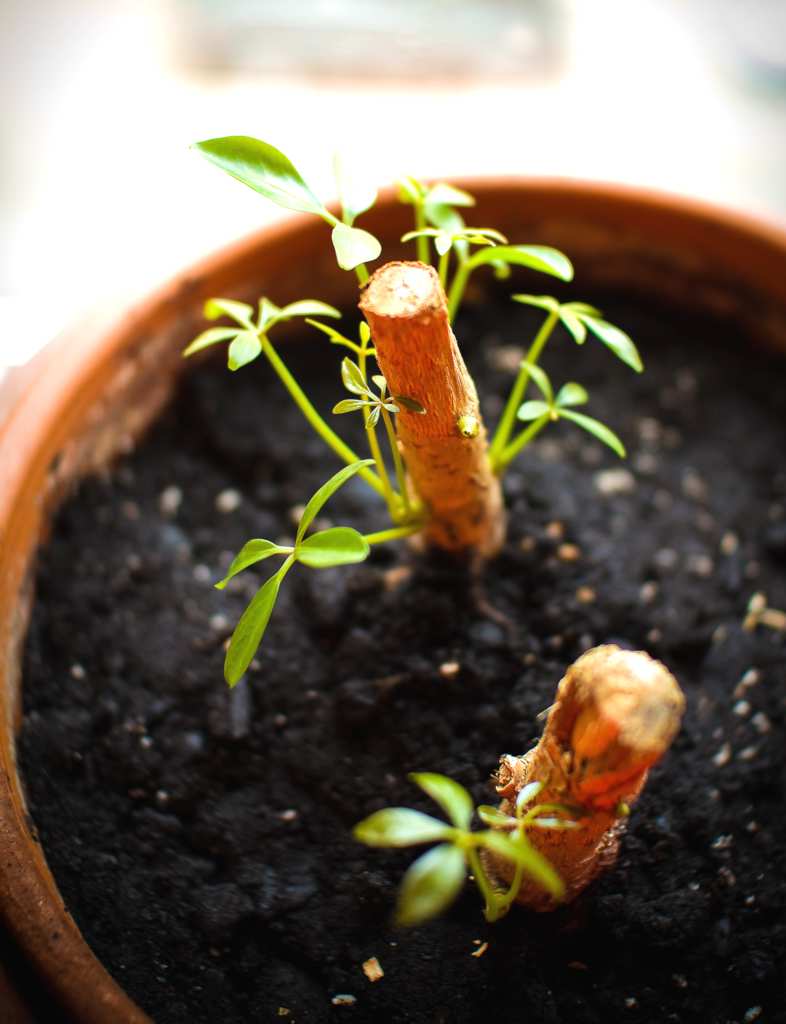
It’s actually easy to propagate your schefflera – simply prepare cuttings from the stem.
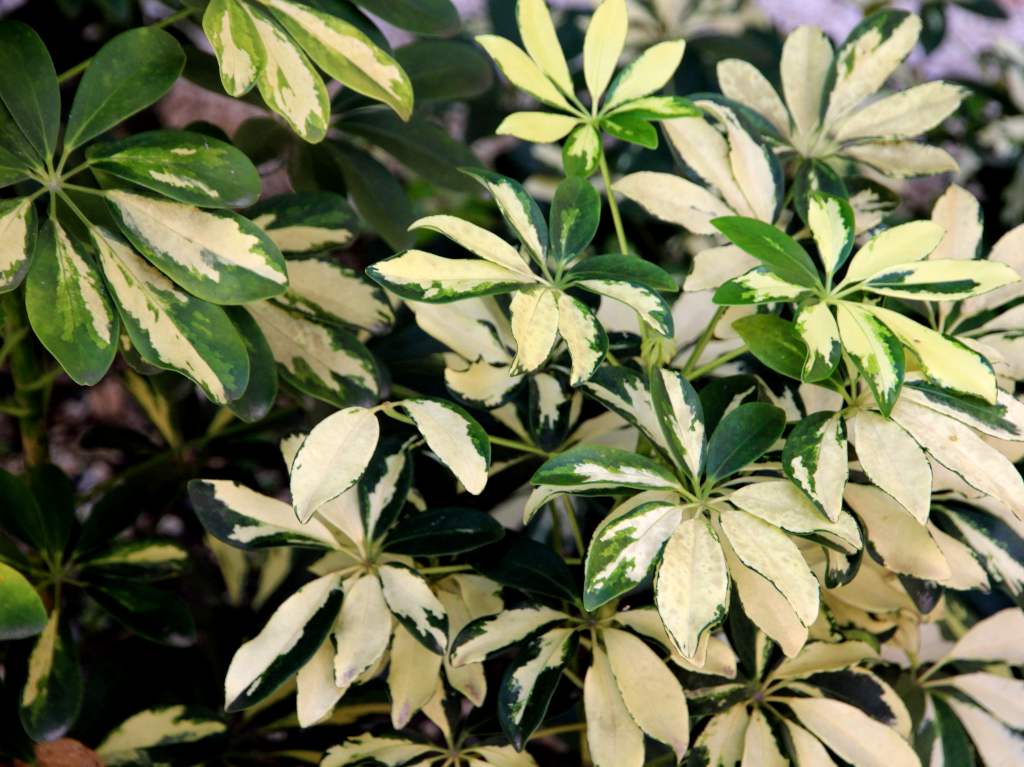
Cuttings is a sure way to replicate your favorite schefflera.
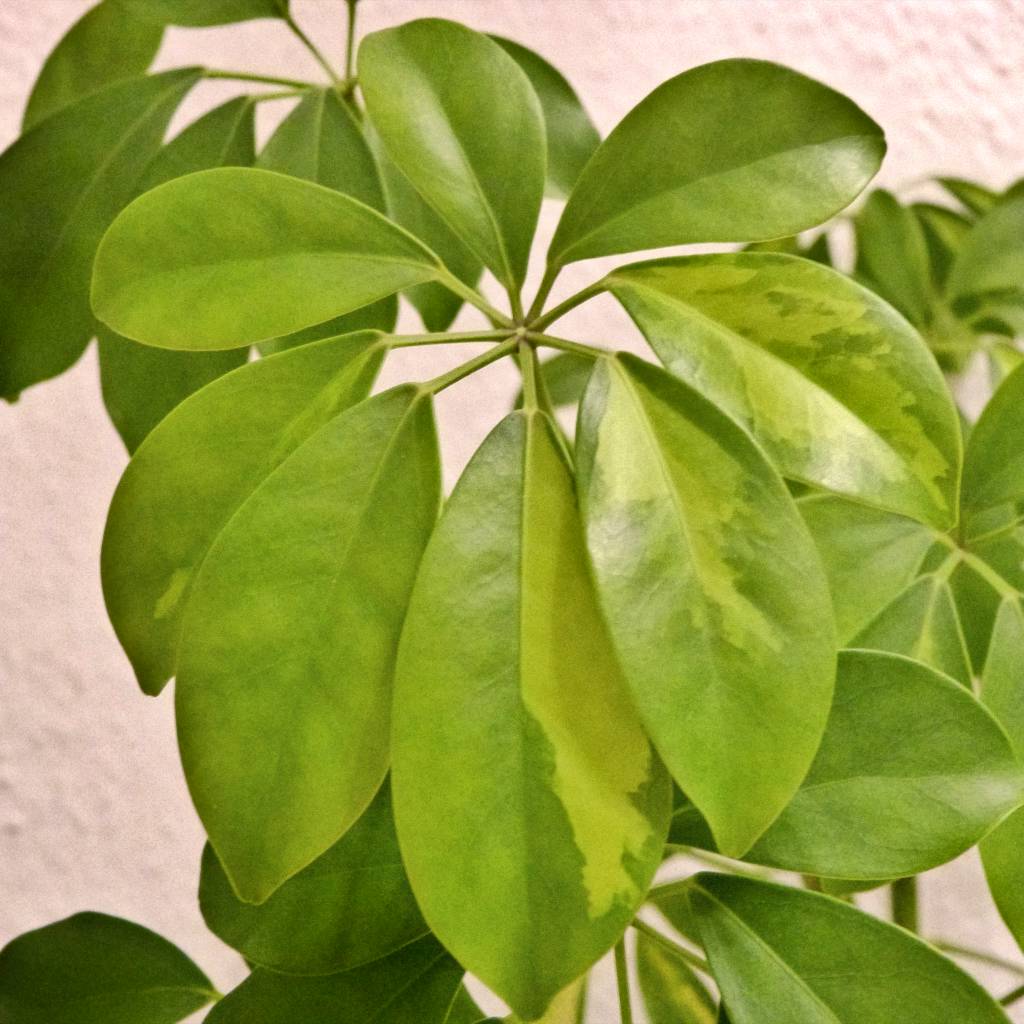
This is especially relevant if you want to keep mutations such as the particularly variegated schefflera, shown below.
Variegated schefflera plants require more sun than the more conventional, green varieties.
With a pot or garden box and regular topdressing, your schefflera can grow to reach a magnificent 6 to 10 feet (2 to 3 meters) tall!