Developed in a profusion of shapes and colors, dahlias are available in a host of varieties. To promote the most beautiful and the most hardy, the distinguishing “Red label dahlia” seal of quality was created.
Red Label is one of several florist organizations that helps people identify excellence in plant breeding and horticultural practices. It is a France-based organization.
How can one choose the best varieties of a plant that counts thousands of cultivars?
With this question in mind, many gardeners who were members of the “Excellence Végétale” charity decided to set up a Red Label that would honor and recognize plants of superior quality.
Dahlias were among the first to be awarded this label in 2010, and in the following years they will be joined by rose trees and Christmas trees.
Exactly a hundred and fifty dahlia varieties of different brands and from various producers are now permitted to showcase the precious label, recognized by the French Ministry of Agriculture.
Each is chosen by a jury of experts composed of local government unit representatives, specialized press journalists and amateur gardeners. The label prizes quality bulbs, larger because they were hand-grown and selected. This practice produces plants that are more resilient in the face of disease and bear more flowers.
Since variety lists and catalogues can change over time, confirm the current official listing with the relevant certifying body or supplier before ordering, rather than relying on an older printed catalogue.
Beyond the label itself, dahlias are sorted by the shape of their flower. Here is what the article describes, so you can picture each type before you plant.
| Type | Flower shape | Growing note |
|---|---|---|
| Simple dahlias | Open heart ringed with petals, much like a daisy | Cut side shoots if you want very large flowers |
| Ornamental dahlias | Large, sun-like flowers | Cut side shoots if you want very large flowers |
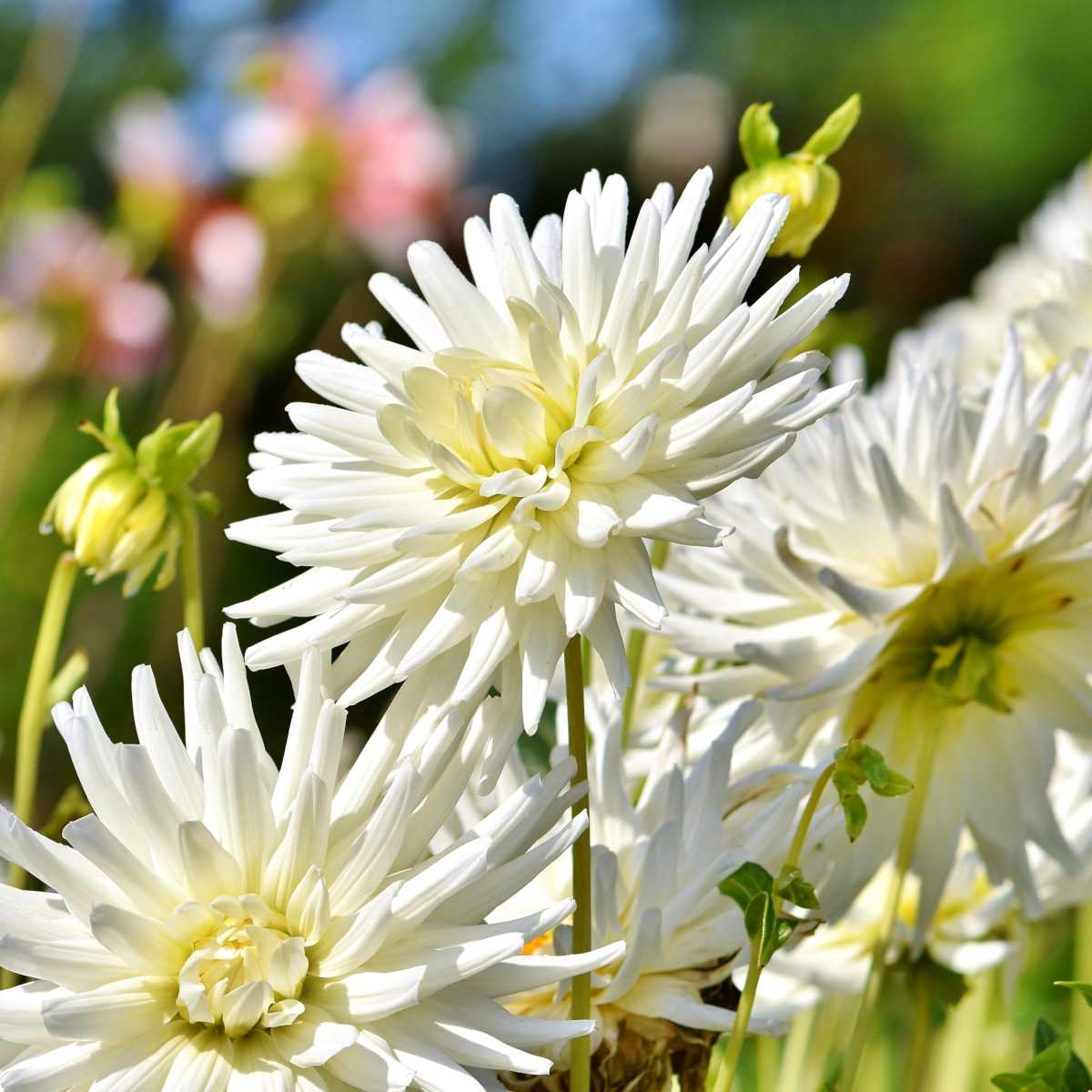
| Cactus dahlias | Large, sun-like flowers | Cut side shoots if you want very large flowers |
| Pompom dahlias | Tube-like petals forming a delicate ball | The one type not to strip of its side shoots |
| Dwarf dahlias | Compact, small-growing plants | Suited to growing in pots |
Whichever type you choose, all of them flower on until the first frost spells.
Labels aside, a handful of dahlias turn up year after year in garden centres and bulb catalogues because they simply perform. The table below sets out what each one brings, so you can match flower shape, colour and foliage to the spot you have in mind.
| Variety | Flower type | Flower colour | Foliage | Best use |
|---|---|---|---|---|
| ‘Bishop of Llandaff’ | Semi-double, open centre | Scarlet red | Dark bronze-purple | Mixed border, medium height |
| ‘David Howard’ | Miniature decorative | Burnt orange | Dark bronze | Hot-colour borders, medium height |
| ‘Bednall Beauty’ | Semi-double | Dark red | Near-black bronze | Pots and containers, dwarf |
| ‘Arabian Night’ | Small decorative | Deep blackcurrant red | Mid-green | Cutting and dark border schemes |
| ‘Café au Lait’ | Large decorative | Creamy blush to buff | Mid-green | Cutting, wedding-style bouquets |
| ‘Moonfire’ | Single, open centre | Yellow with orange eye | Dark bronze | Pollinator planting, medium height |
| ‘Thomas Edison’ | Large decorative | Rich purple-violet | Mid-green | Back of border, tall |
| ‘Gallery Art Deco’ | Decorative | Orange with bronze tones | Mid-green | Patio pots and edging, dwarf |

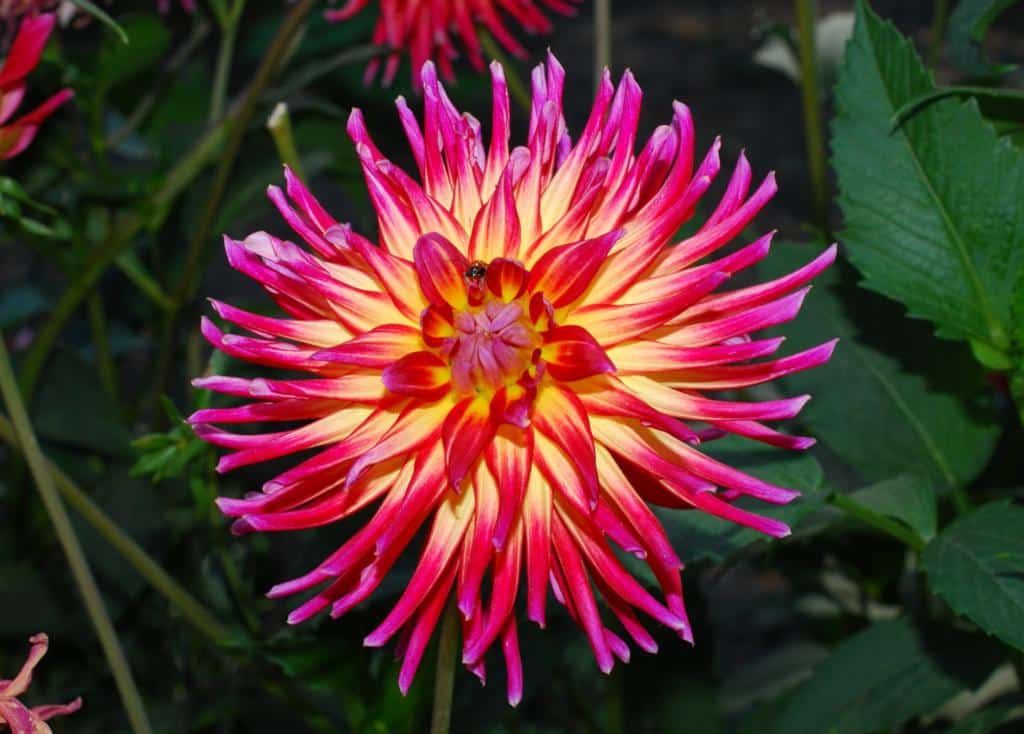
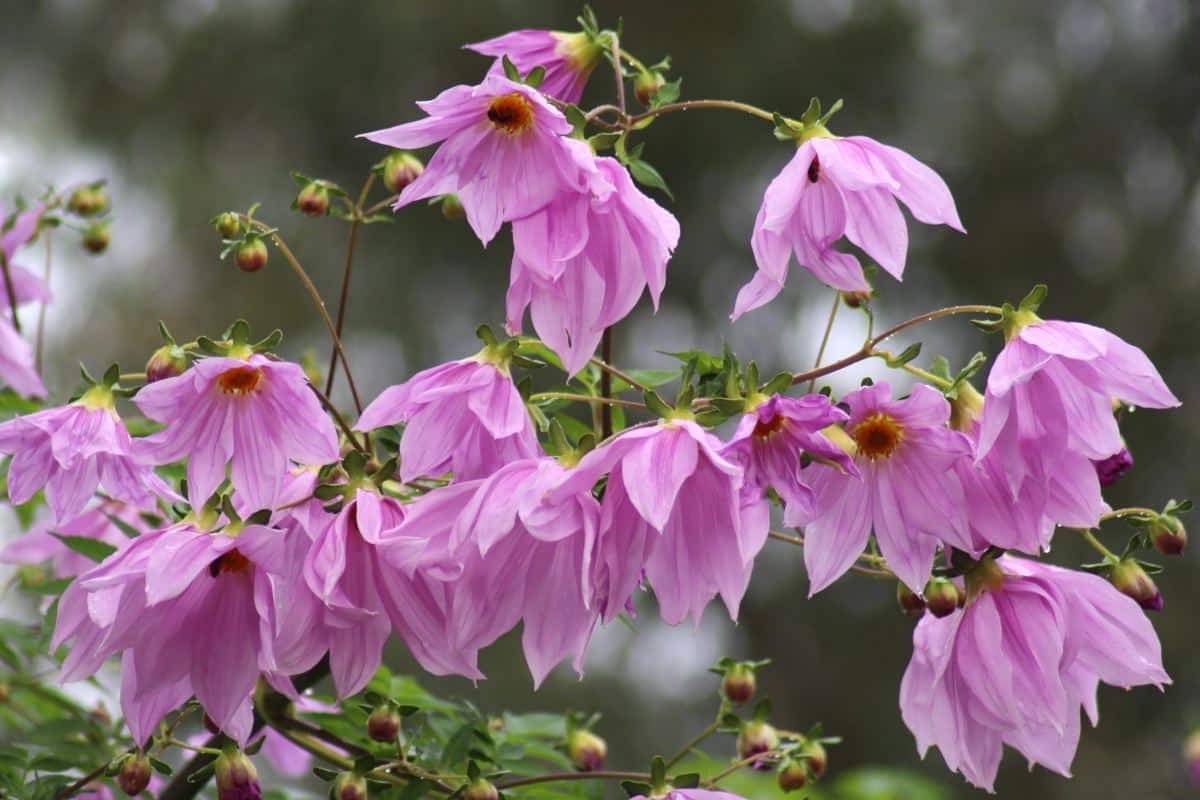
Native to Mexico, dahlias offer varied colored flowers that last up to the first frost spells. We distinguish simple dahlias with the heart surrounded by petals much like a daisy, from ornamental dahlias, cactus dahlias and pompom dahlias, with large sun-like flowers. Pompom dahlias have tube-like petals that make the flower look like a delicate ball. Dwarf dahlias are adapted to growing in pots.
These bulbs are planted in mid-spring to late spring, at a depth of about four inches (ten centimeters). If spring is very wet, protect your young growth from slugs and snails which love to eat them: surround them with ashes or beer traps.
In summer, water with moderation and avoid getting leaves wet. Remove wilted flowers regularly in order to spur the plant into preparing new flowers. If you want very large flowers, cut the side shoots off from the plant (except for pompom dahlias).
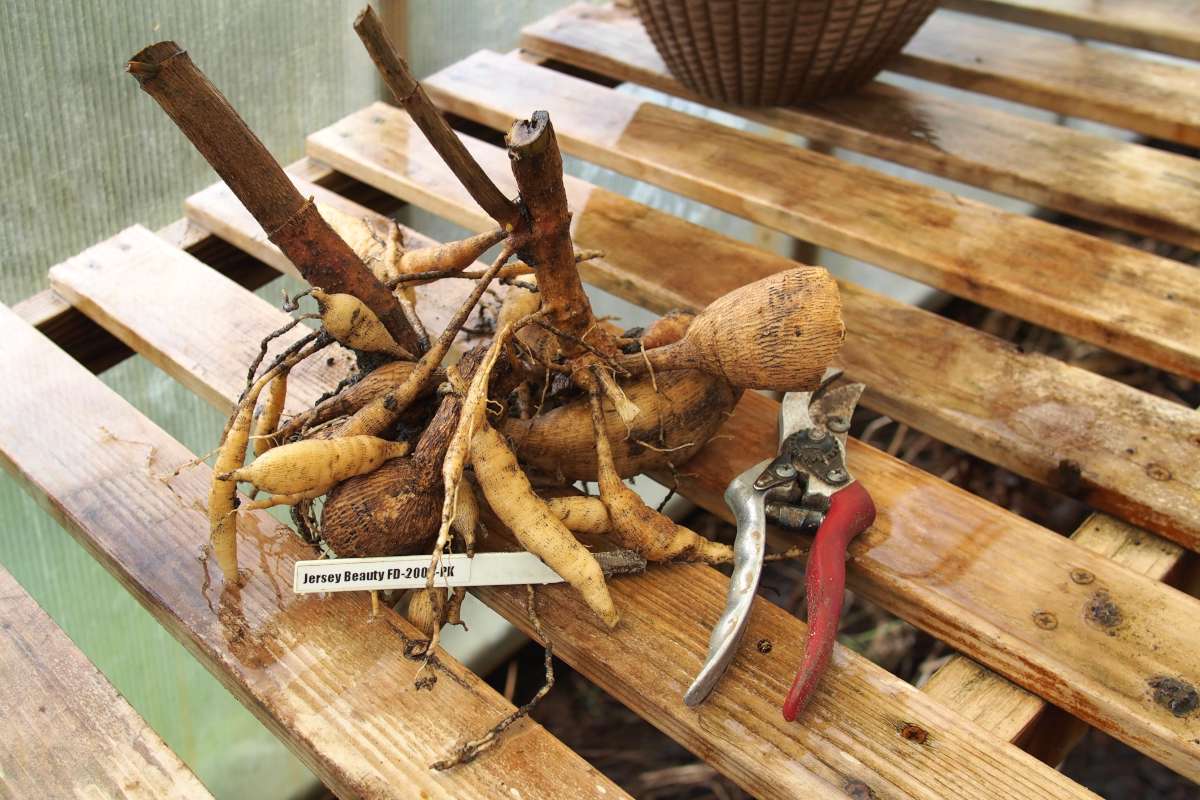
At All Saint’s Day, after the first frost spells, unearth your dahlia bulbs. Let them dry before storing them in a dry and cool spot, where they will patiently wait to be replanted again come spring. That is also the time to replace them with spring bulbs for the garden to flower right when the weather starts looking up.
Laure Hamann