Outdoor Zamioculcas – planting, pots and care for ZZ plant outside
·
0
Glossy fronds and swollen tuber-roots that store their own water make the ZZ plant (Zamioculcas zamiifolia) an easy choice for a shaded patio or bed, watered only once a month once established. Everything depends on one condition: it must never freeze, or the plant dies outright.
Outdoor ZZ plant at a glance
Name
Zamioculcas zamiifolia
Common
ZZ plant, emerald palm
Hardiness
32°F/0°C — no freezing
Outdoor height
2-3 feet (0.6-1 m)
Soil type
Well draining
Exposure
Part shade, shade
This fabulous glossy leaf plant will make your outdoor life easy and beautiful!
Planting ZZ plant outdoors
Your ZZ plant will do equally well in a container as it will in the ground. In containers, it’ll need a little more care.
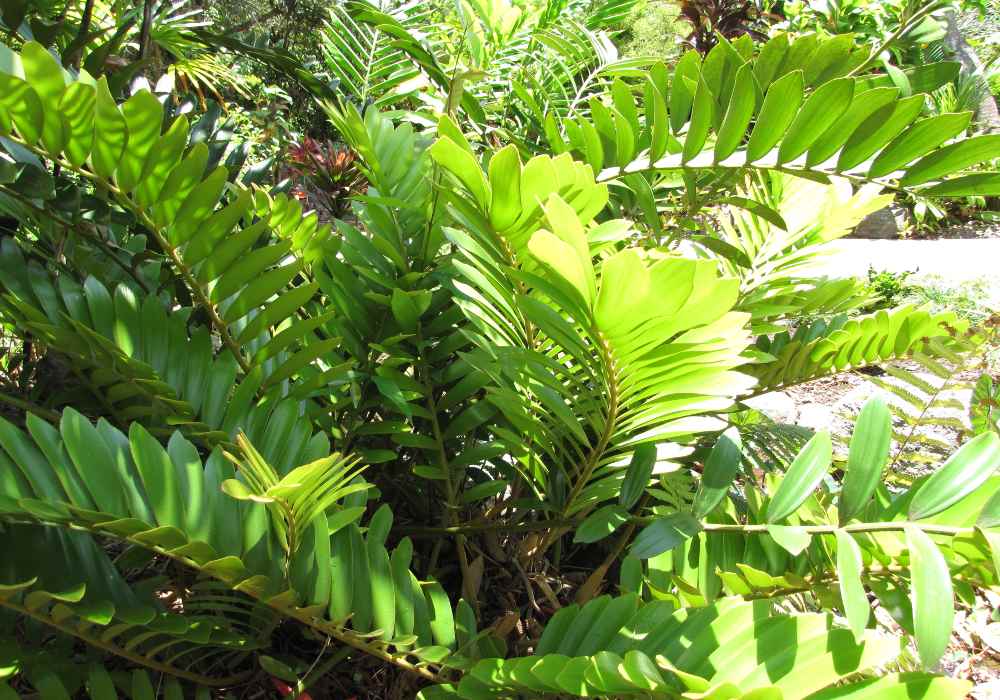
ZZ plant in the ground
Planting in the ground suits frost-free gardens only
This is only possible in areas with very mild winters. A ZZ plant will survive outdoors if temperatures never drop below 40°F (5°C). Freezing will kill the plant.
As a result, the coldest possible hardiness zones for Zamioculcas are:
USA, zones 10+ (zone 11, etc)
UK, H2 and above (H1c, H1b…)
Note that with winter protections, you can gain yet another zone: zone 9 for the USA and zone H3 in the British Isles.
However, since the ZZ plant is a slow grower, fronds that die off may take a while to grow back.
The ZZ plant will thrive in shade and part shade outdoors. Proper drainage is again important. If the soil in your garden is heavy, read up on how to make clay soil lighter. In extreme cases, plant your ZZ atop a mound or in a raised garden bed.
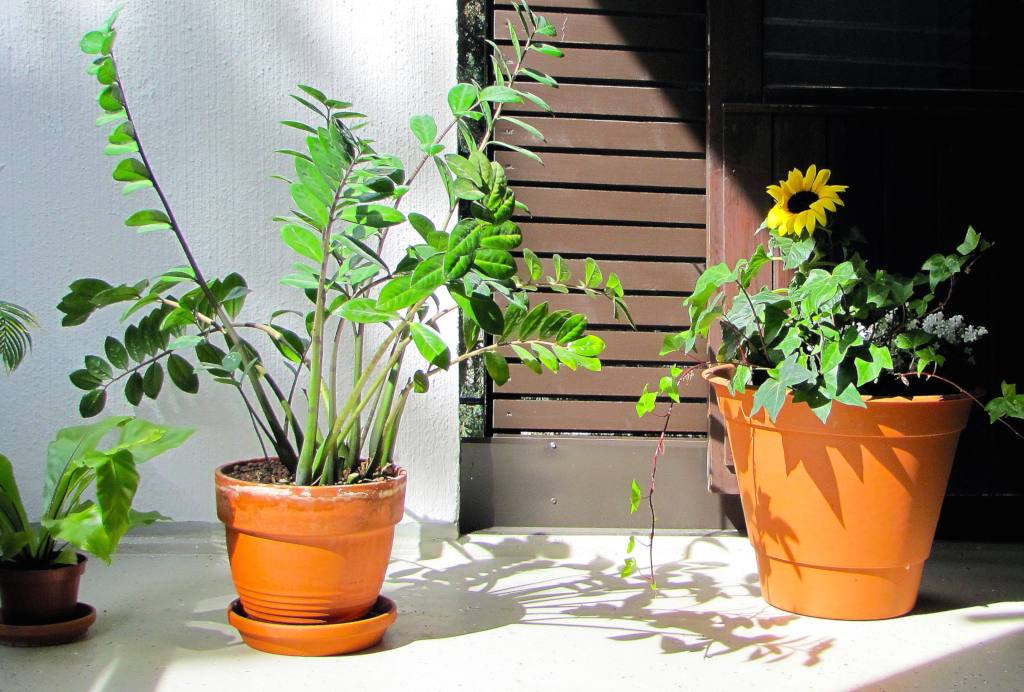
Pot with ZZ plant outside
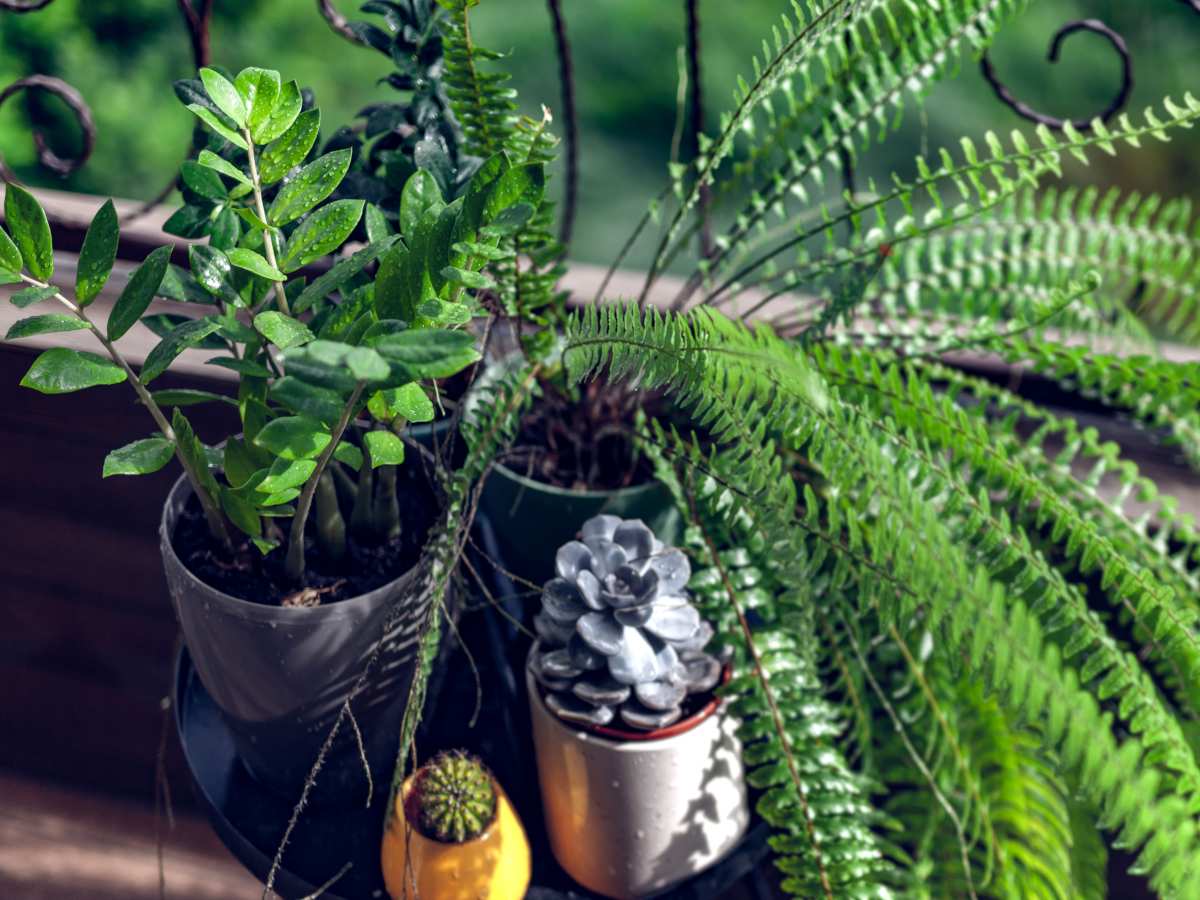
Excellent news: you can bring your indoor ZZ plant in and out of the house without any problems at all!
Just make sure it doesn’t go directly from a shaded bath chamber to a hot full-sun patio. It’s best to harden it over a period of 2 weeks:
Harden potted plants off over two weeks outdoors
First day, bring it out for an hour in the morning. Then, bring it back in.
Increase by half an hour every day, until the whole day is spent outside.
Remember to water more if weather is warm, windy and dry.
Also, bring it indoors if temperatures drop by a lot at night (down to near-freezing).
Watering outdoor Zamioculcas
Once your ZZ plant is well established, you’ll only need to water once a month if there isn’t any rain. Clearly among drought-resistant options for dry gardens.
Since it grows best in the shade it shouldn’t dry out too fast and the tuber-roots are good at retaining water.
Water more often in summer to spur growth.
No need to water in winter (dormant period).
If in the colder areas (below 40-50°F or 5-8°C), do your best to keep water out. Cold isn’t the first winter enemy: cold water is.
Water potted ZZ plants twice as often: every fortnight.
Choosing a ZZ plant variety for the garden
All ZZ plants share the same needs outdoors, so the choice comes down to how you want to use them in the planting scheme.
Choosing a ZZ plant variety for the garden
Variety
Size or look
Best outdoor use
Lucky giant
Taller, with smooth, rounder leaves
Back or side of a flower bed, behind bright flowers
Zenzi
Short, with neat, lush fronds
Low edges and border linings
ZZ raven
Selection for dark colour schemes
A must-have in a black-themed garden
Whichever you pick, none of them tolerates frost, so winter care is the same for all.
Which ZZ plants varieties do best outside?
They’ll all do equally well – or equally badly in times of freezing.
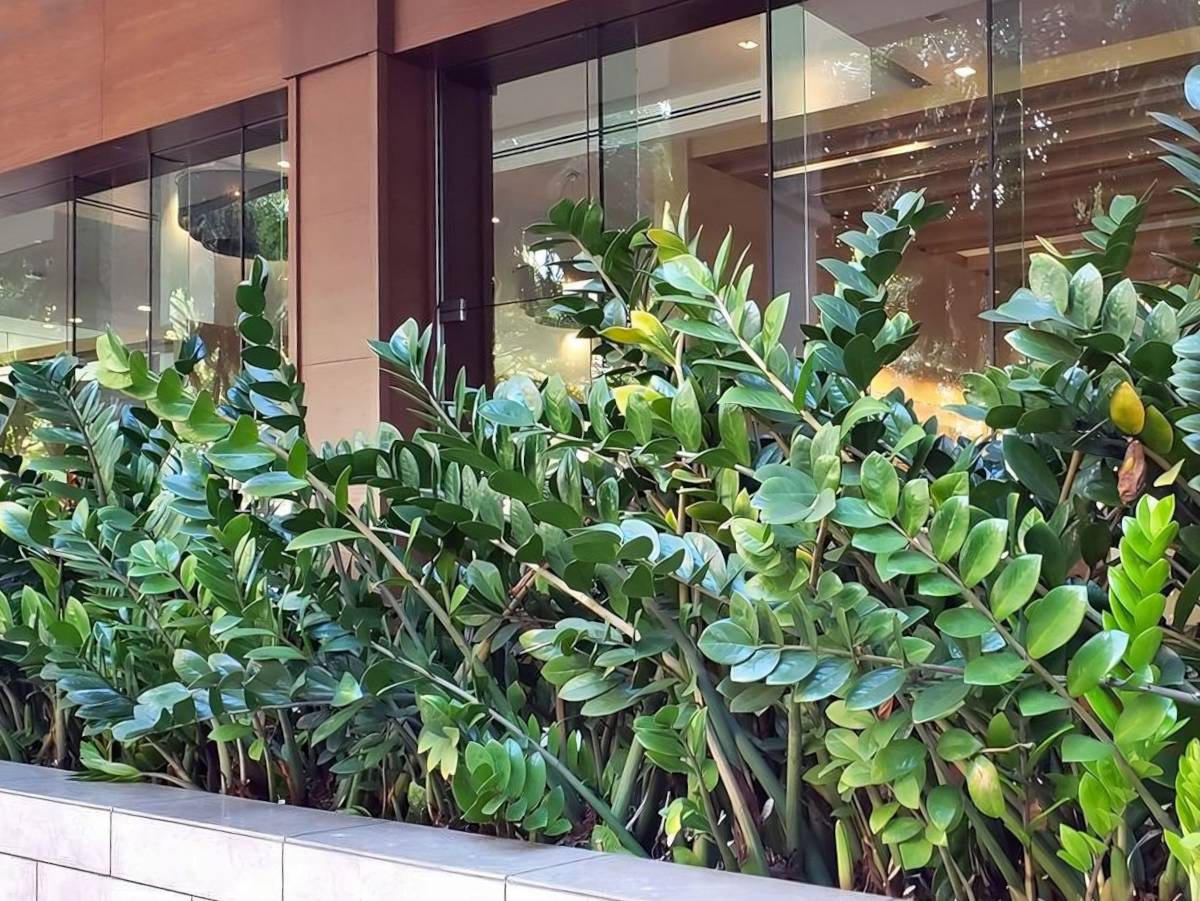
What matters more is the usage you plan to have for each ZZ variety: these are excellent for outdoor landscaping!
For instance, taller “Lucky giant” will do great at the back or side of a flower bed. Bright flowers will look stunning against the smooth, rounder leaves.
Short Zenzi plants are excellent for low edges, lining them with neat, lush fronds.
ZZ raven, of course, is a must-have in a black-themed garden.