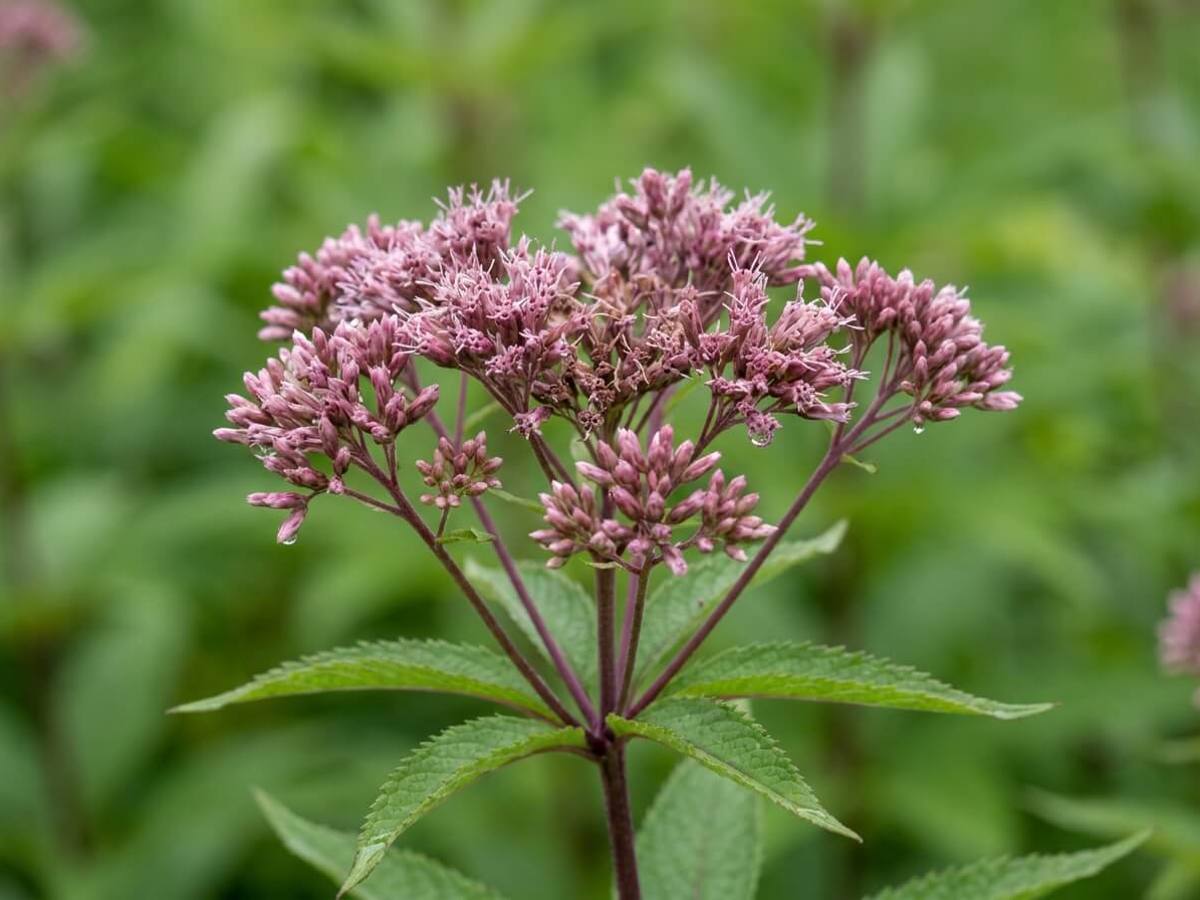
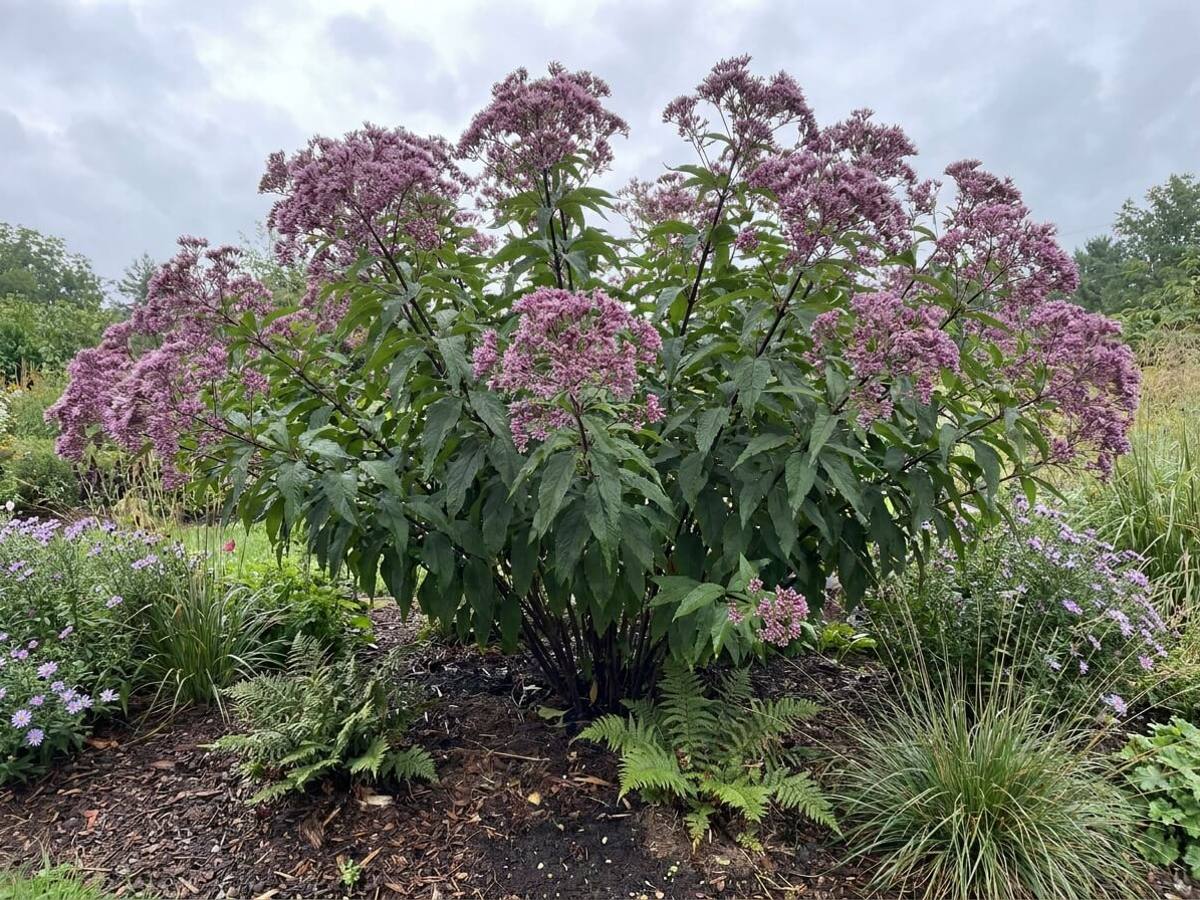
Towering yet elegant, Eupatorium maculatum raises great domed heads of dusky mauve-pink flowers on sturdy purple-spotted stems, often reaching well above head height by late summer. It is one of the finest back-of-border perennials for damp ground, bringing structure, late colour and an extraordinary amount of insect life to a garden. Its distinctive trait is the flattened, plate-like flower cluster — a landing pad that butterflies find irresistible.
Full sun gives the strongest stems, the deepest flower colour and the most compact habit. Light dappled shade for part of the day is perfectly acceptable, especially in hotter, drier regions, but deep shade produces lanky growth that leans and flops. Shelter from fierce wind is worth considering given the plant’s height.
This is a plant of wet meadows and stream sides, so it wants soil that stays moist through the growing season. Heavy loam and clay suit it beautifully; thin, sandy or free-draining chalk soils are the main enemy, and there it will need enriching with organic matter and regular watering. It is unfussy about pH, thriving anywhere from slightly acidic to distinctly alkaline.
Cold is no problem at all — the roots shrug off hard frost well below −20 °C. In Mediterranean or continental climates with baking summers, site it on the shadier, damper side of the garden, or beside a pond, to avoid scorched foliage.
Plant in early autumn while the soil is still warm, so roots establish before winter, or in mid-spring once the worst frosts have passed. Spring planting is safer on cold, wet clay where winter waterlogging can rot a new crown.
Almost all the work this plant asks for falls into four short windows. The table below sets out what to do when, and why it matters.
| Season | Key task | Why it matters |
|---|---|---|
| Early spring | Divide congested clumps as shoots emerge; mulch 5 cm deep around the buds | Shoots come up late, so mark the position first to avoid digging into the crown |
| Late spring | Pinch out the growing tips when stems reach 50 cm — the Chelsea chop | Cuts the final height by 30–40 cm and builds shorter, self-supporting stems |
| Summer | Water generously in dry spells; add discreet stakes or a ring support before buds form | A thirsty plant flowers poorly, and the heavy heads catch the wind |
| Mid to late autumn | Leave the seed heads standing; lift and split overcrowded clumps | Parchment-brown heads give winter structure and feed birds |
| Late winter | Cut stems down to 10 cm above soil level | No frost protection needed — only avoid ground sitting under standing water |
Keep to this rhythm and the clump will stand tall, unstaked, for years.
Spring: Shoots appear late — often not until mid-April — so mark the position to avoid digging into the crown. Apply a mulch of compost 5 cm deep around, not over, the emerging buds, and feed only lightly, as rich nitrogen encourages soft, floppy stems. To reduce the final height by 30–40 cm, pinch out the growing tips when stems reach 50 cm in late May, the so-called Chelsea chop.
Summer: Water generously in dry spells; wilting leaves and crisping leaf margins are the first sign of stress, and a thirsty plant flowers poorly. In exposed gardens, insert a few discreet stakes or a ring support before flower buds form, as the heavy heads catch the wind. Leave the flowers untouched for the butterflies and bees rather than deadheading.
Autumn: The seed heads turn a soft parchment brown and look handsome through October and November — leave them standing for winter structure and for birds. Cut stems down to 10 cm above soil level in late autumn or, better still, in late winter. Autumn is also a good moment to lift and split congested clumps, replanting the vigorous outer sections.
Winter: The plant dies back completely to a woody crown and needs no protection whatsoever in temperate gardens. Only ensure the ground does not sit under standing water for months on end.
Selected forms offer better colour and, in some cases, far more manageable proportions than the wild species.