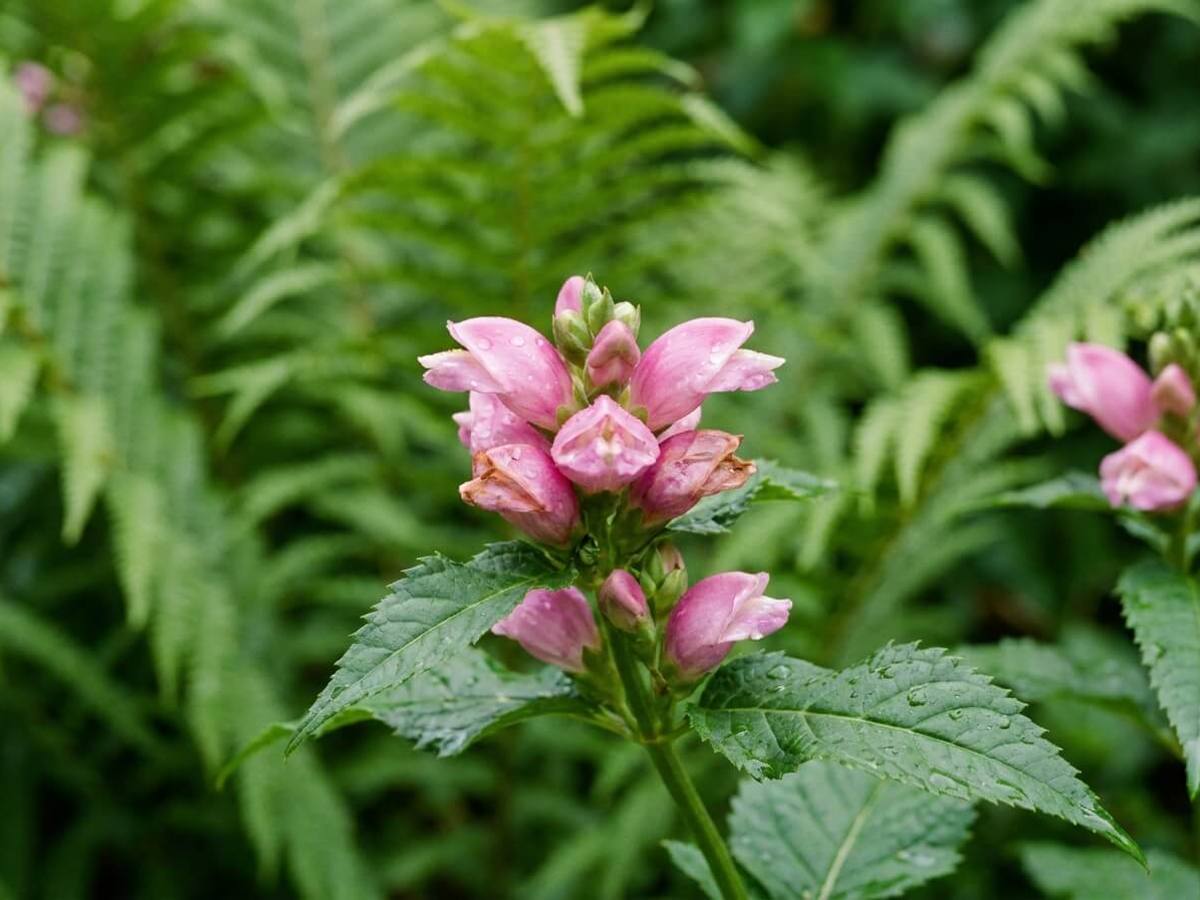
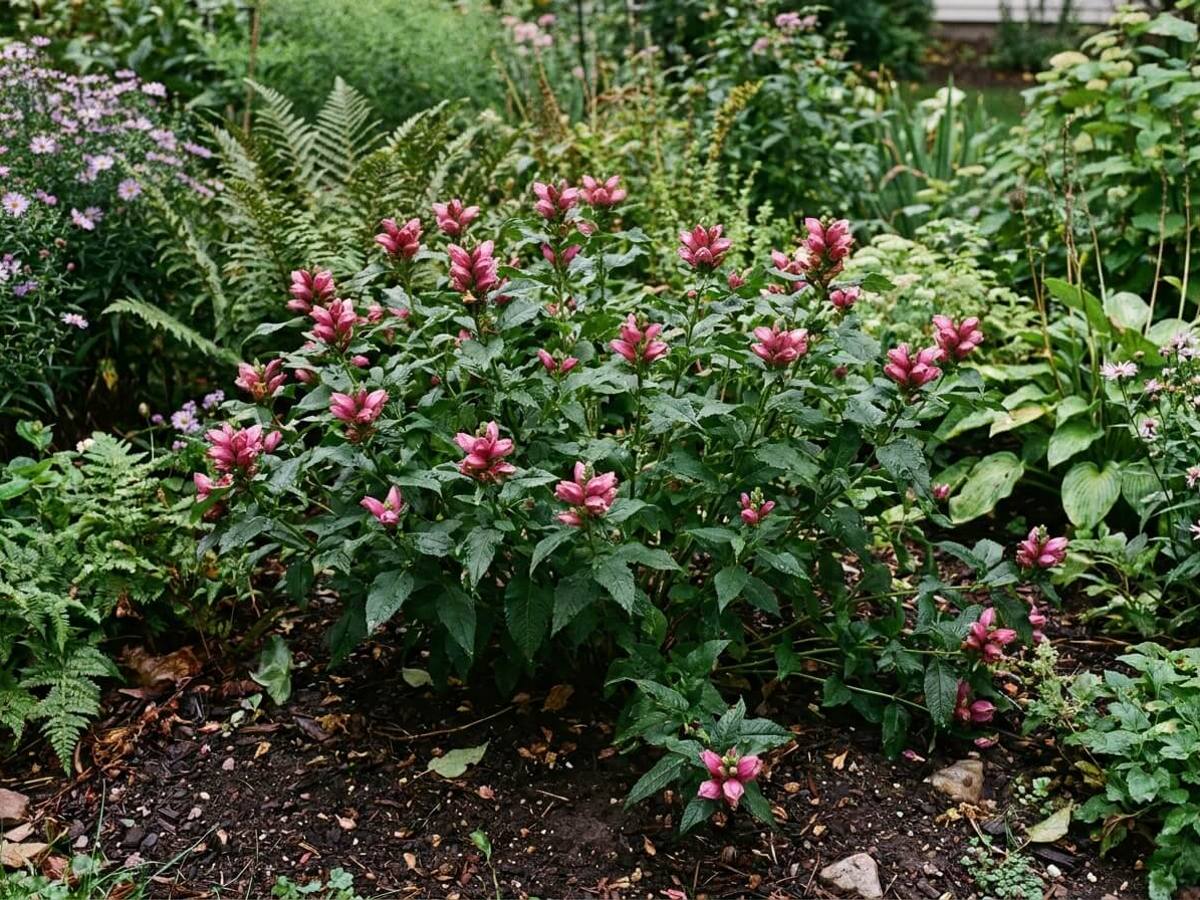
Chelone obliqua is one of the most useful late-flowering perennials for damp ground, throwing up stiff, upright stems topped with dense heads of rosy-pink, hooded flowers from late summer well into autumn. Each bloom really does resemble the head of a tortoise or turtle with its mouth slightly open — squeeze one gently and it “gapes”. It is a superb companion for asters, Japanese anemones and grasses in a border that stays moist, and bumblebees adore it.
Turtlehead is happiest in full sun where the soil never dries out, and in dappled or partial shade where it does. Given four to six hours of direct light it flowers generously and holds its stems bolt upright without staking. In deep shade it still survives, but stems stretch and flowering thins considerably.
The essential requirement is moisture. Choose deep, humus-rich soil that stays damp through summer — heavy loam, improved clay or the margins of a pond or bog garden are ideal. It tolerates a wide pH range but performs best between pH 5.5 and 7.0, and dislikes thin, free-draining chalk and sandy soils unless heavily enriched.
Native to wet meadows and streamsides of the eastern and central United States, it copes with hard frost, prolonged winter wet and short growing seasons. In warmer, drier regions plant on the shaded, north-facing side of a border and mulch generously.
Plant in early to mid spring, once the soil has warmed and the shoots are just breaking, so the roots establish before summer heat. Autumn planting also works well in mild areas with reliably damp soil.
Turtlehead asks for very little, but the few jobs it does need are tied to a particular moment in the year. This table sets out what to do when, and why it matters.
| Season | Main jobs | Why it matters |
|---|---|---|
| Mid-spring | Mark the clump, mulch or apply a balanced organic feed, pinch out tips at 25–30 cm | Shoots break late and are easily hoed off; pinching gives bushier, self-supporting stems with more flower heads |
| Early summer to late summer | Water deeply and regularly; slice off unwanted creeping growth with a spade | Drought stress scorches leaf margins and spoils flowering; no deadheading is needed as spikes open in succession |
| Early to late autumn | Leave stems standing while they look good, then cut to about 5 cm; lift and divide congested clumps | Flowering carries on until the first sharp frosts, and stems left standing give winter structure |
| Early winter to late winter | Nothing essential; spread a loose leaf-mould mulch over the crown on light soils | The plant is fully hardy, but exposed, cold gardens and thin soils benefit from cover |
Keep the soil damp through all four seasons and the rest of the calendar looks after itself.
Turtlehead asks for very little, but the few jobs it does need are tied to a particular moment in the year. This table sets out what to do when, and why it matters.
| Season | Main jobs | Why it matters |
|---|---|---|
| Mid-spring | Mark the clump, mulch or apply a balanced organic feed, pinch out tips at 25–30 cm | Shoots break late and are easily hoed off; pinching gives bushier, self-supporting stems with more flower heads |
| Early summer to late summer | Water deeply and regularly; slice off unwanted creeping growth with a spade | Drought stress scorches leaf margins and spoils flowering; no deadheading is needed as spikes open in succession |
| Early to late autumn | Leave stems standing while they look good, then cut to about 5 cm; lift and divide congested clumps | Flowering carries on until the first sharp frosts, and stems left standing give winter structure |
| Early winter to late winter | Nothing essential; spread a loose leaf-mould mulch over the crown on light soils | The plant is fully hardy, but exposed, cold gardens and thin soils benefit from cover |
Keep the soil damp through all four seasons and the rest of the calendar looks after itself.
Turtlehead asks for very little, but the few jobs it does need are tied to a particular moment in the year. This table sets out what to do when, and why it matters.
| Season | Main jobs | Why it matters |
|---|---|---|
| Mid-spring | Mark the clump, mulch or apply a balanced organic feed, pinch out tips at 25–30 cm | Shoots break late and are easily hoed off; pinching gives bushier, self-supporting stems with more flower heads |
| Early summer to late summer | Water deeply and regularly; slice off unwanted creeping growth with a spade | Drought stress scorches leaf margins and spoils flowering; no deadheading is needed as spikes open in succession |
| Early to late autumn | Leave stems standing while they look good, then cut to about 5 cm; lift and divide congested clumps | Flowering carries on until the first sharp frosts, and stems left standing give winter structure |
| Early winter to late winter | Nothing essential; spread a loose leaf-mould mulch over the crown on light soils | The plant is fully hardy, but exposed, cold gardens and thin soils benefit from cover |
Keep the soil damp through all four seasons and the rest of the calendar looks after itself.
Spring: Shoots emerge late, often not until April, so mark the position to avoid hoeing them off. Apply a balanced organic feed or a mulch of compost as growth starts. Pinch out the growing tips when stems reach 25–30 cm for bushier, self-supporting plants with more flower heads.
Summer: Water deeply and regularly in dry spells — drought stress is the most common cause of scorched leaf margins and poor flowering. Watch for the clump creeping outwards on short rhizomes and simply slice off unwanted growth with a spade. There is no need to deadhead, as the flowers open in succession up each spike.
Autumn: Flowering continues until the first sharp frosts, so leave the stems standing for as long as they look good. Cut back to about 5 cm once blackened, or leave the stems for winter structure and tidy in early spring. Autumn is a good time to lift and divide congested clumps in mild, damp gardens.
Winter: The plant dies back entirely and is fully hardy without protection. A loose mulch of leaf mould over the crown is welcome on light soils or in exposed, cold gardens.
Selections are few but distinct, and closely related species are often sold alongside.