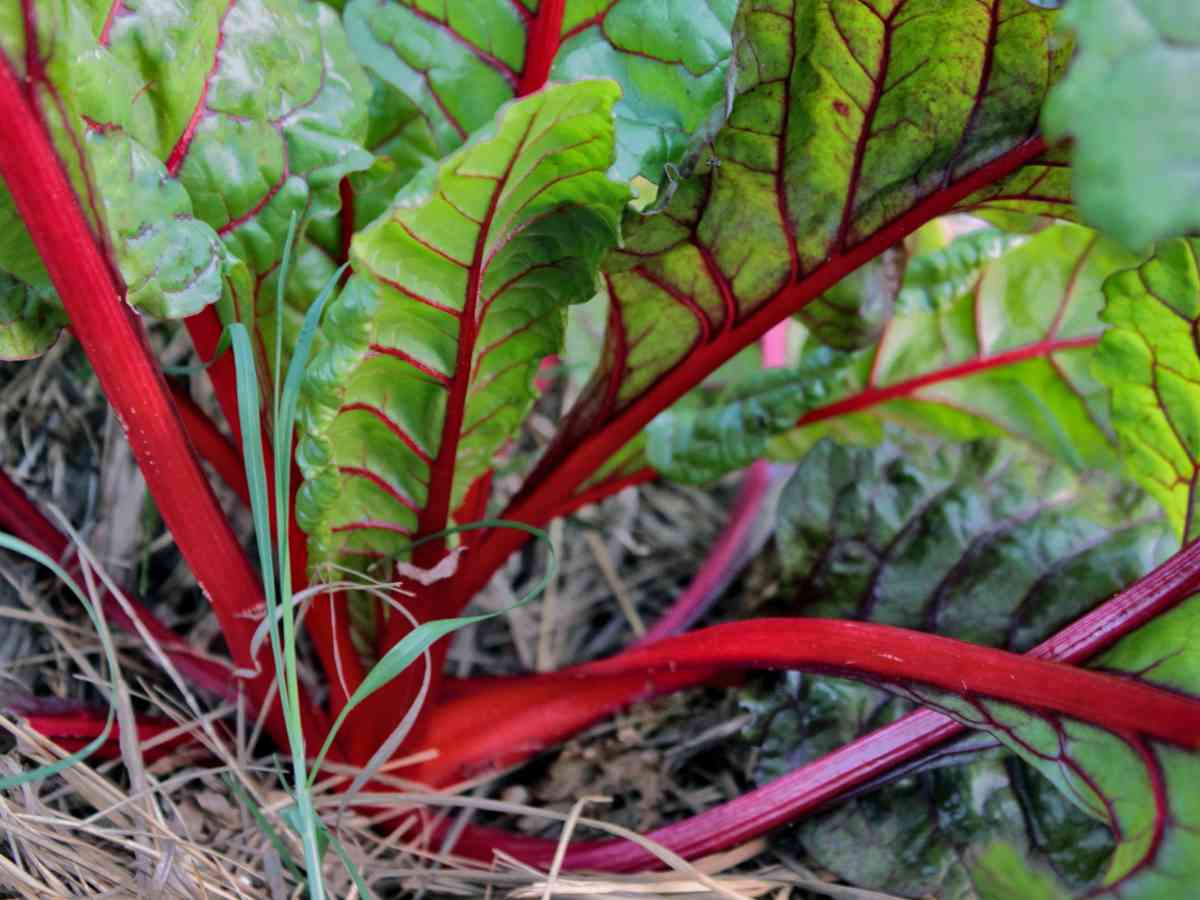
Ribs of white, yellow or red support leaves that are eaten alongside the stalks: chard (Beta vulgaris), also called silverbeet or perpetual spinach, is one of the most fibre-rich vegetables, with a delicately sweet taste. Keep the soil cool and moist, mulching in summer, and you can cut stalks from midsummer until the first frosts.
| Name | Beta vulgaris |
|---|---|
| Family | Chenopodiaceae |
| Type | biennial, vegetable |
| Height | 12 to 20 inches (30 to 50 cm) |
| Exposure | full sun, part sun |
| Soil | rather rich and acidic |
| Sowing | spring |
| Planting distance | 16″ / 40 cm |
| Harvest | summer, fall |
It has other names like silverbeet, perpetual spinach or seakale beet.
This biennial is much appreciated for all its parts, leaf and stalk, and for the fact that it is one of the vegetables with the highest fiber content.
Chard is a vegetable that can be equally easily sown in spring or planted a bit later, until the beginning of summer, if you’ve purchased it in nursery pots.
If you wish to start from seed, better to sow from early spring to early summer in a nursery for areas where the winter climate is cold and in situ in milder climates.
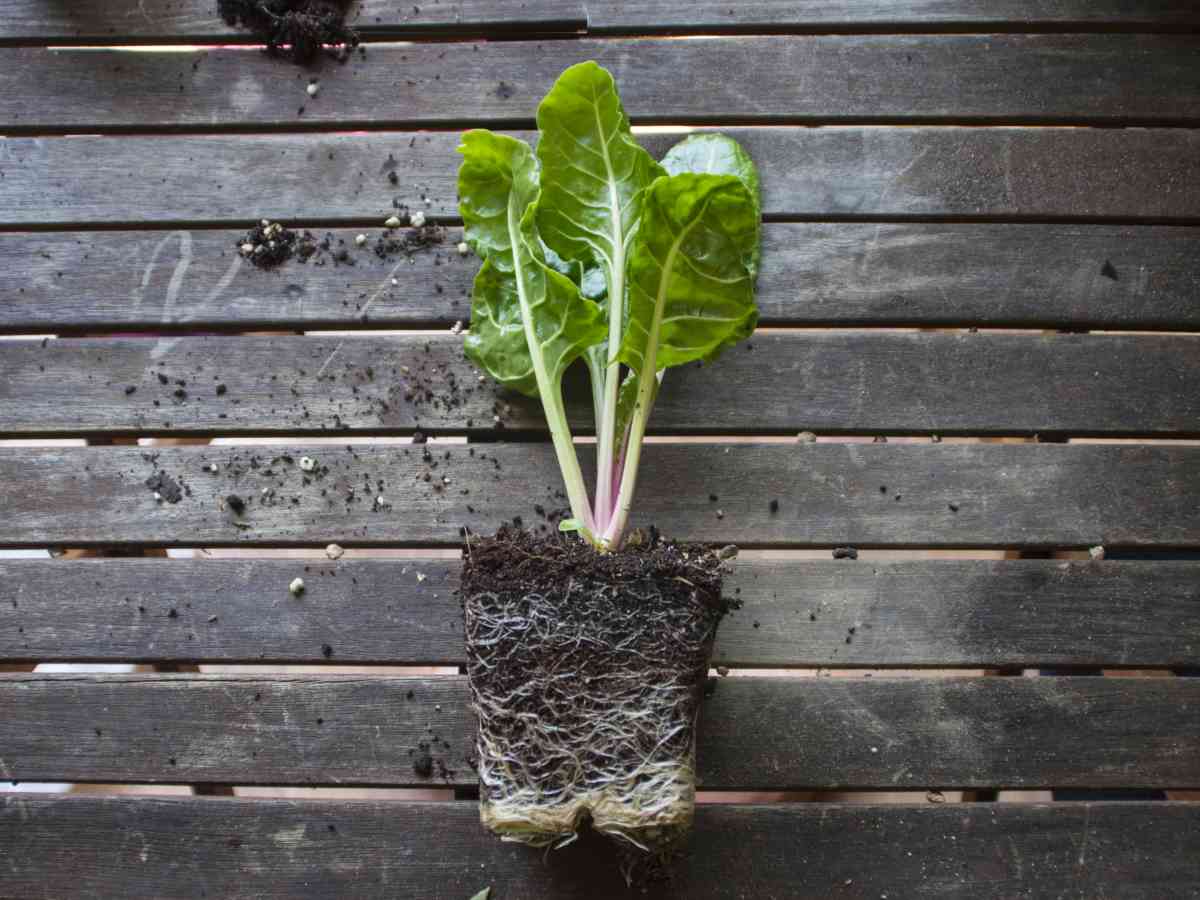
If purchased in nursery pots, chard can be planted all spring long, spacing them 12 to 16 inches (30 to 40 cm) apart on all sides.
Young chard plants might be attacked by black aphids:
Chard can be started from seed in a nursery, sown straight into the plot, or bought as young plants in nursery pots. The three routes differ in timing, spacing and the climate they suit.
| Method | When | How | Best suited to |
|---|---|---|---|
| Sowing in a nursery | Early spring to early summer | Transplant to the growing bed once 4 or 5 leaves have formed, 12 to 16 inches (30 to 40 cm) apart | Areas where the winter climate is cold |
| Direct sowing in situ | Early spring to early summer | Rows ½ inch (1 to 2 cm) deep, 4-5 seeds every 16 inches (40 cm), then thin to the strongest sprout | Milder climates |
| Planting nursery pots | All spring long, until the beginning of summer | Space 12 to 16 inches (30 to 40 cm) apart on all sides and water regularly after planting | A later start without sowing |
Whichever start you choose, watch young plants for black aphids in their first weeks.
Chard varieties differ mainly in the colour and width of their ribs and in whether they are grown for thick stalks or for tender leaves. The table below sets out the kinds most often sold as seed, so you can pick one for the cooking pot, the salad bowl or the flower border.
| Variety | Rib and stem colour | Leaf | Best use |
|---|---|---|---|
| Bright Lights | Mixed pink, gold, orange, crimson | Green to bronze-tinted | Ornamental beds and baby-leaf picking |
| Bright Yellow | Golden yellow | Mid green | Colour that holds on the plate |
| Rhubarb Chard | Deep crimson red | Dark green, red-veined | Colourful stir-fries and mixed borders |
| Perpetual Spinach | Slim pale green | Soft green, spinach-like | Spinach substitute, picked young and often |
| Five Colour Silverbeet | Mixed white, yellow, orange, pink, red | Green, lightly savoyed | Cut-and-come-again and decorative planting |
| Ruby Chard | Bright red | Dark green, puckered | Baby salad leaves and braising |
| Fordhook Giant | Broad white | Dark green, heavily savoyed | Heavy cropper, stems and leaves cooked separately |
| Lucullus | White | Pale green, crinkled, tender | Leaves cooked like spinach |
| Barese | Short white | Glossy green, spoon-shaped | Baby leaf, containers, quick picking |
| Argentata | Broad silvery-white | Dark green, blistered | Thick stalks cooked as a vegetable |
Usually the harvest season for chard extends from Midsummer up to the first frost spells, depending on the time of sowing, planting, and on your needs.
You can plan on harvesting chard around 2 months after sowing.
Being biennial, chard runs to a flower stalk in its second spring and the stalks then turn tough and stringy.
Native to Southern Europe, chard is a rather ancient vegetable grown like an annual.
Its leaves and stems alike are appreciated, since both boast a delicate taste that gourmet chefs can’t find anywhere else. France, the country where culinary arts are nearly a religion, is actually the world’s largest chard produce.
Chard belongs to the same family as red beets, and it can be eaten both cooked or raw, just like spinach.
Its taste is a bit sweet, and in the South of France, near the city of Nice, chard is a vegetable that appears almost in every dish of this Mediterranean diet. It is cooked there in omelets, baked with cheese, added to pies and even desserts!
The most common varieties are ‘Fordhook giant’, ‘Verte a carde blanche’, ‘Bright Lights’, with yellow or red ribs, ‘Ruby Chard’ with red ribs or silverbeet, ‘Golden’.
The many health benefits and therapeutic properties of silverbeet are often unknown to the public at large.
Low in calorie intake and rich in fibers, it is a great source of vitamins C and A, iron and magnesium, which makes it an excellent vegetable for fighting drowsiness.
Chard eases transit and has diuretic and laxative effects on our body.
Chard loves it when the soil is kept cool and moist. Remember to mulch in summer to keep the soil cool.