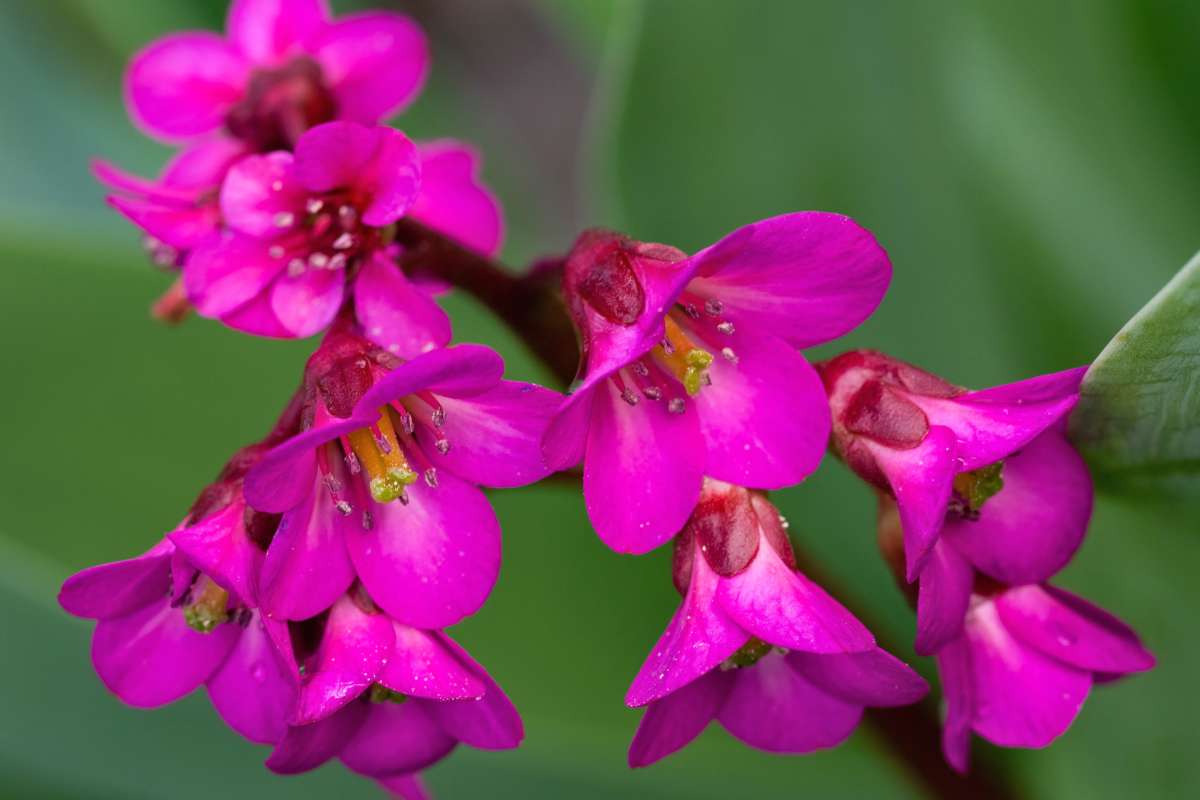
Large, thick leaves — the reason it is called elephant ears — rise from a creeping rhizome, with cute flowers clumped together into a bunch. Bergenia (Bergenia), the cobbler’s plant, is one of very few plants blooming from early winter to winter’s end; give it winter sun and summer shade under deciduous trees and it needs virtually no care.
| Name | Bergenia |
|---|---|
| Family | Saxifragaceae |
| Type | perennial |
| Height | 12 to 16 inches (30 to 40 cm) |
| Exposure | full sun, part sun |
| Soil | ordinary |
| Flowering | early winter to mid-spring depending on the variety |
A typical plant for rocky ground, edges, and flower beds.
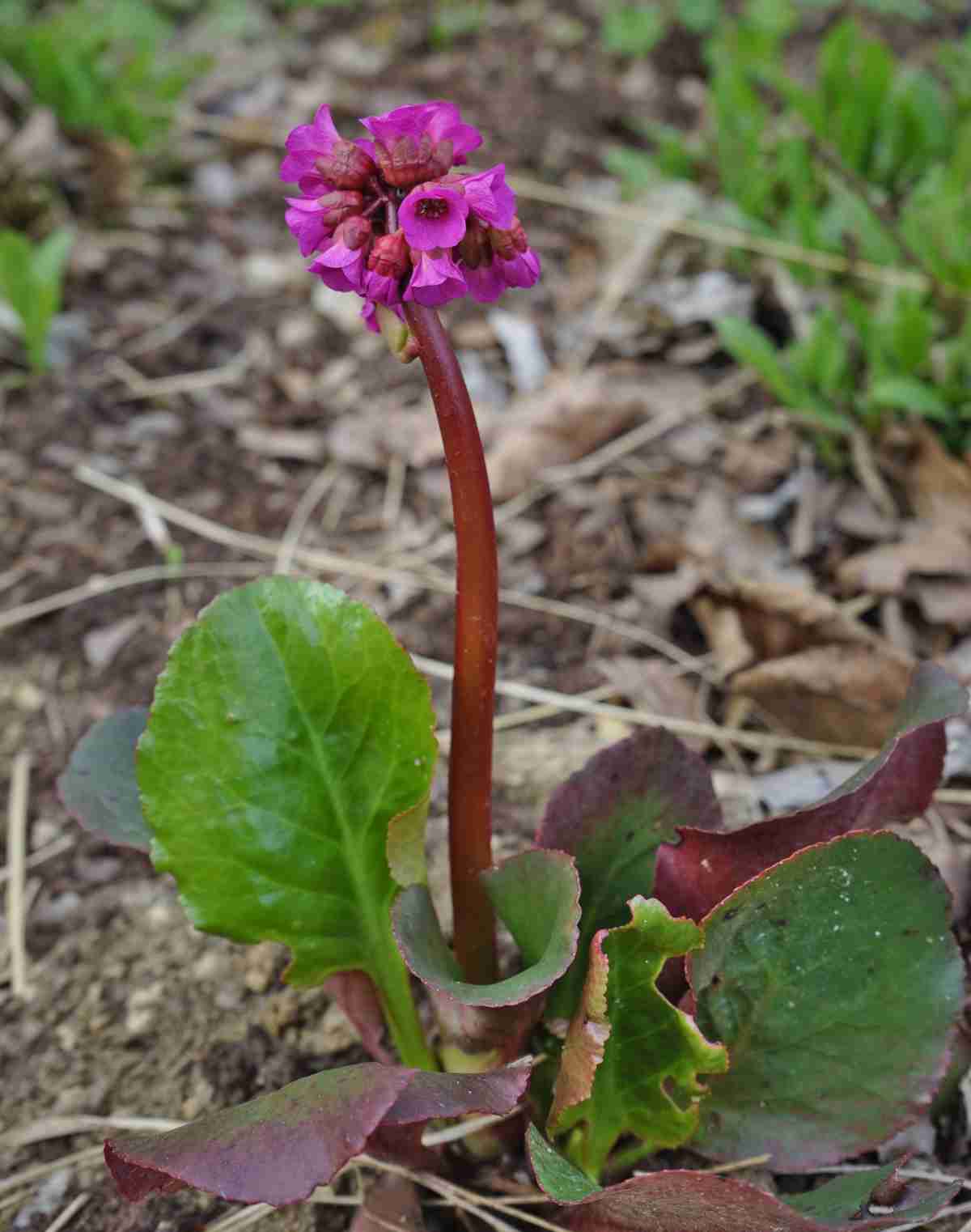
Plant bergenia in fall to have it blooming during the month of early winter.
It is also possible to plant in spring if you’re able to water regularly at the beginning.
A sun-endowed spot in winter is crucial for your bergenia to bloom. However, since it needs shade during summer, the ideal setting for it is to grow at the foot of deciduous trees.
Bergenia doesn’t fear the cold nor does it fear freezing, this actually makes the color of its leaves more intense.
Bergenia grows along a creeping rhizome, which makes it a plant that tends to nibble space up as years go by.
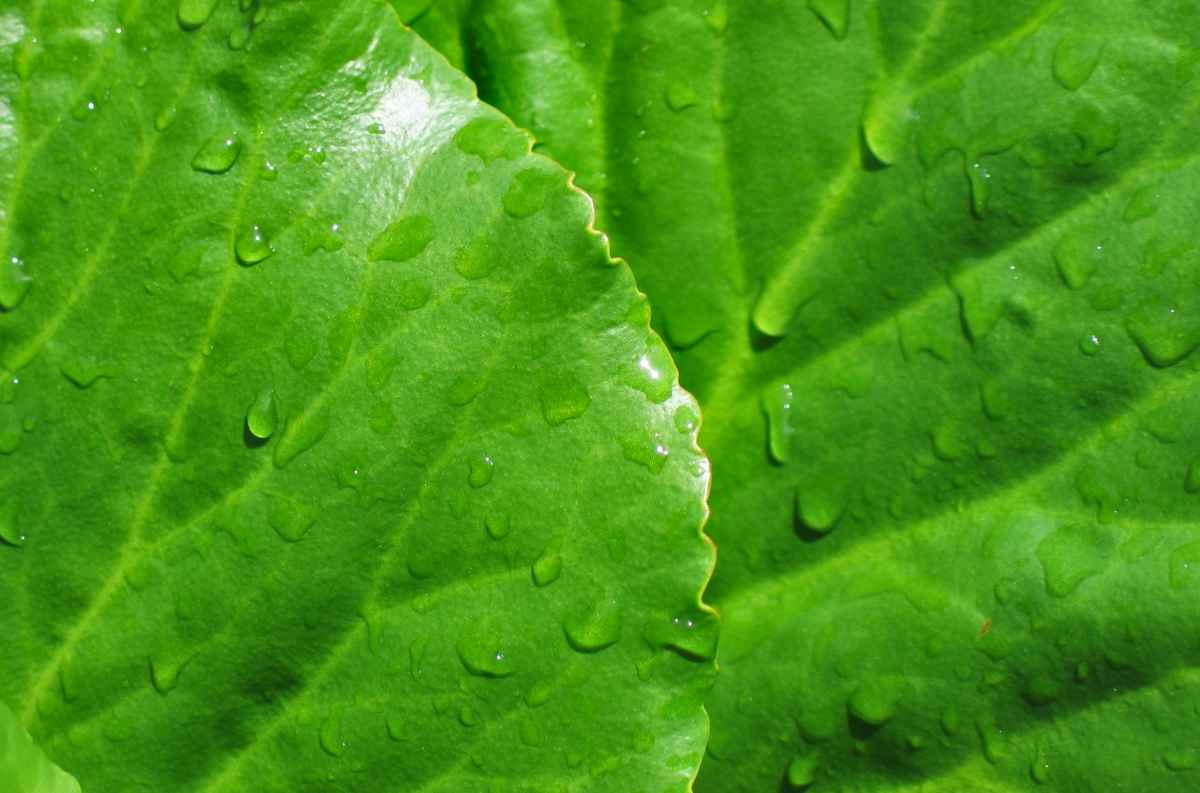
The hardiness of Bergenia is very high, since it resists the lowest temperatures without any issue.
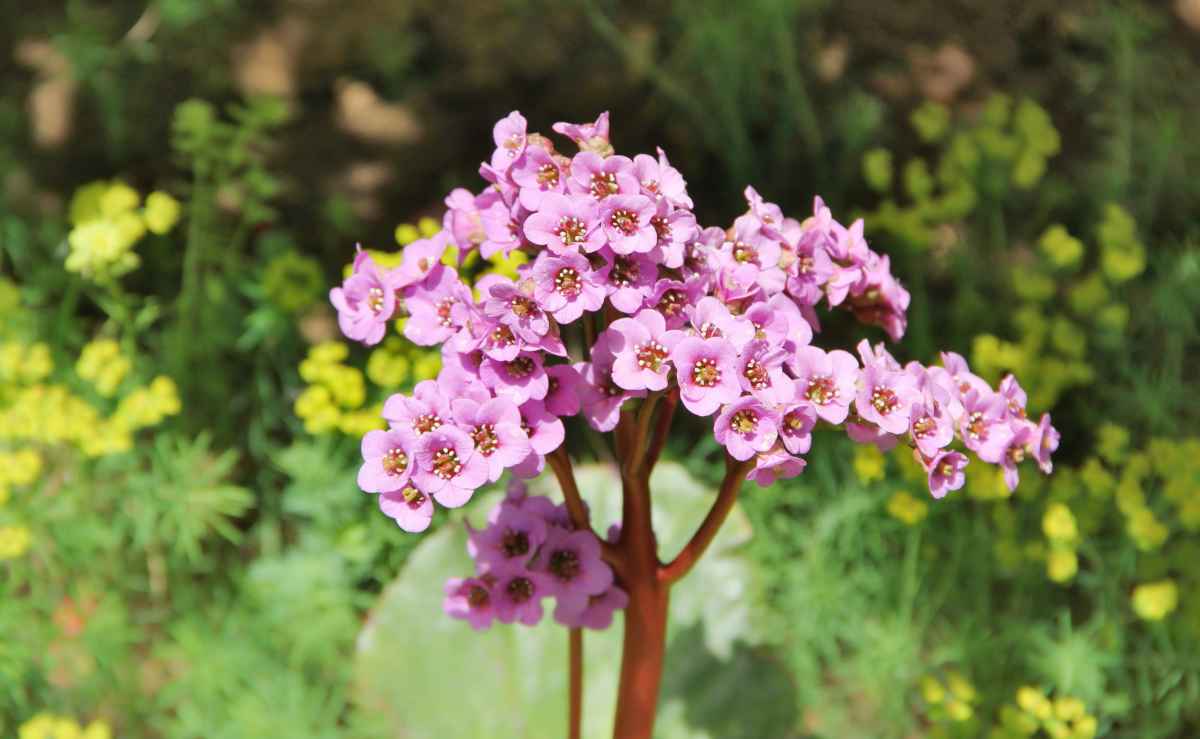
If your bergenia doesn’t flower, this is probably due to the fact that the soil is too rich, and/or that it lacks direct sun in winter.
Bergenia is very resistant to most diseases.
Bergenia works to a very simple calendar, with only a handful of key moments in the year. Here is what each season calls for and what you can expect in return.
| Period | What to do | What to expect |
|---|---|---|
| Fall | Main planting season | Blooming during the month of early winter |
| Spring | Alternative planting season | Needs regular watering at the beginning |
| early winter to mid-spring | Flowering, cut wilting flowers off as they die | One of the very few plants in bloom from early winter to the end of winter |
| early spring or mid-spring | Multiply through crown division, after the blooming | New plants from the creeping rhizome |
| Fall (if no flowers) | Move the plant to a sunnier, less rich spot | Restored blooming the following winter |
Outside these moments, bergenia asks for little more than water in case of lack of rain.
Bergenias differ mainly in flower colour, the height of the flower stems and how strongly the foliage turns red in the cold. The table below compares the varieties most often found in garden centres and catalogues.
| Variety | Flower colour | Height | Winter leaf colour | Best use |
|---|---|---|---|---|
| ‘Silberlicht’ (Silver Light) | White, ageing pink | 12 to 16 in (30 to 40 cm) | Green, bronze tinted | Shaded edges, light corners |
| ‘Morgenröte’ (Morning Red) | Rose pink | 12 to 16 in (30 to 40 cm) | Green | Beds, often flowers twice |
| ‘Purpurea’ | Purple pink | 18 to 24 in (45 to 60 cm) | Purple flushed | Large clumps, ground cover |
| ‘Abendglut’ (Evening Glow) | Magenta, semi-double | 10 to 12 in (25 to 30 cm) | Maroon | Rockeries, low edging |
| ‘Baby Doll’ | Pale shell pink | 10 to 12 in (25 to 30 cm) | Green, red edged | Small gardens, pots |
| ‘Bressingham Ruby’ | Deep rosy red | 12 to 16 in (30 to 40 cm) | Beetroot red | Front of bed, winter colour |
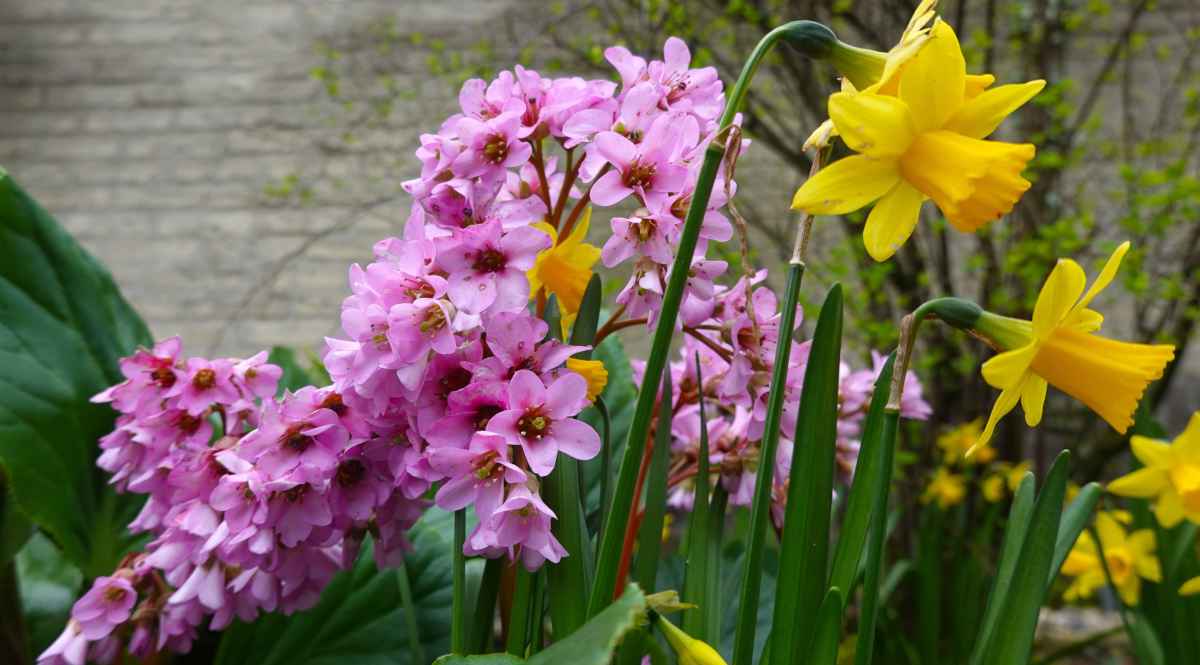
Native to China and Afghanistan, this is one of very few plants that blooms as early as early winter, and up until the end of winter.
This plant, also called the cobbler’s plant or elephant ears, forms amazing large, thick leaves and the cute flowers are clumped together to form a bunch.
With high levels of tannin compounds, the fact that cobblers used it to tan leather gave the plant its name of the “cobbler’s plant”.
This perennial is very hardy and requires virtually no care at all, while guaranteeing a very high appeal for your edges, rocky ground or mounds!