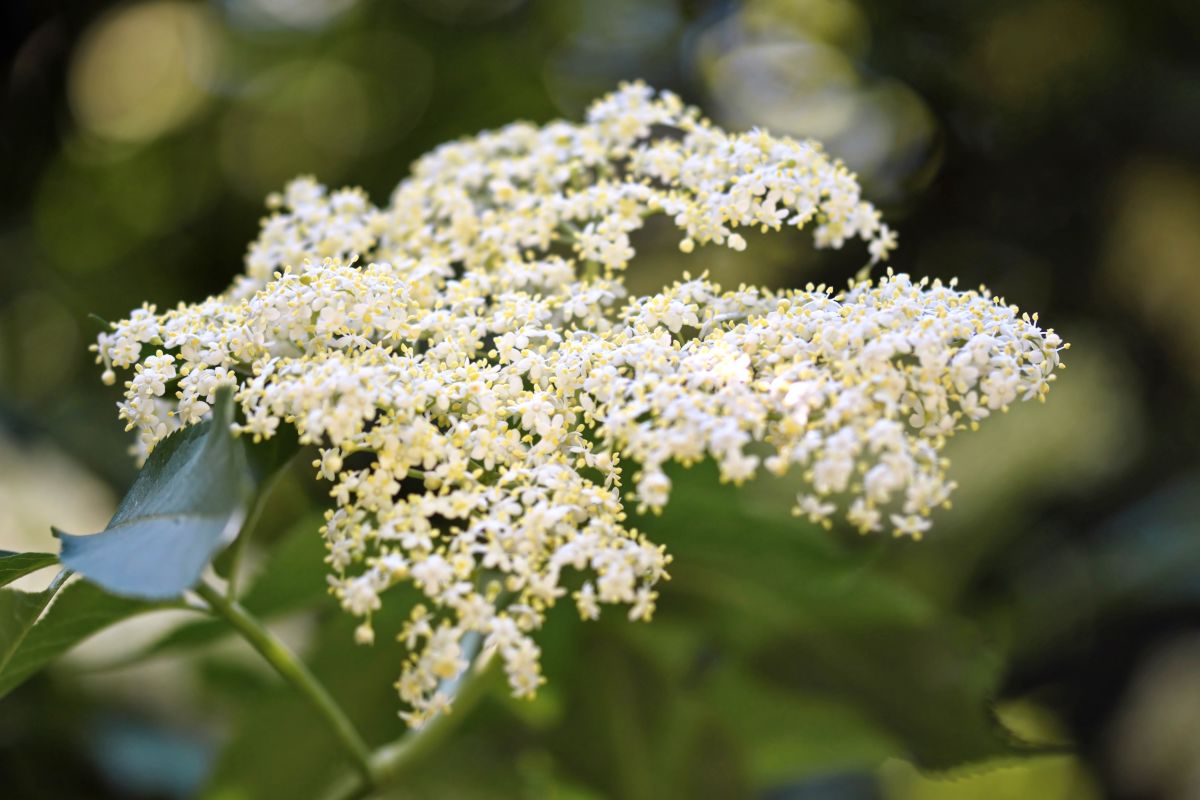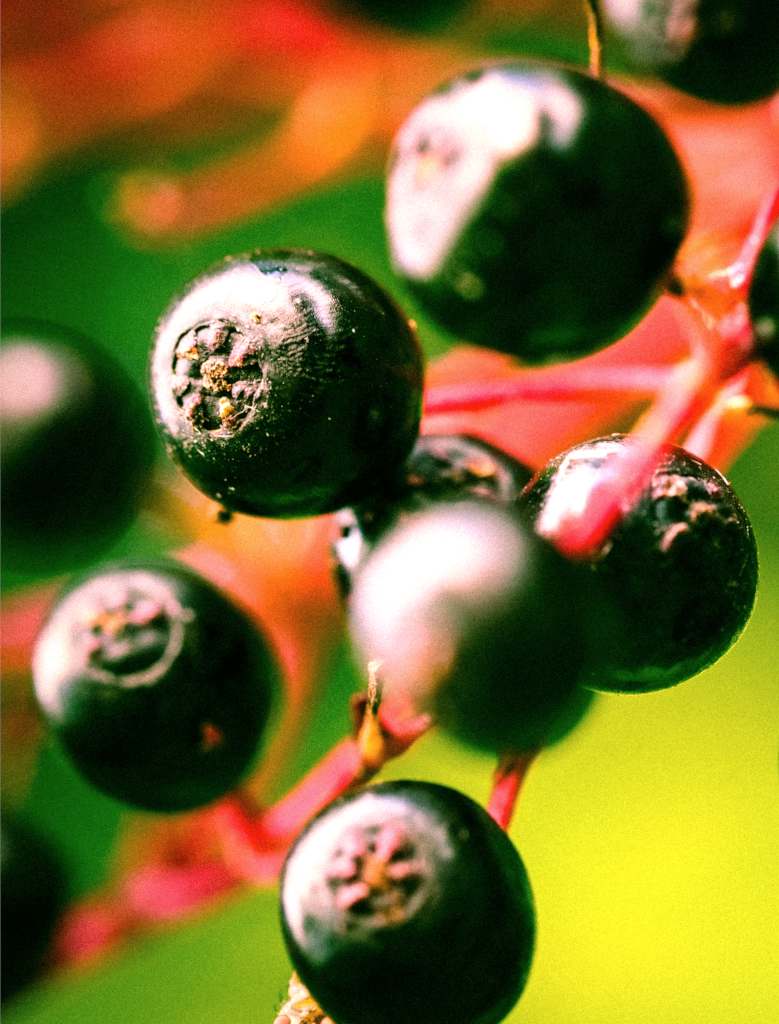
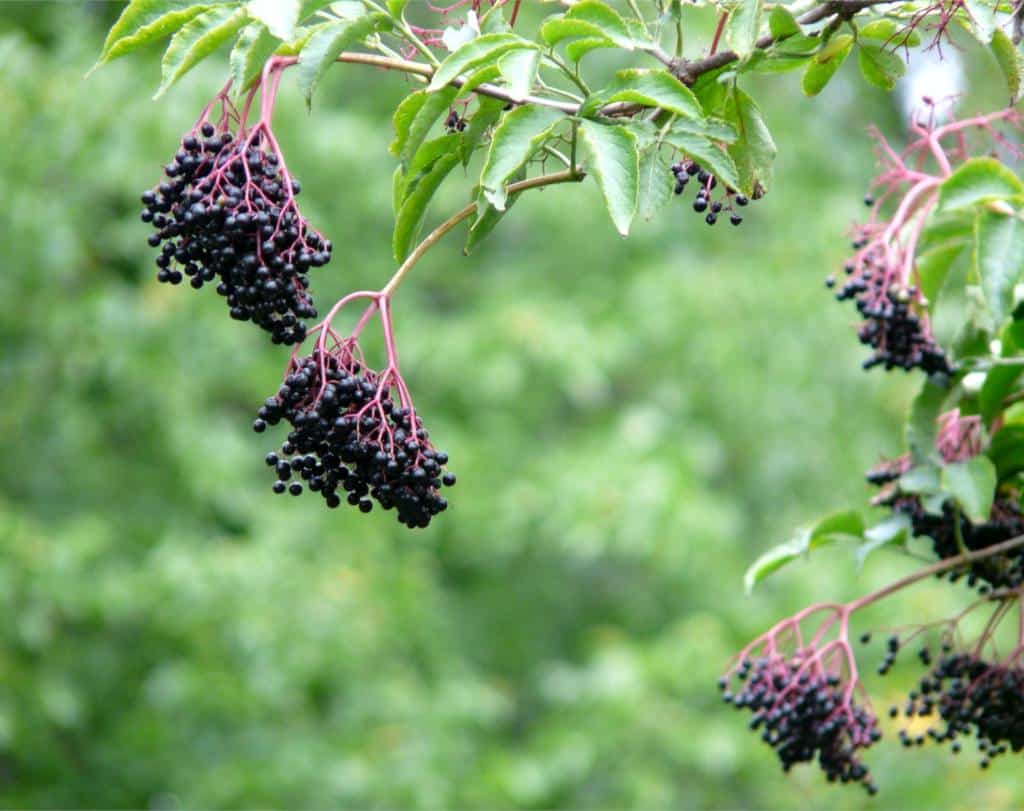
Flat-topped, branching sprays of ivory flowers open in early summer, then hang heavy with deep purple-black berries that are a magnet for birds. American black elderberry (Sambucus canadensis) takes any soil, endures -22°F and shrugs off disease; cook the fruit, for raw berries are slightly poisonous, while stewed they turn into jam, lemonade and syrup.
| Name | Sambucus canadensis |
|---|---|
| Family | Adoxaceae |
| Type | shrub |
| Height | 10 to 16 feet (3 to 5 meters) |
| Exposure | full sun or part shade |
| Soil | any |
| Foliage | deciduous |
| Flowering | early summer to midsummer |
American black elderberry is planted indifferently in fall or spring. But planting it in fall makes it easier for the plant to resume growth in spring.
If you must plant in spring, provide for regular watering at the beginning to ensure that the roots dive deep into the ground.
It loves sun and any type of soil: chalky, moist, dry…
American elderberry is largely self-fruitful, but growers commonly recommend planting two different cultivars within about 50 feet of each other, since a second variety nearby is said to improve fruit set.
Allow about 6 feet (2 meters) between plants in a hedge.
Canadian elder suckers freely from the base, so either site it where new shoots can roam or slice them off with a spade.
Spread a mulch of compost or bark over the planting area, because elder roots run close to the surface and dry out quickly.
Almost everything this shrub asks for falls into a handful of moments. Here is what each one involves, and why it counts.
| Task | When | Why it matters |
|---|---|---|
| Planting | Early autumn, or spring | Autumn planting makes it easier for the shrub to resume growth in spring |
| Mulching the root zone | At planting, then kept topped up | Elder roots run close to the surface and dry out quickly |
| Pruning back by about one third | Early spring | Deepens the beautiful hue of the foliage |
| Flowering | Early summer to midsummer | Flowers form on wood grown the same year, so a hard spring cut still leaves blooms |
| Picking the clusters | Once berries are deep purple-black | Underripe fruit carries more of the compounds that upset the stomach |
| Watering | Drought spells, and after spring planting | Surface roots dry out fast and young plants need roots to dive deep |
Beyond these, the shrub is easygoing and stands strong in the face of most diseases.
American black elderberry is a tree that calls for almost no care. It is really easygoing and it stands strong in the face of most diseases.
To deepen the beautiful hue of your elder, cut back the branches by about ⅓ at the beginning of spring.
American elderberry suckers freely and forms spreading clumps, so cutting shoots at ground level only removes top growth temporarily; to limit the clump, dig or sever the suckers’ underground root connections.
American elderberry flowers on wood produced during the current year, so even a hard spring cut still leaves you flowers and berries.
The roots sit close to the surface and dry out quickly, so water in drought spells and keep a mulch over the root zone.
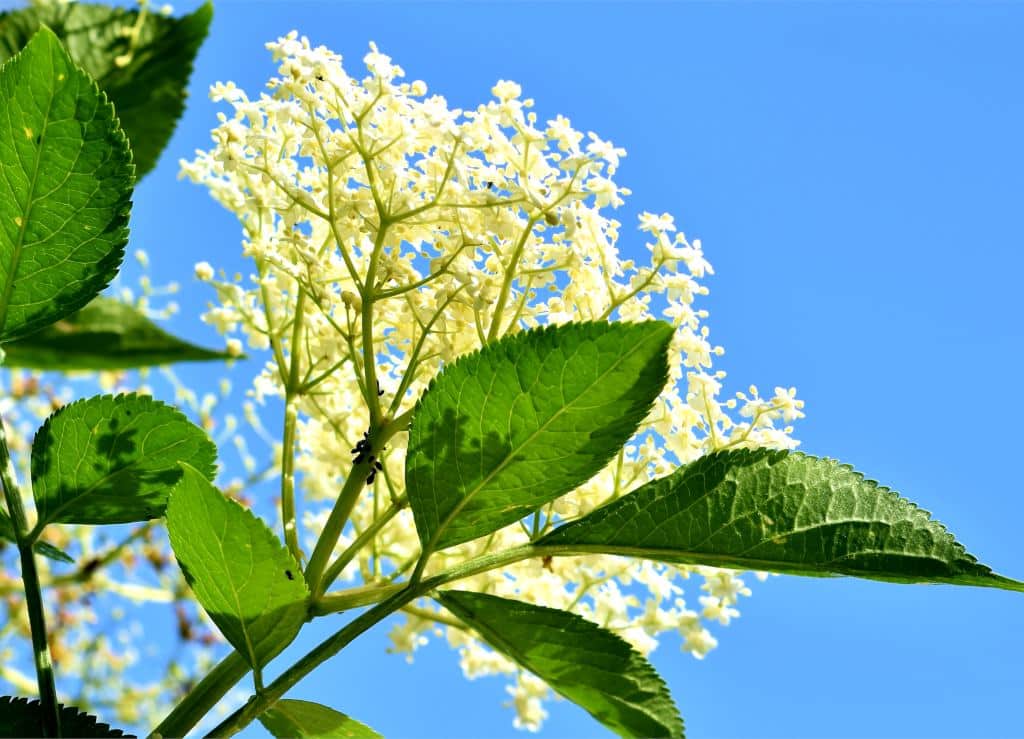
American black elderberry, or Canadian elder, upholds light leafage, a discrete colorful blooming and fruits that are a magnet for birds.
It is both hardy, resisting down to -22°F (-30°C), and quite invulnerable to diseases, which makes it a very easy-growing shrub.
Fruits and flowers can both be consumed. They’re even brewed to wine in Scandinavian countries. However, best avoid eating the berries raw because they’re slightly poisonous and might lead to nausea and vomiting if ingested at high doses.
This beautiful shrub is very easy to grow and requires virtually no care at all apart from an (optional) annual pruning.
The berries, when cooked, are perfectly edible. They make for delicious <!––>elderberry jam<!––>, lemonade and syrup.
Its fruits are edible, but take care: it is important to cook the berries to eliminate any risk of poisoning.
If in doubt, look it up… or you’ll experience gastric disorders.
Pick whole clusters only once the berries have turned deep purple-black and hang heavy, since underripe fruit carries more of the compounds that upset the stomach.
Strip the berries off the green stalks with a fork before cooking, as the stems and leaves hold more of the toxic compounds than the fruit does.
Do not confuse elderberry with pokeweed: pokeweed’s dark purple berries hang in elongated, unbranched clusters along a thick reddish stem, while elderberry’s fruit forms flat-topped, branching sprays.
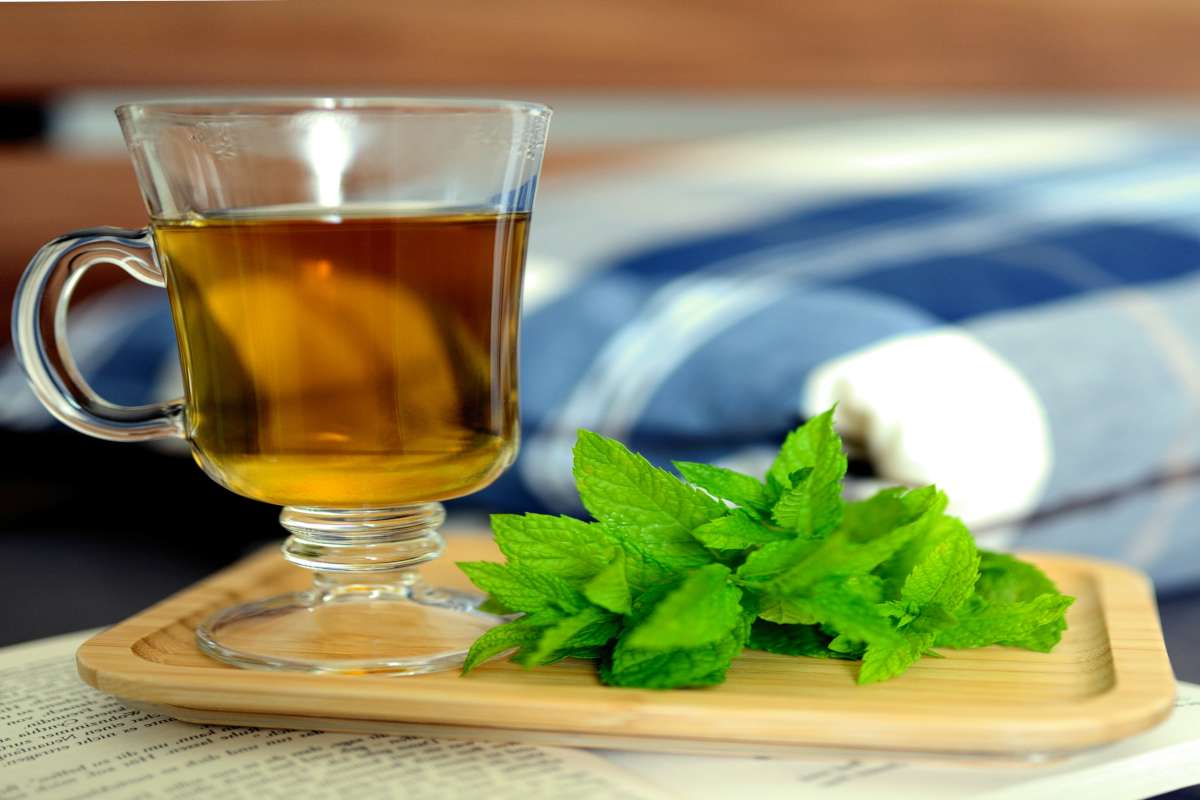
Fermented elder tea is an excellent option to treat plants organically against such parasites as aphids or caterpillars.
The fermented elder tea recipe is easy to follow:
Read more about the different types of weed tea.
Spray the elder tea at dusk or on an overcast day rather than in full midday sun, so the liquid evaporates more slowly and stays in contact with the foliage longer.
Plant two different American black elderberry cultivars close together: cross-pollination gives noticeably heavier crops of berries.
Canadian elder suckers freely from the base, so slice off unwanted shoots with a spade to keep the clump within bounds.
Elder grows very fast, which makes it a great shrub to hide away from prying eyes.