
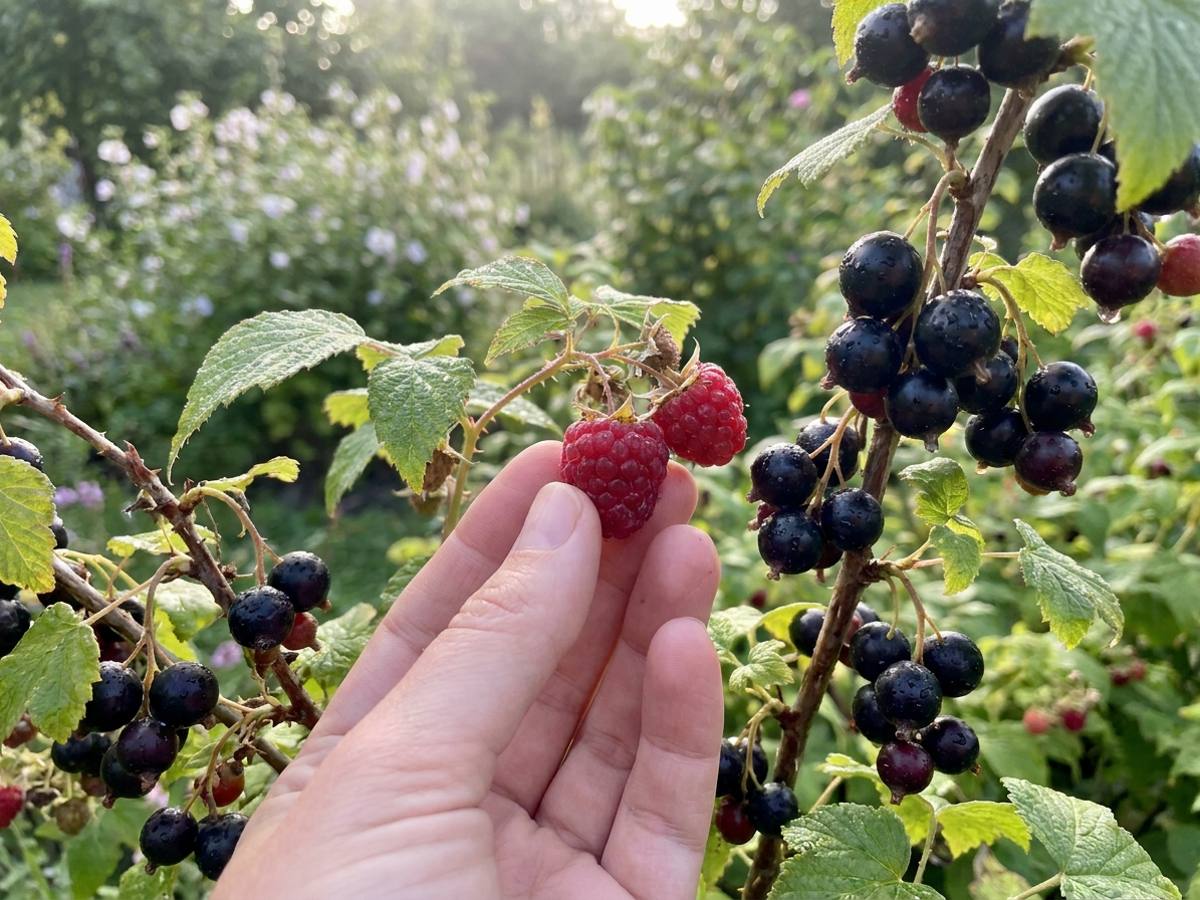
Midsummer is the sweet spot for soft fruit harvesting across the Northern Hemisphere, yet most gardeners pick too early or miss the peak window entirely. Learn to read the subtle signs that berries, currants, and stone fruits have reached optimal ripeness, and discover how smart storage extends your glut from days into weeks. The difference between good jam and exceptional jam often comes down to harvest timing.
Right now, gardens from Kent to California are heavy with colour. Raspberries are at their most prolific, blackcurrants and redcurrants have darkened fully, and early stone fruits like apricots and plums are dropping into ripeness across a single week. This narrow window of perfection demands attention; miss it, and you’ll be preserving fruit that lacks the intensity you grew it for in the first place.
Most gardeners believe colour alone signals readiness, but a deep purple raspberry or jet-black currant can still be underdeveloped on the palate. True ripeness involves sugar concentration, acidity balance, and the fruit’s willingness to release from the stem. A berry that falls into your palm with the gentlest touch has arrived; one that requires a tug hasn’t. This distinction matters enormously whether you’re eating fresh or bottling for winter preserves.
Stone fruits present their own complexity. An apricot can feel soft to gentle pressure yet taste disappointingly bland if picked before its sugars have fully developed. Research from the University of California suggests that fruit picked at commercial ripeness stages contains up to 30 per cent less sugar than tree-ripened specimens harvested just three to five days later.
Each crop announces its peak differently, and each holds for a different length of time once picked. Use this table to decide what to gather first and what can wait another couple of days.
| Fruit | Sign it is ready | How often to pick | After picking |
|---|---|---|---|
| Raspberries | Releases from the cane with no resistance, soft right through, sweet-smelling | Every two to three days through midsummer | Three to four days in the fridge, in a single layer |
| Blackcurrants and redcurrants | Fruit fully darkened, though colour alone can mislead | Check every two to three days, watching for splitting after heavy rain | Keep slightly longer than berries thanks to thicker skins |
| Apricots and plums | Soft to gentle pressure, but sugars build in the last few days on the tree | Watch daily: a whole crop can ripen within one week | One to two days at room temperature, then refrigerate to halt ripening |
| Fruit destined for the store cupboard | Picked at full flavour peak, never early | Gather in the cool of early morning, not in afternoon heat | Freeze on trays before bagging, or turn into jam or cordial |
Taste one berry from each part of the garden before you commit to a heavy pick.
Follow these steps to capture fruit at its flavour peak:
As temperatures peak mid-month, some varieties will slow their ripening cycle. Monitor your currants and berries for signs of sun scald or splitting, particularly after heavy rain. Begin thinking about late summer preservation now, whether that’s jam-making, freezing, or bottling, so you’re ready to act decisively when the second flush of raspberries arrives.
