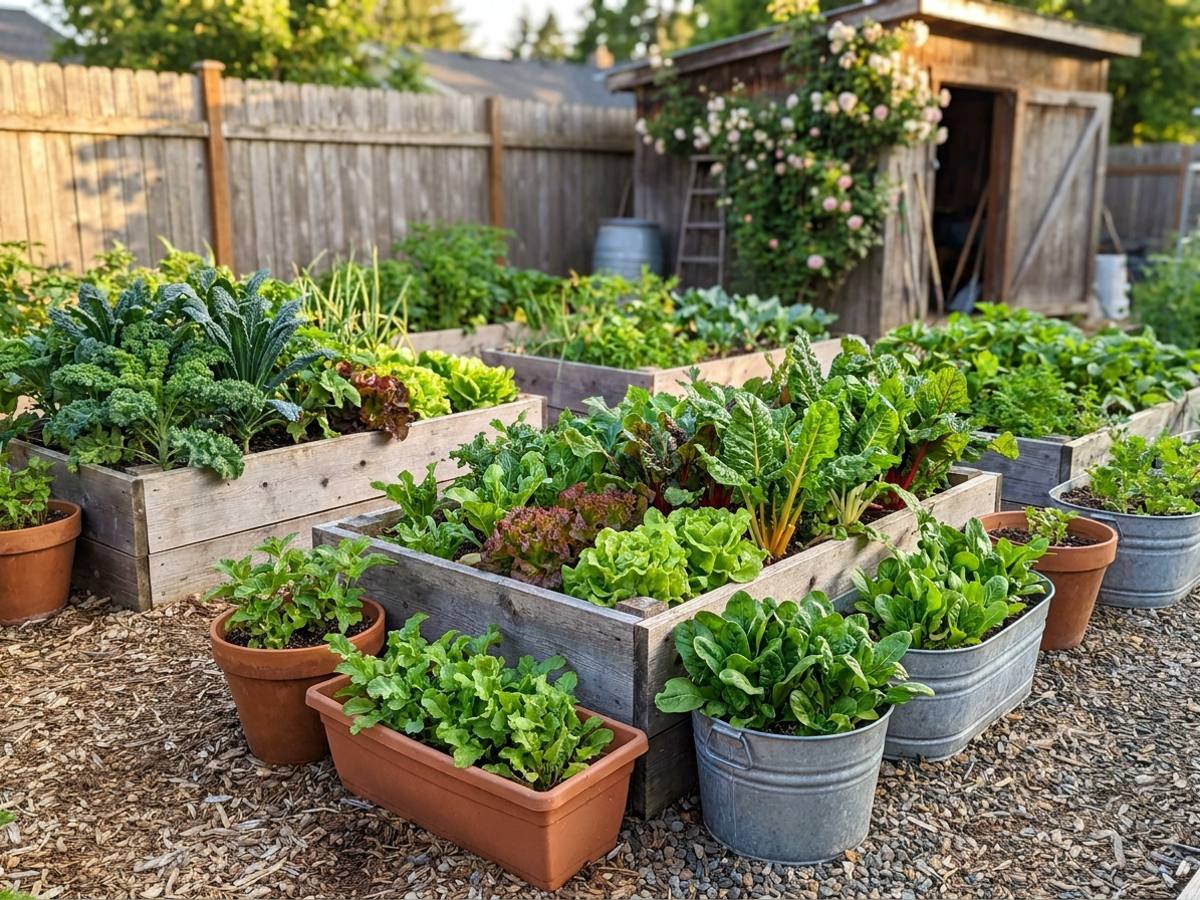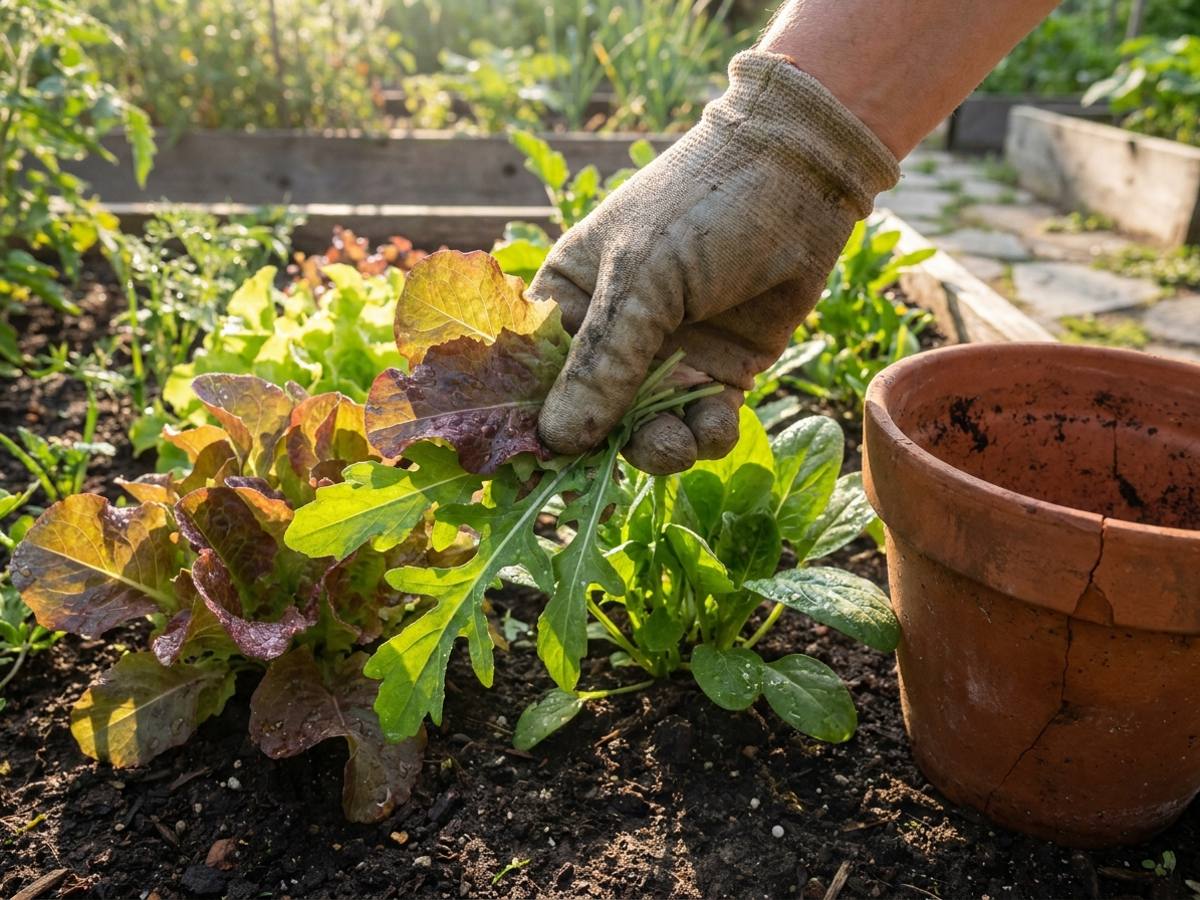
I harvested lettuce, spinach and rocket from my garden bed every week this summer. The verdict? A homegrown salad costs less than half the supermarket price, and my real-world accounts reveal exactly where your money goes, where it gets wasted, and whether starting from seed actually saves you cash.
In summer, across the UK and US, salad leaves flood the market. Supermarkets are discounting heavily, and gardeners who started their leafy greens in late spring are reaching maximum productivity. This is the moment to calculate what you’ve genuinely saved, because the growing season is winding down and autumn sowings require different planning.
I spent £47.82 on my salad garden over four months. This included soil, seeds, potting mix, netting against pests, and a timer for my drip irrigation system. By contrast, I would have spent £227.40 buying equivalent salad leaves from Tesco and Whole Foods combined, based on weekly purchases of mixed bags priced between £1.20 and £3.50. That leaves a saving of £179.58 before accounting for time or occasional crop failures.
But here’s what surprised me: seeds were the cheapest part at £8.40. The soil, amendments and infrastructure cost nearly five times more. Most gardeners underestimate spending on compost refreshes and pest management. I bought netting twice, once because slugs defeated my first attempt, and replacement drip tape when rabbits damaged the original. These hidden costs add up quickly but still pale against supermarket bills.
The accounts for a single salad bed show that the cheapest line is the one most gardeners worry about, and the expensive lines are the ones they forget. Here is the same bed broken down item by item.
| Cost item | What it cost | Why it matters |
|---|---|---|
| Seeds | £8.40 over four months | The cheapest element of the entire bed |
| Soil, amendments and infrastructure | Nearly five times the seed bill | This is the line that decides your budget, not the seed packets |
| Compost refreshes and pest protection | The most commonly underestimated spending | Hidden costs add up quickly but still pale against supermarket bills |
| Whole bed, four months | £47.82 | Against £227.40 of equivalent supermarket bags |
| Net saving | £179.58 | Before time or occasional crop failures are counted |
Seeds are rarely what breaks a salad budget; soil and pest protection are.
If you’re considering starting a salad bed before autumn, act now:
Late summer is the critical month for deciding whether to continue through the colder months. Winter varieties like winter lettuce, hardy spinach and land cress can produce from early autumn through early spring in most UK zones, though US gardeners should check your first frost date. Most will see lower yields but fresh leaves nonetheless, which changes the financial equation entirely when supermarket prices spike in winter.