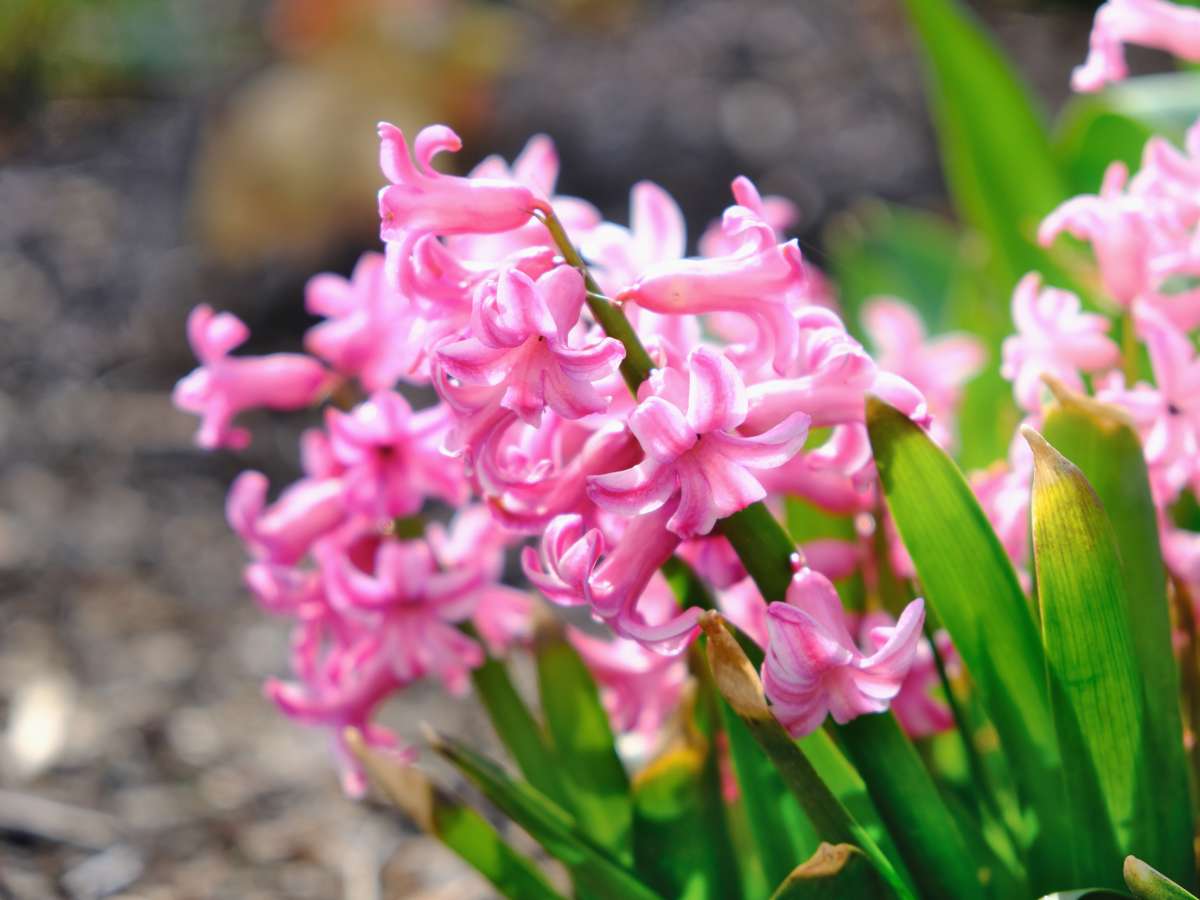
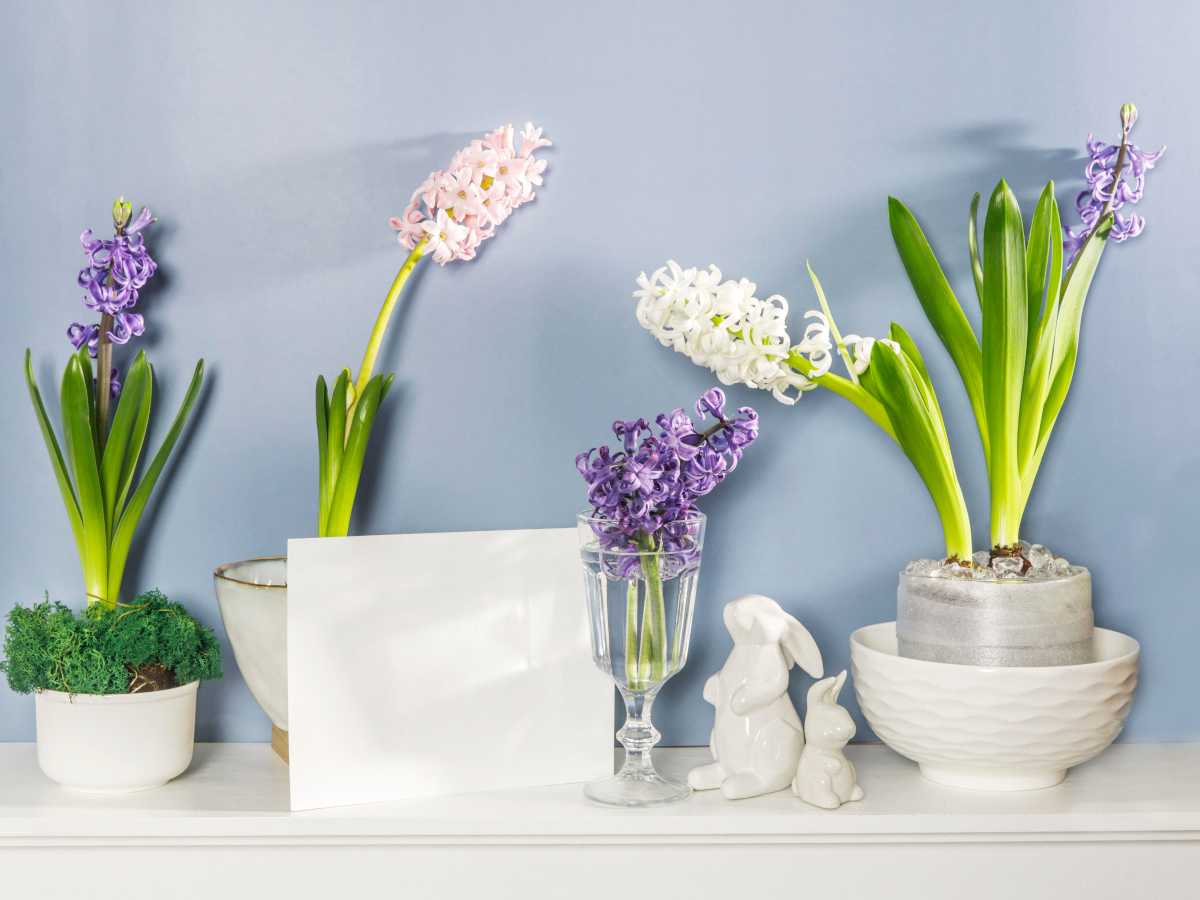
Flower spikes crowded with curling petals, best described as “locks”, carry a fragrance strong enough to scent a whole room. Native to West Asia, the hyacinth works as well in a winter pot indoors as in a border, where it is hardy down to 5°F (-15°C); give it light, humus-rich, well drained soil and it comes back.
The early blooming means the plant is spent when spring comes along. Will it survive when planted in the ground? YES!
Gardening:
This fabulously fragrant flower is as perfect for the garden as it is for an indoor pot.
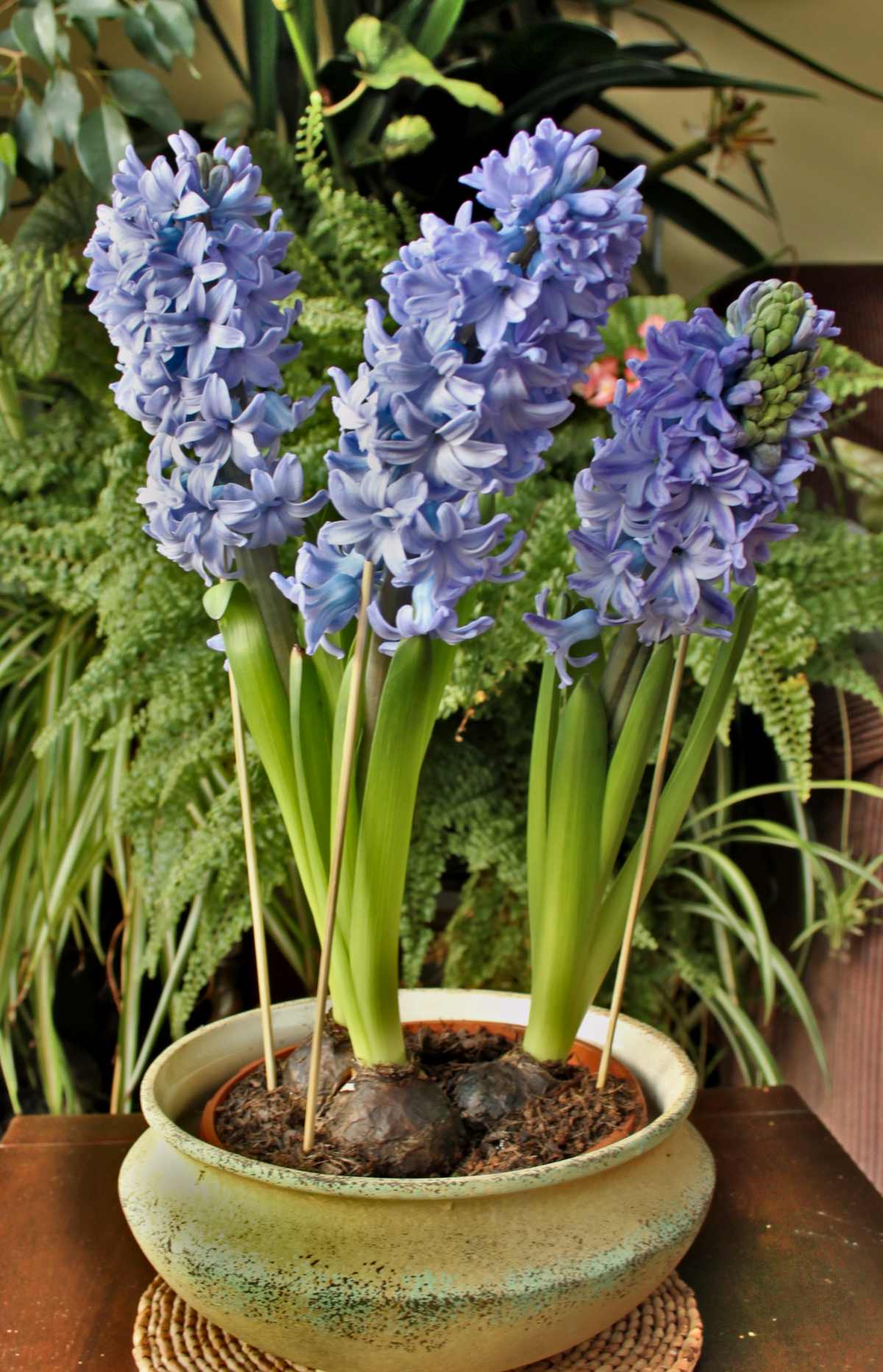
Hyacinths are native to West Asia, Turkey, Syria and Lebanon. This flower has a powerful fragrance and is a symbol of peace, power and simplicity, too.
A poet, in his heyday, had compared the hair of his beloved to the elegant stature of hyacinths.
Today, the curly movements of petals on garden hyacinth flowers is best described with the word “locks”.
Planting forced bulbs that have bloomed early is generally less successful.
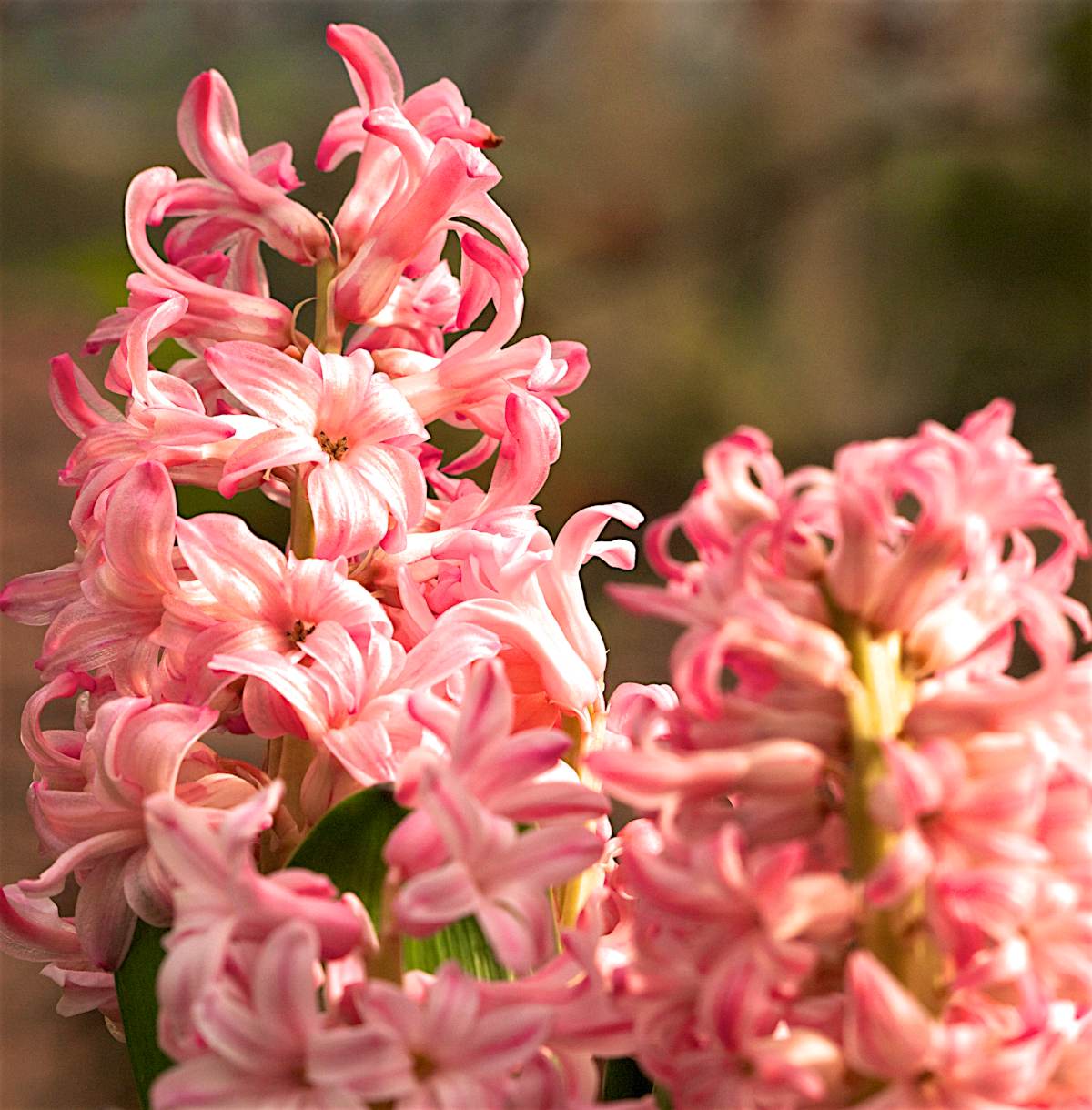
They were forced in greenhouses, and often not survive the gap in the season cycle.
To benefit from their intense perfume, plant hyacinths near your house, along walkways, under your windows, in your meditation garden…
Whether a bulb has been forced or not changes both when you plant it and how likely it is to flower again. Here is what the article says about each case.
| Type of bulb | When to plant | What happens next |
|---|---|---|
| Ordinary garden bulb | Directly in the ground in fall | Blooms mid-spring to early summer, depending on variety and climate |
| Forced bulb, stored properly | In spring, a full year later, after a year and a few months in the dark | The recommended route for a spent forced bulb |
| Forced bulb, short storage | In fall, at the end of the first summer | About a 50/50 success rate, one in two survive |
| Small offset bulbs | Collected once leaves have withered, planted in fall | Flowers smaller and less furnished than in the first year or two |
A forced bulb is never as reliable as a fresh one, but it costs nothing to try.
Most hyacinths sold in autumn belong to a handful of long-established cultivars, each with its own colour and its own knack for either forcing in a bowl or settling into a border. Use this table to match the variety to the job you have in mind.
| Variety | Flower colour | Flowering time | Best used for |
|---|---|---|---|
| Blue Jacket | Deep navy blue, darker stripe | Mid spring | Borders and large pots |
| Delft Blue | Soft porcelain blue | Early to mid spring | Forcing indoors and borders |
| Pink Pearl | Deep pink, paler edges | Early to mid spring | Forcing indoors and pots |
| Anna Marie | Pale shell pink | Early spring | Forcing indoors, containers |
| City of Haarlem | Pale primrose yellow | Late spring | Borders, extending the season |
| Carnegie | Pure white | Mid to late spring | White schemes, cut stems |
| Woodstock | Beetroot purple | Mid spring | Pots and dark colour schemes |
| Jan Bos | Crimson red | Early spring | Indoor bowls and bedding |
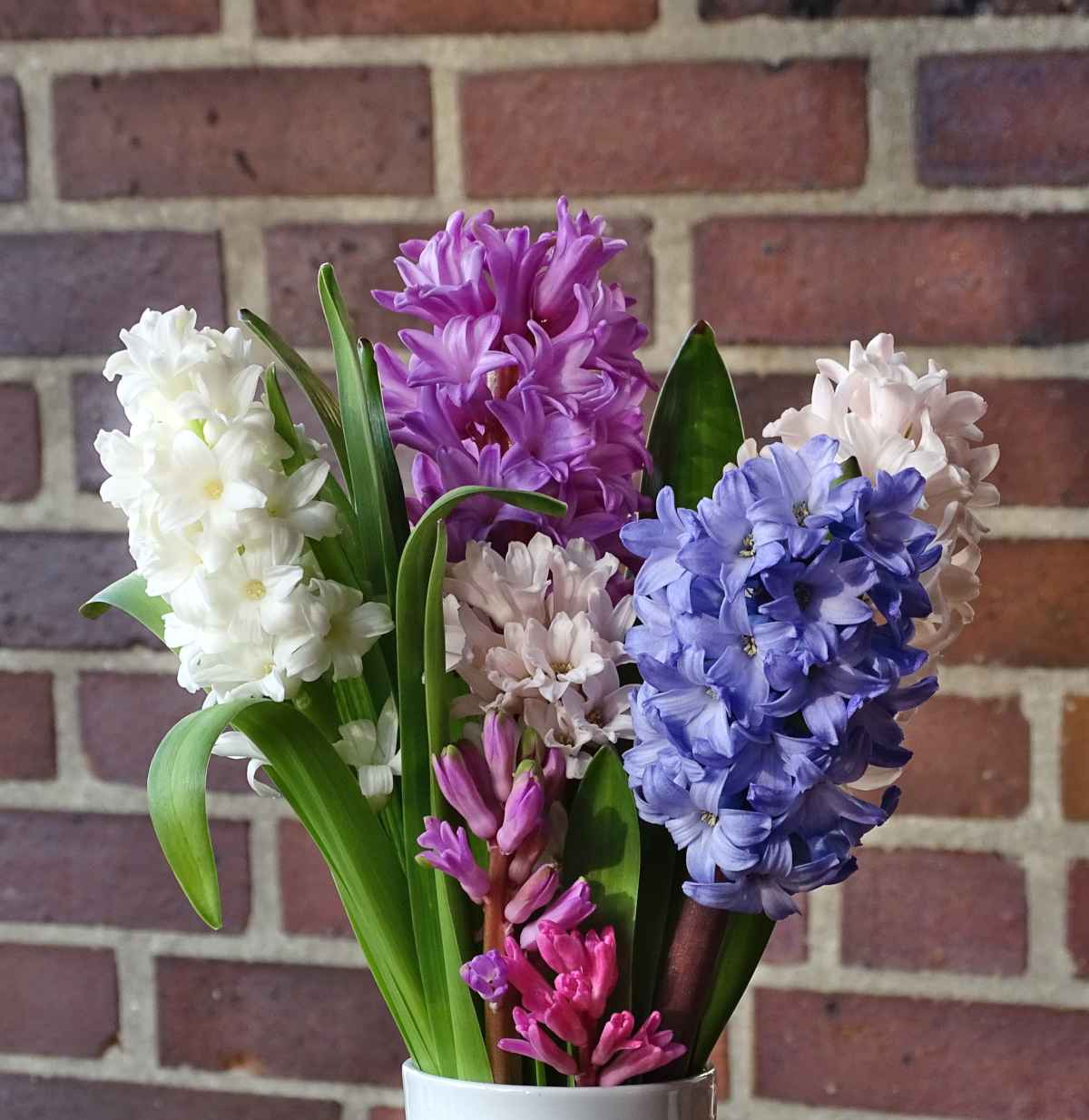
Hyacinth grows very well in our houses, balconies and terraces. It’s perfect for large pot arrangements.
Feel free to slice the stem and create nice, fragrant hyacinth bouquets. Most often, colors come in a range of white, pink and violet, with shades of blue.
Ever since hyacinths started selling hyacinths whole, with their bulb, quality has greatly increased. Cut hyacinths are increasingly appearing in floral art. Their appealing colors make them perfect matches for all seasonal bouquets.