Red Escallonia: growing, care tips and garden uses
0
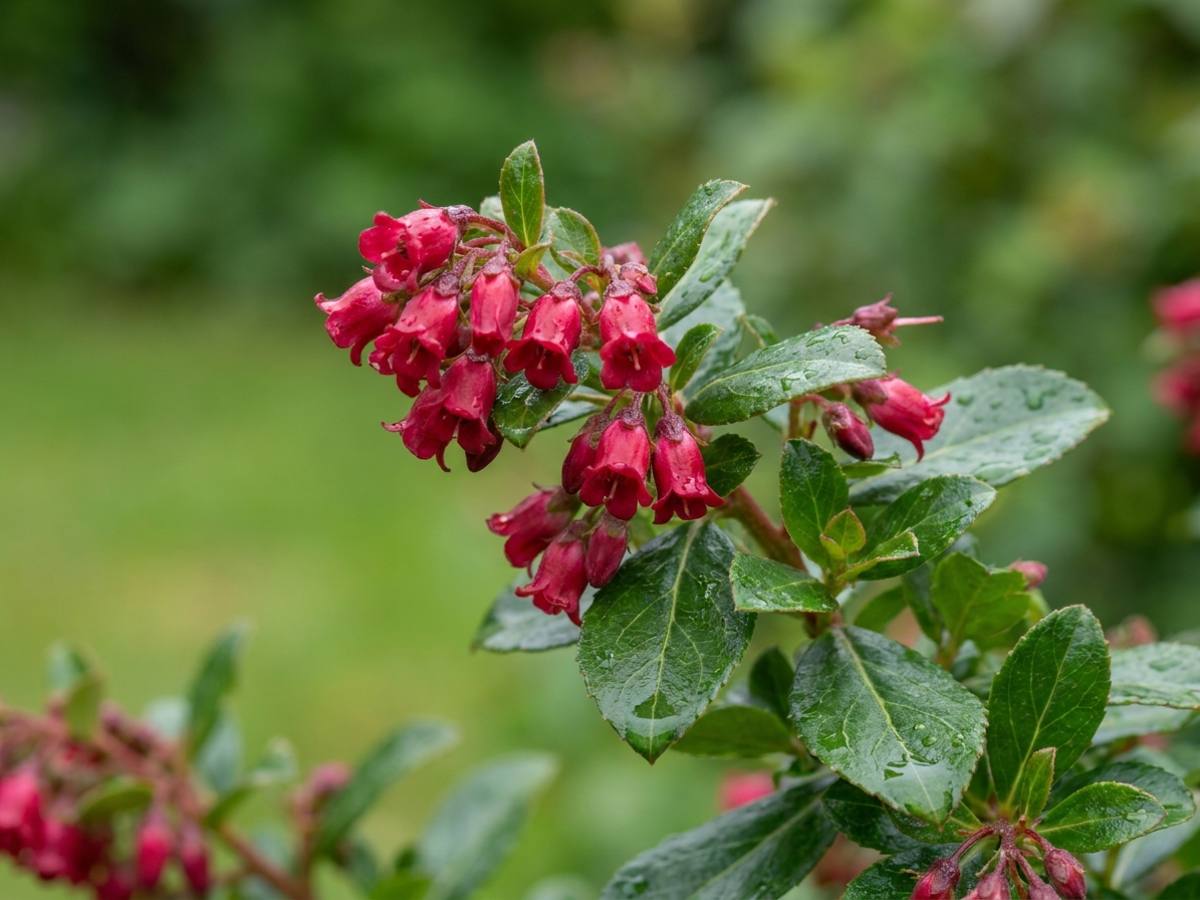
Escallonia rubra is a dense, glossy-leaved evergreen from Chile and Argentina, smothered in tubular crimson to rosy-red flowers from midsummer well into autumn. It is one of the finest hedging shrubs for coastal gardens, shrugging off salt-laden gales that would scorch most other evergreens. Crush a leaf and you will notice a faintly resinous, sticky aroma — the reason it is sometimes called Chilean gum box.
Growing conditions
Escallonia flowers most generously in full sun, where the shoots ripen properly and the shrub stays compact. It copes with light partial shade, but expect fewer blooms and a looser, more open framework. Shelter from cold, drying easterly winds matters far more than shelter from sea winds, which it positively enjoys.
Almost any free-draining soil suits it — sandy, loamy, stony or shallow chalk. It is thoroughly lime-tolerant and happy anywhere between pH 6 and 8, but it resents waterlogging, and heavy clay that stays sodden through winter will eventually kill it. On such ground, plant on a slight mound and work in grit and organic matter.
In mild maritime regions of Britain, Ireland, Brittany and the Pacific Northwest it is virtually evergreen and untroubled. Inland and in colder counties, a hard winter below −12 °C can defoliate or kill back the top growth, though established plants usually resprout from the base.
How to plant Escallonia
Plant in mid-spring (April to May) so roots establish before winter, or in early autumn (September) in mild coastal areas where the soil stays warm. Avoid planting in midwinter into cold, wet ground.
Spacing: set hedging plants 45–60 cm apart in a single row for a quick, dense screen; allow 1.5–2 m between specimens grown as free-standing shrubs.
Depth: plant so the top of the rootball sits flush with the surrounding soil — burying the stem base encourages rot.
Soil preparation: fork over a trench twice the width of the rootball and mix in garden compost plus grit on heavier soils.
Watering in: soak thoroughly after planting, then water weekly through the first two summers, especially in windy sites where foliage loses moisture fast.
Propagation: take semi-ripe cuttings 8–10 cm long in late July or August; they root readily in a shaded cold frame within six to eight weeks.
Escallonia rubra growing in a naturalistic garden border
Care through the seasons
Spring: Wait until the risk of hard frost has passed, then tidy any winter-damaged or frost-blackened shoots back to healthy wood. Scatter a general-purpose fertiliser or blood, fish and bone around the base and mulch with 5 cm of compost, keeping it clear of the stems. This is also the moment to renovate an overgrown hedge, cutting hard if needed.
Summer: Water young plants during dry spells; mature specimens are notably drought-tolerant once their roots are down. Trim formal hedges immediately after the main flush of bloom, usually late July or August, taking off around a third of the new growth. Do not shear later than early September or you will remove next year’s flowering wood and expose soft shoots to frost.
Autumn: Enjoy the late flowers, which often continue into October in mild seasons and are much visited by bees and hoverflies. Rake up and destroy fallen spotted leaves rather than composting them, as they carry over fungal leaf spot. Mulch newly planted specimens to insulate the root zone.
Winter: The shrub stays evergreen in mild districts but may drop leaves after severe cold. In colder inland gardens, protect young plants with fleece and resist the urge to prune damaged growth until spring.
Best varieties to grow
Several selections and close relatives offer different sizes, habits and flower colours.
Escallonia rubra var. macrantha — the classic seaside hedging form, vigorous to 4 m with large, glossy leaves and rich rose-crimson flowers.
Escallonia rubra ‘Crimson Spire’ — upright and dense to 2.5 m, with deep crimson blooms; the best choice for a formal, narrow hedge.
Escallonia rubra ‘Woodside’ — a naturally dwarf, spreading form under 1 m, ideal for a rock garden or low edging, though it throws the occasional tall shoot that needs removing.
Escallonia ‘C.F. Ball’ — a robust rubra hybrid with aromatic foliage and bright red tubular flowers over a long season.
Pests, diseases and common problems
Escallonia leaf spot: the most serious modern problem, causing orange-brown to purple blotches and heavy leaf fall in late summer, particularly on clipped hedges. Improve air flow by thinning growth, clear fallen leaves, avoid overhead watering and feed well to help plants push out replacement foliage.
Honey fungus: escallonias are among the more susceptible shrubs, showing sudden dieback, white fungal sheets beneath the bark and black “bootlace” strands in the soil. There is no cure — dig out the plant with as much root as possible and replant with a resistant species elsewhere.
Wind and frost scorch: brown, crisped leaf margins after a cold, dry winter look alarming but are rarely fatal. Wait until late spring, prune back to green wood and the shrub will normally reclothe itself within a season.
🌿 Nature & Garden Newsletter
Gardening tips, recipes & seasonal advice, twice a week.