Early autumn is harvest month, and if your apple and pear trees are heavy with fruit, you’re facing a sweet problem: how to eat them all before they spoil. Victorian gardeners solved this brilliantly using cool storage, and those time-tested methods still work perfectly today, combined with modern knowledge about variety-specific ripening. Learn how to keep your homegrown crop crisp and flavourful until spring.
In early autumn, across UK and US gardens, apples and pears reach peak maturity. The first early varieties like Discovery and Bartlett are already dropping, whilst mid-season and late cultivars are still developing their sugars in the cool autumn air. This is the critical moment to assess your crop, plan your storage strategy, and begin harvesting the earliest pickings before they deteriorate on the tree or ground.
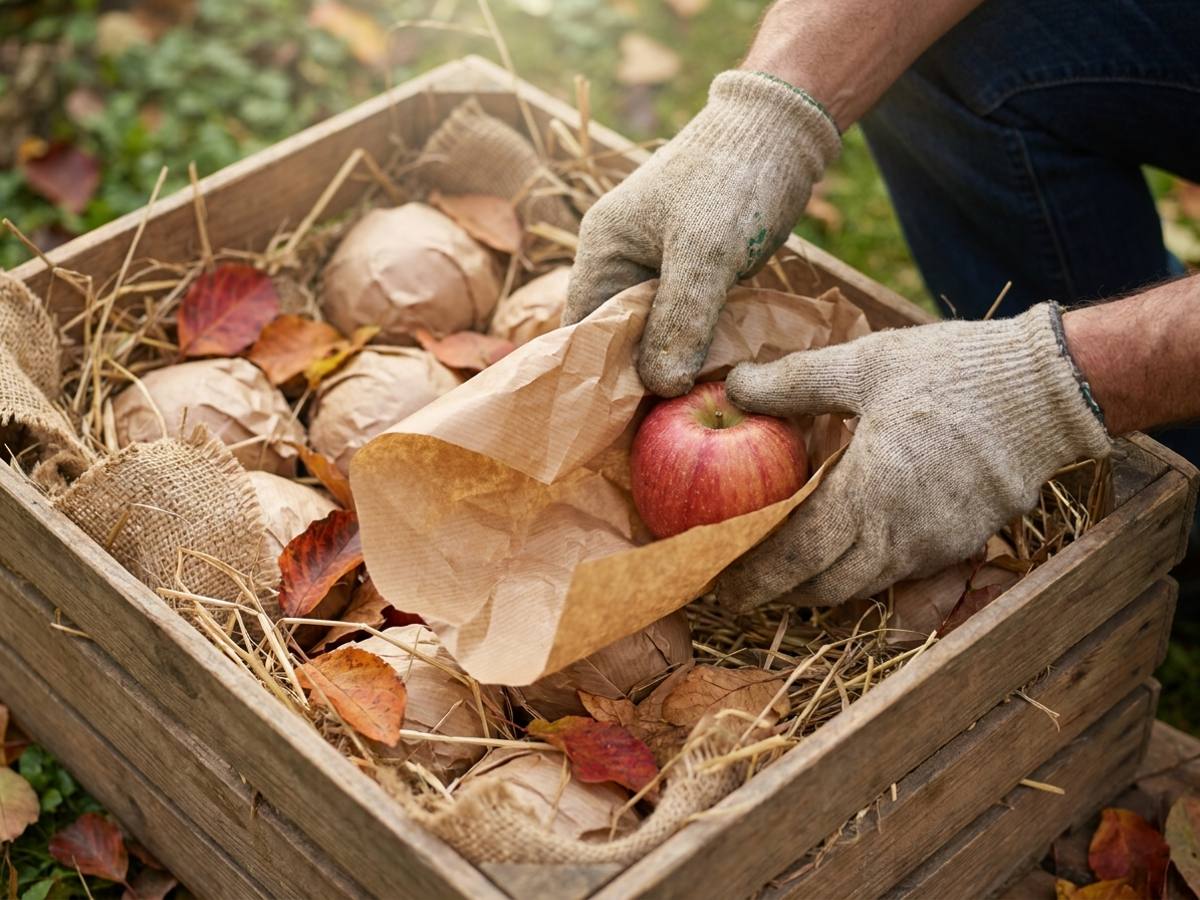
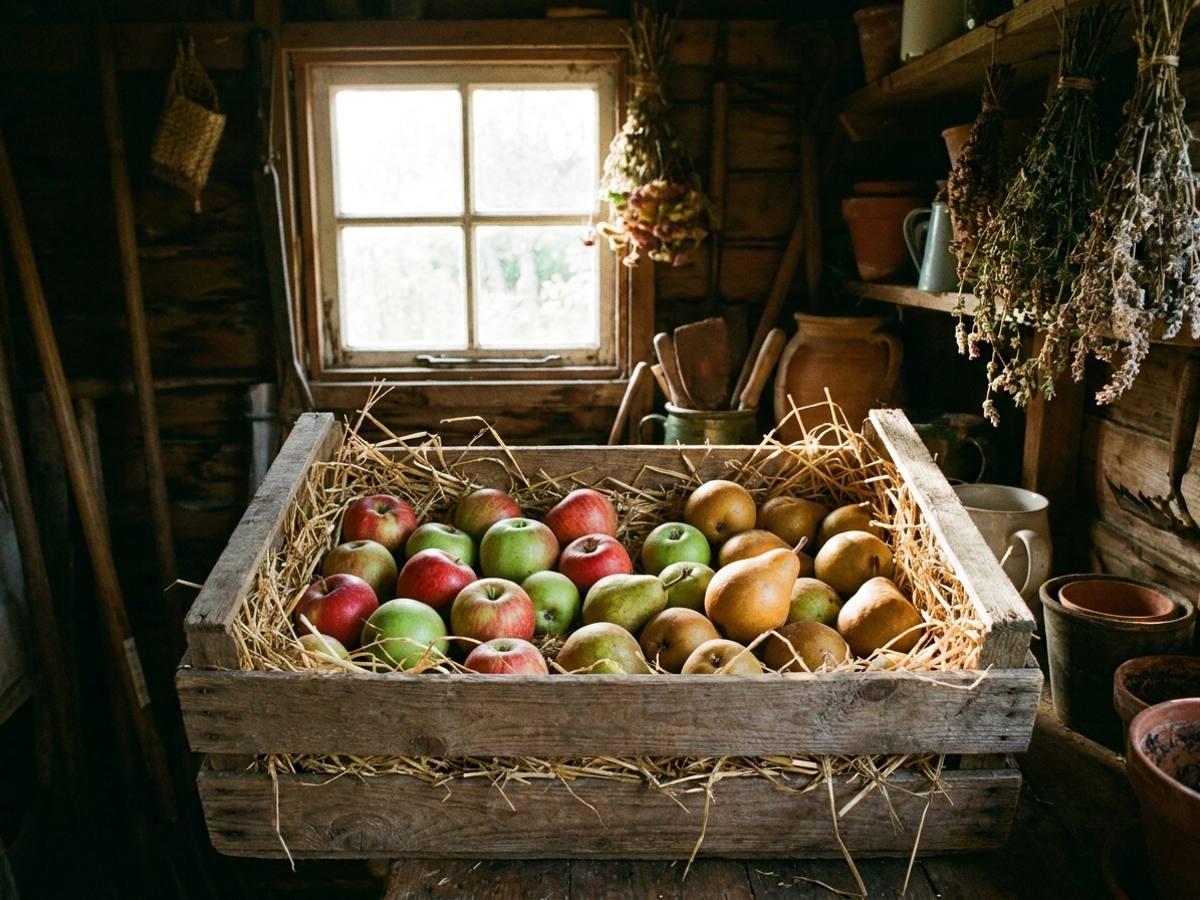
Most home gardeners assume their harvest must be eaten quickly or preserved as cider, jam, or sauce. In reality, apples and pears have a natural dormancy period. When stored correctly, they’ll keep for weeks or months, their flavour deepening rather than fading. The trick is mimicking the cool, humid, dark conditions that Victorian larders and root cellars provided naturally, using temperature control between 2°C and 4°C, relative humidity around 85 to 95 percent, and complete darkness.
Different varieties have dramatically different storage lives. Late-keeping apples like Granny Smith, Cox, and Bramley can last four to six months. Pears, conversely, need careful handling; they ripen rapidly once picked and require checking weekly. Early apples like Discovery last barely three weeks, regardless of storage conditions.
Not every apple or pear earns a place in the store. Storage life depends far more on the variety you picked than on the box you put it in.
| Variety or group | Fruit | Picking and handling | Keeps for |
|---|---|---|---|
| Granny Smith, Cox, Bramley | Late-keeping apples | Gentle twist and lift, handled like eggs | Four to six months |
| Discovery | Early apple | Picked as it matures, before it drops | Barely three weeks, whatever the conditions |
| Bartlett and pears generally | Pear | Harvested slightly earlier, while still firm | Ripens rapidly off the tree; check every three to five days |
| Any marked or bruised fruit | Apple or pear | Kept out of the store entirely | Use at once for cooking or cider |
Match the variety to how long you need it to last, and rotate your stock so the earliest pickings go first.
Start these actions immediately as your fruit matures:
Throughout mid-autumn and late autumn, check your stored fruit weekly, removing any showing signs of decay before mould spreads. Pears will demand attention every three to five days as they shift from storage to eating ripeness. By early winter, your late-keeping apples will have developed deeper, more complex flavours than any shop-bought fruit. Plan tasting sessions monthly, rotating your stock so the earliest pickings are used first.