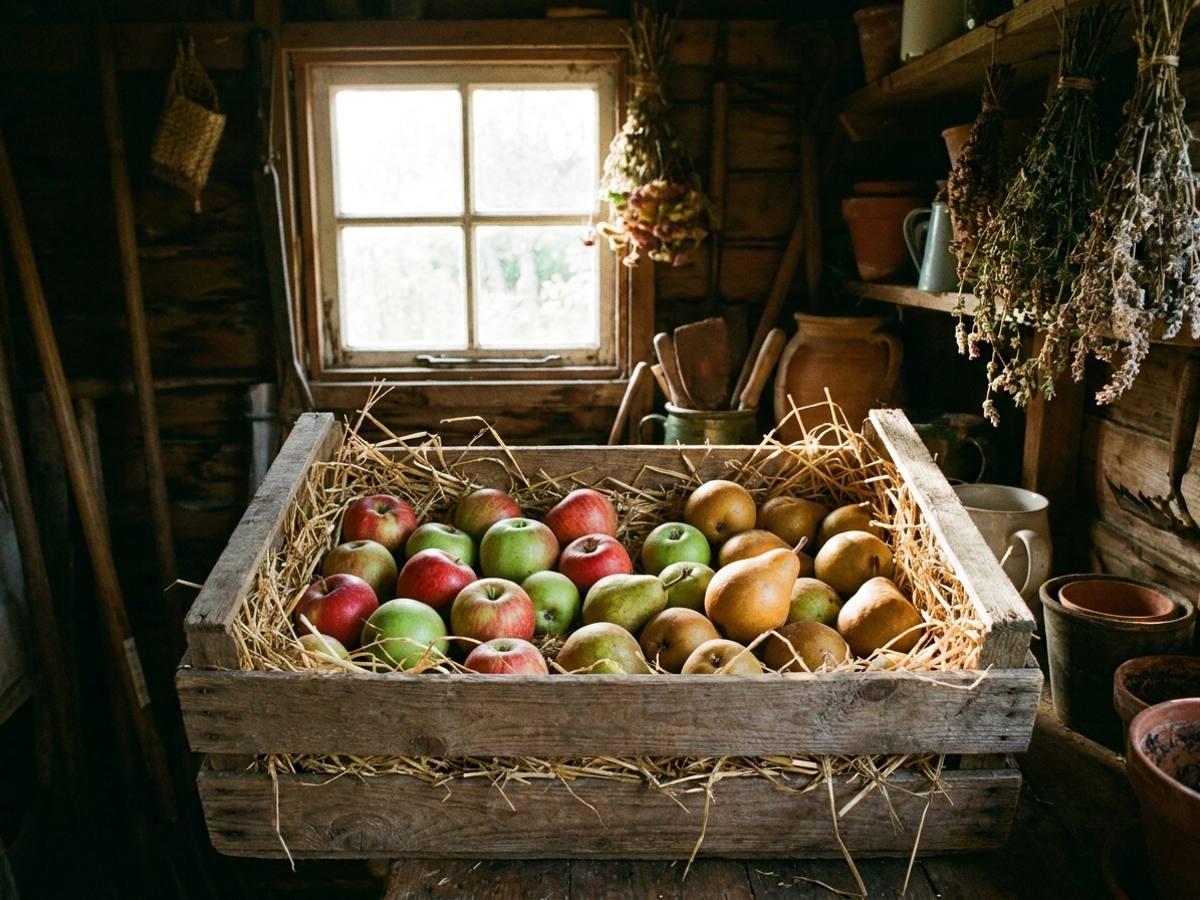
Harvest your apples at the wrong time and store them in the wrong conditions, and half your crop will be mush by mid-winter. Yet most gardeners treat all apples the same. Early varieties rot within weeks if chilled, whilst late keepers shrivel in a warm shed. Match storage to variety and ripeness, and you’ll eat home-grown apples from October through to March.
Across the UK and US, apple trees are heavy with fruit as summer fades into early autumn. The temptation is to pick everything at once and store it all in one cool corner. This is precisely when storage failure begins. Early varieties like Discovery and Gala are ready now, but they demand different conditions from late keepers like Granny Smith or Bramley, which won’t reach peak ripeness for another six weeks.
Store an early apple variety at cellar temperature (below 4 °C) and it will develop internal browning and collapse within three weeks. Store a late keeper at room temperature and it will shrivel into a leathery husk by December. Most gardeners lose 40 to 50 percent of their crop to rot, fermentation or shrivelling simply because they picked everything together and stacked it in the same box.
The difference comes down to ethylene production and respiration rate. Early varieties are already past their prime within days of picking. Late varieties are still maturing in storage and need warmer, slower conditions to develop their full flavour and longevity. Confuse the two, and you waste months of growing season in a single afternoon.
Separate your varieties now and follow these steps for each type:
Once you’ve picked and stored your apples, the key is gentle vigilance. Temperature fluctuations cause more damage than steady cold, so avoid storing apples near radiators or in uninsulated sheds that swing between 15 °C and 2 °C. Humidity matters too, keep it between 85 and 95 percent. By late autumn, when temperatures drop below 12 °C outdoors, unheated garden stores become ideal for late keepers, extending your eating season deep into winter.