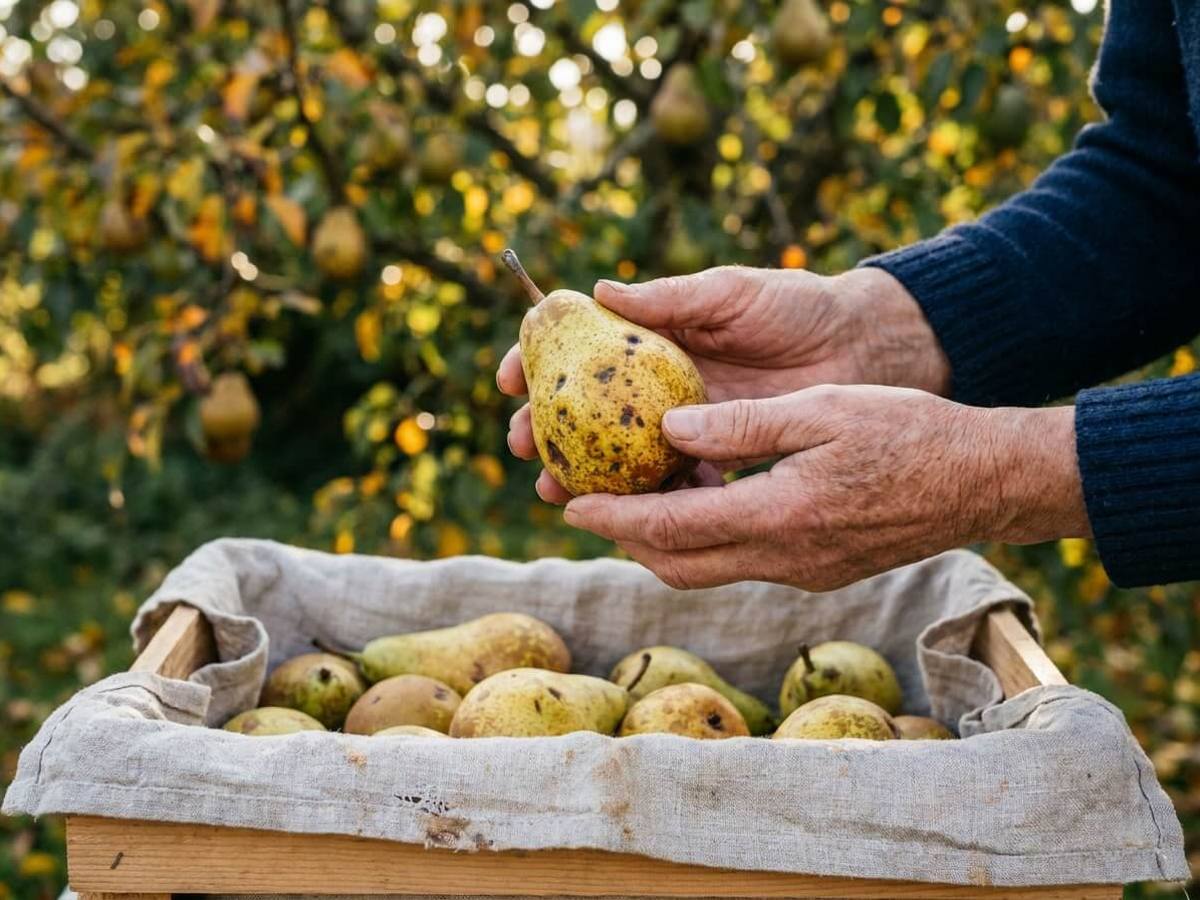
Stop bruising your pears: the gentle technique that extends storage life
0
Bruised pears mean wasted harvests. Most gardeners lose 20-30% of their crop to handling damage during those critical weeks between picking and indoor ripening. October is peak pear season across the UK and US, and one simple technique, practised now, will transform your storage success and keep fruit pristine for weeks longer.
Why October pear picking demands precision
Across the UK and northern US, pears reach harvest readiness in mid to late autumn, when air temperatures drop and the first hard frosts threaten. This narrow window, lasting only two to three weeks, defines whether your crop stores well or deteriorates rapidly. Pears are notoriously thin-skinned compared to apples, and bruising begins the moment they’re picked, often invisibly.
The hidden cost of careless harvesting
A single dropped pear, or one squeezed too firmly during collection, develops internal browning that spreads within days, even in cool storage. What appears sound on the surface masks flesh damage beneath. Gardeners routinely lose 25-30% of their autumn harvest this way, according to horticultural extension data, yet the remedy costs nothing but attention.
Pick only when the fruit separates easily from the branch with a gentle upward twist, never downward yanking or pulling. This is the single most important step.
Use padded picking bags or soft cloth-lined baskets instead of hard containers. Metal and rigid plastic bruise skin on contact.
Place each pear gently into storage, never dropping from height. Arrange them in single layers with paper between each fruit, or wrap individually in tissue paper for premium varieties.
Store at 3-5 °C (37-41 °F) in high humidity, away from ethylene-producing apples and tomatoes. Check weekly and remove any fruit showing soft spots immediately.
Monitoring your crop through storage
Inspect your pears weekly throughout their storage period. Healthy fruit ripens evenly over two to four weeks indoors, developing flavour and sweetness as starch converts to sugar. Watch for any signs of mould or wrinkled skin, which signal either over-ripeness or humidity problems. Proper technique means you’ll enjoy perfect pears well into winter, rather than discarding bruised fruit by November.
🌿 Nature & Garden Newsletter
Gardening tips, recipes & seasonal advice, twice a week.
🌿 Nature & Garden Newsletter
Gardening tips, recipes & seasonal advice, twice a week.
🌿
Get our gardening tips, recipes and seasonal advice
Subscribe to Nature & Garden Newsletter — twice a week, no ads.