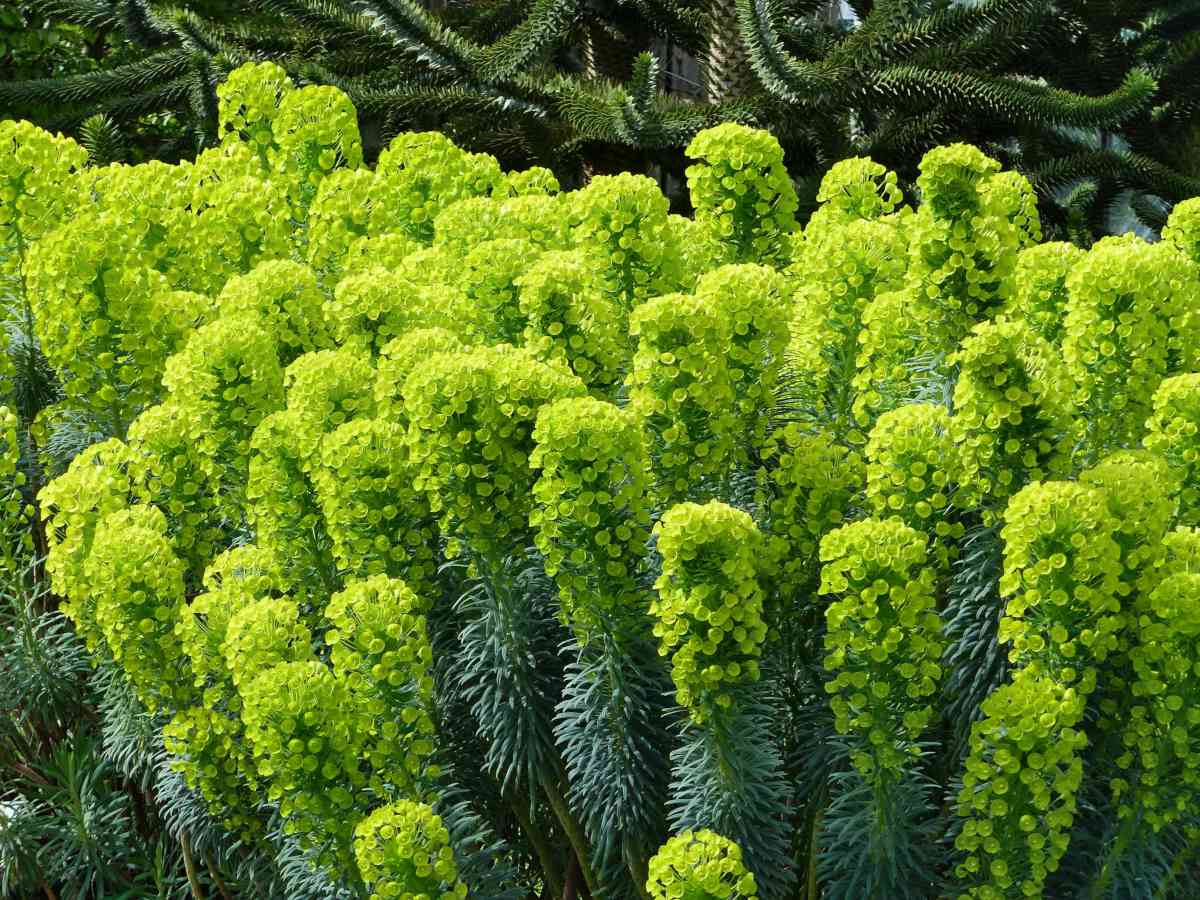
In spring in soil preferably amended with soil mix, and if possible, organic soil conditioner like manure or seaweed.
If you sow castorbean seeds, try to sow in a nursery during the month of March and transplant it directly to the ground in May after any risk of low temperatures has gone away.
| Name | Ricinus communis |
|---|---|
| Family | Euphorbiaceae |
| Type | annual shrub |
| Height | 6 to 13 feet (2 to 4 meters) |
| Exposure | full sun |
| Climate | warm |
| Soil | rich enough |
| Foliage | deciduous |
| Fruit formation | summer |
Because castorbean is grown as an annual, everything hangs on getting the timing right from seed to summer fruit. Here is what to do and when.
| Task | When | What it involves |
|---|---|---|
| Sowing in a nursery | early spring | Soak the seeds in water for 24 hours beforehand |
| Transplanting to the ground | late spring | Only once any risk of low temperatures has gone |
| Planting out | spring | Soil amended with soil mix and manure or seaweed |
| Fruit formation | early summer to late summer | The thorny flowers give way to fruit |
| Pruning | never | The shrub lives only a single year |
Grown this way, the plant makes its full height in one short season.
It doesn’t need any pruning because this shrub only lives for a year.
A surprising plant with its thorny flowers, castorbean is special in that it needs to be sown and grown as an annual.
Quite easy to care for, its quick growth belies its vulnerability to low temperatures.
Shelter it from wind and place it in a very sunny spot.
It is a good idea to soak the castorbean seeds in water for 24 hours before sowing them.