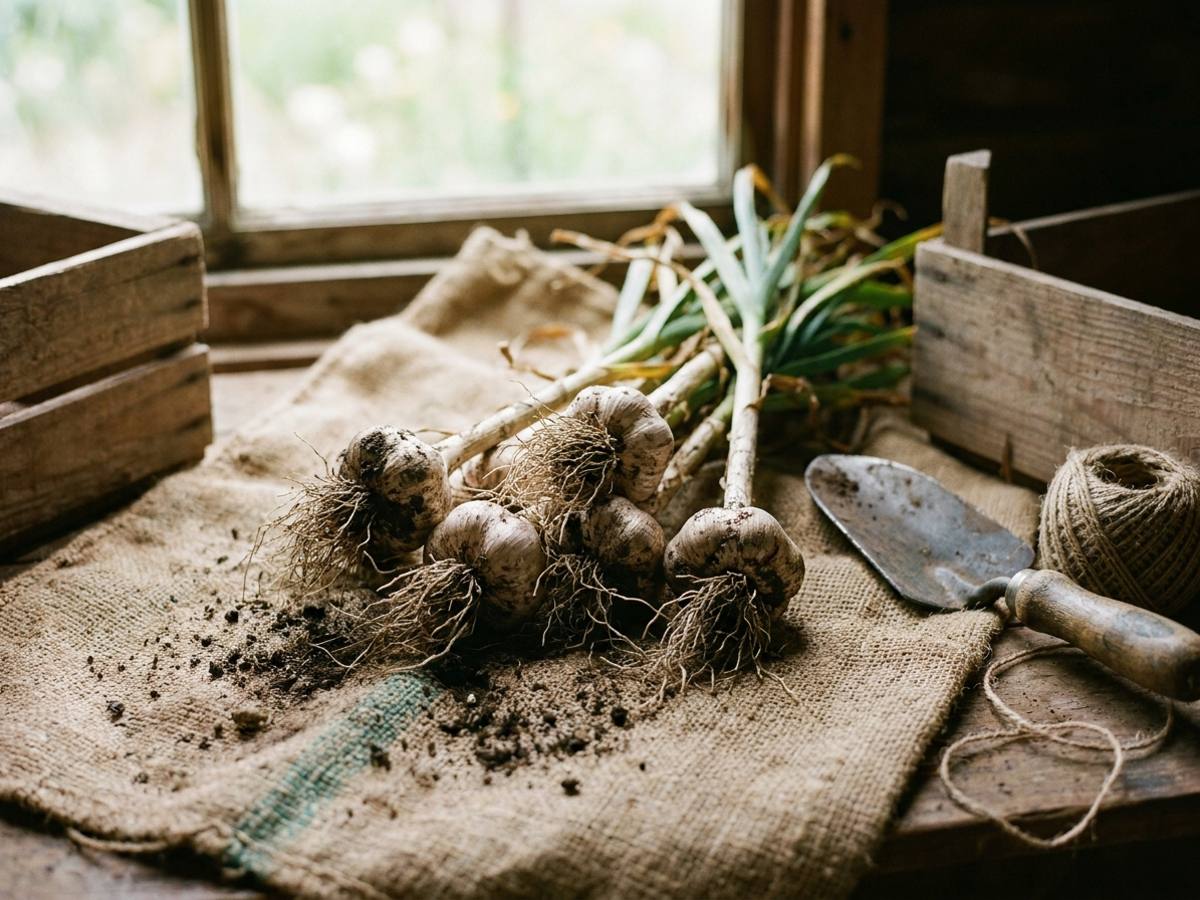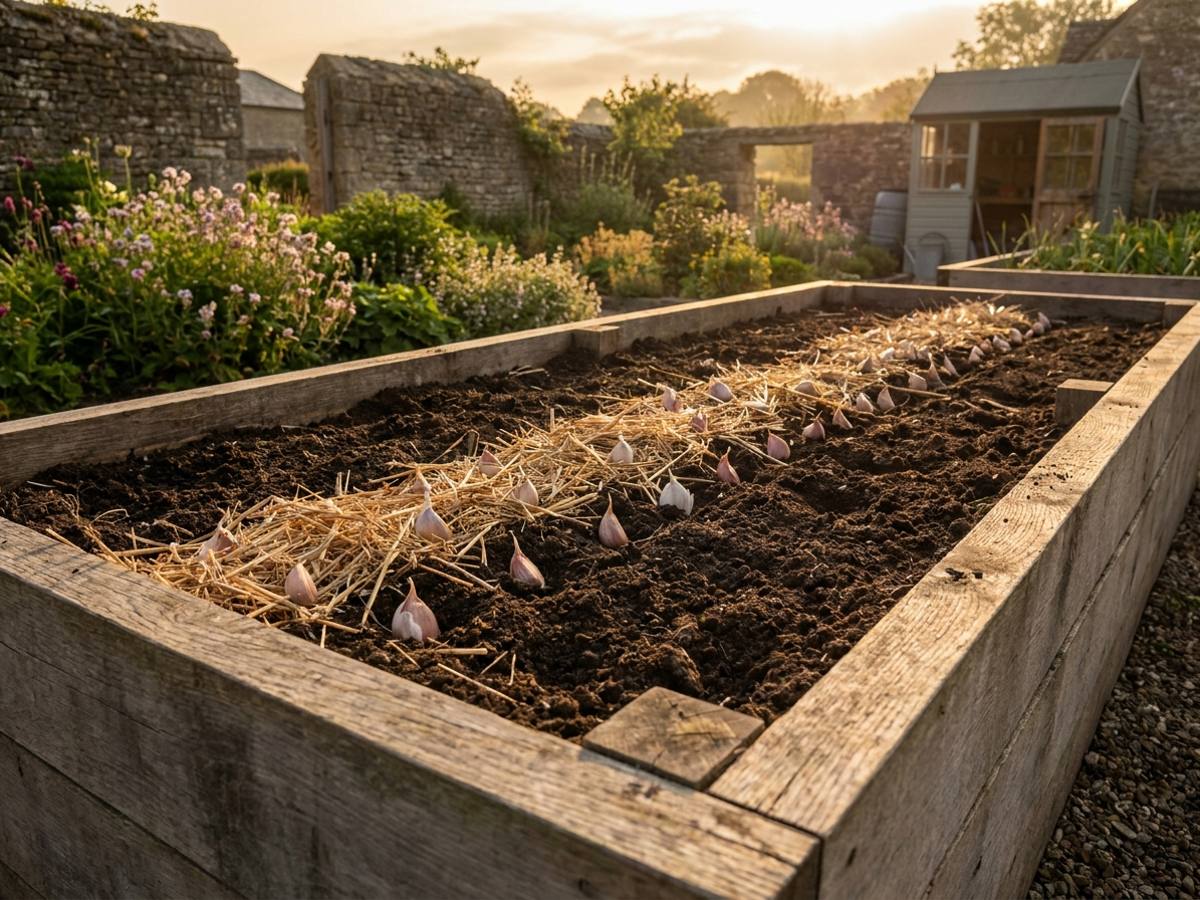
If you’re planning to sow garlic this month, you’re already on the right track, but most gardeners completely miss the window. Spring planting produces stunted, undersized bulbs, whilst autumn sowing yields hefty, flavour-packed harvests. Here’s why timing is everything, and what to do instead.
Across the UK and US, late summer marks the beginning of garlic season, yet many home gardeners remain firmly stuck in spring-planting mode. In late summer, perceptive gardeners source seed garlic, preparing beds, and planning mid-autumn and late autumn plantings. Meanwhile, others are still waiting for spring, completely unaware they’re about to waste an entire growing cycle.
Garlic is a cold-season crop with a non-negotiable biological requirement: it needs sustained chilling over winter to trigger bulb formation. Plant in spring, and the plant races straight to flowering without developing a proper bulb. Plant in autumn, and the clove spends months underground, accumulating the vernalisation hours necessary for the bulbing response that follows.
The difference in results is stark. Autumn-planted garlic produces bulbs 40 to 50 percent larger than spring-planted equivalents, with sweeter, more complex flavour compounds developed through the extended growing season. A single bulb planted in mid-autumn will yield six to ten substantial cloves by early summer. A spring-planted clove typically produces a single, golf-ball-sized bulb at best.
You have roughly six weeks to get organised before the autumn planting window opens in earnest.
Garlic rewards gardeners who work to the calendar rather than to habit. The table below sets out what each window asks of you, and what it gives back.
| Window | What to do | Soil temperature | What you get |
|---|---|---|---|
| Late summer | Order certified seed garlic and prepare the beds with compost or aged manure | Not yet critical | First pick of the best varieties before stocks sell out |
| Early autumn | Planting window opens; water thoroughly if rainfall is scarce | Consistently below 15°C | Cloves go in with time to root before hard frost |
| Mid-autumn to late autumn | Main planting; split bulbs into cloves only just before setting them out | Dropped below 13°C | Six to ten substantial cloves per bulb by early summer |
| Spring | Best avoided | Too warm for vernalisation | A single golf-ball-sized bulb at best, and poor keeping |
Autumn-planted bulbs run 40 to 50 percent larger than spring-planted equivalents, which is the whole argument in a single figure.
As early autumn arrives, watch soil temperatures closely, aiming for consistent readings below 15°C before planting. Moisture levels matter too, particularly in late summer and early autumn, so water thoroughly if rainfall is scarce. By late autumn, your autumn plantings will be establishing roots, and next summer will reward your foresight with exceptional garlic.