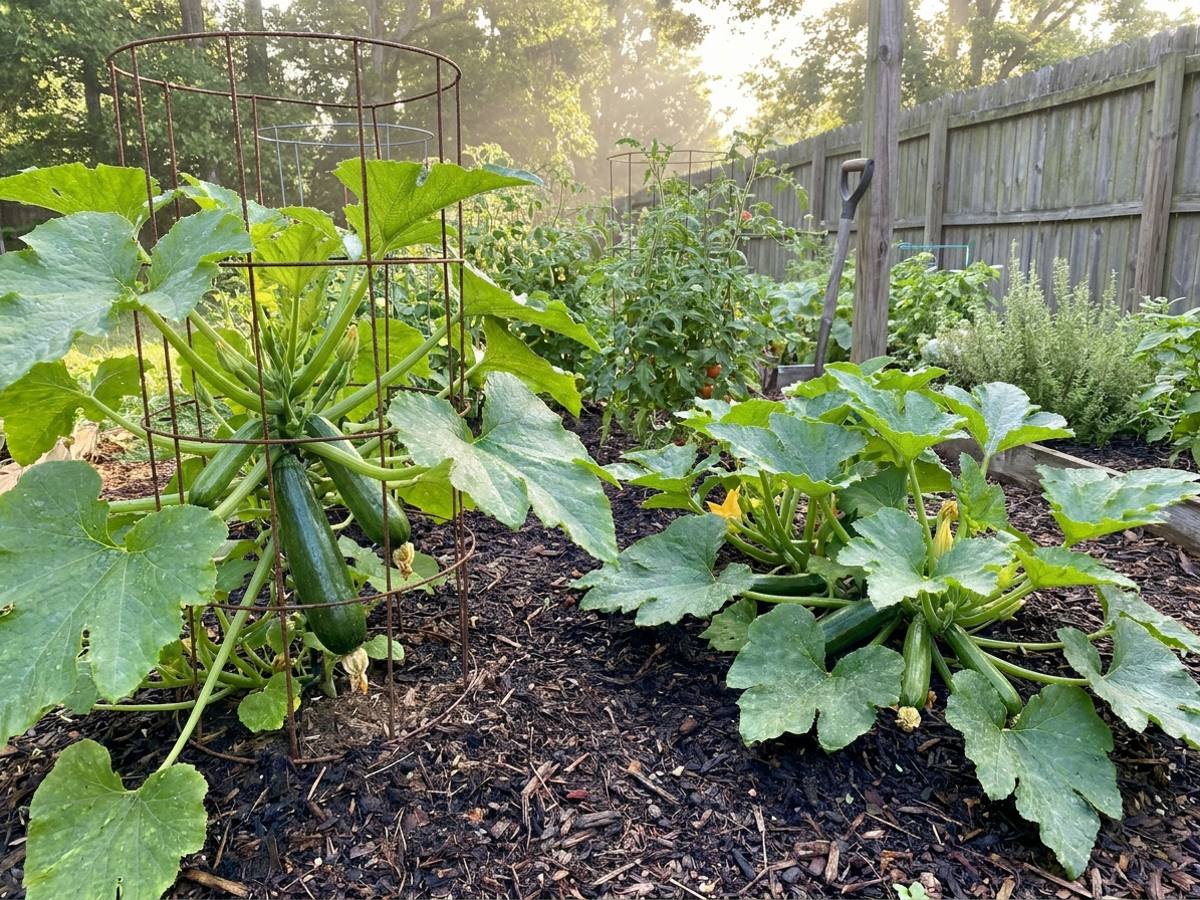
Courgette cages vs ground sprawl: which produces more fruit?
0
August is peak courgette season, but is your sprawling plant delivering maximum yield? A summer-long trial pits vertical cage cultivation against traditional ground growing, revealing which method truly wins on fruit count, disease resistance, and garden space efficiency. The results may surprise you.
Peak harvest season demands the right growing method
Across the UK and US, August gardens are groaning under the weight of courgette vines. This is the month when plants either flourish or succumb to powdery mildew, when hidden fruit gets overlooked amongst dense foliage, and when space becomes genuinely precious in smaller plots. In midsummer, gardeners make daily picking decisions and noticing which plants are genuinely productive.
Vertical cages offer compelling advantages but come with hidden costs
Cage-grown courgettes occupy roughly 70 per cent less ground space than sprawling varieties, a significant advantage for compact gardens and container setups. They receive superior air circulation, which measurably reduces fungal disease incidence by up to 40 per cent according to growing trials. However, the vertical method demands consistent training, more frequent watering due to reduced soil contact, and stronger initial investment in sturdy caging infrastructure.
Traditional ground sprawl, by contrast, spreads naturally with minimal intervention. The soil mass beneath provides natural moisture retention, and established varieties like Courgette ‘Defender’ or ‘Romanesco’ often produce slightly higher total yields by August when the vines are fully mature. The trade-off is undeniable: sprawling plants occupy 2 to 3 square metres per plant, monopolising valuable garden real estate.
Monitor your plants now to gather real August data
To properly assess which method suits your garden, conduct these practical measurements this week:
Count total fruit harvested from both methods across seven consecutive days, recording size and quality to identify which system delivers premium specimens versus bulk quantity.
Inspect lower foliage closely for powdery mildew or botrytis symptoms, documenting disease coverage percentage to quantify the cage method’s air-circulation advantage.
Measure the footprint occupied by each plant type, calculating fruit yield per square metre to establish genuine space efficiency rather than relying on assumptions.
Track watering frequency for both systems during dry spells, noting whether caged plants require noticeably more intervention than ground-grown varieties.
Plan your September transition whilst August data guides you
The next two weeks are critical for observing plant performance under peak summer conditions. Use your August measurements to inform next year’s growing decisions, whether that means investing in quality cage systems or dedicating a separate sprawl zone away from your main vegetable beds. August yields tell the honest story that marketing cannot.
🌿 Nature & Garden Newsletter
Gardening tips, recipes & seasonal advice, twice a week.
🌿 Nature & Garden Newsletter
Gardening tips, recipes & seasonal advice, twice a week.
🌿
Get our gardening tips, recipes and seasonal advice
Subscribe to Nature & Garden Newsletter — twice a week, no ads.