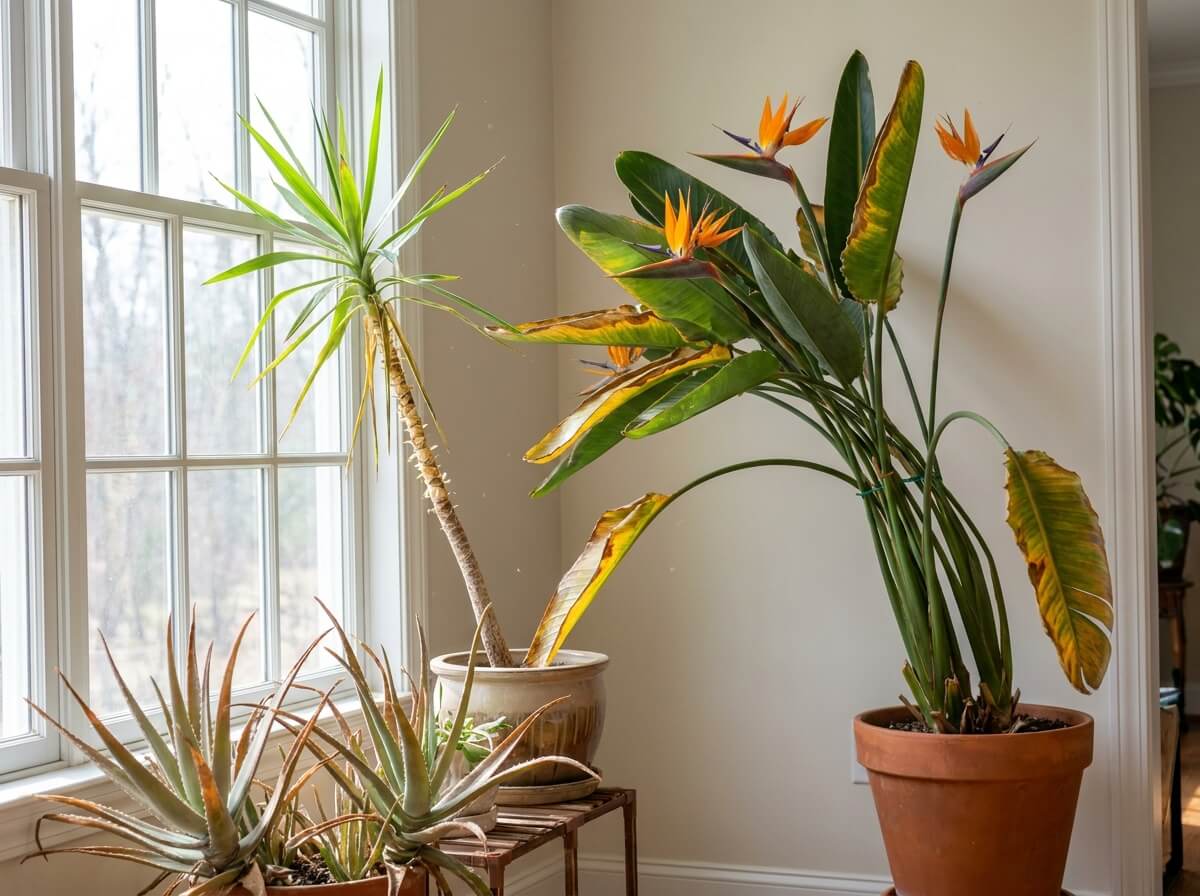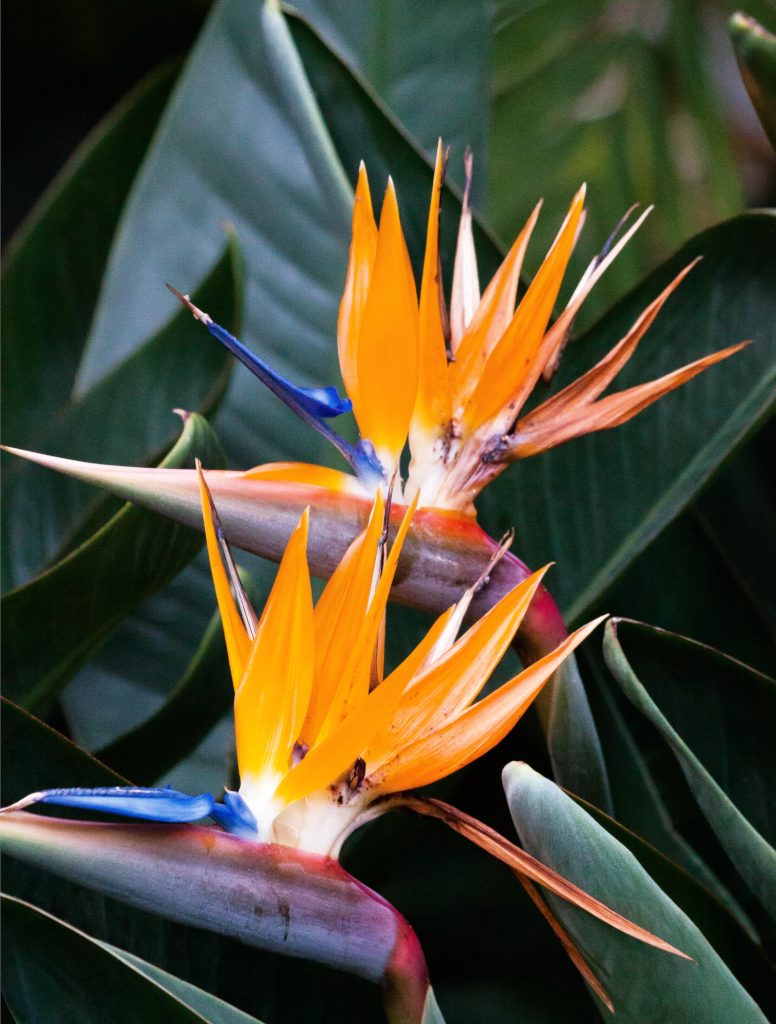
Yellow and red flowers rise above dense evergreen leaves like an elegant quiver of arrows: that is the bird of paradise (Strelitzia reginae), a South African perennial grown as much for its foliage as for its bloom. It will not take frost, but give it warmth and soil that stays moist and it flowers for months.
| Name | Strelitzia reginae |
|---|---|
| Common name | bird of paradise |
| Family | Strelitziaceae |
| Type | perennial |
| Height | 3 to 6 ½ feet (1 to 2 meters) |
| Exposure | full sun, part sun |
| Soil | ordinary |
| Foliage | evergreen |
| Flowering | late spring to early autumn |
Strelitzia is sensitive to frost, even light frost below 35°F (2°C) and thus can only be planted directly in the ground in regions with mild enough winters.
It normally lives in the warmer regions of the globe that offer rather tropical growing conditions and must be grown in pots and brought indoors in winter if this isn’t the case.
In summer, when the weather is hot, it is important to water your strelitzia often, especially when grown in pots.
Where you grow your strelitzia decides its position, its growing medium and how you water it. The table sums up the three situations described above.
| Growing situation | Where to place it | Soil or mix | Watering |
|---|---|---|---|
| Planted in the ground | A very sunny spot, in regions with mild enough winters | Soil mix and garden soil, moist, cool but well drained | Water often in hot summer weather; protect the plant if temperatures drop |
| Grown in a pot | Partly shaded, sheltered from wind and drafts | Flower plant soil mix, repotted every 2 or 3 years | Water often in summer, preferably in the evening, without wetting the leafage |
| Brought indoors for winter | A luminous room kept cool, never below 50°F (10°C) | Same pot, moved up a size every 2 or 3 years | Reduce watering through the winter |
In every case the plant asks for little more than warmth, light and soil that stays moist without staying wet.
If the Strelitzia is well planted and its location suitable, it will only require little care.
No pruning is actually necessary except if you wish to balance the shrub out.
If it was planted in the ground outdoors, it means your climate will allow for it, and so there isn’t much to do except to protect the plant if ever temperatures drop.
In pots and in areas where winters are quite cold, proceed with bringing the plant inside to a spot where the temperatures stay cool.
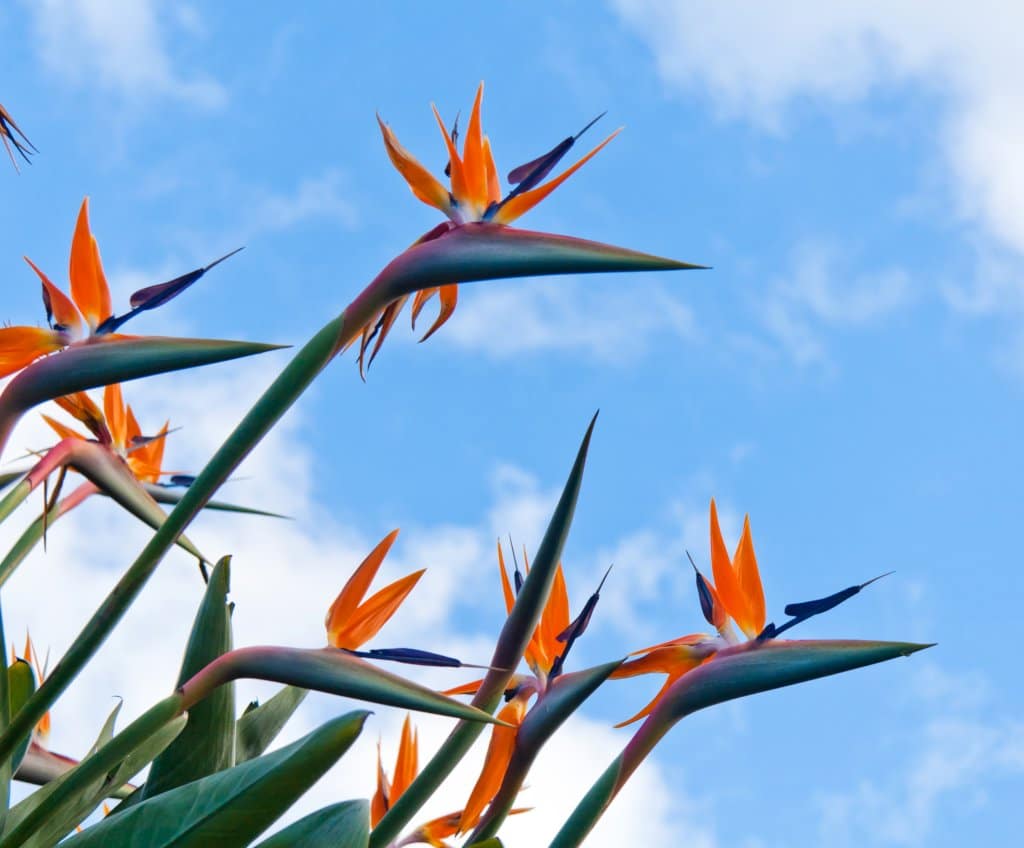
This very beautiful perennial offers a unique yellow and red blooming that looks like an elegant quiver of arrow.
Native to South Africa, it prefers rather warm climate of course if growing in the ground, otherwise you can plant it in a garden box and bring it indoors for winter.
Its natural environment is around bodies of water, which is why it requires a certain amount of soil moisture to thrive.
To increase blooming, you can add organic fertilizer in spring and renew the application once in summer.