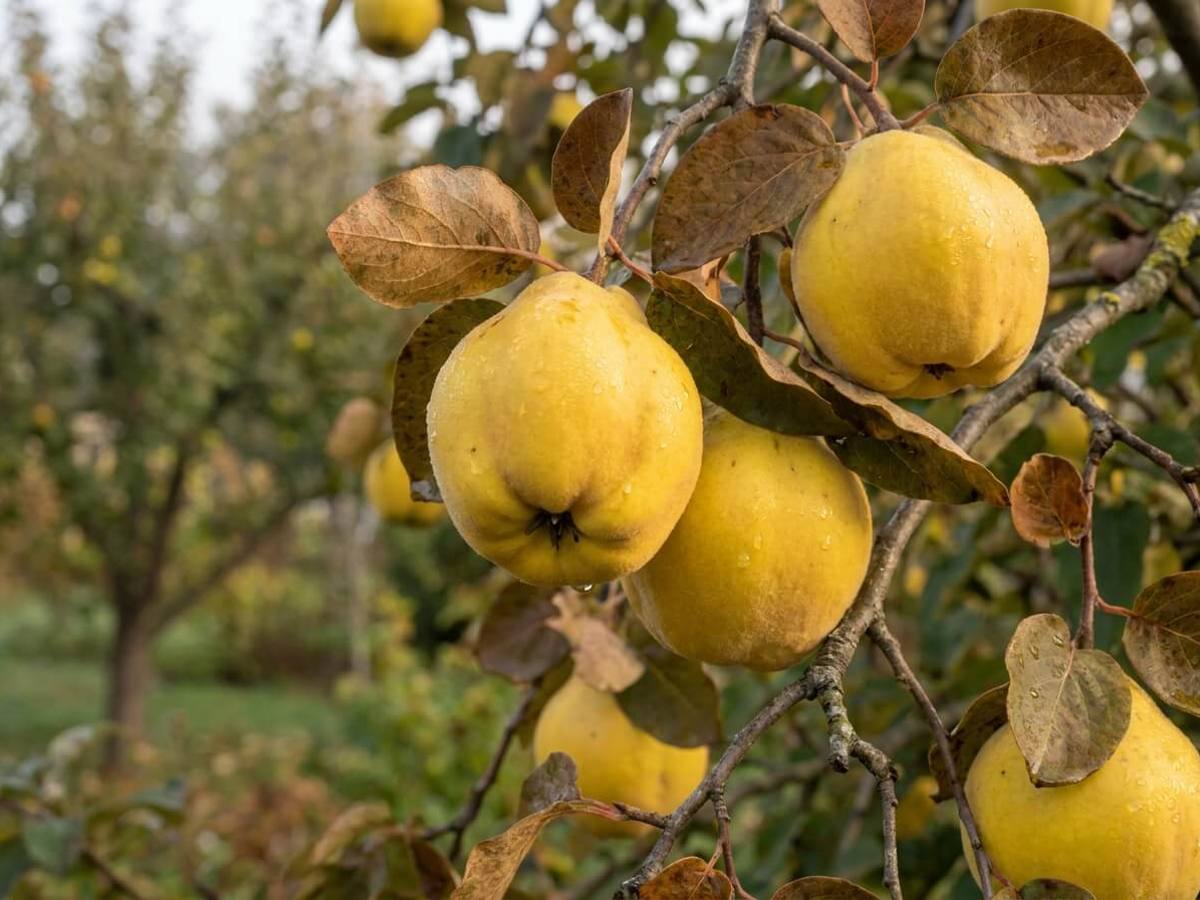
Why September is quince season across the northern hemisphere
Whilst apple trees finish their harvest by late summer, quince trees are only entering their final ripening phase. In the UK and northern US, this is the season when the fruit transitions from hard, greenish-yellow to a deeper golden hue, and the tree’s leaves begin their autumn shift. The first real frosts arrive in late autumn, and they will destroy quince entirely.
The ripeness problem: hardness hides readiness
Quince is deceptively difficult to judge by touch alone. The fruit remains rock-hard throughout its entire ripening process, even when perfectly mature. Many gardeners harvest too early, leaving flesh dense and bitter, or wait too long and lose fruit to frost damage. The forgotten test that works is fragrance: ripe quince emits a distinctive perfume from the base of the fruit, sweet and unmistakable. If your nose detects nothing, wait another week.
Bruising is another serious concern. Quince flesh stains and browns easily when damaged, ruining both appearance and storage potential. A fall from height or careless handling in the basket will create marks that persist for months. This is why careful hand-picking, not shaking, is essential.
How to harvest and cure quince in September and early October
Follow these steps to pick, prepare, and store your crop successfully:
Test fragrance first by sniffing the base of the fruit; harvest only when the scent is unmistakable and strong
Pick by hand, twisting gently upwards and supporting the branch with your other hand to avoid bruising
Place each fruit in a lined basket or shallow tray, never stacked, to prevent damage
Cure the harvest in a cool, dark, well-ventilated space (10-15 °C is ideal) for two to three weeks before storage
Store in a single layer in a cool room or unheated garage where temperature stays below 12 °C, checking monthly for any soft spots
Monitoring for frost and planning your cooking calendar
Keep an eye on weather forecasts as autumn deepens. A hard frost warning should trigger immediate harvest of any remaining fruit, even if fragrance is faint. Properly cured and stored quince will keep for three to four months, giving you time to plan paste, jam, jelly, or roasted preparations through winter and into spring. You have earned months of reward for this brief window of careful work.
🌿 Nature & Garden Newsletter
Gardening tips, recipes & seasonal advice, twice a week.
🌿 Nature & Garden Newsletter
Gardening tips, recipes & seasonal advice, twice a week.
🌿
Get our gardening tips, recipes and seasonal advice
Subscribe to Nature & Garden Newsletter — twice a week, no ads.