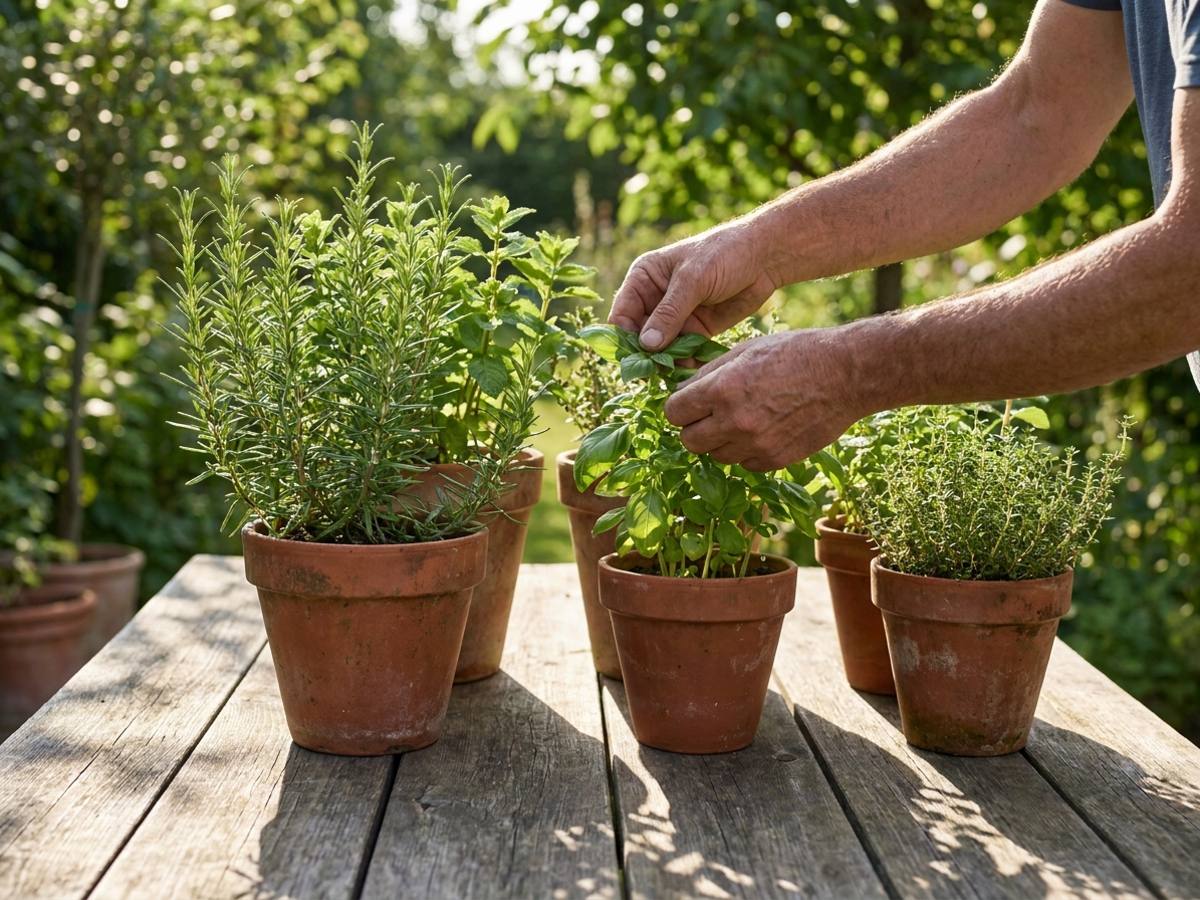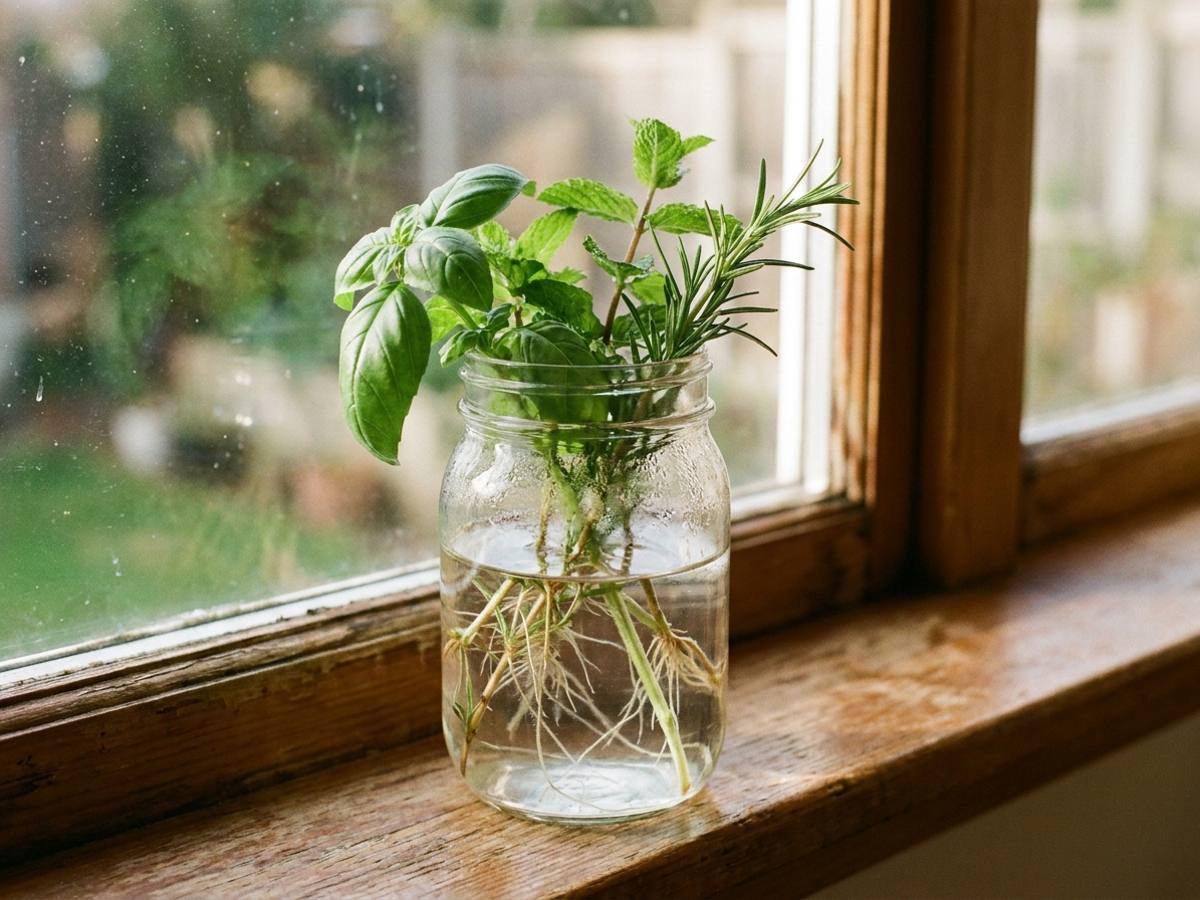
Supermarket herb bunches cost £1.50 each. Propagate them into dozens of plants and you’ll harvest fresh basil, mint, and rosemary all summer long – saving hundreds on grocery bills whilst building genuine self-sufficiency. In August, peak growing season is here: now is the time to turn those cuttings into a renewable herb garden.
In midsummer, across the UK and US, herb plants are at their most vigorous. The soil is warm, daylight is long, and tender growth is abundant. August is when cuttings root fastest and most reliably. Gardeners who wait until autumn risk losing momentum: cooler nights slow root development, and tender herbs like basil begin to flower and decline.
The three herbs most often bought as supermarket bunches behave quite differently once you take cuttings from them. Rooting speed and winter survival are what decide how you treat each one.
| Herb | Time to root | After rooting |
|---|---|---|
| Basil | 7 to 14 days | Tender: keep frost-protected in the UK |
| Mint | 7 to 14 days | Perennial: survives mild winters outdoors in containers or borders |
| Rosemary | 2 to 3 weeks | Perennial: survives mild winters outdoors in containers or borders |
Whichever you choose, pot the cutting on once the roots are about 1 cm long.
A single basil bunch from the supermarket lasts a week, maybe two if you’re careful. Over a 12-week growing season, that’s six to twelve bunches at £1.50 each – roughly £9 to £18 per herb. Multiply that across three or four herbs, add mint for mojitos and rosemary for roasting, and your summer bill climbs to £40 or £50. One gardener documented £180 in herb spending before switching to propagation; by mid-August, her propagated plants were yielding more than enough for daily use, with surplus for freezing and sharing.
The financial return is real. But there’s something deeper here: the satisfaction of walking to your garden instead of your supermarket, snipping what you need, knowing it cost almost nothing and will regenerate within weeks.
The process is straightforward. Follow these steps to turn a single supermarket bunch into a permanent herb supply:
In late August and early September, watch for mould or algae on water-propagated cuttings; this signals poor air circulation. Move jars away from direct sun if they’re sitting in heat all day. Once rooted cuttings are potted on, ensure they’re hardened off gradually before moving outdoors, especially if they’ve been indoors under lights.
By October, your propagated herbs will be established plants ready for autumn harvesting and winter storage. That single bunch from July keeps giving.