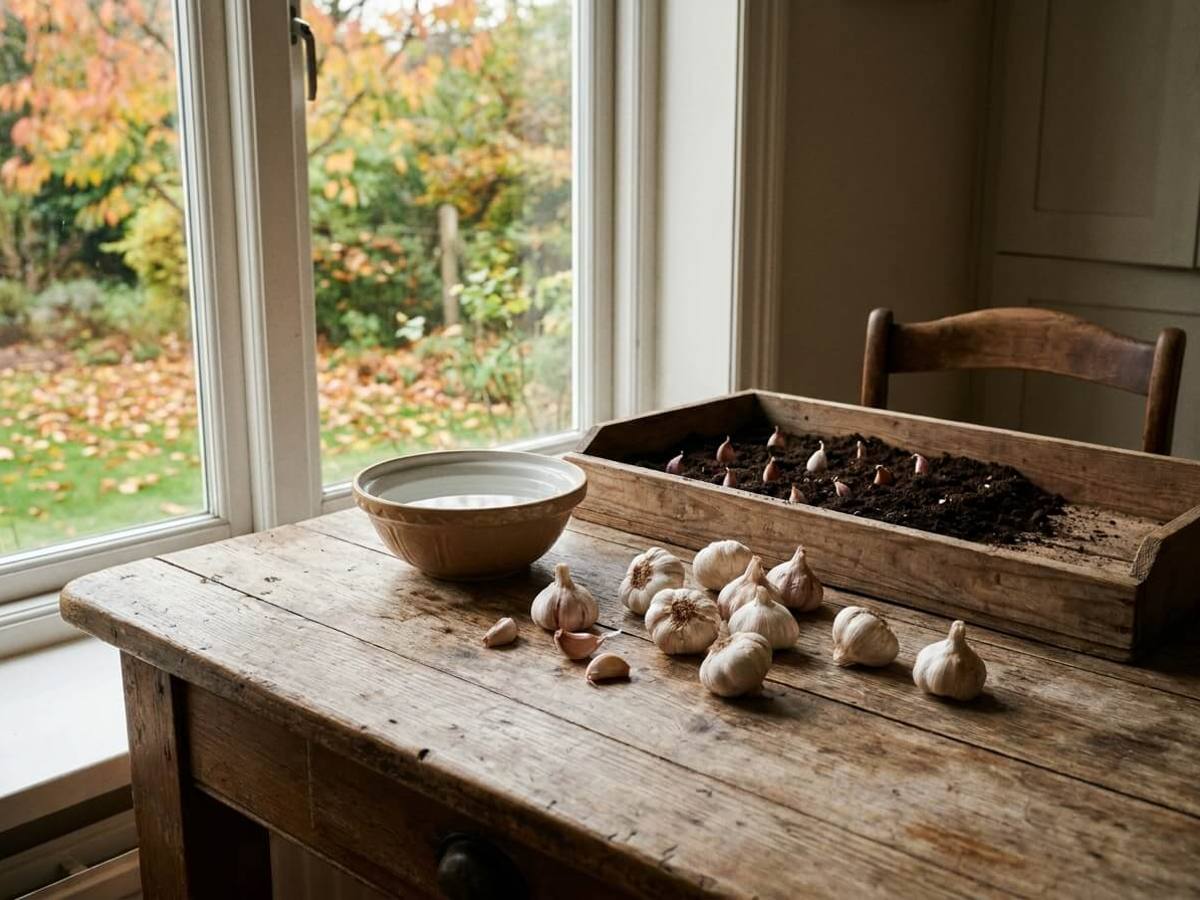
Thousands of UK and US gardeners soak garlic cloves before autumn planting, believing it strengthens winter growth. New research suggests the opposite: soaking increases disease pressure and delays root establishment. Skip the bucket, use drier methods instead, and watch your garlic thrive through the coldest months.
Across the UK and North America, late summer marks the moment when gardeners dust off their garlic stocks and prepare autumn beds. This is when the soaking myth takes hold, passed down through gardening forums, seed catalogues, and well-meaning neighbours. Yet the soil conditions and disease landscape in September tell a different story.
Soaking garlic cloves, typically in water or diluted fungicide solutions, aims to activate the clove and promote faster root emergence. In theory, it sounds sensible. In practice, trials across North American university extension programmes and UK research plots have shown that waterlogged cloves are more susceptible to bacterial rot and fungal colonisation during the critical weeks of autumn establishment. The moist environment favours pathogens over the developing clove itself.
Gardeners who soak often report slower winter growth, higher failure rates, and bulbs that lack vigour come spring. The clove expends energy fighting off infection rather than directing resources into root development. In cool, damp autumn soil, this delay can be decisive. Cloves planted dry, by contrast, establish roots faster and develop stronger winter crowns.
Prepare your garlic for success using these straightforward steps:
Once cloves are planted in mid-to-late autumn, root development begins below ground whilst shoots emerge after 3 to 4 weeks. Watch for signs of uneven emergence; sparse germination often points to diseased cloves or waterlogging rather than poor variety choice. By mid-winter, a healthy garlic bed should show a carpet of pale green shoots. Come spring, those vigorous plants will outpace any that were soaked, establishing the foundation for bigger bulbs come summer.